Sewing Techniques for Theatre: An Essential Guide for Beginners distills the intimidating art of sewing down into simple, quick, and effective lessons to prepare readers for an entry-level position in a costume shop. The lessons follow an hour-by-hour structure, offering detailed instructions to creating 11 sewing samples, a scrub shirt, and a tote bag. Embedded in the projects' directions are lecture materials on safety, irons, fabric, and patterns. With a wealth of hands-on exercises, review questions, photographs, and step-by-step instructions for compiling a portfolio, this guide teaches aspiring costume technicians about the culture and machinery of the costume shop, and equips them with the necessary skills to begin their career as members of a costume shop team.
- 156 pages
- English
- ePUB (mobile friendly)
- Available on iOS & Android
eBook - ePub
About this book
Information
Chapter 1
Hour One
Introduction to the Costume Shop
Welcome to the costume shop. This Narnia – a magical place within the ‘closet’ – is a hub of creation and creative people. Most costume shops combine the fields of clothing construction, millinery (hat construction), wigs/facial hair, masks, fabric dyeing/manipulation, makeup, and all things that could fit into the category of costume crafts. Usually, every person within the shop is working on a unique piece.
Because of this variety, a costume shop can be a strange place for a novice. Not only is it full to the brim, it is thick with rules, ritual, and culture. It is normal to be overwhelmed. Be patient with yourself and with others when beginning this adventure. Know that the projects covered in this book will provide a common set of skills and vocabulary that allow you to jump into your new environment.
People are the most important part of a costume shop. When entering say, “Hello.” Introduce yourself. Forming questions in an entirely new environment is difficult, and you should feel free to ask or just listen, depending on your comfort level.
Your first day is just that, one of many – simply a start of a great journey. A re-occurring theme in this book and in costume shop work is, “You won’t learn everything all at once.” Become familiar with the shop from the big picture down to the details. Does each area have a primary use? What is the flow of a costume’s construction? Learn the various storage areas too. Tour the facilities. Often, working in the costume shop can feel like cooking in someone else’s kitchen; you may have skills, but finding the tools is difficult. Is there an experienced shop worker to pair with and form a team? Assist by gathering supplies for the project and later putting them away, thus learning the location of the scissors, thread, needles, and other items while benefiting from observing the work of the senior partner. Soon enough, you will be working solo on projects, and this mentor will be available to help with questions.
Creativity thrives among those with good work ethics. Come to work on time and prepared to participate. Give plenty of notice when canceling or re-scheduling. Call when you are not able to come to work. Know when the shop is facing a deadline and how your actions will affect the process of creating the show. Treat coworkers with kindness. Ideally, a shop should be devoid of harmful gossip. There are still plenty of people to talk about, such as tacky celebrities or your crazy aunt. Yes, sometimes an eye roll escapes, and it takes more effort to count blessings than to complain. Knowing that you can hold your tongue about others can build trust among colleagues. Other HR guidelines will also apply.

Figure 1.1 A spray booth is more of a necessity than a luxury. Work in a properly ventilated area

Figure 1.2 Dye vat with ventilation hood

Figure 1.3 Where does your shop keep first-aid and fire suppression items?
Shop Safety
Maintaining a safe shop is everyone’s responsibility. If you adhere to the following precautions, you will be well on your way to working in and creating an optimal atmosphere. Dress appropriately. Wear non-slip, full-coverage shoes. Stains, paints, and dyes ruin clothes, so dress to mess. Hair, scarves, ties, jewelry, and other hanging items catch in projects and cause problems.
Sprays, paints, glues, or anything emitting a smell needs proper ventilation. A spray booth draws odors and toxins out of the shop (see Figure 1.1). Even items that do not smell may have a particulate hazard, such as granulated fabric dye. Note the vent hood over the dye vat on Figure 1.2. Observe the manufacturer’s warnings on products.
Identify the safety equipment. Locate the fire extinguisher and first aid kit in preparation for fire or injury. Figure 1.3 depicts these items in an area with easy accessibility.
Perhaps your costume shop has a written set of rules. If they aren’t posted, ask the shop supervisor for clarification. In all cases, let your good sense prevail. The most effective precaution might be your state of mind. Be alert.
Even the occasional party has boundaries, yet they remain 100% necessary. In my shop, celebrations underscore the accomplishments of the staff, create a community, and allow time to reflect on the breadth and depth of the work. To prevent staining the costumes, place them a safe distance from food. Properly store all toxic chemicals during cooking or serving. What are the rules in your shop for food and beverages when having a party? What are the rules for food when not having a party?
Review
True/False
- ___________ Millinery and crafts are never done in a costume shop.
- ___________ Sewing machines are the most important things in a shop.
- ___________ Partnering with an experienced stitcher can be helpful in the short and long term.
- ___________ Safety is the responsibility of the costume shop manager.
- ___________ Costume shops should celebrate their accomplishments.
Hour Two
Costume construction is a hands-on skill; to learn it, you must do it. The book alternates between lecture and projects, growing your skills logically. Read each section and note the corresponding photographs. Complete each exercise before moving on. To facilitate smooth transitions from project to project, start each chapter with all of the recommended supplies. A cumulative list is located at the end of the book.
Necessary Supplies for Chapter 1
- Fabric scissors
- Thread scissors
- Measuring tape
- Chalk
- 1 yard of woven fabric – see details in the “Fabric Shopping” section
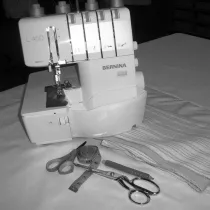
- Overlock sewing machine
Scavenger Hunt
Try finding the location of the following items in your costume shop:
- – Thread scissors (about 4″ long)
- – Thread
- – Hand sewing needles
- – Fire extinguisher
- – First-aid kit
Fabric
When constructing garments, our medium for the art is the fabric. In broad strokes, we can divide fabric into four categories; leather, felt, knit, and woven (see Figure 1.5). Leather is animal hide after processing. Leather can be difficult (but not impossible) for use in costume construction. Felt begins as fibers (often from wool) soaked, smashed, and heated into an even layer. It is easily shaped and provides insulation so long as it isn’t re-soaked, re-smashed, or re-heated. Knit fabric starts with fibers spun into a y...
Table of contents
- Cover
- Half Title
- Title
- Copyright
- Contents
- Acknowledgments
- Introduction
- Chapter 1 Hour One
- Chapter 2 Hour Three
- Chapter 3 Hour Six
- Chapter 4 Hour Nine
- Chapter 5 Hour Fourteen
- Master Supply List
- Chapter Review Answers
- Index
Trusted by 375,005 students
Access to over 1.5 million titles for a fair monthly price.
Study more efficiently using our study tools.
Frequently asked questions
Yes, you can cancel anytime from the Subscription tab in your account settings on the Perlego website. Your subscription will stay active until the end of your current billing period. Learn how to cancel your subscription
No, books cannot be downloaded as external files, such as PDFs, for use outside of Perlego. However, you can download books within the Perlego app for offline reading on mobile or tablet. Learn how to download books offline
Perlego offers two plans: Essential and Complete
- Essential is ideal for learners and professionals who enjoy exploring a wide range of subjects. Access the Essential Library with 800,000+ trusted titles and best-sellers across business, personal growth, and the humanities. Includes unlimited reading time and Standard Read Aloud voice.
- Complete: Perfect for advanced learners and researchers needing full, unrestricted access. Unlock 1.5M+ books across hundreds of subjects, including academic and specialized titles. The Complete Plan also includes advanced features like Premium Read Aloud and Research Assistant.
We are an online textbook subscription service, where you can get access to an entire online library for less than the price of a single book per month. With over 1.5 million books across 990+ topics, we’ve got you covered! Learn about our mission
Look out for the read-aloud symbol on your next book to see if you can listen to it. The read-aloud tool reads text aloud for you, highlighting the text as it is being read. You can pause it, speed it up and slow it down. Learn more about Read Aloud
Yes! You can use the Perlego app on both iOS and Android devices to read anytime, anywhere — even offline. Perfect for commutes or when you’re on the go.
Please note we cannot support devices running on iOS 13 and Android 7 or earlier. Learn more about using the app
Please note we cannot support devices running on iOS 13 and Android 7 or earlier. Learn more about using the app
Yes, you can access Sewing Techniques for Theatre by Tracey Lyons in PDF and/or ePUB format, as well as other popular books in Media & Performing Arts & Fashion Design. We have over 1.5 million books available in our catalogue for you to explore.