eBook - ePub
Coaching in Islamic Culture
The Principles and Practice of Ershad
- 184 pages
- English
- ePUB (mobile friendly)
- Available on iOS & Android
eBook - ePub
Coaching in Islamic Culture
The Principles and Practice of Ershad
About this book
This book is the result of a collaboration between two authors who share a passion and commitment for coaching. Its aim is to enthuse readers and provide guidance about the appropriate use of coaching within Islamic culture. The intention is to provide a culturally relevant coaching framework for use in Islamic context, which allows Muslims to develop in ways that are aligned with their faith and traditions. The complete coaching framework presented here is called Ershad.
CHAPTER ONE
A brief history of coaching
At the start of this book, we think it would be helpful to survey the history of coaching in order to gain a better understanding of its origins. While executive coaching has been flourishing as an optimal way of enhancing performance since the early 1990s, the concept of a supportive relationship based on meaningful conversations has a long history.
Ancient Greece
The very first reference to this kind of supportive relationship occurs in a Greek myth as told in Homer’s The Odyssey. In this tale, Odysseus’s son, Telemachus, is supported by a wise old man called “Mentor”. Subsequently, the word “mentor” has become associated with the figure of a wise and trusted adviser based on this literary character. Historically, the Ancient Greeks provided dedicated support for their elite athletes. The most promising athletes would practise in gymnasia, supported by former champions of the same sport. It should be noted that they did not use the term “coach” for this role. However, although they used the word “gymnastes” to describe these former champions, this equates broadly to the role of the modern sports coach.
The Hungarian town
The word “coach” is thought to have originated from the name of a town in Hungary (Koc, pronounced “kotch”) that used to build carriages in the fifteenth century. The type of light, fast carriage they built became popular across Europe. The English word “coach” is thought to derive from the Hungarian word “kocsi” which means “from the town of Koc”. It is believed that coaches (and the word “coach”) came into use in England in the sixteenth century.
University of Oxford
The first usage of the word “coach” to refer to a person seems to be in an academic context, at the University of Oxford in the 1830s (Online Etymology Dictionary). In this case, the word “coach” was used to refer to a tutor who supported a student with his or her academic work. It is believed that it was initially used informally, implying that a tutor would take a student from point A (not knowing what he or she needed to know in order to pass an examination) to point B (having good knowledge of the material in order to pass an examination)—much like a coach (or carriage) which would also take people from point A to point B.
Sports coaching
Coaching has been central to elite sporting performance for generations. The year 1861 is the first time the word “coaching” can be identified as being used in an athletic sense. From the 1860s onwards, coaching has been used in the sports context in England, with sports coaches supporting athletes to excel in their chosen fields. Sports coaching has developed quickly and significantly into a professional field (Day & Carpenter, 2016). Nowadays almost every sports team has a coach—and every elite athlete is supported to achieve greatness by a dedicated coach.
Business
The business world has always been interested in the possibility of improving human performance. At times in its history, it has been particularly attracted to exploring how to improve human performance through psychology. Between the 1940s and 1960s, some organisations provided their senior executives with counselling, delivered by occupational or organisational psychologists. These interventions were designed to support the executives to overcome barriers and excel at their work.
Humanistic psychology
The modern incarnation of coaching can trace its roots back to the Human Potential Movement of the 1960s, a decade of exploration in human growth and development. Two eminent psychologists, Abraham Maslow and Carl Rogers, were champions of human potential and leading figures in the field of humanistic psychology. This movement promoted an optimistic view of human nature, arguing that people had an urge to achieve their full potential. As a result, the movement advised employers of the importance of treating their people well, rather than focusing entirely on performance improvements.
Inner game
The concept of the “inner game” was proposed by Tim Gallwey in his 1974 book, The Inner Game of Tennis. In this revolutionary text, Gallwey suggested that the “inner game” of a player (psychological attitude) was as important as the “external game” (physical skill and competencies). In other words, the struggle against one’s own doubts, fears, and self-limiting beliefs was as important as the struggle against an external opponent. Although this first book addressed the question of the “inner game” of a tennis player, it soon became apparent that the concept could apply to any situation. This theory was embraced by the business community in the US in the 1970s and 1980s. It was brought to the UK by Graham Alexander and John Whitmore who had learned the approach from Gallwey when they were in the US. Linking up with a global consultancy firm, Alexander and Whitmore developed the concept into the well-known GROW model that is now taught in most coach training programmes. Following the publication of Whitmore’s book Coaching for Performance in 1992, executive coaching started to flourish in the UK in the final years of the twentieth century and has been gaining momentum steadily since then. Coaching is currently being used to support students, business leaders, patients, health professionals, future leaders, senior executives—in fact anyone who wishes to achieve more of their potential.
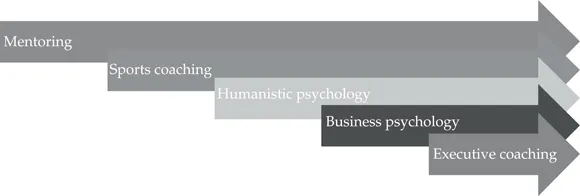
Figure 1.1. The sources of executive coaching.
Today: professional contexts
Executive coaching is today firmly embedded in many Western cultures. It is often used in educational settings (van Nieuwerburgh, 2012) and is popular across a wide range of professional contexts (van Nieuwerburgh, 2016). Executive coaching has come to be viewed as an individualised form of personal and professional development. While generic skills can still be taught through traditional training days, it is now believed that more sophisticated professional development for leaders and executives can be delivered through one-to-one coaching. It is seen as timely, on-the-job professional development. One-to-one coaching arrangements for senior leaders, coaching to support and embed professional development, and access to coaching across organisations are now commonplace.
The last two decades have witnessed an explosion of interest, with many hundreds of training organisations delivering coach training programmes. These range from one-day short courses, online courses, week-long certificated programmes to postgraduate level qualifications. Coaching is in use in professional contexts in many of the world’s leading economies (Ridler Report, 2016; Sherpa Executive Coaching Survey, 2015). Furthermore, coaching is now a profession in its own right with a number of professional associations (e.g., International Coaching Federation; Association for Coaching; European Mentoring and Coaching Council; Association for Professional Executive Coaching and Supervision).
Today: the academic field
The academic underpinnings and evidence base for coaching initially came from a number of different fields, including sports, counselling, education, psychotherapy, and psychology. More recently, there is research and study on coaching directly through two emergent academic fields: coaching psychology and positive psychology. It is possible to undertake a postgraduate qualification such as MA or MSc in coaching. The earliest of these programmes were launched in Australia and the United Kingdom in the 1990s. Such programmes are now delivered in British universities within psychology, education, and business departments and an increasing number of universities globally.
A mark of the recognition of the business and leadership potential of executive coaching is the fact that some of the world’s elite business schools now deliver postgraduate courses in executive coaching. Henley Business School and INSEAD, for example, both deliver such programmes.
The field of coaching now has its own academic, peer-reviewed journals, including Coaching: An International Journal of Theory, Research and Practice, The International Journal of Evidence-based Coaching and Mentoring, and the International Coaching Psychology Review. There are special interest groups dedicated to coaching within the American Psychological Association (APA), the Australian Psychological Society (APS), and the British Psychological Society (BPS).
Research into coaching
Since the 1990s, there have been concerted efforts within the field to broaden the evidence base of coaching in the academic arena (Passmore & Fillery-Travis, 2011). Early qualitative studies and case studies have been followed more recently by small-scale quantitative and mixed methods studies (Passmore & Theeboom, 2015). Broadly speaking, it has been possible to demonstrate that coaching is having positive effects on performance, well-being, goal attainment, and attitudes to work (Theeboom, 2016). While the academic field is still in its infancy compared to more established areas of study, the initial findings are encouraging and bode well for the future of coaching.
Defining the term
The rapid development of the profession of coaching has also had some shortcomings. One of these is the lack of definitional clarity of the term “coaching”. This is due, in part, to the mixed heritage of coaching. Having emerged from mentoring, sports coaching, and the humanistic tradition, executive coaching is seen in a number of different ways by professionals. The commercial drivers to present coaching as “all things to all people” has also played a part in muddying the waters. Below, we will outline our definition of executive coaching so that we can bring some clarity to our own discussion in this book.
Well-known definitions
Perhaps the best-known coaching definition is that proposed by Sir John Whitmore:
“Unlocking people’s potential to maximise their own performance. It is helping them to learn rather than teaching them” (2009, p. 11).
Below are a few other definitions that provide a few slightly different views about coaching:
• “The art of facilitating the unleashing of people’s potential to reach meaningful, important objectives” (Rosinski, 2003, p. 4)
• “The art of facilitating the performance, learning and development of another” (Downey, 2003, p. 21)
• “Coaching is a method of work-related learning that relies primarily on one-to-one conversations” (de Haan, 2008, p. 19)
• “Coaching is a human development process that involves structured, focused interaction and the use of appropriate strategies, tools and techniques to promote desirable and sustainable change for the benefit of the coachee and potentially for other stakeholders” (Bachkirova, Cox, & Clutterbuck, 2014, p. 1)
• “Executive coaching is a conversational process that leads to a change in thinking or behaviour with the aim of improving outcomes in professional contexts” (van Nieuwerburgh, 2016, p. 3).
Broadly speaking, there is agreement that coaching:
1. Is a managed conversation that takes place between two people
2. Aims to support sustainable change to behaviours or ways of thinking
3. Focuses on learning and development (van Nieuwerburgh, 2017, p. 5).
Coaching and mentoring
Coaching and mentoring are closely related terms as we have discussed earlier. Coaches and mentors share similar skills and processes. Mentors, however, are expected to have expert information about the topic of discussion. Mentoring is a process for transferring knowledge, insights, and expertise from one person to another. Coaches, on the other hand, do not need to have expert knowledge about the topic being discussed. The role of the coach is to support a coachee to generate his or her own solutions and ideas. The mentor can be seen as an adviser or wise counsellor while the coach is more of a facilitator and thinking partner.
A key differentiator is the directivity or non-directivity of the person in the supporting role. Although both coaches and mentors can direct the conversational process, the coach is non-directive when it comes to what the coachee should do. This means that the coach does not advise, guide, or make suggestions about actions that a coachee might undertake. On the other hand, the mentor has a more directive role. Mentors are expected to provide suggestions, share insights, and impart guidance. As you can see, both roles have the same intention of supporting the coachee or mentee. In coaching, the support takes the form of facilitation while in mentoring, the support involves direct guidance.
Coaching and counselling
Coaching and counselling also share many similarities. In both cases, one person (the coach or counsellor) listens empathetically to the client as they work through the topic that the client has brought to the session. Both are one-to-one, confidential, and meaningful conversations. The coach’s role is to support the coachee to identify a desired future state or goal and then listen and ask questions as the coachee explores ways of moving forward. A counsellor is more likely to be needed when the client requires support to resolve complex psychological issues that have occurred in the past.
A key differentiator between coaching and counselling, therefore, is whether the conversation is focused on the past or on the future. It has been proposed that coaching should focus on the present and the future, while counselling tends to focus on uncovering and resolving problematic issues from a person’s past.
Coaching and consultancy
Coaching and consultancy are also closely aligned activities. Effective coaching and consultancy should start from building an understanding of the client’s current situation. Both approaches should be working to help the clients to generate relevant, tailor-made solutions. However, consultants are employed in order to provide solutions for their clients. Often, they are expected to be experts in their clients’ professional context. Coaches, on the other hand, are employed to support their clients to think through challenges for themselves. For a coach, having experience of the client’s professional context may be helpful for credibility but this is not essential.
Our experience
As authors, we have significant experience of executive coaching. We are both qualified executive coaches with experience of coaching clients in the Middle East, the United States, Europe, and Australia. We also spend a significant amount of our time training others to become coaches. One of us has experience of teaching on po...
Table of contents
- Cover
- Half Title
- Title Page
- Copyright Page
- Dedication
- Table of Contents
- ACKNOWLEDGEMENTS
- ABOUT THE AUTHORS
- SERIES EDITOR’S FOREWORD
- FOREWORD
- INTRODUCTION
- CHAPTER ONE A brief history of coaching
- CHAPTER TWO Coaching in Islamic culture
- CHAPTER THREE Listening with purpose
- CHAPTER FOUR Asking powerful questions
- CHAPTER FIVE Summarising and paraphrasing
- CHAPTER SIX Giving and receiving feedback
- CHAPTER SEVEN Ershad coaching framework
- CHAPTER EIGHT The Alignment Wheel
- CHAPTER NINE The coaching way of being
- CHAPTER TEN Conclusion
- CHAPTER ELEVEN Case studies and personal stories
- REFERENCES
- INDEX
Trusted by 375,005 students
Access to over 1.5 million titles for a fair monthly price.
Study more efficiently using our study tools.
Frequently asked questions
Yes, you can cancel anytime from the Subscription tab in your account settings on the Perlego website. Your subscription will stay active until the end of your current billing period. Learn how to cancel your subscription
No, books cannot be downloaded as external files, such as PDFs, for use outside of Perlego. However, you can download books within the Perlego app for offline reading on mobile or tablet. Learn how to download books offline
Perlego offers two plans: Essential and Complete
- Essential is ideal for learners and professionals who enjoy exploring a wide range of subjects. Access the Essential Library with 800,000+ trusted titles and best-sellers across business, personal growth, and the humanities. Includes unlimited reading time and Standard Read Aloud voice.
- Complete: Perfect for advanced learners and researchers needing full, unrestricted access. Unlock 1.5M+ books across hundreds of subjects, including academic and specialized titles. The Complete Plan also includes advanced features like Premium Read Aloud and Research Assistant.
We are an online textbook subscription service, where you can get access to an entire online library for less than the price of a single book per month. With over 1.5 million books across 990+ topics, we’ve got you covered! Learn about our mission
Look out for the read-aloud symbol on your next book to see if you can listen to it. The read-aloud tool reads text aloud for you, highlighting the text as it is being read. You can pause it, speed it up and slow it down. Learn more about Read Aloud
Yes! You can use the Perlego app on both iOS and Android devices to read anytime, anywhere — even offline. Perfect for commutes or when you’re on the go.
Please note we cannot support devices running on iOS 13 and Android 7 or earlier. Learn more about using the app
Please note we cannot support devices running on iOS 13 and Android 7 or earlier. Learn more about using the app
Yes, you can access Coaching in Islamic Culture by Raja'a Allaho,Christian van Nieuwerburgh in PDF and/or ePUB format, as well as other popular books in Business & Mentoring & Coaching. We have over 1.5 million books available in our catalogue for you to explore.