Alternative Fuel Vehicles gives full coverage of all associated qualifications and awards in the emerging field of alternative fuels. It is an essential introduction to the ever-growing demand for vehicles that operate using non-conventional fuels.
This first book on AFVs endorsed by the IMI begins with an overview of the subject, ideal for beginners, before outlining what is meant by alternative fuels, why they are necessary, and why climate change and associated legislation are key drivers. Details of how alternative fuels are made, the supply infrastructure, and how these vehicles work are all included. A chapter on fuel cells introduces learners to the use of hydrogen, and one on engines and engine management includes coverage of combustion as an aid to understanding why changing the type of engine fuel is complex. Some basic engine technology is included to help readers new to the subject. Real-life case studies and examples are used to illustrate different technologies in current use, and to speculate on new developments. This book is an ideal companion to any unit of study on alternative fuel, but will also be of interest to working technicians and keen amateurs.
The general definition of an ‘alternative fuel’ for a vehicle is one that is not produced from crude oil. However, this explanation can be blurred as some alternative fuels are mixed with petroleum base fuels and, further, some are derived from oil, but used in a different way. More about this later.
Definition
Alternative fuel: Not produced from fossil deposits such as crude oil, coal or shale.
Fuels are generally thought of as liquids because the two main fuels used for automotive applications are liquids at room temperature:
1Petrol/Gasoline
2Diesel.
In 2016, the worldwide average demand was over 90 million barrels1 of oil and liquid fuels per day. That is about 35 billion barrels a year! Production reached 97 million barrels per day in late 2015, and a demand for almost 100 million barrels per day is expected in the next few years (BP, 2017).
Key fact
In 2016 the worldwide average demand for oil and liquid fuels was over 90 million barrels per day.
There are other alternative fuels but the ones that will be examined in more detail in this book are:
1Ethanol (Bio-alcohol)
2Methanol
3Biodiesel
4Liquified natural gas (LNG)
5Compressed natural gas (CNG)
6Liquified petroleum gas (LPG)
7Hydrogen
8Solar
9Dimethyl ether fuel.
Some of these fuels are used to make electricity. The method of conversion will be examined but not the additional electric vehicle technology. Please refer to Hybrid and Electric Vehicles (Denton, 2016) for more details on these areas.
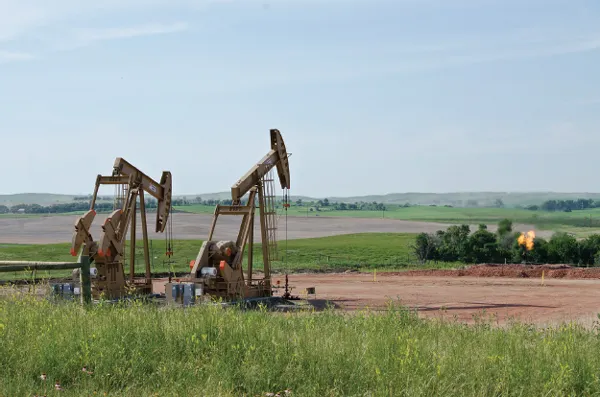
Figure 1.1Crude oil being pumped from the ground2
Safety first
All fuels are highly flammable, some are corrosive and some are stored under very high pressure – take care!
1.2 Infrastructure and regulations
In January 2013, the European Commission proposed a directive requiring Member States to adopt national policy frameworks for developing the market for alternative fuels and to ensure that minimum infrastructure is set up for their supply in road and water-borne transport:
► Each Member State should ensure the establishment of a defined minimum number of recharging points for electric vehicles by the end of 2020 (at least 10% of them publicly accessible). Ports should be equipped with shore-side electricity supply for vessels by end-2015.
Key fact
European Commission directive requires Member States to adopt national policy.
► Hydrogen refuelling points should be set up in sufficient number (no further than 300 km apart) to allow hydrogen vehicles to circulate throughout the territory (by 2020 in Member States where this technology has already been introduced).
► LNG supply should be available for navigation along the core Trans-European Transport (TEN-T) network in maritime ports (2020) and inland ports (2025), and LNG refuelling points should sustain heavy-vehicle road transport along the core network (refuelling points at least every 400 km by 2020).
► By end-2020, Member States should ensure sufficient CNG refuelling points are set up (at least every 150 km) to support CNG vehicles across the EU. This proposal would also require harmonisation of technical specifications of alternative fuels, and common standards for refuelling and electric charging systems, and more information to consumers on compatibility of fuels and vehicles.
Notwithstanding the results of Brexit negotiations (ongoing at the time of writing …), the UK has put forward regulations to implement the requirements of Directive (2014/94/EU)3 of the European Parliament and of the Council of 22 October 2014. This is about establishing a common framework of measures for the deployment of alternative fuels infrastructure. The purpose of the Directive is to minimise dependence on oil and to mitigate the environmental impact of transport. The significant points for the context we are working within are listed below. For alternative fuel infrastructure deployed or renewed after 17 November 2017, the requirements are specified in the Schedule to the Regulations.
► Normal or high-power recharging points for electric vehicles comply with the minimum technical standards for socket outlets or vehicle connectors.
► Refuelling points supplying hydrogen meet with a technical standard in relation to their connectors for motor vehicles.
► Data indicating the geographic location of public recharging or refuelling points, when available, must be accessible to the public on an open and non-discriminatory basis.
The EC Fuel Quality Directive (FQD) (2009/30/EC) defines standards for transport fuels and requires that fuel suppliers meet a 6% reduction in greenhouse gas emissions by 2020, relative to 2010 baseline levels, across all fuel categories. The FQD specifies that ethanol may be blended into petrol up to a limit of 10% by volume.
In the UK the Renewable Transport Fuel Obligation (RTFO) order applies to large suppliers and requires a percentage of the fuel supplied to come from renewable and sustainable sources.
Fuel specs are defined in European standards developed by governments, the oil industry and the car industry working together to make sure that petrol and diesel are suitable for use in the range of different vehicle and engines.
The standard specifications4 of petrol and diesel in the UK are British Standard (BS) versions of European Standards (EN):
► BS EN 228 for petrol
► BS EN 590 for diesel.
These regulations first allowed for up to 5% of ethanol to be blended in petrol and 5% biodiesel in diesel so that fuel suppliers could meet the RTFO. At the 5% level, there was no issue of compatibility with car fuel systems and no need to mark pumps to tell customers that the fuel may contain biofuel. In March 2013 the maximum ethanol allowed in petrol increased from 5% to 10%. There may be compatibility issues with some older fuel system components at this level. The updated standard therefore stated that any petrol containing more than 5% ethanol must be clearly labelled on the pump as: Unleaded petrol 95 E10. Filling stations supplying E10 also offer an E5 version for non-compatible vehicles.
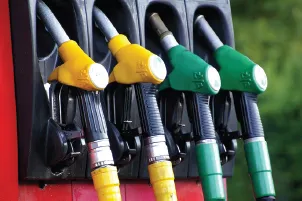
Figure 1.2Fuel pump with a range of options
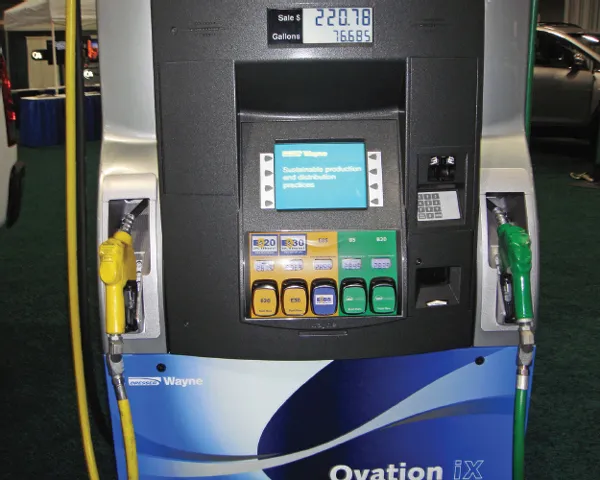
Figure 1.3Biofuel dispenser for several ethanol and biodiesel blends5
Over 90% of petrol vehicles on the road are compatible with E10 bu...
Table of contents
Cover
Half Title
Title Page
Copyright Page
Table of Contents
Preface
Acknowledgements
1 Introduction
2 The environment
3 Alternative fuels
4 Fuel cells
5 Engines
6 Case studies
7 Automotive Technology Academy
References
Index
Trusted by 375,005 students
Access to over 1.5 million titles for a fair monthly price.
Study more efficiently using our study tools.
Frequently asked questions
Yes, you can cancel anytime from the Subscription tab in your account settings on the Perlego website. Your subscription will stay active until the end of your current billing period. Learn how to cancel your subscription
No, books cannot be downloaded as external files, such as PDFs, for use outside of Perlego. However, you can download books within the Perlego app for offline reading on mobile or tablet. Learn how to download books offline
We are an online textbook subscription service, where you can get access to an entire online library for less than the price of a single book per month. With over 1.5 million books across 990+ topics, we’ve got you covered! Learn about our mission
Look out for the read-aloud symbol on your next book to see if you can listen to it. The read-aloud tool reads text aloud for you, highlighting the text as it is being read. You can pause it, speed it up and slow it down. Learn more about Read Aloud
Yes! You can use the Perlego app on both iOS and Android devices to read anytime, anywhere — even offline. Perfect for commutes or when you’re on the go. Please note we cannot support devices running on iOS 13 and Android 7 or earlier. Learn more about using the app
Yes, you can access Alternative Fuel Vehicles by Tom Denton in PDF and/or ePUB format, as well as other popular books in Technology & Engineering & Automotive Transportation & Engineering. We have over 1.5 million books available in our catalogue for you to explore.