The global context
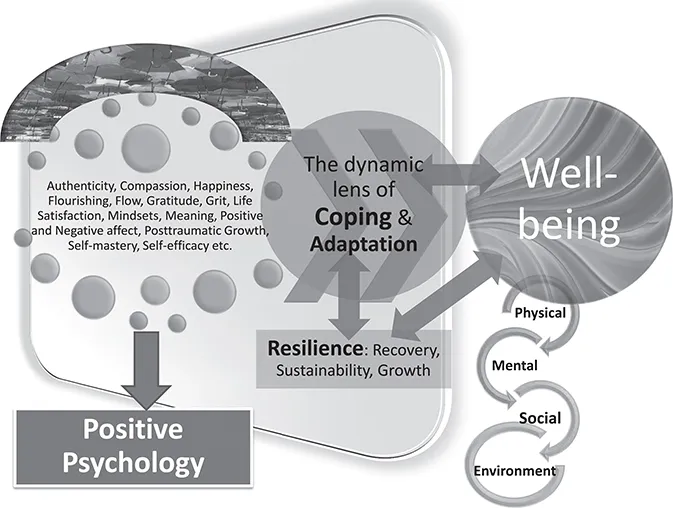
The definition of health as ‘a state of complete physical, mental and social well-being and not merely the absence of disease or infirmity’, proposed by the World Health Organization (WHO, 1948) in the preamble to the Constitution has remained unamended since 1948. In doing so it incorporates total well-being under the concept of health and puts an emphasis on the individual’s subjective experience rather than the objective assessment of others. The focus on social well-being recognises the important role of the environmental context in promoting well-being of individuals. Fundamental conditions and resources for health such as social justice, equitable access to education, shelter, food, stable ecosystem etc. are some of the basic prerequisites for a secure foundation in health, particularly for children in their early years who are reliant on others for these provisions. This is akin to a mother bird building a nest for its babies: ‘The twigs intertwined for the nest and the nest is where you feel safe and where you do your growing and the baby bird grows safely to an adult’ (‘The Nest’ – ARACY, 2014).
Chapter 2 provides a more detailed look at well-being in the early years using Bronfenbrenner’s ecological systems theory of development where well-being of a child is dependent on all the elements within the ecosystem in which a child resides. Well-being in children, in simple terms, means the quality of their lives. The definition of well-being, however, varies depending on the academic and professional lens, including domains of child health, policy and legal arenas, in education, research and practice (Barblett & Maloney, 2010).
The shift to the Knowledge Age in the 21st century brings about new patterns of practices involving a period of major social, economic and political change. One of these is the shift in focus from measuring a nation’s progress solely based on economic performance-oriented goals (e.g. Gross Domestic Products) towards those that encompass social progress, quality of life and well-being such as the Gross National Happiness index in Bhutan and the Better Life Index developed by the OECD (New Economics Foundation, 2012; OECD, 2017; OPHI, 2015). A common approach to defining and measuring well-being is to consider well-being as a multi-dimensional concept. Ben-Arieh and Frones (2007a, 2007b) defined well-being in childhood as ‘encompassing quality of life in a broad sense’. This means looking at well-being from different aspects of children’s lives including economic conditions, peer relations, political rights and opportunities for development, with an emphasis on social and cultural variations. Since 2013, Martorano and colleagues have been developing and refining a Child Well-Being index for the United Nations Children’s Fund (UNICEF). Five dimensions of children’s lives have been considered: material well-being, health and safety, education, behaviours and risks, and housing and environment. The index provides a ranking order for countries according to their performance in advancing child well-being as underpinned by the framework of the Convention on the Rights of the Child (UNICEF, 1998).
National agenda on children’s well-being
Consistent with global imperative to improve the health and well-being of children, countries such as the UK, US and Australia have developed national policies, frameworks and standards for children’s well-being from birth (see Chapter 3 for details). For example, Australia has launched their first national plan The Nest action agenda in 2013 with a vision for all Australian children and youth to achieve six outcomes: being loved and safe; having basic necessities; being healthy; learning; participating; and having a positive sense of identity and culture (ARACY, 2014). In line with this action plan were the many initiatives to track and improve the well-being and development of children in the early years. One such initiative is the Australian Early Development Census (AEDC) which provides a national measure to monitor five areas or ‘domains’ of early childhood development in Australia:
- physical health and well-being
- social competence
- emotional maturity
- language and cognitive skills (school-based)
- communication skills and general knowledge.
These domains are closely linked to the predictors of good adult health, education and social outcomes (AEDC, 2015). As a population-based measure, the AEDC helps communities know how their children are progressing and highlights what is working well (developmentally on track) and what needs to be improved or developed (developmentally at risk or vulnerable) to support children and their families for health and well-being.