eBook - ePub
Handbook of Aluminum
Volume 2: Alloy Production and Materials Manufacturing
- 736 pages
- English
- ePUB (mobile friendly)
- Available on iOS & Android
eBook - ePub
Handbook of Aluminum
Volume 2: Alloy Production and Materials Manufacturing
About this book
This reference provides thorough and in-depth coverage of the latest production and processing technologies encountered in the aluminum alloy industry, discussing current analytical methods for aluminum alloy characterization as well as extractive metallurgy, smelting, master alloy formation, and recycling. The Handbook of Aluminum: Volume 2 examin
Information
1
Extractive Metallurgy of Aluminum
FATHI HABASHI
Laval University, Quebec City, Canada
1 HISTORY
Since Humphry Davy announced in 1808 his belief that the plentiful compound alumina was the earth (oxide) of an undiscovered metal, scientists had been making efforts to obtain this new metal. Davy never made any aluminum himself; but in 1825, the Danish scientist Hans Christian Oersted (1777–1851) published his successful experiment in producing a tiny sample of the metal in the laboratory by reducing aluminum chloride with potassium amalgam. Potassium was isolated a few years earlier by Davy.
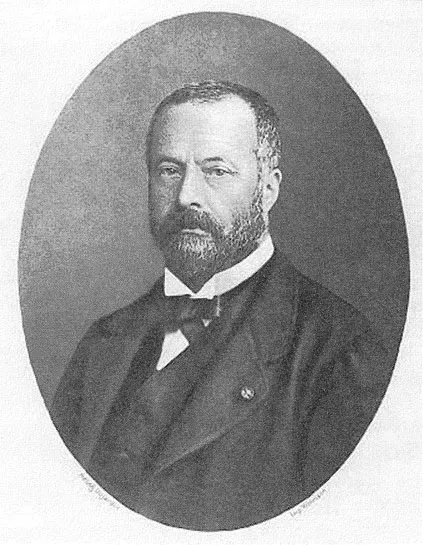
Two years later, Friedrich Wöhler (1800–1882) in Germany produced tiny globules of aluminum by the same method, and was able to demonstrate the metal’s lightweight and malleability. Henri Sainte–Claire Deville (Fig. 1) in France in 1854 showed that cheaper sodium could also be used, and the first commercial plant producing small quantities of aluminum was begun in 1855. Since potassium and sodium were produced electrolytically, the process was expensive.
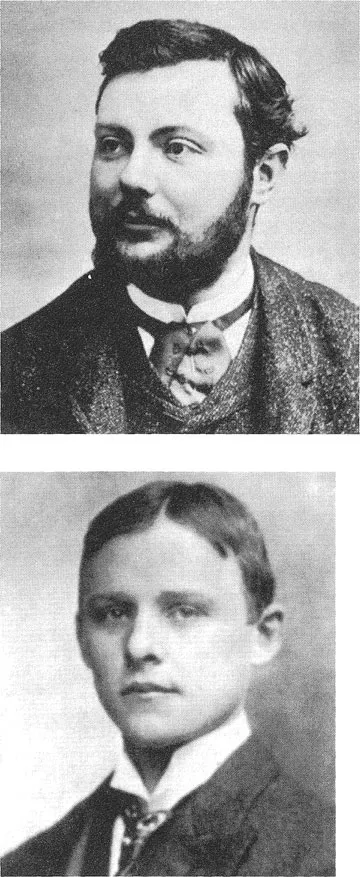
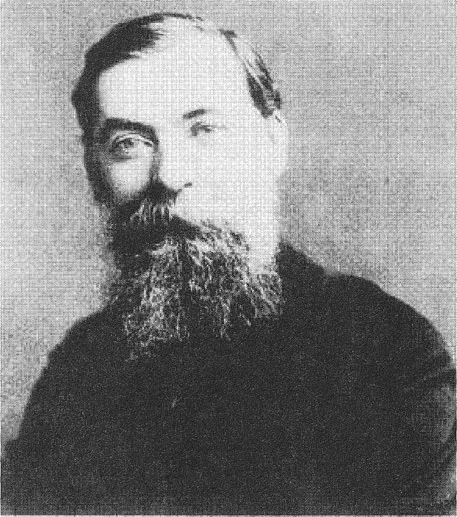
In 1886, following the development of large-scale equipment for generating electrical power, Paul Héroult (Fig. 2a) in France, and Charles Hall (Fig. 2b) in the United States, independently developed a process for the direct electrolytic decomposition of Al2O3. They discovered that when an electric current is passed through molten cryolite containing dissolved Al2O3 at 980–1000°C, molten aluminum is deposited at the cathode and carbon dioxide is liberated at the carbon anode. This discovery, coupled with the process developed by Karl Josef Bayer (Fig. 3) in 1888 for the production of alumina, resulted in the modern process for the production of aluminum.
2 GENERAL REMARKS
Aluminum comprises 8% of the earth’s crust and is, therefore, the most abundant structural metal. Its production since 1965 has surpassed that of copper and now comes next to iron (Fig. 4). Its unit price started very high and today is comparable to copper (Fig. 5). It is competing with copper in the electric industry and as a material of construction. Although the electrical conductivity of aluminum is slightly lower than that of copper, it is still economical to use in preference to copper in power cables because of its lighter weight. As a material of construction, aluminum can be anodized to get a protective oxide film, which can be dyed to give a colorful appearance. For the production of the metal, the following points should be taken into consideration:
• The electrowinning of aluminum from an aqueous solution is not possible because of the strongly negative deposition potential of this metal and the rapid hydrolysis of the aluminum ion.
• Oxides in general have high melting points. Therefore, for the electrowinning of aluminum from its oxide, a suitable low melting point electrolyte must be found in which the oxide is appreciably soluble.
• In the manufacture of aluminum, there are two main stages. The first embraces the production of pure Al2O3 from bauxite, and the second is the reduction of this Al2O3 to the metal in a bath of fused cryolite (Fig. 6).
• In the electrowinning of aluminum from oxide melts, the carbon anodes are quantitatively consumed.
• The production of alumina from bauxite is the largest pressure leaching operation in the world.
• Similarly, the production of aluminum by the molten salt electrolysis of alumina in cryolite is the most important industrial application of molten salt electrowinning and is the largest electrolytic industry in the world.
• The electrolytic step in aluminum production is the most energy intensive operation (Table 1).
• Material handling is a major cost factor in aluminum production. For each ton of aluminum produced, more than 3 tons of materials are transported to and from potlines.
• The electrolytic process produces aluminum with purity as great as 99.5–99.8%. Higher purity (99.99%) is obtained by an electrolytic refining process.
3 RAW MATERIALS
The produc...
Table of contents
- Cover
- Half Title
- Title Page
- Copyright Page
- Preface
- Table of Contents
- Contributors
- 1. Extractive Metallurgy of Aluminum
- 2. Smelting of Aluminum
- 3. Creation of Master Alloys for Aluminum
- 4. Recycling of Aluminum
- 5. Analytical Techniques for Aluminum
- 6. Work Hardening, Recovery, Recrystallization, and Grain Growth
- 7. Modeling of Microstructural Evolution During Processing of Alumium Alloys
- 8. Texture-Property Relationships in Aluminum Alloys: Simulations and Experiments
- 9. Property Prediction
- 10. Mechanical Properties
- 11. Corrosion of Aluminum and Its Alloys
- 12. Surface Chemistry of Adhesion to Aluminum
- 13. Surface Modification
- 14. Aluminum Nitriding
- 15. Friction Stir Welding of Aluminum Alloys
- 16. Aluminum Intermetallics
- 17. Aluminum-Based Metal Matrix Composites
- 18. Environmental and Toxicological Effects
- Appendixes
- Index
Trusted by 375,005 students
Access to over 1.5 million titles for a fair monthly price.
Study more efficiently using our study tools.
Frequently asked questions
Yes, you can cancel anytime from the Subscription tab in your account settings on the Perlego website. Your subscription will stay active until the end of your current billing period. Learn how to cancel your subscription
No, books cannot be downloaded as external files, such as PDFs, for use outside of Perlego. However, you can download books within the Perlego app for offline reading on mobile or tablet. Learn how to download books offline
Perlego offers two plans: Essential and Complete
- Essential is ideal for learners and professionals who enjoy exploring a wide range of subjects. Access the Essential Library with 800,000+ trusted titles and best-sellers across business, personal growth, and the humanities. Includes unlimited reading time and Standard Read Aloud voice.
- Complete: Perfect for advanced learners and researchers needing full, unrestricted access. Unlock 1.5M+ books across hundreds of subjects, including academic and specialized titles. The Complete Plan also includes advanced features like Premium Read Aloud and Research Assistant.
We are an online textbook subscription service, where you can get access to an entire online library for less than the price of a single book per month. With over 1.5 million books across 990+ topics, we’ve got you covered! Learn about our mission
Look out for the read-aloud symbol on your next book to see if you can listen to it. The read-aloud tool reads text aloud for you, highlighting the text as it is being read. You can pause it, speed it up and slow it down. Learn more about Read Aloud
Yes! You can use the Perlego app on both iOS and Android devices to read anytime, anywhere — even offline. Perfect for commutes or when you’re on the go.
Please note we cannot support devices running on iOS 13 and Android 7 or earlier. Learn more about using the app
Please note we cannot support devices running on iOS 13 and Android 7 or earlier. Learn more about using the app
Yes, you can access Handbook of Aluminum by George E. Totten, D. Scott MacKenzie, George E. Totten,D. Scott MacKenzie in PDF and/or ePUB format, as well as other popular books in Technology & Engineering & Industrial Engineering. We have over 1.5 million books available in our catalogue for you to explore.