eBook - ePub
What if it happens in my classroom?
Developing skills for expert behaviour management
- 144 pages
- English
- ePUB (mobile friendly)
- Available on iOS & Android
eBook - ePub
What if it happens in my classroom?
Developing skills for expert behaviour management
About this book
Why can't I stop my students from being noisy as they leave my classroom? What can I do when a student is texting on their phone in my lesson? How can I stop a student from constantly tapping their pen while I am talking?Sound familiar?Chewing gum, dropping litter, swearing, late homework and disruptive behaviour in class are just a few of the issu
Information
CHAPTER 1
MANAGING THE BEHAVIOUR OF STUDENTS AT THE START OF YOUR LESSON
| What do you do when a student… | |
| 1 | Says ‘Your lesson is boring’ |
| 2 | Says ‘I need to go to the toilet’ in the first five minutes |
| 3 | Does not have the right equipment |
| 4 | Is late for your lesson |
| 5 | Gives you a letter excusing them from your lesson |
| 6 | Is leaning out of a window |
| 7 | Is listening to music |
| 8 | Throws items at other students |
| 9 | Does not work with a TA |
| 10 | Does not want to sit in a seating plan |
| 11 | Enters the room noisily |
SCENARIO 1
A bright student says your lesson is boring
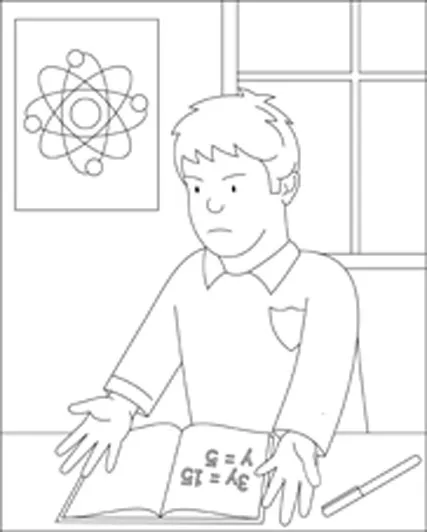
A bright student (A) in your class sits down at the start of your lesson and says loudly ‘This lesson is boring. We always end up doing the same thing. Why are your lessons so boring?’
HOW DO YOU HANDLE THIS SITUATION?
- 1 Ignore student A and carry on with the rest of the lesson and introduce the activities etc. However, student A is likely to repeat their comment at some further point in the lesson as they clearly want to send a message to you and will not stop until you have acknowledged it in some way. You will need to decide when you are going to talk to student A about their attitude and behaviour either at some stage in the lesson or after the lesson. However, you do need to address the situation as the type of attitude shown by student A can quickly spread to other students.
- 2 Make a sarcastic comment such as ‘Thank you for your positive contribution to this lesson [name of student], I see that you are going to be making your usual perceptive comments on my lesson.’ You can then carry on introducing the rest of the activities for the lesson. You will probably have defused the situation for that moment but there is the risk that student A is likely to repeat their comment at another point in the lesson in order to cause maximum impact.
- 3 You can do a combination of (1) and (2) beforehand but you are going to have to talk to student A at some point during the lesson. The student is trying to send you a message and you need to find out what the problem is before student A decides to become too disruptive and lead the way for others to become disruptive too.Hopefully student A has decided to cooperate with the initial activities of the lesson; if they look as if they are not going to do this then tell them that you would like them to complete the activity and you will come and talk to them within the first ten minutes of the lesson. Try and have this initial exchange with student A on a one-to-one at their desk rather than with you saying this from the front of the classroom.Depending on your knowledge of student A, you may wish to have this conversation with them outside the classroom but removing yourself from the room can have a detrimental effect on the learning of the others in the classroom. If you think that the conversation is going to be volatile and possibly negative then you may wish to suggest to student A that you should talk at the end of the lesson.You may find that giving student A a piece of paper at this point and asking them to write down four points that they wish to discuss with you at the end of the lesson can ‘take the wind out of their sails’ slightly. You can tell student A that you would like them to set the agenda for the meeting since they clearly felt strongly enough to announce their feelings at the start of the lesson. Insist that they write four points down – no fewer. Sometimes, the thought of staying behind at the end of the lesson and also being asked to write this number of points down can make the student decide that they don’t wish to meet you. You can then ensure their cooperation in the future by referring to this missed opportunity.However, allowing student A the opportunity to write down their points makes them realise that you are taking it seriously; it will make the student think about their points rather than just use the meeting as an excuse to criticise, in a reactive manner, the activities in the lesson; the other students can see that you are taking it seriously; it shows the other students that there are consequences for uncooperative behaviour in your classroom; you are handling the situation in a non-confrontational manner.Asking the student to write down his/her reasons for finding your lessons boring means that you avoid having to deal with a stroppy student’s emotional response to the content of your lessons. This type of conversation will not be constructive for anyone involved. It may end up denting your confidence whilst making the student feel better that you have been ‘told’, especially if the student has been able to do it in front of their classmates. By asking student A to write down his/her points you are indicating that student A has to take responsibility for his/her behaviour while at the same time giving it importance by putting their points in the written form.You can then control the content, the timing of the conversation and possibly also who attends the conversation. You may be able to suggest to the student that you wish another member of staff to be present in order that the student feels that their points are taken seriously. This gives you support if needed but it also gives the student the opportunity to back down as the student may decide at this stage that their reasons for finding your lessons ‘boring’ are more to do with them than you.Instead, you may think it is appropriate to respond in writing to student A’s points which can be given to them at the start of the next lesson. Again, this is a dialogue about learning which is in a format that a bright student might appreciate, but you should ensure that your Head of Department knows about this and is copied in to any letter that you write. Telling student A that you will respond to their concerns in a written form by next lesson can also help to defuse the immediate situation and ensure their cooperation for the rest of the lesson.However, if you decide to take any of the above actions, you must make it absolutely clear that this is a ‘one time offer’. You are happy to respond to student A’s concerns in a conversation or in a letter but only this once. You cannot create a culture in your classroom of student A making emotive comments about your lessons on a regular basis which you then follow up all the time.
EXTRA NOTE
Bright but disruptive students can be damaging to the learning environment in your classroom so giving them the opportunity to write down their points can help ‘clear the air’ between you. It is then for you to decide if you think the student’s points are valid and how you are going to react to them. You might wish to consult your Head of Department if you think some of the points are out of your control, e.g. lack of access to computers. You may decide to tell the class some of student A’s points and how you are going to make improvements if you think it is appropriate.
It is a feature of successful teaching to receive feedback from students and using the written form to do this tends to ensure that the quality of the feedback you receive is more constructive and you can also control your reaction to the points that are made. If you feel it is appropriate, you might wish to extend the way you have handled student A’s comments to the whole class. Towards the end of a lesson (a different one from the above lesson), ask all the students to give you some written feedback in the form of ‘two positive points and two areas to improve’ about your lessons. You can make this feedback as general or as specific as you wish – for example, students to give you comments about the teaching of a particular unit or types of teaching and learning activities.
However, in all cases, you must be seen to do something with the students’ points. Sometimes, winning round a difficult class can be done by asking students for feedback and then being seen to react to it. For example, students may want more group work in lessons. Make sure that if you include group work in future lessons, you refer back to the feedback from the students and indicate that you are doing it because of what the students said. Some of the points that are made by the students may be impossible for you to implement – be honest about this and explain why you cannot do it. If needed, ask your Head of Department or another senior member of staff to come in and explain why an issue is school policy and not something that you can change.
Once you have built up a culture of constructive feedback in your classroom then a verbal discussion can also be incredibly helpful for you and the students. However, it may be some time before you feel able to do this as you do not want the conversation to turn into a ‘free for all’ about what is wrong with your lessons, the school, other teachers etc. You may find that promoting written feedback gives the students a framework to work within that can be expanded to a verbal discussion at an appropriate time.
SCENARIO 2
A student asks to go to the toilet regularly
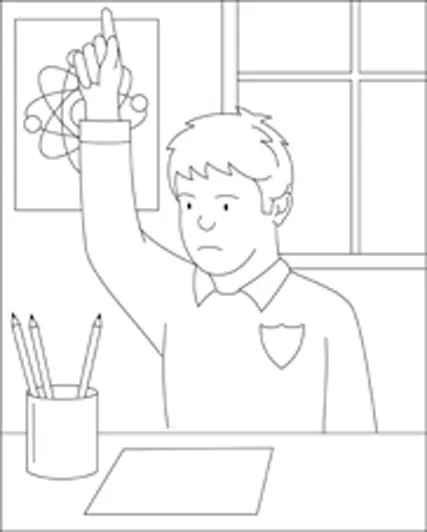
A student puts his/her hand up while you are talking to the rest of the class and in the teaching phase of your lesson and asks to go to the toilet after about ten minutes of the lesson. This is not the first time in one of your lessons that this student has done this and you are beginning to spot a regular pattern of this student asking to leave your lessons to go the toilet.
HOW DO YOU HANDLE THIS SITUATION?
- 1 You can say in front of the whole class ‘[Name of student] really so soon? Did you really forget to go to the toilet before you came to my lesson? No, you cannot go.’The rest of the students might laugh at your comment but also the student is then likely to ensure that the focus of attention stays on them by saying ‘Sir/Miss, I really do need to go. It’s urgent – if you know what I mean. When you gotta go, you gotta go.’ Are you still going to say ‘no’ at this point? If you do, is there a risk that the student might continue to disrupt your teaching by moving around on their chair and saying phrases like ‘Come on Miss/Sir’ etc.? At this point, the student has achieved their desired outcome which was clearly to disrupt your lesson, especially if you think that they timed their initial request to be the most disruptive.Is there a risk that other students might join in the ‘fun’ and start saying ‘Miss/Sir, you’ve got to let him/her go. What happens if there is an accident? You don’t want that to happen, do you?’ The momentum and focus of the lesson is now not only on you but also this student. At some point, you are going to have to do something about it and usually it will be to allow the student to leave to go to the toilet. What does this show about your authority in the classroom? Does it show that if you say ‘no’ but the students persist that you will always say ‘yes’? Is the student likely to leave quietly when you do let them go and are they going to come back in again in a measured and calm manner? If the student has done this for maximum attention, are they likely to leave the room for a short time or just long enough to irritate you and make the point that this whole situation has been conducted at their pace? What are you going to say when this student returns? The other students are now involved and will be watching your reaction carefully. This has now escalated the situation to something that can undermine your authority in front of the students and therefore create a pattern that you may see emerge in future lessons.
- 2 You can say to the student ‘[Name of student] if you still need to go in five minutes, then you can ask me again.’ This has given a solution to the problem and indicated to the student that you are not dealing with the request immediately. You are also suggesting that you do not consider this to be a genuine request which is why they need to ask again for you to take it seriously. This should give you enough time to finish the teaching phase of this part of your lesson and then talk to the student. Talking to the student might be easier than waiting for them to put up their hand again at another disruptive moment and ask the same question. If you let the student go to the toilet at this point of the lesson, you may wish to read (3) and think about whether talking to the student in the corridor on their return will also help to prevent this become a recurring issue.
- 3 As soon as you see the student put their hand up, you can indicate with a hand gesture that you wish for them to put their hand down. You can then go and stand near the student and finish what you are saying to the rest of the class. If the student is still trying to attract your attention while you are standing near to them then you can quickly say ‘[Name of student] I will finish talking in about three minutes and we can talk about whatever it is then.’ Then move away and complete what you are saying as quickly as you can and organise the class with a quick discussion ac...
Table of contents
- Cover
- Title
- Copyright
- Contents
- Acknowledgements
- Introduction
- 1 Managing the behaviour of students at the start of your lesson
- 2 Managing the behaviour of students during the main phase of your lesson
- 3 Managing the behaviour of students as your lesson draws to a close
- 4 Managing the behaviour of students as they leave your classroom
- 5 Managing the behaviour of students in the corridor
- Index
Trusted by 375,005 students
Access to over 1.5 million titles for a fair monthly price.
Study more efficiently using our study tools.
Frequently asked questions
Yes, you can cancel anytime from the Subscription tab in your account settings on the Perlego website. Your subscription will stay active until the end of your current billing period. Learn how to cancel your subscription
No, books cannot be downloaded as external files, such as PDFs, for use outside of Perlego. However, you can download books within the Perlego app for offline reading on mobile or tablet. Learn how to download books offline
Perlego offers two plans: Essential and Complete
- Essential is ideal for learners and professionals who enjoy exploring a wide range of subjects. Access the Essential Library with 800,000+ trusted titles and best-sellers across business, personal growth, and the humanities. Includes unlimited reading time and Standard Read Aloud voice.
- Complete: Perfect for advanced learners and researchers needing full, unrestricted access. Unlock 1.5M+ books across hundreds of subjects, including academic and specialized titles. The Complete Plan also includes advanced features like Premium Read Aloud and Research Assistant.
We are an online textbook subscription service, where you can get access to an entire online library for less than the price of a single book per month. With over 1.5 million books across 990+ topics, we’ve got you covered! Learn about our mission
Look out for the read-aloud symbol on your next book to see if you can listen to it. The read-aloud tool reads text aloud for you, highlighting the text as it is being read. You can pause it, speed it up and slow it down. Learn more about Read Aloud
Yes! You can use the Perlego app on both iOS and Android devices to read anytime, anywhere — even offline. Perfect for commutes or when you’re on the go.
Please note we cannot support devices running on iOS 13 and Android 7 or earlier. Learn more about using the app
Please note we cannot support devices running on iOS 13 and Android 7 or earlier. Learn more about using the app
Yes, you can access What if it happens in my classroom? by Kate Sida-Nicholls in PDF and/or ePUB format, as well as other popular books in Education & Behavioural Management. We have over 1.5 million books available in our catalogue for you to explore.