![]()
1
The Landscape of Travel and Tourism
Introduction
What a marvelous thing it is to be able to embark on a journey elsewhere, on holiday especially, filled with anticipation, enthusiasm, and perhaps trepidation if it’s the first visit to a different land. You are looking forward to encountering a different language, experiences that call on all the senses, whether it’s walking around your dream city (which one is that?) or gazing at the Milky Way from an equatorial ecolodge, encountering hospitality, a gesture of kindness as you walk into a café, exhausted and famished. Then there are all those souvenirs you bring back, that bring recollections of the trip, or perhaps they’re a conversation piece attracting the attention of your dinner guests. You may even be wearing the souvenir—a bracelet, a T-shirt, or sandals bought in a bazaar teeming with color and life. They act as powerful memory receptacles of the place; you might remember the shopkeeper, the artisan, or the bargaining you might have done (hopefully having checked first if it was an acceptable practice there, as one might with tipping). There’s the joy of new conversations, possibly making new friends, and hopefully benefiting local economies rather than exploiting them (buy local!). But it is a chimera, this thing called tourism. It can offer fun, joy, rich existential experiences, ways to contribute constructively to conservation and to individual as well as social well-being. Yet there are also possibilities to wreak thoughtless harm on the destination, the environment, and those who inhabit them.
This chapter looks at the local to global landscape that we will be exploring in future chapters. The “impacts” of tourism are complex, and disguise many issues related to justice and ethics that one might not even think are related to it. To engage in “good tourism” requires, among other things, being able to identify and address injustices that arise in relation to tourism, directly or indirectly, and for this a holistic view as described further below is important. It applies to every approach and form of tourism that aspires toward being responsible, just, and “sustainable.” In fact, an exploration of justice and ethics (the two are not easily separable) in tourism shows that justice, responsibility, and sustainability are close companions, and they are accompanied by several other important principles. The goal in future chapters is to examine a range of justice-related issues, and to identify and explore some principles that can help to redress injustices and enable good actions in tourism. A related goal is to look at some theoretical approaches to justice that can assist with this task. Note, however, that this is not a legalist book—tourism law is not the focus. The journey into justice here is a holistic one to help advance insight and understanding of this subject and its contribution to “good tourism.” While only a few theoretical perspectives related to justice are raised in the limited space of this book, the range of issues and insights that emerge will hopefully tempt you to embark on new journeys to advance research and practice in this important area. But before we get too far, let us take a quick trip around the world and develop a joint understanding of the landscape of travel and tourism that we will be entering in future chapters and how to view tourism’s “impacts.”
Travels in the 21st Century
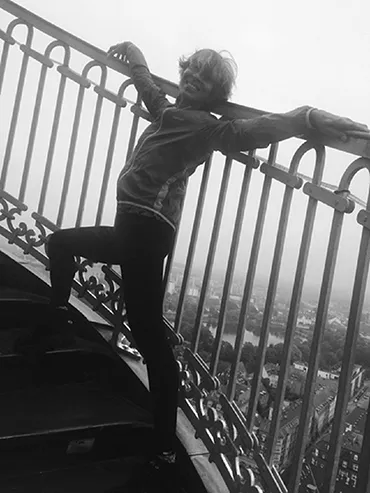
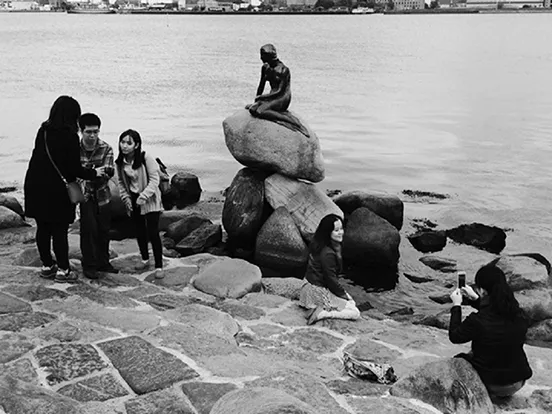
Most of the time, you’re not traveling alone. Accompanying you, aside from your fellow travelers, are many accouterments of modern travel—your cell phone, iPad or other mobile device that enables you to post pictures on Facebook, Instagram, Snapchat, etc., and almost instantaneously hear from friends and family. Use your phone apps to get more information on a museum exhibit, a historic site, an upcoming event, the weather; Siri or Alexa will help direct you if you’re lost or hungry! As the critical geographer David Harvey put it, we live in a world of “time-space compression” (Harvey, 1990). Time has speeded up and space has shrunk under rapid mobilities, images, and news from a globalized media. The global culture industries are gathering and spreading world music, film, and literature. You are traveling through Europe but you are connecting with your friends ten thousand miles away through social media—they love your Instagram post of this beautiful leaning church tower in Copenhagen (see the brave modern tourist-warrior in Photo 1.1). If you’re afraid of heights, you could wander instead to Copenhagen harbor and take a Selfie with the bronze statue of the “Little Mermaid” (Photo 1.2) to post on your favorite social media site… but, wait a minute, do you actually know the story of this iconic little mermaid from Hans Christian Andersen’s fairy tale? How many times do you think she has been vandalized?1
PHOTO 1.1 Tourist posing on the golden staircase of the baroque Church of Our Savior in Copenhagen, Denmark. Her tourist friend from Australia posted a similar photo of herself and the spectacular setting on Instagram, and a dozen friends responded within minutes.
Photo credit: Deni Valentina
PHOTO 1.2 The Little Mermaid’s wistful pose under the tourist gaze in Copenhagen harbor
Photo credit: T. Jamal
Traveling offers marvelous opportunities to enjoy, learn, relax, and connect with these “elsewhere” places. Virtual tourism and augmented reality experiences, “Smart Tourism” or “Smart Hospitality,” are opening new worlds and new tastes—your GPS and Google Maps will guide you through a maze of streets and alleys to locate restaurants to match your foodie tastes. Actually, Franklin and Crang (2001) argue in the first edition of the journal Tourist Studies that we can also have tourist-like experiences without stepping outside our increasingly cosmopolitan home world—we may be fortunate and live in an urban city where foods from around the world can be found, interior decorations from indigenous to modern can be easily sourced, diverse cultural festivals, world music, and sporting events fill local arenas, and so on.
Of course, along with all the technological advances has come the ability for increased surveillance of human movements, consumer behavior and activities, e.g., through monitoring your social media activities, online purchases, and web searches. Much is known of your travel choices and consumption profile, and entertainment companies like Disney are experts at designing experiences to match your profile in order to offer a good (marketers would say satisfactory) leisure experience…and to shape your understanding, behavior, and preferences with well-designed interpretive materials.2 New innovations and mobilities of work and travel, however, bring increased governance challenges in both virtual and physical spaces. Many who labor in the sharing economy (e.g., Airbnb) and on-demand platforms like Uber, for instance, are in those in-between spaces of governance where contentious issues of workers’ rights and sexual abuse have arisen due to lack of clear oversight and regulation (see, for example, Duan, 2018; Schmitt, 2017). Is the new collaborative economy (sharing/on-demand/gig economy) a less than fair “taking economy”? A closer look at this mobile landscape is merited to identify the opportunities and challenges facing travel and tourism in the 21st century.
Growth, Mobilities, and Action Agendas
The World Travel and Tourism Council (WTTC) is a global organization engaged in awareness raising and advocacy for tourism. It points out that tourism is a multi-billion dollar industry, employing over 100 million people directly, and generating about 10% of global GDP (https://www.wttc.org/mission/). In addition to facilitating travel across borders and seeking to ensure that the “growth of our sector is managed responsibly, finding the balance between people, planet, and profits,” it “informs governments about ways to implement policies that ensure the business environment is conducive to the growth of Travel & Tourism” (https://www.wttc.org/mission/). Note the discourse of “growth” in the WTTC’s statements above and that of another supranational organization, the United Nations World Tourism Organization (UNWTO). The UNWTO confirms that international tourism demand and growth was robust in 2016 despite various challenges. International tourist arrivals grew by 3.9% to 1,235 million, according to the latest UNWTO World Tourism Barometer. It was the seventh consecutive year of sustained growth since the 2009 global economic and financial crisis. At least 300 million more international tourists traveled the world in 2016 compared to the pre-crisis record in 2008 (international tourism receipts grew at a similar pace in this time period), and 46 million more tourists (overnight visitors) traveled internationally in 2016 compared to 2015 (UNWTO, 2017).
“Tourism has shown extraordinary strength and resilience in recent years, despite many challenges, particularly those related to safety and security. Yet, international travel continues to grow strongly and contribute to job creation and the wellbeing of communities around the world,” said UNWTO Secretary-General Taleb Rifai (UNWTO, 2017).
Take a look at how this long-standing discourse of “growth” has been experienced in popular urban destinations like Amsterdam. Case 1.1 illustrates some mass tourism issues that you might find in a tourism impacts textbook, but it is a current, live challenge for the city and its residents.
Case 1.1 Amsterdam’s Burgeoning Tourism Growth
Tazim Jamal
As part of their education, young wealthy Europeans in the 18th century would often embark on a “Grand Tour” of great cultural cities in Europe, like Venice, Rome, Paris, and London, to gain cultural experiences and learning. Today, these cities are inundated with international and regional visitors, causing immense stress on infrastructure and local residents. Some like Amsterdam are experiencing even higher inflows due to incoming business expatriate work. The city recently won a contest to be the new home of the European Medical Agency (EMA), which was seeking to relocate from London after Britain leaves the EU. While Dutch politicians celebrated this Brexit gift, for it would bring economic gain from 900 new white-collar workers, local residents felt it just added more stress. These high-income expats were just another group of strangers who would drive up property prices and rent (Sterling, 2017).
The city of 850,000 residents and its historic 17th-century city center are already stressed by high numbers of visitors and remarkably inappropriate behaviors. One autumn weekend (in 2017), resident Els Iping discovered a bunch of drunk male tourists tearing up the shrub in front of her house, which didn’t surprise her: “These kind of things happen all the time,” she says matter-of-factly. “It’s worse when they throw up in your plant boxes, because you can’t rinse it away—you have to scoop it out” (van der Zee, 2017). Over the past ten years, visitation has grown from 11 million in 2005 to almost 18 million in 2016, and at the current rate of growth the city is expected to attract 23 million by 2030. Iping’s picturesque downtown neighborhood has changed, with screaming, drunk visitors starting to revel on Thursday into the weekend, leaving behind an immense amount of rubbish, she said. Meanwhile, the small businesses she knew, the chemist, fishmonger, hairdresser, even the shoe shop, had disappeared, replaced by tourist-oriented services, including ice cream shops and cannabis seed vendors (van der Zee, 2017).
Bern Nap, a 59-year-old French teacher and writer, also sees the loss of neighborhood identity, social cohesion and overall deterioration in his part of town, near the red-light district where he has lived for more than 40 years. Many tourists indulged in wild partying and behaviors they would not exhibit at home, he felt, in part because Amsterdam had always portrayed the image that everything was possible there. As he said: “I have nothing against guided tours through my neighborhood. But it’s a different thing when 40 people block the entrance to your house while listening to a guide who’s giving a loud, 20-minute performance that looks more like a standup comedy act than a guided tour” (van der Zee, 2017). Much of the growth stemmed from the money the city pumped into tourism after the 2008 financial crisis, in order to help the economy. Sebastiaan Meijer, the council’s spokesperson for economic affairs, said: “For years we have actively stimulated property developers to build hotels in the city, and our marketing organization travelled around the world promoting Amsterdam as a tourist destination.” Their marketing policy then was targeted to make Amsterdam a visitation choice, but now they want to convey a new message: “‘come to Amsterdam, but please behave’” (van der Zee, 2017).
Critics argue that the economic benefits of jobs and revenue tend to mostly benefit large companies and do not match the social and financial costs; estimates indicate tourism costs the city €71m a year, which is well above the €64m raised in tourism taxes (Dutch News, 2017). City officials are working hard to manage the effects. The beer bicycle (a vehicle serving beer to about a dozen tourists) has been banned (aided by local residents’ efforts), new hotel construction is being curbed in the city center, tourist taxes are being raised. The city is also negotiating with Airbnb to address a range of issues of concern to local residents. Airbnb is the largest among short-stay rental platforms; around 22,000 rooms and flats are offered for rent annually, and one in six homeowners rent out a room or flat on Airbnb in the more popular neighborhoods (van der Zee, 2016).
Local movements have also arisen to counter mass tourism’s problems. Resident Sito Veracruz, an urban planner concerned about the distortions to rent and real estate prices (already very high in the city) caused by Airbnb, is attempting to set up an alternative short-stay platform, FairBnB, where hosts are registered with the council and more socially responsible. “I am talking about a platform that really complies with the principles of a fair, non-extractive and col...