International Law: Our Common Future offers a dynamic approach to the study of international law that actively engages students in ways that more traditional textbooks do not. One way this is achieved is by focusing on recent events, including international terrorism, extraordinary rendition, the legality of drone strikes, environmental devastation, and human rights. Another is by having students wrestle with actual court rulings rather than being given short summaries of these decisions. These cases, which are from a wide array of international, regional, and domestic tribunals, are followed by a series of provocative and challenging questions and prompts that will naturally lead to classroom discussion and debate.
The book recognizes the importance of visual media in terms of student learning. In addition to photographs of individuals and events that feature prominently in the development of international law, each chapter has sections entitled "International Law at the Movies" which highlight feature films and documentaries that explore the topic at hand.
What students will quickly come to realize is that international law is not a distant and abstract entity, but rather, is intimately connected to various aspects of their daily lives. The book shows some of the remarkable changes in international law, most notably the declining importance of the role of the state. As a final point, the book is written in an engaging, almost conversational, style that is accessible to students in a wide array of academic disciplines.
FEATURES OF THIS INNOVATIVE TEXT
This book is specifically designed to appeal to student interest, to promote active learning, and to integrate carefully edited court cases with explanatory text. Here are just a few of the features devoted to achieving these goals:
Boxed text highlighting current events
"International Law at the Movies" boxes
Photos illustrating key moments and figures in international law
Cases carefully edited and set off from the main text
Notes and Comments following court case excerpts
References for each chapter divided into key types of sources including Books and Articles, Reports, Agreements, and Cases (international, regional, and domestic tribunals)
Glossary of key terms putting terms in context with events
Filmography
Table of Cases with links to original sources
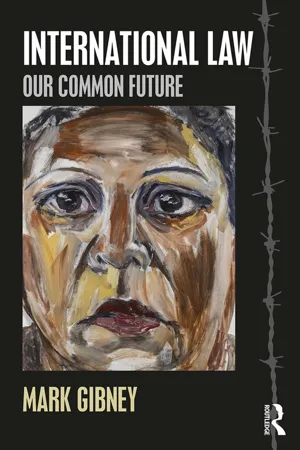
A NOTE ABOUT THE COVER ART
Title: "María, inside since April 14, 2014" Artist: Ben Betsalel
The cover image is from a prison project in Colombia, "Human Beings Inside and Outside," done in collaboration with the International Committee of the Red Cross (ICRC).
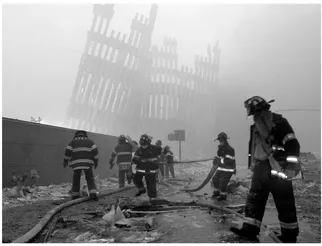
On September 11, 2001, a group of al-Qaeda hijackers commandeered four commercial airplanes departing from various cities on the East Coast of the United States. Two of these planes were flown into the World Trade Center buildings in New York City, causing these two structures to collapse and bringing about the deaths of more than 3,000 people. Another plane was flown into the Pentagon building outside of Washington D.C., resulting in massive damage to the structure and the additional loss of life, while the fourth plane, which was believed to be heading toward the White House, crashed in a field in western Pennsylvania after passengers fought against the hijackers, causing it to crash.
Domestically, the U.S. Congress gave the president an enormous amount of authority to fight the “war on terrorism,” as the Bush administration termed it, by passing the Authorization for the Use of Military Force, which the administration interpreted as authority to combat terrorism whenever and wherever the threat arose.
The administration moved equally aggressively in the international arena. On September 21, 2001, in a nationally televised address before Congress, Bush demanded that the Taliban government in Afghanistan immediately and unconditionally surrender any and all al-Qaeda members on its soil, dismantle al-Qaeda training camps, and give the United States unfettered access to suspected al-Qaeda facilities. When this request was rebuffed, on October 7 the United States initiated a military campaign against Afghanistan, aided by Afghan forces of the Northern Alliance, to depose the Taliban-led government and root out al-Qaeda. On March 19, 2003, the Bush administration greatly expanded the war on terrorism by leading an invasion of Iraq based on the claim that the Saddam Hussein regime possessed weapons of mass destruction and was in league with al-Qaeda forces.
The events of 9/11 were certainly not the first acts of “international terrorism.” However, that day the world entered into a new age – the age of terrorism – and as you well know, since then there have been repeated terrorist attacks in locales all over the globe. In 2017 alone, and merely cataloging terrorist attacks in major Western cities, this included attacks in: New York City (December 11 and October 31), Barcelona (August 17), London (June 3), and Stockholm (April 7), as well as the suicide bomber who killed 22 people at an Ariana Grande concert in Manchester (May 22).
As noted in the Introduction, international law has traditionally only governed relations among and between states. Yet, the most visible and arguably one of the most pressing security issues of our age involves a myriad of non-state actors residing in a number of countries that share a goal of disrupting and perhaps even dismantling the international order.
Box 1.1:Terrorism Under International Law
Although the term “terrorism” is used all the time, it might be surprising to learn that there is no official definition of terrorism under international law. One reason for this relates to the old adage that “one person’s terrorist is another person’s freedom fighter.” One such example of this is the African National Congress in South Africa, which was considered by many as a “terrorist” organization after the ANC decided to take up arms against the apartheid regime. Similarly, while the Israeli government has long considered Hamas to be a terrorist organization, in their effort to remove the British from Palestine, Israeli “freedom fighters” carried out a number of attacks that by today’s standards would be considered as “terrorism.”
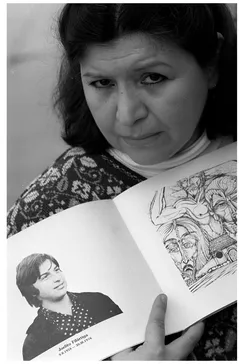
In this chapter our focus is on efforts to address international terrorism through the law, either by holding “terrorists” themselves responsible, or more likely, states that provide “aid and assistance” to terrorists or terrorist organizations. Our first case, Tel-Oren v. Libyan Arab Republic (1984), was handed down a few years after the Second Circuit Court of Appeal’s landmark ruling in Filartiga v. Pena-Irala (1980). In Filartiga, the son of a political dissident in Paraguay was tortured and killed by police forces working under the direction of police captain Pena-Irala. After the Filartiga family learned of Pena-Irala’s whereabouts in the United States, they filed a civil action against him on the basis of the Alien Tort Statute (ATS) from the Judiciary Act of 1789, which reads in its entirety: “The district courts shall have original jurisdiction of any civil action by an alien for a tort only, committed in violation of the law of nations or a treaty of the United States.” In a landmark ruling, the Second Circuit held that the Filartiga family could proceed with its suit. Pena-Irala then returned to Paraguay, while the Filartiga family was awarded a default judgment of $10 million.
In Tel-Oren, victims of a terrorist attack carried out in Israel sought to invoke the ATS against a group of non-state actors, including the Palestinian Liberation Organization. As you will see, all three circuit judges concur with the ruling of the district court that the suit should be dismissed. However, their reasoning differs sharply. What should also be of great interest are the diverging views regarding international law itself.
Tel-Oren v. Libyan Arab Republic, 726 F.2d 774 (D.C. Cir. 1984)
BEFORE EDWARDS AND BORK, CIRCUIT JUDGES, AND ROBB, SENIOR CIRCUIT JUDGE PER CURIAM
Plaintiffs in this action, mostly Israeli citizens, are survivors and representatives of persons murdered in an armed attack on a civilian bus in Israel in March 1978. They filed suit for compensatory and punitive damages in the District Court, naming as defendants the Libyan Arab Republic, the Palestine Liberation Organization, the Palestine Information Office, the National Association of Arab Americans, and the Palestine Congress of North America.
In their complaint, plaintiffs alleged that defendants were responsible for multiple tortious acts in violation of the law of nations, treaties of the United States, and criminal laws of the United States, as well as the common law. For purposes of our jurisdictional analysis, we assume plaintiffs’ allegations to be true. The District Court dismissed the action both for lack of subject matter jurisdiction and as barred by the applicable statute of limitations. We affirm the dismissal of this action. Set out below are separate concurring statements of Judge Edwards, Judge Bork, and Senior Judge Robb, indicating different reasons for affirming the result reached by the District Court.
HARRY T. EDWARDS, CIRCUIT JUDGE, CONCURRING
This case deals with an area of the law that cries out for clarification by the Supreme Court. We confront at every turn broad and novel questions about the definition and application of the “law of nations.” As is obvious from the laborious efforts of opinion writing, the questions posed defy easy answers.
At issue in this case is an aged but little-noticed provision of the First Judiciary Act of 1789, which gives federal courts jurisdiction over a minute class of cases implicating the law of nations. Thus, it is not startling that the central controversy of this action has now produced divided opinions between and within the circuits. The opinions of Judge Bork and Judge Robb are fundamentally at odds with the decision of the Second Circuit in Filartiga v. Pena-Irala, which, to my mind, is more faithful to the pertinent statutory language and to existing precedent. Although I cannot concur in the opinions of my colleagues, I do agree with them that the decision of the District Court should be affirmed. I write separately to underscore the rationale for my decision; I do this because, as will be apparent, there are sharp differences of viewpoint among the judges who have grappled with these cases over the meaning and application of 28 U.S.C. § 1350 (1976).
On March 11, 1978, thirteen heavily armed members of the Palestine Liberation Organization (hereinafter “the PLO”) turned a day trip into a nightmare for 121 civilian men, women and children. The PLO terrorists landed by boat in Israel and set out on a barbaric rampage along the main highway between Haifa and Tel Aviv. They seized a civilian bus, a taxi, a passing car, and later a second civilian bus. They took the passengers hostage. They tortured them, shot them, wounded them and murdered them. Before the Israeli police could stop the massacre, 22 adults and 12 children were killed, and 73 adults and 14 children were seriously wounded. Most of the victims were Israeli citizens; a few were American and Dutch citizens. They turned to our courts for legal redress and brought this action. The District Court dismissed the action for lack of subject matter jurisdiction. The critical issue on appeal is whether plaintiffs alleged sufficient facts to meet the jurisdictional elements of those sections.
My inquiry into the sufficiency of plaintiffs’ allegations is guided by the Second Circuit’s decision in Filartiga. For reasons set out below, I adhere to the legal principles established in Filartiga but find that factual distinctions preclude reliance on that case to find subject matter jurisdiction in the matter now before us. Specifically, I do not believe the law of nations imposes the same responsibility or liability on non-state actors, such as the PLO, as it does on states and persons acting under color of state law. Absent direction from the Supreme Court on the proper scope of the obscure section 1350, I am therefore not prepared to extend Filartiga’s construction of section 1350 to encompass this case.
Section 1350 provides that a district court shall have original jurisdiction over civil actions “by an alien for a tort only, committed in violation of the law of nations or a treaty of the United States.” In the absence of an allegation of a treaty violation, the critical issue in Filartiga was whether torture constitutes a violation of the law of nations. In determining that it does, Judge Kaufman reviewed the accepted sources of international law – the usage of nations, judicial opinions and the works of jurists – and concluded that official torture of both aliens and citizens is prohibited by the law of nations. That section 1350 was enacted in the Judiciary Act of 1789, when world perceptions both of the role of international law and its substantive provisions differed considerably from perceptions of today, did not preclude this result. Judge Kaufman took guidance from The Paquete Habana, (holding that the traditional prohibition against seizure of an enemy’s coastal fishing vessels had ripened from a standard of comity into a settled rule of international law), and observed that “courts must interpret international law not as it was in 1789, but as it has evolved and exists among the nations of the world today.”
The opinion thus established several propositions. First, the “law of nations” is not stagnant and should be construed as it exists today among the nations of the world. Second, one source of that law is the customs and usages of civilized nations, as articulated by jurists and commentators. Third, international law today places limits on a state’s power to torture persons held in custody, and confers “fundamental rights upon all people” to be free from torture. Fourth, section 1350 opens the federal courts for adjudication of the rights already recognized by international law.
Because I am substantially in accord with these four propositions, and Judge Bork and Judge Robb apparently are not, I am unable to join in their opinions. First, and most fundamentally, I diverge from the views of my colleague Judge Bork regarding the necessary elements of this court’s jurisdiction. The Second Circuit did not require plaintiffs to point to a specific right to sue under the law of nations in order to establish jurisdiction under section 1350; rather, the Second Circuit required only a showing that the defendant’s actions violated the substantive law of nations. In contrast, Judge Bork would deny jurisdiction to any plaintiff – presumably including those in Filartiga – who could not allege a specific right to sue apart from the language of section 1350 itself.
Judge Bork’s suggestion that section 1350 requires plaintiffs to allege a right to sue granted by the law of nations is seriously flawed. Initially, it assumes that the “law of nations” could provide a specific, articulated right to sue in a form other than a treaty or executive agreement. Yet no evidence is offered to indicate that jurists or commentators have ever looked to the law of nations to determine when a wrongful deed is actionable. This absence of evidence is not surprising, because it is clear that “international law itself, finally, does not require any particular reaction to violations of law. . . . Whether and how the United States wished to react to such violations are domestic questions. . . . ”
In consequence, to require international accord on a right to sue, when in fact the law of nations relegates decisions on such questions to the states themselves, would be to effectively nullify the “law of nations” portion of section 1350. There is a fundamental principle of statutory construction that a statute should not be construed so as to render any part of it “inoperative or superfluous, void or insignificant,” and there exists a presumption against a construction yielding that result. Yet, the construction offered by Judge Bork would have the effect of voiding a significant segment of section 1350.
Judge Bork argues that the statute retains meaning under his interpretation because he recognizes that the drafters of section 1350 perceived of certain offenses against the law of nations. He enumerates three offenses recognized by Blackstone – violation of safe-conducts, infringement of the rights of ambassadors, and piracy – and insists that these were the offenses that the drafters of section 1350 had in mind. This explanation is specious, not responsive. Judge Bork does nothing more than concede that, in 1789, the law of nations clause covered three substantive offenses. However, under his construction of section 1350, this concession is meaningless unless it is also shown that the law of nations created a private right of action to avenge the three law of nations violations to which Blackstone averted – a showing that would require considerable skill since the law of nations simply does not create rights to sue. Indeed, in the very passage quoted by Judge Bork, Blackstone makes clear that it was the municipal laws of England, not the law of nations, that made the cited crimes offenses.
While I e...
Table of contents
Cover
Half Title
Title
Copyright
Contents
Acknowledgments
Preface
Introduction
Part I International Terrorism
Part II Warfare
Part III Accountability, Responsibility, and Immunity
Part IV Human Rights
Glossary
Table of Cases
Filmography
Index
Trusted by 375,005 students
Access to over 1.5 million titles for a fair monthly price.
Study more efficiently using our study tools.
Frequently asked questions
Yes, you can cancel anytime from the Subscription tab in your account settings on the Perlego website. Your subscription will stay active until the end of your current billing period. Learn how to cancel your subscription
No, books cannot be downloaded as external files, such as PDFs, for use outside of Perlego. However, you can download books within the Perlego app for offline reading on mobile or tablet. Learn how to download books offline
Perlego offers two plans: Essential and Complete
Essential is ideal for learners and professionals who enjoy exploring a wide range of subjects. Access the Essential Library with 800,000+ trusted titles and best-sellers across business, personal growth, and the humanities. Includes unlimited reading time and Standard Read Aloud voice.
Complete: Perfect for advanced learners and researchers needing full, unrestricted access. Unlock 1.5M+ books across hundreds of subjects, including academic and specialized titles. The Complete Plan also includes advanced features like Premium Read Aloud and Research Assistant.
Both plans are available with monthly, semester, or annual billing cycles.
We are an online textbook subscription service, where you can get access to an entire online library for less than the price of a single book per month. With over 1.5 million books across 990+ topics, we’ve got you covered! Learn about our mission
Look out for the read-aloud symbol on your next book to see if you can listen to it. The read-aloud tool reads text aloud for you, highlighting the text as it is being read. You can pause it, speed it up and slow it down. Learn more about Read Aloud
Yes! You can use the Perlego app on both iOS and Android devices to read anytime, anywhere — even offline. Perfect for commutes or when you’re on the go. Please note we cannot support devices running on iOS 13 and Android 7 or earlier. Learn more about using the app
Yes, you can access International Law by Mark Gibney in PDF and/or ePUB format, as well as other popular books in Law & International Law. We have over 1.5 million books available in our catalogue for you to explore.