Successful travel photographers have to wear more hats than perhaps any other photographic genre. In a single travel photo essay they are at times architectural photographers, food photographers, music photographers, car photographers – the list encompassing every possible type of photography.
The Travel Photo Essay teaches the reader the necessary techniques to create cohesive professional travel stories, using images that go far beyond "I was here" photographs. From the establishing shots to the equipment list, this book discusses the techniques and concepts necessary to create professional looking images in various genres, including portrait photography, landscape photography, wildlife photography, food photography, documentary photography, sports photography and more. Covering issues such as lighting, writing, workflow and the travel photography market, award-winning photographer and writer Mark Edward Harris explains how to marry photos with words, telling a cohesive story through a series of photographs.
Creating a series of pictures that tell a story has been the mainstay of travel magazines since their inception. Travel editors have a mantra that must be taken to heart before approaching a publication with an idea: “A location is not a story.” For the most part this is true except when locations are so off the beaten path that they warrant a wider focus. For example, Eve Arnold’s monumental book In China, published in 1980, came at a time when few Western photographers were allowed into the Middle Kingdom. She told me in an interview that the success of that book compelled her to take on the United States with her camera. The result was In America, an interesting photo book but one she felt in the end was too broad in scope.
My magazine features, books, and exhibitions on North Korea and Iran have been successful because they are relatively unexplored with a camera. So unless you are going to a country that is far removed from the main-stream, you need to get more specific to create an interesting, photo-driven story.
The Chinese philosopher Laozi wrote –
– which loosely translates as “The journey of a thousand ri begins with a single step.” Though we now use kilometers and miles, the words are just as true today as when they were written 2500 years ago. But which direction to go and having an idea of what to do when you get there are crucial to the success of the endeavor. Developing a basic “shot list” (discussed in Chapter 7) is a good starting point. Having this framework will open you up to many unforeseen opportunities.
While I do prepare for an assignment, I also go into it with an “empty cup,” so to speak. After all, nothing more can be poured into a full cup and one of the great things about travel is that sense of discovery. As the thirteenth century Persian poet Rumi wrote: “As you start to walk on the way, the way appears.”
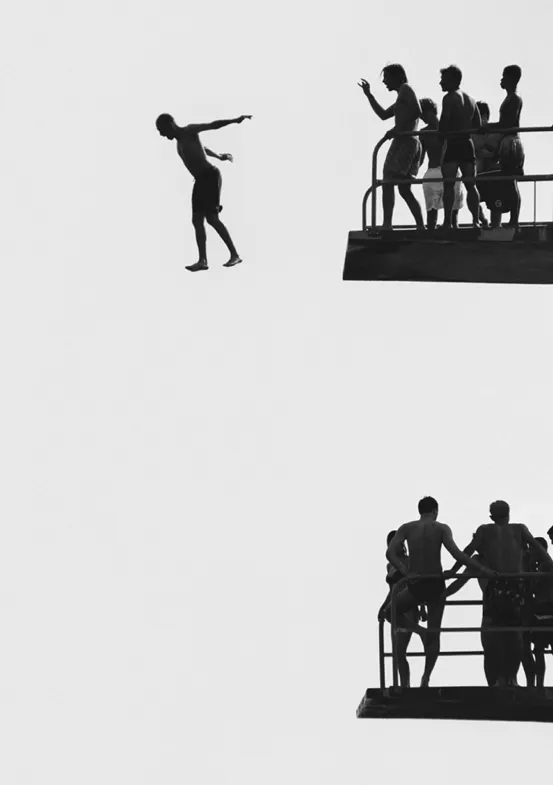
If we are so focused on the final destination we might miss great photography opportunities on the journey. While on a half-day stopover in Geneva on my way to an assignment in Lebanon, I strolled around the city’s famous lake and captured one of the most successful fine art/stock photography images of my career: a silhouette of a man jumping off a high diving platform, seemingly suspended in midair.
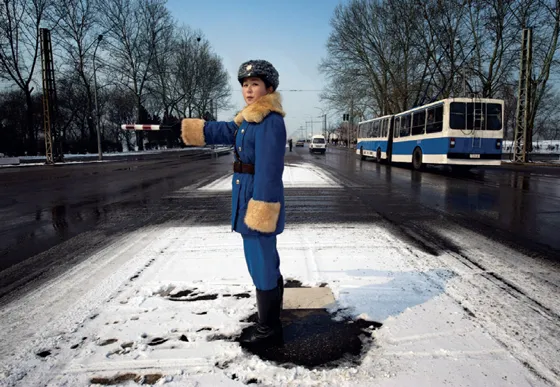
Figure 1.1 A traffic officer in Pyongyang, North Korea photographed with a 20mm f/2.8 lens at 1/250th of a second shutter speed, f/13, and an off-camera Nikon Speedlight held to the camera’s left with a 1/4 CTO (color temperature orange) gel.
So what types of stories will get a travel editor’s attention or will help you get the most out of your personal journeys? Get inside your location, find human-interest story angles, try and peg your photo essay to the anniversary of a special event. Look for stories that give both you and the viewer an inside look into a culture by focusing on a person, a ritual, a unique aspect of history. The list is endless. The best photo essays are often the ones that come from a personal interest, so search “inside” before you go looking outside for ideas.
A dozen travel journalists can be on the same press trip to the same city and produce 12 diverse stories. Each will have their unique “angle.” The top travel journalists tend to have a niche or focus such as food, music, history, sports, adventure tourism, family travel, or nightlife. What’s yours? Take a good look. Annie Leibovitz told me while discussing concept development that “sometimes photographers overlook the thing that is right in front of them, it just seems too obvious.” Your own hometown will undoubtedly have some hidden and not so hidden treasures that could yield great travel photo essays. After all, where you live represents a travel destination to someone else. You don’t always have to get on a plane or train or even in a car to generate a dynamic photo essay.
Figure 1.2 A high diving platform on Lake Geneva, Switzerland.
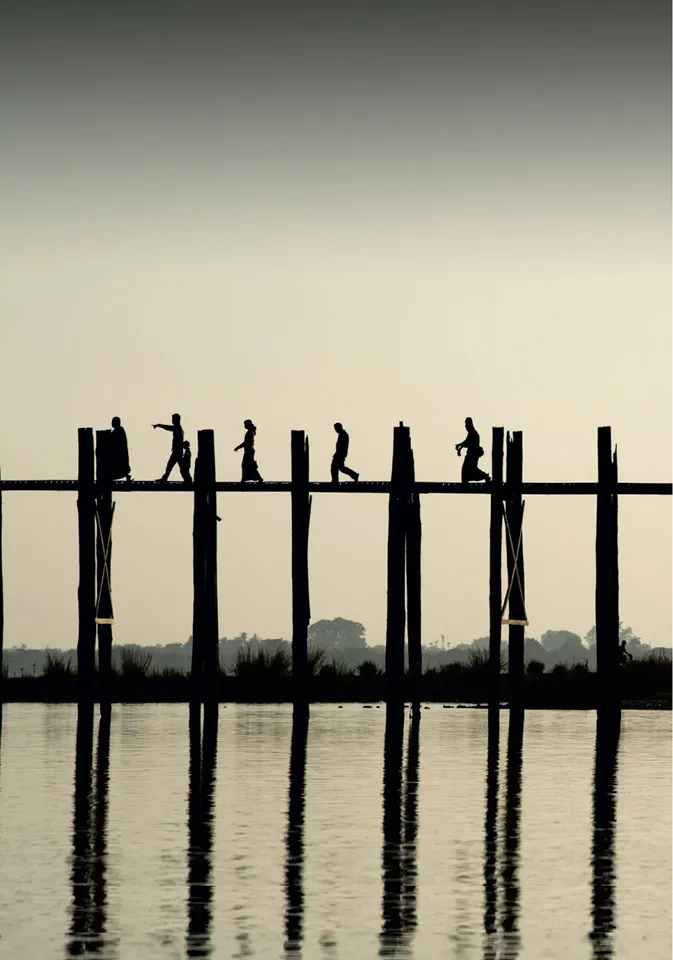
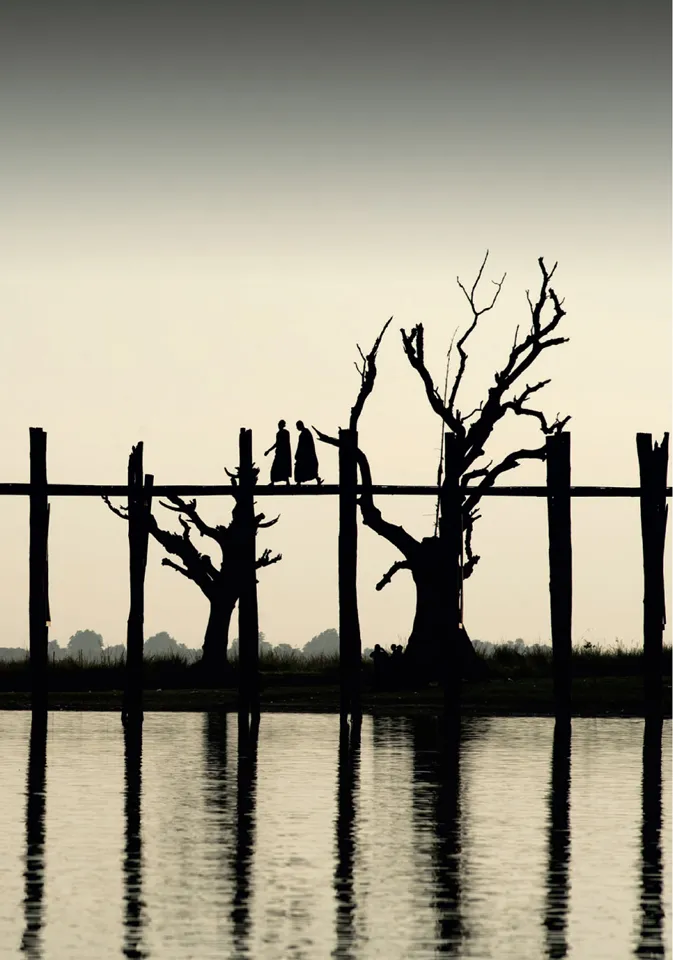
Figure 1.3 The U Bein Bridge in Mandalay, Myanmar photographed with a 180mm f/2.8 on a Nikon D3 at 1/640th of a second, f/9, ISO 200.
My interests in history and geopolitics have lead me on a path to examine why things are the way they are in the world, not just documenting the present but trying to infuse my stories with an awareness of the past. I’ve found that history is one of the few subjects that keeps me grounded in the present.
At its most basic, a travel photo essay is a series of images that make up a story. Like any good book it should have a strong beginning, middle, and end. Like chapters in a book, the images should relate to each other as you move through the story and come to a successful conclusion.
DEVELOPING THE IDEA
How do professional travel writers and photographers come up with story ideas? Many magazines work with editorial calendars. In the case of travel publications, they might have issues focused on South America, Asia, Europe, Hawaii, the Caribbean, sea and river cruises and so on. This gives their sales teams a roadmap to seek out potential advertisers. It is then the job of the editorial staff to create content. What’s new or “hot” now in South America? It’s important to understand that magazine staffs are typically divided in two – an editorial side and an advertising side. If they weren’t, the end product would be a publication full of “advertorials” – stories that are, in effect, long-form advertisements. This could jeopardize the editorial integrity of the magazine and potentially mislead readers. The whole process is a balancing act which the best magazines do well, harmonizing advertising dollars – the life source of a publication – with strong editorial content.
Once editorial calendars have been established, the magazine will have staffers and freelance writers generate story ideas which, if accepted, will then need to be illustrated by photographers. There is also room in most travel publications for news items and other content that is not related to the overall editorial calendar that still requires photographic coverage. Some writers illustrate their own stories, especially for smaller publications with limited budgets. The advantages of being a self-contained writer/ photographer team or at least being handy with a pen will be discussed in Chapter 9. If a professional photographer is hired, they will either accompany the writer or travel to the same locations with a close to final version of the text as well as a recommended shot list to illustrate the story. Publications can also pick up stock imagery (discussed in Chapter 11) to illustrate stories.
Public relations companies are constantly sending out press releases about what their clients are doing that they believe or that they want us to believe is new and exciting. These are often referred to as “story starters.” While some of these are just putting a new spin on an existing product, some are newsworthy and are great leads for potential stories. A case in point is when Mountain Lodges of Peru opened up a luxury alternative to the Inca Trail hike. This pitch led to my taking the story idea which I gave the working title “In the Footsteps of the Inca” to the editors of the travel trade publication, Travel Weekly, which resulted in a feature renamed, “Inca Empire, Apart from the Masses.” While I was in Peru I searched out a second story angle and generated a feature on the country’s historic capital, “Preserving Lima.”
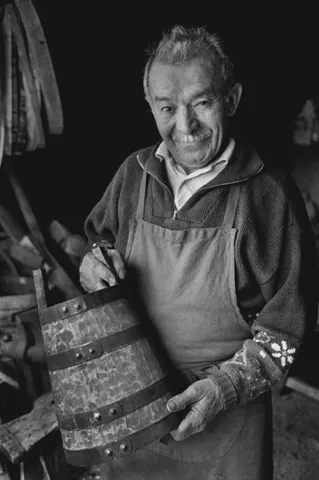
Figure 1.4 An environmental portrait of a cooper at Chateau Mouton Rothschild in Bordeaux, France.
Since non-professionals do not have editorial staffs to develop and flush out story concepts, it might be useful to kick around some ideas with your travel companion for an upcoming trip. It’s not dissimilar to the way travel writers and photographers work with their editors.
FREELANCE PITCHING
Let’s say you’re planning to take a trip to Europe and would like to generate some magazine stories. You would never dare contact a travel editor and say, “I’m going to Europe and would like to do a story for you.” They would probably (or at least they should) hang up before you complete the sentence. “I’m going to France …” Still too broad. Go deeper. Get specific. An obvious hook for France could be its incredible wine country. That of course can be broken down further by region – Burgundy, Bordeaux, and so on. River cruises such as those offered by Uniworld and Viking have great itineraries plying the waters of these historic wine regions and are potential angles for stories. An angle within or through those regions could be on the tradition and craftsmanship of French oak barrel coopers. The accompanying text could help the reader understand how oak affects the flavor of wine.
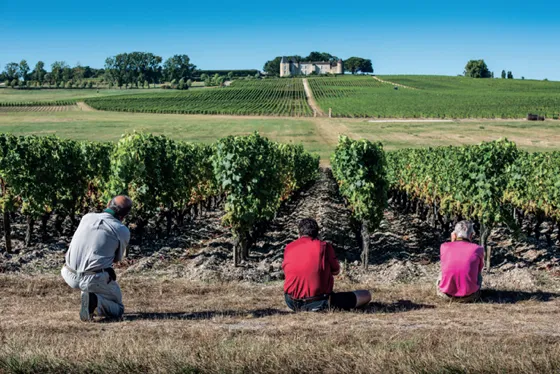
Figure 1.5 Students in my Uniworld Floating Photo Workshop seek out the perfect angle in a Bordeaux vineyard.
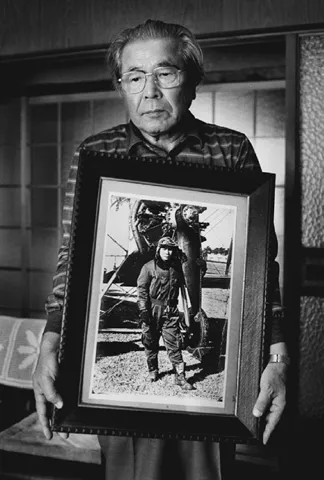
Figure 1.6 Yoshitada Nishikaichi holds a photograph of his brother Shigenori Nishikaichi, who was killed on the Hawaiian island of Niihau after bombing Pearl Harbor on December 7, 1941.
Because of my interest in history, I pitched a story on the 70th anniversary of D-Day to Travel Weekly. The following sentence was part of my pitch and ended up in the printed story: “...
Table of contents
Cover
Half Title
Title Page
Copyright Page
Table of Contents
About the Author
Acknowledgments
Introduction
1 The Concept
2 Building Blocks of the Travel Photo Essay
3 Compositional Elements and Key Concepts to Master
4 Getting Technical
5 Lighting on Location
6 The Travel Photo Essay: A Brief History
7 Case Studies
8 Wearing the Many Hats of the Travel Photographer
9 The Written Word
10 Getting the Most Out of Our Digital Files: Workflow and Post-Processing: Workflow and Post-Processing
11 The Travel Photography Market
Index
Trusted by 375,005 students
Access to over 1.5 million titles for a fair monthly price.
Study more efficiently using our study tools.
Frequently asked questions
Yes, you can cancel anytime from the Subscription tab in your account settings on the Perlego website. Your subscription will stay active until the end of your current billing period. Learn how to cancel your subscription
No, books cannot be downloaded as external files, such as PDFs, for use outside of Perlego. However, you can download books within the Perlego app for offline reading on mobile or tablet. Learn how to download books offline
Perlego offers two plans: Essential and Complete
Essential is ideal for learners and professionals who enjoy exploring a wide range of subjects. Access the Essential Library with 800,000+ trusted titles and best-sellers across business, personal growth, and the humanities. Includes unlimited reading time and Standard Read Aloud voice.
Complete: Perfect for advanced learners and researchers needing full, unrestricted access. Unlock 1.5M+ books across hundreds of subjects, including academic and specialized titles. The Complete Plan also includes advanced features like Premium Read Aloud and Research Assistant.
Both plans are available with monthly, semester, or annual billing cycles.
We are an online textbook subscription service, where you can get access to an entire online library for less than the price of a single book per month. With over 1.5 million books across 990+ topics, we’ve got you covered! Learn about our mission
Look out for the read-aloud symbol on your next book to see if you can listen to it. The read-aloud tool reads text aloud for you, highlighting the text as it is being read. You can pause it, speed it up and slow it down. Learn more about Read Aloud
Yes! You can use the Perlego app on both iOS and Android devices to read anytime, anywhere — even offline. Perfect for commutes or when you’re on the go. Please note we cannot support devices running on iOS 13 and Android 7 or earlier. Learn more about using the app
Yes, you can access The Travel Photo Essay by Mark Edward Harris in PDF and/or ePUB format, as well as other popular books in Art & Photography. We have over 1.5 million books available in our catalogue for you to explore.