![]()
1
Climate action in a globalizing world
An introduction
Håkan Thörn, Carl Cassegård, Linda Soneryd and Åsa Wettergren
Introduction: From the Warsaw walkout to the Paris Agreement
At the 2013 United Nations climate summit in Warsaw (COP19), 800 people – representing leading environmental movement organizations (EMOs) in the Global South and North, unions, and other organizations and networks deeply committed to global climate activism – walked out of the meeting under the banner “Polluters talk, we walk.” A statement issued in connection with the action expressed solidarity with countries in the Global South, advocating a “just transition” consistent with the “climate justice” slogan, which demonstrators had declaimed outside the conference venue five days earlier (Warsaw Walkout 2013).
Never before had such a wide range of movement organizations united in such a confrontational action within the well-guarded gates of the COP (Conference of the Parties) negotiations venue. Until COP15 in Copenhagen in 2009, the climate justice discourse had been surrounded by deep tension and conflict between EMOs based in two networks: the highly institutionalized Climate Action Network (CAN) and its critics, Climate Justice Now! (CJN!) and Climate Justice Alliance (CJA) (Hadden 2015; Chatterton et al. 2012). The latter used the phrase “climate justice” to contest the de-politicization of the climate issue in the context of the global climate governance structure of UNFCCC (United Nations Framework Convention on Climate Change) and to signal opposition to the cooperative, institutionalist strategy represented by CAN. This event was a starting point for a broad-based global climate mobilization in the run-up to the 2015 Paris COP, at which world leaders had committed to deliver a substantial agreement to fight climate change.
Two years later, on December 12, 2015, world leaders presented an agreement that, according to UNFCCC’s press release, was historically unique:
An historic agreement to combat climate change and unleash actions and investment toward a low carbon, resilient and sustainable future was agreed by 195 nations in Paris today. The Paris Agreement for the first time brings all nations into a common cause based on their historic, current and future responsibilities. The universal agreement’s main aim is to keep a global temperature rise this century well below 2 degrees Celsius and to drive efforts to limit the temperature increase even further to 1.5 degrees Celsius above pre-industrial levels.
(UNFCCC 2015)
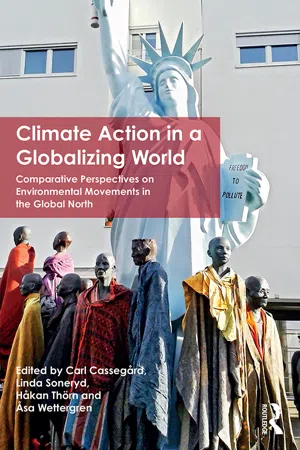
FIGURE 1.1 Banner in demonstration on November 16, during COP19 in Warsaw
Photo: Håkan Thörn.
The climate movement was deeply divided in its reactions to the agreement, as movement organizations and networks issued statements expressing enthusiasm, anger and/or ambivalence. Among the most enthusiastic were some of the leading and institutionalized members of CAN International, such as the U.S. Sierra Club, which argued that “The Paris agreement is a turning point for humanity” (CAN International 2015). They were joined by Avaaz, in the 2010s emerging as a new significant actor in the context of global climate activism, now stating that:
If agreed, this deal will represent a turning point in history, paving the way for the shift to 100% clean energy that the world wants and the planet needs.
(CAN International 2015)
Quotes on CAN International’s website from other leading members, such as Greenpeace and WWF, were equally enthusiastic. But when we scrutinized the full quotes on these organizations’ websites, they appeared more ambivalent:
The wheel of climate action turns slowly, but in Paris it has turned. This deal puts the fossil fuel industry on the wrong side of history. [ … ] There’s not enough in this deal for the nations and people on the frontlines of climate change. It contains an inherent, ingrained injustice.
(Greenpeace International 2015)
By including a long-term temperature goal of well below 2°C of warming with a reference to a 1.5°C goal, the latest draft text sends a strong signal that governments are committed to being in line with science. What we need now is for their actions, including emission reductions and finance, to add up to delivering on that goal. [ … ] A big concern is that there’s no guarantee of assistance for those who will suffer from immediate climate impacts, especially the poor and the vulnerable.
(WWF International 2015)
Other actors were neither enthusiastic nor ambivalent, but furious – especially networks based in the Global South with a strong commitment to climate justice. Third World Network stated that the agreement is “a small step toward averting climate disaster” (Third World Network 2015), while the Pan-African Climate Justice Alliance was more fiercely critical:
For civil society representatives of the continent most impacted by climate change, our hearts bleed profusely for the communities who expected COP21 to deliver an agreement that is responsive to African realities.
(PACJA 2016)
But the reactions did not reveal a complete North/South divide, as Global South actors were joined by players such as Friends of the Earth International, which stated that “the Paris deal is a sham” (FoE International 2015). This view was also shared by prominent public intellectuals in the U.S. and Britain, such as James Hansen (Columbia University, former NASA), who stated that “It’s a fraud really, a fake” (Guardian 2015); and George Monbiot (2015), whose short statement spread like wildfire in the worldwide media: “By comparison to what it could have been, it’s a miracle. By comparison to what it should have been, it’s a disaster.”
How did a movement expressing such strong unity in 2013 end up so divided two years later? This book provides an explanation through a narrative and an analysis of developments in climate activism (and, more broadly, environmental activism) following COP15 in Copenhagen in 2009. We demonstrate how the unity in 2013 and the division post-Paris need to be understood relative to the disillusionment with the failure to reach a substantial agreement in Copenhagen, which our research indicates was a “watershed” in the contemporary history of the global climate movement. We also show that beyond the divided reactions to the Paris agreement, there is now a unity linked to the concept of “climate justice,” representing an idea that the fight against climate change is inseparable from global justice issues. At the same time, the concept is contested, as different movement actors ascribe different meanings to it. We argue that these different meanings need to be seen in relation to processes of (national and global) movement institutionalization and different approaches taken to social change, such as the consensus-oriented ecological modernization approach or the more anti-systemic demands for “system change, not climate change.”
Climate activism and global governance
This book explores movement strategies among climate activists following COP15 in Copenhagen, and analyzes how they relate to processes of institutionalization, de-politicization and politicization. It is intended as a critical contribution to empirical research on, and theorizing of, “global governance”, and especially climate governance (e.g. Stevenson and Dryzek 2014). We specifically examine activities in the COPs, with a focus on COP19 in Warsaw in 2013, COP20 in Lima in 2014 and COP21 in Paris in 2015. COP is the annual conference organized by the UNFCCC, which is a treaty passed at the UN Earth Summit in Rio de Janeiro in 1992 (organized by United Nations Conference on Environment and Development, UNCED). UNFCCC is the “parent treaty” of the 1997 Kyoto Protocol and today has 197 nation states as parties. We argue that the COPs represent both a significant political space and a practical option for studying movement interactions and articulations at the global level.1 The COPs have such political significance that even national EMOs that choose not to participate (or are excluded because of a limited number of accreditations) still need to relate to their existence. Moreover, as we noted while observing COP19–21, even when top-level negotiations stall, the conference still remains a forum for meeting, networking and joint strategizing by a wide range of non-governmental organizations (NGOs), thereby emerging as an arena for global civil society.
Climate change has become an important issue for the environmental movement and for other social movements, which are increasingly engaged in global climate activism. Thus, COPs have become an institution in the field, and also serve as “global public sphere moments,” i.e. moments when a global public sphere comes into being through the temporary concentration of political power and information flows (Eide and Kunelius 2010).
In our empirical work, we also focused on interpretations of the consequences of COP15 in Copenhagen.2 This movement process involved establishing “climate justice” as a discursive nodal point – a signifier that unifies a given field (Laclau and Mouffe 1985) – in the construction of a new collective identity that brings together previously separate networks in global climate activism. We analyze these processes in connection with what we conceptualize as “post-Copenhagen” challenges for global climate activism. This involves new articulations of the relationships among the global, national and local dimensions of the movement. We provide an analysis of how such relationships are articulated in the cases of climate activism in Denmark, Japan, Sweden and the U.S.
While pre-Copenhagen networks and strategies still exist, we argue that recent developments in global climate activism in the 2010s represent a shift toward a post-Copenhagen re-articulation of the action space of global climate activism. Against this background, this book addresses the questions: Following what was widely perceived as a disappointing setback for global climate governance at the Copenhagen summit, what were the main strategies of global climate activism? To what extent do these strategies express a continuation of the institutionalist approach that prevailed up until the Copenhagen summit, and to what extent do we also see anti-institutionalist approaches? What is the significance of climate justice in these processes? Does its emergence as a discursive nodal point imply a de-politicization of what “climate justice” meant in Copenhagen, where it was used to challenge the dominance of the major, institutionalized EMOs of the Global North, or do we see a continuation and expansion of the politicization of the climate issue reaching into more established political contexts? To what extent, and how, have these strategies been articulated in the national context of our four selected countries, Denmark, Japan, Sweden and the U.S., and how should we understand national variations?
In the following sections we discuss comparative research literature on the environmental movement and green global governance, engaging in the debate on social movement institutionalization and globalization. We argue that the analysis of institutionalization, which in previous research mainly concerned national political contexts, needs to be re-conceptualized in light of developments that were conceptualized in terms of globalization and neoliberalism. To contribute to such re-conceptualization, we introduce and explain the concepts of de-politicization and responsibilization, arguing that a key dimension of current climate activism is a politics of responsibility. This constitutes a “loose” theoretical framework (in contrast to a strictly applied theory) for the book that will be further elaborated on in the concluding Chapter 10. Furthermore, we provide some general methodological reflections, addressing both our study of the global public sphere of the COPs and the four national cases (for a detailed account of our methodology, see the Appendix).
National comparisons in the context of political globalization
In part, this book builds on and continues comparative research from the 1990s and early 2000s on the environmental movements of countries in the Global North (adding one significant case, Japanese climate activism, which previous comparative research has overlooked): Jamison et al.’s The Making of the New Environmental Consciousness (1990), which compares Sweden, Denmark and the Netherlands; Jamison’s The Making of Green Knowledge: Environmental Politics and Cultural Transformation (2001), which compares Denmark, Sweden and the U.S.; and Dryzek et al.’s Green States and Social Movements (2003), which compares the U.S., Germany, Norway and the UK. These studies demonstrate how the development of environmental movements in the Global North has been strongly shaped by national political traditions and by different strategies adopted by each state in dealing with social movements. They also emphasize the significance, dilemmas and ambiguities of movement institutionalization in states governed through parliamentary democracy. Our book, on the other hand, reflects more recent developments, most importantly the new phase of globalization of the environmental movement in the 2000s, which is linked to the rise to dominance of the climate issue in the build-up to the 2009 Copenhagen COP. Even more importantly, this book distinctly focuses on how the strategies of national movements, and their interaction with their respective governments, shape and are shaped by transnational and global political processes. This also involves a different theoretical and methodological approach to comparative research, building on certain elements of global sociological theory that began to take shape around the turn of the millennium. This makes our approach different from existing contemporary research on the environmental/climate movement, which tends to focus on national movements (Dryzek et al. 2003) or cross-national diffusion (Scholl 2014).
Drawing on sociological globalization perspectives (Sassen 2006), we argue that the relationship between the global and national dimensions is complex, as global developments take on different meanings in national and local contexts and vice versa. This analytical perspective differs from the approaches that treat global politics as ultimately shaped by pre-defined national interests and processes. We do not take the national political space as a point of departure for our analysis. Such approaches, we believe, suffer from the fallacy of “methodological nationalism” (Beck 2000) – the tendency to take for granted that the compared units are self-contained and independent of each other.
Since we consider the movements in our case countries to be shaped through an interplay of global and national contexts, this book does not conduct a conventional comparison of national cases as if they were independent of each other. Rather, our comparative approach focuses on how important developments, visible in the global context of the climate summits, are differently articulated in, and related to, their particular national contexts. This means that we start by observing and analyzing certain tendencies and processes in the context of environmental movement politics in a global civil society (Part I) (Thörn 2006), and then move to national contexts (Part II). While contemporary political processes constantly criss-cross national borders, meaning that there are no clear boundaries between the domestic and the global in today’s globalized world, an analytical distinction between the national and global political contexts is relevant in order to capture how national institutions and political cultures still influence, and are influenced by, global and transnational political processes. In the book, we strive to recognize such complex interplay, comparing how processes in the context of the global climate activism are shaped and articulated at a particular moment in different national contexts.
Green governance – a critical view
Over the last decade, a number of scientific works used the concept of global governance to capture the political dimensions of con...