eBook - ePub
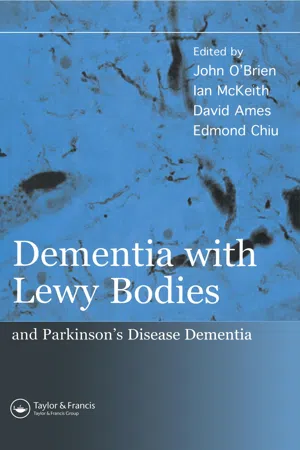
Dementia with Lewy Bodies
and Parkinson's Disease Dementia
- 296 pages
- English
- ePUB (mobile friendly)
- Available on iOS & Android
eBook - ePub
Dementia with Lewy Bodies
and Parkinson's Disease Dementia
About this book
Filling a noticeable gap in the market for a new text solely focused on Dementia with Lewy Bodies, this book discusses cutting-edge topics covering the condition from diagnosis to management, as well as what is known about the neurobiological changes involved.
With huge progress having been made over the last decade in terms of the disorder
Information
chapter 1
Historical background
Thomas H Bak and Graham G Lennox
The development of the concept of dementia with Lewy bodies (DLB) mirrors the history of neuroscience in general over the last 200 years. The first contributions, in the 19th century, were entirely based on observation at a time when the examination of the nervous system had not yet been systematized. By the early 20th century, these clinical observations began to be supplemented by pathological data of gradually increasing sophistication. Progress accelerated when immunohistochemical techniques provided a way of identifying cortical Lewy bodies easily, and allowed clinicians to go back and improve the descriptions of the clinical correlates and their epidemiology. Most recently we have moved into an era where molecular genetic studies are starting to contribute to our understanding of the condition. This whole process has seen a move from the geographically-defined schools of thought (which provided, for example, predominantly French and German early clinical and pathological reports and a period of almost exclusively Japanese clinicopathological progress) to the present international approach.
The first detailed description of a Lewy body disorder was probably James Parkinson’s Essay on the Shaking Palsy (1817). He outlined many of the motor symptoms of what we now call Parkinson’s disease, then termed paralysis agitans. Perhaps as a consequence of limited opportunity to follow the progress of his six patients, he made no mention of the cognitive aspects of Parkinson’s disease and believed that the intellect was ‘uninjured’. He appealed to morbid anatomists to clarify the anatomical and pathological cause. The late 19th century brought recognition that dementia may complicate the course of Parkinson’s disease. In 1861–62, whilst still a junior member of the Salpetriere faculty, Charcot with Vulpian baldly stated that ‘in general, psychic faculties are definitely impaired’. He later added that ‘the mind becomes clouded and the memory is lost’, an assertion amplified by his pupil Ball (1882) in a detailed description of seven cases. The positions taken by Parkinson and Charcot respectively, had a long lasting influence on the predominant views in their countries: while French authors regularly reported dementia, depression, hallucinations and bradyphrenia in their parkinsonian patients, Anglo-Saxon authors usually stressed normal behavior and cognition.
It was not until 1912 that Friedrich Heinrich Lewy began to answer Parkinson’s call for pathological clarification. In a chapter on the pathological anatomy of paralysis agitans, Lewy observed intracytoplasmic inclusion bodies in the basal forebrain (substantia innominata) and dorsal motor nucleus of the vagus nerve in brains of patients with Parkinson’s disease. With the limited staining techniques of the time, he classified them as similar to the amyloid inclusions described previously in myoclonus epilepsy by Lafora (1911). Lafora replicated Lewy’s results the following year and demonstrated that the inclusions described by Lewy form a separate category, which he called ‘cuerpos hialinos’ (Lafora, 1913). The term ‘Lewy Body’ (‘corps de Lewy’) was introduced by Tretiakoff (1919), who was also the first to detect them in the substantia nigra and stress the importance of this location for the pathogenesis of Parkinson’s disease. Lewy himself (1923) went on to describe the occurrence of Lewy bodies in different parts of the brain, including the cerebral cortex, in a group of 56 patients, 64% of whom had marked mental alteration. The existence of cortical Lewy bodies was widely confirmed (Hallervorden, 1933; Helfland, 1939; von Braunmühl, 1949).
The first study linking dementia directly to the cortical Lewy bodies was presented at the Annual Meeting of the American Association of Neuropathologists in 1958 and published three years later (Okazaki et al, 1961). The authors described two cases with progressive dementia, disorientation, hallucinations and profound motor disability which they regarded as ‘terminal quadriparesis in flexion’ rather than parkinsonism. The pathological examination revealed the presence of Lewy bodies, ‘morphologically and histochemically indistinguishable from those initially described by Lewy in Parkinson’s Disease’, but ‘widely disseminated in all lobes and all cortical layers except Layer I’. Although the authors did not propose any specific name for the new putative syndrome, they stressed that the ‘morphologic singularity and close clinical resemblance’ of their two cases suggested the possibility that ‘this complex represents a defined entity’. The study of Okazaki et al (1961) contained not only many clinical and pathological features which today would be considered as characteristic of DLB, but also discussed its differential diagnosis. The clinical picture of dementia in the absence of parkinsonism and the strikingly different distribution of Lewy bodies set the cases clearly apart from idiopathic Parkinson’s disease. The absence of senile plaques or neurofibrillary tangles distinguished them from Alzheimer’s disease. Indeed, the authors went as far as to claim that Lewy body and Alzheimer pathology are ‘to a large measure, mutually exclusive’, a statement which, as we will see, has been called into question by subsequent studies.
After a hiatus lasting more than 10 years, a series of detailed case reports of dementia associated with cortical Lewy bodies began to emerge from Japan (Kosaka et al, 1976; Ogasawara et al, 1978; Kosaka and Mehraein 1979, Ikeda et al, 1980). In terms of the clinical picture the cases were often referred to as ‘unclassifiable’ or ‘atypical’, but a comparison of their main features reveals a remarkable similarity. The majority of cases showed a combination of dementia and parkinsonism, although the latter was often mild; only very few studies reported cases of dementia without parkinsonism (Ikeda et al, 1980) or parkinsonism without dementia (Ikeda et al, 1975). The most prominent and frequent cognitive symptoms were disorientation, confusion, forgetfulness and restlessness (Kosaka et al, 1976; Ogasawara et al, 1978; Kosaka and Mehraein, 1979; Ikeda et al, 1980). Psychotic features such as hallucinations and paranoid delusions were also reported (Kosaka and Mehraein, 1979). In terms of pathology the cases were characterized by widespread cortical Lewy bodies but, in contrast to the study of Okazaki et al (1961), the majority of the brains showed additional signs of a variable degree of Alzheimer-type pathology (Kosaka et al, 1976; Kosaka, 1978; Kosaka and Mehraein, 1979; Ogasawara et al, 1978; Ikeda et al, 1980).
In 1984, Kosaka, Yoshimura, Ikeda and Budka reviewed the existing literature and proposed that these cases should be regarded as a new disease entity, which they termed ‘diffuse Lewy body disease’. Shortly thereafter the disease became increasingly recognized also in Britain and North America. Gibb et al (1987) described four of their own cases and discussed 23 of previously published ones, all with remarkably similar clinical and pathological findings. The next few years saw the publication of further series including some that were reasonably large and from relatively unselected sources (Eggerton and Sima, 1986; Ditter and Mirra, 1987; Joachim et al, 1988; Burkhard et al, 1988; Byrne et al, 1989; Hansen et al, 1990; Perry et al, 1990). The triad of dementia, parkinsonism and psychotic symptoms was established as the core syndrome of the new disease. In addition, new symptoms, now considered to be key features of DLB, were first recognized in that period: fluctuating level of consciousness with episodic confusion (Gibb et al, 1987; Byrne et al; 1989), frequent unexplained falls (Byrne et al, 1989; McKeith et al, 1992), excessive sensitivity to side effects of neuroleptic medication (McKeith et al, 1992) and syncope with transient loss of consciousness (McKeith et al, 1992). The profile of the dementia was elaborated upon, highlighting deficits in attention (Sahgal et al, 1992), visuospatial abilities (Sahgal et al, 1995) and executive function (Salmon and Galasko, 1996).
While the clinical description of DLB became more precise and specific, the underlying pathology, in particular the relative significance of Lewy bodies and Alzheimer-type changes, remained controversial. This uncertainty was reflected in the terms used to describe the emerging diagnosis. Some authors stressed the importance of the Alzheimer-type pathology, proposing names such as ‘Alzheimer disease with Parkinson’s disease changes’ (Ditter & Mirra, 1978), ‘Alzheimer’s disease with incidental Lewy bodies’ (Joachim et al, 1988) or ‘Lewy body variant of Alzheimer’s disease’ (Hansen et al, 1990). Others focused on the importance of cortical Lewy bodies, preferring terms such as ‘diffuse Lewy body disease’ (Kosaka et al, 1984), ‘dementia with cerebral Lewy bodies’ (Eggerton & Sima, 1986), ‘diffuse cortical Lewy body disease’ (Gibb et al, 1987) or ‘senile dementia of Lewy body type’ (Perry et al, 1990). The consensus conference in Newcastle upon Tyne in October 1995 recognized the crucial importance of cortical Lewy bodies in the pathogenesis of the disease and recommended the designation ‘Dementia with Lewy bodies’—DLB (McKeith et al, 1996).
The recognition of DLB as an entity created a need for operational, clinically applicable diagnostic criteria. The first attempt to formulate such criteria, based on the largest case series of its time (Byrne et al, 1989), came from the Nottingham group (Byrne et al, 1991). The criteria included parkinsonism, dementia and psychiatric features as well as fluctuations in cognition. In the following year, a comparison of 57 autopsy-confirmed AD patients with 41 ‘senile dementia of Lewy body type’ cases led McKeith et al (1992) to formulate new criteria, emphasizing cognitive dysfunction and neuropsychiatric features and adding excessive sensitivity to neuroleptic medication to the list of clinical characteristics of the disease; in contrast to the Nottingham criteria, the presence of parkinsonian features was not considered mandatory. The Newcastle criteria formed the basis of the consensus criteria (McKeith et al, 1996), which soon became adopted worldwide. Fluctuations, visual hallucinations and spontaneous motor features of parkinsonism (not provoked by a neuroleptic medication) were classified as the key features of the disease. The presence of any two indicated a probable, the presence of one a possible DLB. Supportive features included falls, syncope, transient loss of consciousness, neuroleptic sensitivity, systematized delusions and nonvisual hallucinations. Several retrospective and prospective studies have examined the accuracy of the consensus criteria (McKeith et al, 2000; Litvan et al, 2003) and the Second (July 1998) and Third (September 2003) International DLB Workshop recommended the continuation of their use (McKeith et al, 1999; Cummings, 2004).
The last 10 years have witnessed an enormous progress in the methodology applied in DLB research, such as neuropathological staining techniques, molecular biology and neuroimaging. However, the fundamental question troubling researchers since the first descriptions of the disease, the relation between DLB and its two principal differential diagnoses, Parkinson’s disease (PD) and Alzheimer’s (AD), remains an issue of lively debate, made more topical by recent scientific discoveries. By the time of the first descriptions of DLB in the 1960s and 1970s PD was generally considered, at least in the Anglo-Saxon literature, to be almost exclusively a motor disorder. The difference between the ‘demented’ DLB and the ‘cognitively intact’ PD patients seemed, therefore, clear and unequivocal. In the last 30 years, however, cognitive impairment has been increasingly recognized as a frequent and often pronounced feature of PD. The estimated prevalence of dementia in PD patients has increased dramatically from 3% (Mjones, 1949) to 78% (Aarsland et al, 2003). The term Parkinson disease dementia (PDD) came into use to refer to PD with prominent cognitive deficits. DLB and PDD can be indistinguishable on neuropsychological testing (Noe et al, 2004; Mosiman et al, 2004), differing only in the sequence of the symptoms: a patient presenting with dementia followed by parkinsonism is diagnosed as DLB, a patient presenting with parkinsonism followed by dementia as PDD (Cummings, 2004). In this context DLB could be considered a part of a spectrum.
Also in the field of pathology, the boundary between DLB and PD is not always clear-cut. Both diseases are associated with Lewy bodies, which, as noted by Okazaki et al (1961) and Kosaka et al (1976), show only minor differences in morphology between the brainstem and cortex. The main difference observed by Kosaka and Mehraein (1979) was their distribution: in the brainstem they were distributed in accordance with the monoamine nerve terminals; this was not the case in cortex, suggesting that both types of Lewy body might affect different transmitter systems, later identified as cholinergic and dopaminergic. The efficacy of cholinesterase inhibitors in DLB (McKeith et al, 2000) provided an additional confirmation of the importance of the cholinergic pathways in this disease. However, none of these features is DLB-specific: cholinergic deficits have been implicated in the cognitive dysfunction of PD (Dubois et al, 1990) and positive effects of cholinesterase inhibitors have also been reported in PD patients (Aarsland et al, 2004). More importantly, not only have cortical Lewy bodies been detected in PD patients, their density has also been related to cognitive symptoms (Kövari et al, 2003). Moreover, the identification of alpha-synuclein as the main component of Lewy bodies in DLB and PD (Spillantini, 1997) placed both diseases, together with multiple system atrophy (MSA), in the emerging class of alpha-synucleinopathies (Goedert, 2001). Indeed, an interaction between alpha-synuclein and beta-amyloid (a protein implicated in the pathogenesis of AD) may explain the frequently reported co-occurrence of Lewy body and Alzheimer-type pathology and contribute significantly to the clinical overlap between DLB and AD (Masliah et al, 2001).
Looking back over 50 years of DLB research we see a remarkable evolution: beginning with single cases of a rare condition, reported as a curiosity at neuropathological meetings, DLB has come to be recognized as the second commonest form of dementia, accounting for around 15–20% of all cases (Perry et al, 1990; Kosaka & Iseki, 1996). Initially regarded as an atypical mixture of PD and AD, it has evolved into a distinct entity with operationalized diagnostic criteria (McKeith et al, 1996). From a disease with rapid progression and bleak prognosis it has transformed into one of the few forms of dementia in which significant benefits can be derived from pharmacotherapy (McKeith et al, 2000). With its wide range of psychiatric, neuropsychological and neurological symptoms DLB continues to stimulate interdisciplinary research and consequently, an improved understanding of brain function.
References
Aarsland D, Andersen K, Larsen JP, Lolk A et al, Prevalence and characteristics of dementia in Parkinson disease: an 8-year prospective study. Arch Neurol (2003) 60:387–92.
Aarsland D, Mosimann UP, McKeith IG, Role of cholinesterase inhibitors in Parkinson’s disease and dementia with Lewy bodies. J Geriatr Psychiatry Neurol (2004) 17:164–71.
Ball B, De I’insanite dans la paralysie agitante. Encephale J Mal Ment Nerv (1882) 2:22–32.
Burkhardt CR, Filley CM, Kleinschnidt-DeMasters BK, Diffuse Lewy body disease and progressive dementia. Neurology (1988) 38:1520–8.
Byrne EJ, Lennox G, Lowe J, Godwin-Austen RB, Diffuse Lewy body disease; clinical features in 15 cases. J Neurol Neurosurg Psychiatry (1989) 52:709–17.
Byrne EJ, Lennox G, Godwin-Austen RB, Dementia associated Proposed diagnostic criteria. Dementia (1991) 2:283–4.
Charcot JM, Vulpian A, De la paralysie agitante. Gaz Hebdomadaire Med Chir (1861–62) 8:765–7; 9:54–9.
Cummings JL, Reconsidering diagnostic criteria for dementia with Lewy bodies. Meeting review. Reviews in Neurological Diseases (2004) 1:31–34.
Ditter SM, Mirra SS, Neuropathologic and clinical features of Parkinson’s disease in Alzheimer’s patients. Neurology (1987) 37:754–60.
Dubois B, Pilon B, Lhermitte F, Agid Y, Cholinergic deficiency and frontal dysfunction in Parkinson’s disease. Ann Neurol (1990) 28:117–21.
Eggerton DE, Sima AAF, Dementia with cerebral Lewy bodies. Arch Neurol (1986) 43:524–7.
Gibb WRG, Esiri MM, Lees AJ, Clinical and pathological features of diffuse cortical Lewy body disease (Lewy body dementia). Brain (1987) 110:1131–53.
Goedert M, Alpha-synuclein and neurodegenerative diseases. Nature Reviews ...
Table of contents
- Cover Page
- Title Page
- Copyright Page
- Acknowledgments
- Preface
- chapter 1 Historical background
- chapter 2 Clinical spectrum of Lewy body disease
- chapter 3 Classification and diagnostic criteria for dementia with Lewy bodies
- chapter 4 Epidemiology of dementia with Lewy bodies
- chapter 5 Neuropsychological features of dementia with Lewy bodies
- chapter 6 Neuropsychiatric features of dementia with Lewy bodies
- chapter 7 Neurology of dementia with Lewy bodies
- chapter 8 Autonomic dysfunction in dementia with Lewy bodies
- chapter 9 Neuroimaging
- chapter 10 Progression of cognitive impairment and duration of illness
- chapter 11 Neuropathology and pathogenesis of dementia with Lewy bodies
- chapter 12 Neurochemical pathology of dementia with Lewy bodies
- chapter 13 Nosological confusion regarding the boundaries of dementia with Lewy bodies
- chapter 14 Pharmacological treatment of dementia with Lewy bodies
- chapter 15 Nonpharmacological approaches to the care of dementia with Lewy bodies
- chapter 16 Dementia with Lewy bodies—a carer’s view
- chapter 17 Dementia in Parkinson’s disease
- Chapter 18 Other atypical parkinsonian disorders and their differentiation from dementia with Lewy bodies
Trusted by 375,005 students
Access to over 1.5 million titles for a fair monthly price.
Study more efficiently using our study tools.
Frequently asked questions
Yes, you can cancel anytime from the Subscription tab in your account settings on the Perlego website. Your subscription will stay active until the end of your current billing period. Learn how to cancel your subscription
No, books cannot be downloaded as external files, such as PDFs, for use outside of Perlego. However, you can download books within the Perlego app for offline reading on mobile or tablet. Learn how to download books offline
Perlego offers two plans: Essential and Complete
- Essential is ideal for learners and professionals who enjoy exploring a wide range of subjects. Access the Essential Library with 800,000+ trusted titles and best-sellers across business, personal growth, and the humanities. Includes unlimited reading time and Standard Read Aloud voice.
- Complete: Perfect for advanced learners and researchers needing full, unrestricted access. Unlock 1.5M+ books across hundreds of subjects, including academic and specialized titles. The Complete Plan also includes advanced features like Premium Read Aloud and Research Assistant.
We are an online textbook subscription service, where you can get access to an entire online library for less than the price of a single book per month. With over 1.5 million books across 990+ topics, we’ve got you covered! Learn about our mission
Look out for the read-aloud symbol on your next book to see if you can listen to it. The read-aloud tool reads text aloud for you, highlighting the text as it is being read. You can pause it, speed it up and slow it down. Learn more about Read Aloud
Yes! You can use the Perlego app on both iOS and Android devices to read anytime, anywhere — even offline. Perfect for commutes or when you’re on the go.
Please note we cannot support devices running on iOS 13 and Android 7 or earlier. Learn more about using the app
Please note we cannot support devices running on iOS 13 and Android 7 or earlier. Learn more about using the app
Yes, you can access Dementia with Lewy Bodies by John O'Brien, David Ames, Ian McKeith, Edmond Chiu, John O'Brien,David Ames,Ian McKeith,Edmond Chiu in PDF and/or ePUB format, as well as other popular books in Medicine & Geriatrics. We have over 1.5 million books available in our catalogue for you to explore.