This collection is a study of the process by which European planning concepts and practices were transmitted, diffused and diverted in various colonial territories and situations. The socio-political, geographical and cultural implications are analysed here through case studies from the global South, namely from French and British colonial territories in Africa as well as from Ottoman and British Mandate Palestine.
The book focuses on the transnational aspects of the garden city, taking into account frameworks and documentation that extend beyond national borders, and includes contributions from an international network of specialists. Their comparative views and geographical focus challenge the conventional, Eurocentric approach to garden cities, and will interest students and scholars of planning history and colonial history.
eBook - ePub
Garden cities and colonial planning
Transnationality and urban ideas in Africa and Palestine
- 199 pages
- English
- ePUB (mobile friendly)
- Available on iOS & Android
eBook - ePub
Garden cities and colonial planning
Transnationality and urban ideas in Africa and Palestine
About this book
Information
Publisher
Manchester University PressYear
2016Print ISBN
9781526106780
9780719090554
eBook ISBN
9781526111081
PART ONE
Garden cities and colonial Africa
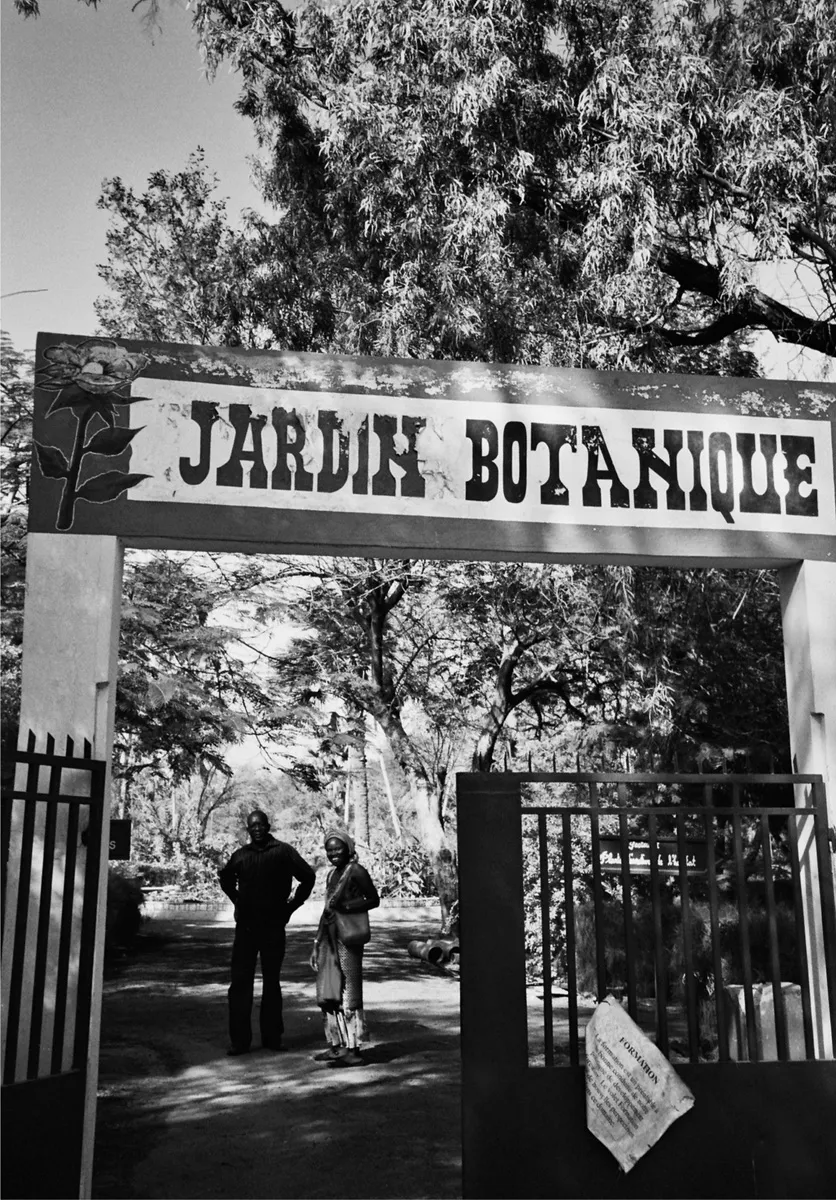
Hann Botanical Gardens, Dakar, Senegal. A combination of experimental gardens and a forestry park during colonial times, used, among other things, for the growing of imported and local species of trees for Dakar’s avenues.
CHAPTER ONE
Symbolic usage of the ‘garden city’ concept during the French Protectorate in Morocco: from the Howardian model to garden housing estates†
Charlotte Jelidi
The expression cité-jardin (‘garden city’) was widely used1 by colonial architects, urban planners, political leaders and property developers as well as by visitors and writers in Morocco during the French Protectorate (1912–56). The expression appeared at first in official circles, where it referred to most plans of villes nouvelles. These were established in French overseas territories during the colonial period, especially in Indo-China, Madagascar and North Africa, alongside indigenous ‘traditional’ towns. These villes nouvelles were designed primarily for the expatriate population, and the latest advances in modern urban planning were systematically applied. Indigenous cities not only remained virtually untouched by colonial planning schemes, but also experienced a process of preservation in an Orientalist spirit.2
In Morocco, the villes nouvelles were established under the aegis of the first Resident-General, Louis-Hubert Lyautey (1854–1934). From his rich military background in Indo-China and Madagascar, Lyautey developed strong pragmatist views concerning colonised populations, views that were crystallised in the urban strategy he promoted. Within this urban framework, the term cité-jardin had been used contemporarily to denote certain residential quarters within the villes nouvelles of Casablanca, Rabat, Fez or Marrakech. These residential quarters were situated on verdant terrain and consisted generally of one- or two-level homes built along curved streets. The street outline was designed to give a picturesque character to these areas, a quality which was often sought for by designers. Sometimes the expression cité-jardin was used to denote an entire ville nouvelle.
While inspired by English garden city ideas of the early twentieth century, the French colonial urban planners distanced themselves from the model defined by Ebenezer Howard, thus contributing to what can be regarded as an actual semantic divergence. This chapter aims to trace the means through which the notion of the garden city was transmitted – and above all distorted – from England to Morocco, through France, and more particularly through its Musée Social. Placing the burgeoning field of town planning at the top of its priorities list, the latter institution served as a live platform for the meeting of professionals of varied backgrounds – from social scientists to political reformers. Next, we shall examine how the citésjardins were constructed in the course of the Protectorate, in terms of both the perceptual and the formal, actual plan. We will point out elements that the architects of the Protectorate chose to borrow from the Howardian model and the British garden cities, namely, the spatial relations within the built-up residential area, or the ‘zoning’ system; the special attention paid to landscape considerations in suburban planning; the preoccupation with the urban picturesque; and the use of abundant vegetation within the framework of planning.
Garden cities, the Protectorate’s urban planners and the Musée Social
The concept of the garden city, which inspired the architects and urban planners who designed Morocco’s villes nouvelles during the first years of the French Protectorate, emerged in the late nineteenth century. At that time, many English industrialists, paternalists and philanthropists laid out, usually on a higher tract of land by the side of their factories, cottages for their employees. These were aimed at providing more pleasant living conditions. Port Sunlight, established in 1895 by a soap manufacturer near Liverpool, and Bournville, near Birmingham, built by a chocolate factory owner,3 were the precursors of the garden city as theorised by Ebenezer Howard in 1898. His ideal city – extending over 2,400 hectares with a capacity for 30,000 inhabitants – was an autonomous town that provided for all its inhabitants’ needs: cultural facilities, sports installations, leisure areas, public parks etc. Howard’s proposition was to create self-sufficient towns with low-level construction erected along circular, tree-lined boulevards. According to Howard, the garden city must be encircled by a vast cordon of agricultural land so as to ensure its total isolation and protection from possible suburban expansion and other peripheral land uses.
Starting in 1903, Howard set out to apply his urban principles, and these were realised in Letchworth garden city, about 60 km north of London.4 Letchworth’s plans were drawn up by the architect and urban planner Richard Barry Parker (1867–1947) and the engineerplanner Raymond Unwin (1863–1940). They were both inspired by the Howardian model5 and were also deeply influenced by Camillo Sitte and his sense for the picturesque, preached in his 1902 work Der städtebau nach seinen Künsterischen Grünsätzen.6 The latter suggested the theory that the informal principles of urban composition applied during the Middle Ages called for further exploration. Sitte’s theories had Austrian, German and Finnish influences and spread in Britain just as the garden city idea was being conceived; they also intersected with the thirst for environmental beauty that reached its peak there in the 1890s.
Devoid of architectural details in matters of style and form, Howard’s written works and the application of his ideas advocated architectural diversity and enabled architectural freedom. His general ideas, as well as the opportunity to embrace a particular aesthetic framework on the regional level, enjoyed immense success in Europe and the United States. Sitte’s doctrine was introduced and made popular in France by Georges Benoit-Lévy (1880–1971),7 a young journalist and a jurist who visited England in 1903, and was appointed by the Musée Social to study the garden city.8 The results of Benoit-Lévy’s work were published upon his return to France in professional journals, and later in a book published in 1904.9
Under the auspices of the French Garden Cities Association (l’Association Française des Cités-Jardins), founded by Benoit-Lévy in 1903, the development of a new urban model was promoted, a hygienic industrial town, or ‘at least a model quarter’, as he proposed for ‘the part of the 200 hectares … that are left available … towards the northern and western fringe of Paris’ municipal area’.10 He did not focus on constructing self-sufficient towns, but rather on creating healthy and well-equipped suburban quarters for labourers, in the vicinity of the industries where they worked. This deviation from the original garden city notion steadily became more and more noticeable. From the first decade of the twentieth century, the term cité-jardin began to be employed by public authorities, urban planners and entrepreneurs in France. Distanced from Howard’s doctrine, the term was used to denote new urban quarters, often devoid of factories but where vegetation was present.
The cités-jardins that flourished in Morocco under the French Protectorate showed exemplary evidence of the semantic misappropriation of the original idea. In Morocco, this misappropriation was not only a prerogative of property developers in their desire to make their housing projects more tempting and sellable by associating them with seductive vocabulary. In fact, the colonial administration, in its concern to offer an attractive image of the villes nouvelles that were newly founded under its initiative, used the term cité-jardin regularly as well.
Jean-Claude Nicolas Forestier (1861–1930), followed by Henri Prost (1874–1959), were among the chief urban designers and planners of Morocco’s villes nouvelles who introduced the notion of cité-jardin. Their inspiration largely came from contemporary metropolitan debates concerning the birth of town planning as a scientific discipline. A landscape gardener and the head of the Department of Public Promenades and Plantations (Service des Promenades et des Plantations) of the city of Paris for twenty-six years, Forestier had been summoned to Morocco on the recommendation of the General Secretary of the Protectorate, Paul Tirard. He was the first professional to work on the villes nouvelles project, appointed by the Minister of Foreign Affairs to study ‘areas available for the planning and establishment of – inside and around the more prominent towns of Morocco, from the present time and in provision for future urban development – public promenades (promenades) and public gardens’.11
Upon completing this mission, Forestier had managed to convince Henri Prost to create development plans for Morocco’s villes nouvelles, advised by Georges Risler, the president of the section of urban and rural hygiene of the Musée Social. A professional expert, a Frenchregistered architect (DPLG) and a receiver of the Grand Prix de Rome (1902),12 Prost was renowned for winning the 1910 competition for the extension of Antwerp. Arriving in Casablanca in May 1914 to take up a three-month appointment, Prost was in charge of the study of plans for the villes nouvelles that Lyautey so desired to build. He stayed in Morocco until 1922, where he became the head of the Special Department of Architecture (service Spécial d’Architecture) and also the head of the Department of Town Planning (service des Plans de Villes).
Although each had undergone different training and experienced a different professional path, Forestier and Prost had very profound affinities. In 1911 they contributed towards the creation of the French Society of Architect-Town Planners (la Société Française des Architectes-Urbanistes, or SFAU), which was renamed in 1919 as the French Society of Town Planners (Société Française des Urbanistes, or SFU). Its objective was the establishment of a registry of documentary records, offering a framework for discussions for professionals in urban planning as well as creating an international network of specialists.
Above all, Forestier and Prost were both active members in the section of urban and rural hygiene of the Musée Social. Established in 1889, and finally inaugurated in May 1894, the Musée Social was at the time a documentation centre and a place for discussion on such diverse themes as work and industry, agriculture, teaching and health. The section on urban and rural hygiene of the Musée Social which treated relative, dialectic questions in urban planning was established in January 1908 for ‘the amelioration of the material and moral conditions of the workers’.13 In France, as well as in its overseas colonial territories, members of this section promoted the requirement, for French settlements of more than 10,000 inhabitants, of establishing a development plan. This plan, also called the PAEE, was aimed at beautification (embellissement) and extension. It was institutionalised by the Cornudet Law, passed in 1919,14 whose formulation the Musée Social pioneered.15
The members of the Musée debated the most relevant contemporary questions within the urban planning profession, most notably the issue of cités-jardins. During the meeting of 10 July 1909, the members recognised the need for documenting and learning more about garden cities abroad, especially in Europe.16 In the followi...
Table of contents
- Cover
- Half Title Page
- Title Page
- Copyright Page
- Contents
- List of figures
- List of contributors
- Series editor’s introduction
- Preface and acknowledgements
- Introduction: Garden cities and colonial planning: transnationality and urban ideas in Africa and Palestine Liora Bigon
- PART I – Garden cities and colonial Africa
- PART II – Garden cities in colonial and Mandatory Palestine (Eretz Israel)
- Afterword: multilateral channels, garden cities and colonial planning Liora Bigon and Yossi Katz
- Index
Trusted by 375,005 students
Access to over 1.5 million titles for a fair monthly price.
Study more efficiently using our study tools.
Frequently asked questions
Yes, you can cancel anytime from the Subscription tab in your account settings on the Perlego website. Your subscription will stay active until the end of your current billing period. Learn how to cancel your subscription
No, books cannot be downloaded as external files, such as PDFs, for use outside of Perlego. However, you can download books within the Perlego app for offline reading on mobile or tablet. Learn how to download books offline
We are an online textbook subscription service, where you can get access to an entire online library for less than the price of a single book per month. With over 1.5 million books across 990+ topics, we’ve got you covered! Learn about our mission
Look out for the read-aloud symbol on your next book to see if you can listen to it. The read-aloud tool reads text aloud for you, highlighting the text as it is being read. You can pause it, speed it up and slow it down. Learn more about Read Aloud
Yes! You can use the Perlego app on both iOS and Android devices to read anytime, anywhere — even offline. Perfect for commutes or when you’re on the go.
Please note we cannot support devices running on iOS 13 and Android 7 or earlier. Learn more about using the app
Please note we cannot support devices running on iOS 13 and Android 7 or earlier. Learn more about using the app
Yes, you can access Garden cities and colonial planning by Laura Bigon,Yossi Katz, Liora Bigon,Yossi Katz in PDF and/or ePUB format, as well as other popular books in History & History of Architecture. We have over 1.5 million books available in our catalogue for you to explore.