![]()
CHAPTER ONE
‘THAAL NIVVER FEEL IT’
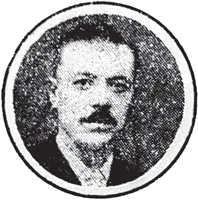
James Billington. (Author’s collection)
Joseph Laycock was a hawker who had cut the throats of his wife and four children. He was held at Armley Gaol in Leeds and the date for his execution was set as 26 August 1884. In the minutes before he was hanged, Laycock spoke to the executioner and asked, ‘You will not hurt me?’
Possibly his question was more than just the usual final thoughts of any condemned prisoner, perhaps he was acutely aware that the man with the responsibility of ending his life was not only new to the post of hangman for Yorkshire, but also untested.
‘No, thaal nivver feel it, for thaal be out of existence i’ two minutes,’ Billington replied, and within moments the thirty-seven-year-old Lancastrian had proved that he was more than fit to hold the position.
Becoming a hangman certainly seemed to be a departure from Billington’s full-time job as a barber, but in truth he had only been appointed after showing an almost obsessive keenness for the post, a desire that had begun before he was old enough to work.
James Billington’s father was also called James. He was a Preston man who had married a Bolton girl named Mary Haslam. Initially they lived in her home town but after losing their first child, William, in 1841, they moved to Preston. James was to become the third eldest of their seven surviving children and after his birth they returned to Bolton.
In the 1851 census return, James Billington senior’s profession was listed as ‘labourer’. However, his son had no plans to follow in his father’s footsteps; instead the eleven-year-old boy built a replica gallows in the family’s backyard and imagined himself in the executioner’s role. He made dummies and practiced hanging them. He was still too young to have developed any sense of duty or strong beliefs in the use of capital punishment, yet he clearly felt a strong attraction to the only profession where an appointment with the incumbent would be an appointment with death.
Until 1874, the country’s principal executioner had been William Calcraft who had been over seventy years old when he had conducted his last execution, making Billington a comparatively young hand. During Calcraft’s period in office he executed over 400 prisoners. He may have been James’ inspiration during his early years, but it was his successor, William Marwood, who set the standard that James Billington would need to match.
Marwood introduced the more humane ‘long drop’ method which lead to an almost instantaneous death. Calcraft’s ‘short drop’ executions left him with the reputation of being a botcher, as it often resulted in the prisoner dying through strangulation, whereas the ‘long drop’ method resulted in prisoners’ necks breaking. Death was still caused by asphyxiation, but this occurred while the prisoner was unconscious.
Marwood died in 1883 and James Billington was quick to apply for the post. However, there were over 1,400 other applications and Marwood’s former assistant Bartholomew Binns was initially appointed, then replaced in 1884 by James Berry. Undeterred, Billington contacted the prison authorities and was invited to York to outline his method.
Despite Berry being a Yorkshire man and holding the position as the Home Office’s principal executioner, Billington successfully convinced the authorities that he should be appointed as executioner for Yorkshire. When the morning of Laycock’s execution dawned, it was the opportunity Billington had sought since childhood and he would have been determined to see nothing go awry.
The Industrial Revolution was the backdrop to James Billington’s formative years. It had dictated the fortunes of the earlier generations of his family and was still rolling forward with sufficient momentum to dominate the futures of the Lancashire communities.
The county of Lancashire lies about 200 miles north of London with the Irish Sea on its west coast, the Pennines on the east, with Cumbria to the north and Cheshire to the south. Before the Industrial Revolution, it was a relatively untouched corner of the country; its main industry was farming, arable in the lowland areas and sheep farming on the moors. The communities subsidised their livelihoods by hand weaving wool garments.
From the mid-nineteenth century, cotton supplanted wool as the most in-demand textile, and Lancashire, with its ideal moist climate for handling cotton threads, found itself with a supply of experienced weavers. Mills sprang up as the industry grew and the power of the streams and rivers was harnessed to run them. With the development of the steam engine mines flourished, tapping into local reserves of coal.
By the time James Billington was born in 1847, the once rural county was the home of rapidly expanding city slums and a burgeoning population. Bolton was made up of eight towns: Blackrod, Farnworth, Horwich, Kearsley, Little Lever, South Turton, Westhoughton, and Bolton itself. Bolton’s population grew from 17,400 in 1801 to 60,300 in 1851. Manchester, less than fifteen miles away, saw an even greater growth rate as its population swelled from 88,500 to 455,500 in the same period.
This unprecedented growth was driven by the textile industry’s need for cheap labour, and overwhelmed the unsophisticated existing infrastructure. Houses were shoddily built and crammed together, often shared by more than one family. It was common practice for people to work, and sleep, in shifts and cram ten or more into a single bedroom. There were no building regulations: floors were earth, there was no running water and houses were mostly built back-to-back with no gardens. Toilet facilities were shared by up to 100 houses and were either in the form of a privy, a deep hole, or a midden, the human equivalent to a manure heap piled against a wall.
With no damp courses, the rooms were perpetually wet; in some cases cellars were built to alleviate this dampness, but such was the level of poverty and housing shortage that these were very quickly sublet. The cellar population, in particular, suffered terrible ill health; cholera was common in the summer and sewage was often washed in during rainy periods.
In the cities, air pollution caused respiratory diseases such as pneumonia, bronchitis and asthma. Mill workers were particularly badly affected as these diseases were brought on by the high levels of cotton dust particles in the workplace. Levels of poverty were higher in Manchester than the notorious slums of London’s East End. In some parts of Manchester a working man’s life expectancy was just seventeen years.
In 1842, the sanitary reformer Edwin Chadwick wrote, ‘it is an appalling fact that, of all who are born of the labouring classes in Manchester, more than 57 per cent die before they attain five years of age.’ In an environment of poor sanitation, minimal hygiene, unclean water supply, terrible diet and overwork, the biggest killer of children was diarrhea.
Of course, Billington survived his early childhood, but his working future was not bright either. In the 1800s working days of up to fifteen hours were commonplace and virtually all ages were recruited. Some babies were drugged with laudanum so that their mothers could work and children barely old enough to start school were recruited as mill apprentices.
Allan Clarke, the Lancashire Labour man, wrote in his book The Effects of the Factory System:
I see the little innocents rudely dragged from bed to be pitched into the factories at the early age of three and four; I see them stunted, sickly, with sad eyes imploring mercy from parents and masters in vain. I see them pining, failing, falling, struggling against hell and death, knowing not what to do for relief, knowing not where to ask for aid, dying by agonising inches, and blest when the end comes.
Children were often recruited at the age of six or seven. Apprenticeships usually lasted until the child reached the age of twenty-one, making it possible that a worker reaching twenty-one could have completed the equivalent of thirty years’ work under modern conditions.
By the mid-1800s many children had schooling in the mornings and worked in the afternoons. Even when education became more widely available, children still left school at twelve years old and it was standard practice for them to start work straight away, often as an apprentice. James Billington became a ‘little piecer’ at a mill, a job which was often given to the youngest children and was also known as being a ‘scavenger’.
David Rowland worked at a textile mill in Manchester and was interviewed by the House of Commons Committee in 1832. He explained the role:
The scavenger has to take the brush and sweep under the wheels, and to be under the direction of the spinners and the piecers generally. I frequently had to be under the wheels, and in consequence of the perpetual motion of the machinery, I was liable to accidents constantly. I was very frequently obliged to lie flat, to avoid being run over or caught.
Many scavengers died by getting caught in machinery and many more were crippled from long hours of crouching.
The textile industry was the area’s main employer but it suffered from a cycle of boom and bust. Workers would often have their pay cut despite it already being well below subsistence level. During some of these depressed periods, emergency supplies of soup and blankets were distributed amongst the poor.
In the years before Billington’s first job in the mills some minor improvements had been made to working conditions: A new Liberal government took office in 1847 and introduced the Ten Hours Bill, which limited the working hours for women and children. The following year it introduced the 1848 Public Health Act, which gave Edwin Chadwick the opportunity to implement some of his sanitation ideas. These included citizens having access to clean water and the removal of sewage to farms where it was used as a cheap form of fertilizer.
While the new social reforms were slowly improving the lives of Lancastrian workers, elsewhere change was more swift. Revolutions were occurring in transport, communications, medicine and science. The world’s first railway station had been opened in Manchester in 1830 and it was now possible to travel quickly from Manchester to London. Inventors, engineers and scientists were developing everything from cars, aircraft, telephones, cameras and the postal system to vaccines, lifts and dynamite.
Another Lancashire man, Sir Robert Peel (1788–1850), had not only been Prime Minister but had created the London Metropolitan Police Force and introduced the Nine Points of Policing which are the foundation principles for modern policing.
For anyone with a little vision and the capabilities of staying out of the dregs of slum life, there were opportunities to be found. The following is a letter James Billington wrote to the Sheriff of Nottingham in 1884. It is reproduced here verbatim, and demonstrates that Billington had a basic education but, just as importantly, a clear vision of the career he wanted:
Sir I have seen it in the paper to-day that there as been a murder here (Nottingham) and having been in communication with the High Sheriff under Sheriff Chaplin and governor of Armley gaol Leeds in Yorkshire I have been examined with them for the post of hangman and the next that is hung there I have to do it. they could see that my system was better than the last and they was pleased with it. it prevents all mistakes as to the rope catching there [sic] arms and it will answer for 2 or 3 as well as one. you will find it to improve on the old system a great deal and I could put it to the old scaffold in about one hour. It is no cumbrance and it can be removed with the other part of the scaffold. they engaged me before Berry but it has been kept quiet and I thought if you had not elected one I should be ready at your call – if it was your will. you have no need to be afraid you may depend on me. I shall have no assistance I can do the work myself I don’t think it needs two to do the work and as long as they can have a little assistance from the gaol if required. I am a teetotaller ten years and a Sunday school teacher over 8 years, and if you like to see my testimonials if you will write to me I will send them or to Mr Gray he has a copy of them.
James Billington’s childhood was not as impoverished as those of many of the children growing up in Lancashire in the 1840s and ’50s, where the poorest groups tended to be communities of immigrants. Nevertheless, he and his peers would have grown up with first-hand experience of infant mortality, disease, malnutrition and squalor. Most of the early deaths in the area could be directly attributed to the greed and negligence of businessmen and government, in this scenario ‘playing hangman’ was not such a morbid game.
By the time of Billington’s first engagement he was a man with all the responsibilities of a large family. His older brother was John, who married Ann Sweetlove in 1869. At the time of the 1871 census they were living at 21 Smith Street, Bolton with their baby daughter and a twenty-one-year-old visitor, a widow named Alice Pennington (née Kirkham). She was soon introduced to James and the two married on 8 April 1872 in the parish church of Bolton-le-Moors.
Both James senior and his son John were in the hairdressing trade, but James junior’s profession was recorded as ‘self-acting minder’.1 James was determined to find opportunity for himself and to avoid an impoverished upbringing for his children.
James and Alice’s first child, Thomas, was born in 1873, followed by William in 1875, John in 1880, Alice in 1883, Mary Ann in 1885 and James in 1887. According to some reports, they also lost another two children in infancy.
Endnote
1 Watched and minded the ‘Self-Acting Mule’, the name of a multi-thread spinning machine. The original Mu...