On 24 June 1948 the Soviet Union abruptly closed all land and water access to the Western Sectors of Berlin. Over 2 million civilians, dependent on the surrounding territory and the West for food, fuel, and other basic goods, were suddenly cut off from all necessities of life. The Western Allies had the option of withdrawing their garrisons and allowing the Soviet Union to take control of the entire of city, or of trying to supply the city by air. Never in history had 2 million people been supplied exclusively by air before. None of senior military commanders believed it could be done. But the political leadership in London and Washington insisted that it must be done. So the largest and most ambitious Airlift in history was set in motion. It began without the West really knowing what the Berliners needed in order to survive - much less how much those supplies weighed. It was launched despite an almost complete absence of aircraft and aircrew resources in Germany and despite the serious inadequacies in airfields and air traffic control. It was launched without airlift expertise in theatre or a unified command structure. But once it was took wing, it flew and turned into something that not even its originators and advocators had ever imagined or expected.
- 320 pages
- English
- ePUB (mobile friendly)
- Available on iOS & Android
eBook - ePub
About this book
Information
Topic
StoriaSubtopic
Storia militare e marittimaChapter 1
CRISIS IN BERLIN
24 JUNE 1948
Just before midnight on the evening of 23 June 1948, the electricity network in the Western Sectors of Berlin collapsed without warning. Shortly afterwards, in the early hours of 24 June, the sole railroad artery into the city from the Western Zone, roughly 100 miles to the west, was closed to rail traffic. Likewise, the only autobahn by which the Western Powers moved personnel, goods and equipment to their garrisons in Berlin, was shut down. At roughly the same time, all barge traffic into the Western Sectors of the city was brought to a complete halt.
As the city awoke to a new day, the Soviet-controlled radio dryly announced to Berliners that: ‘due to technical difficulties’ the Transport Authority of the Soviet Military Administration in Germany (SMAD) had been forced to suspend both passenger and goods traffic on the railroad between Berlin and Helmstedt, the latter being the closest point in the British Zone of Occupation. But Berliners rapidly realised that much more was at stake. The triumphant Soviet Union, which had defeated the once invincible German Wehrmacht, captured Berlin and annexed large parts of Germany, was determined to eliminate an irritation. It wanted to get rid of a patch of territory, deep within its own Occupation Zone, that was not completely under its control: the Western Sectors of Berlin. For whatever reasons, the Soviets had chosen not to use their vastly superior military strength, but to employ an economic weapon instead. Just how powerful the chosen weapon was, however, was recognised at once by those with insight into the situation. The director of the utilities monopoly in the Western Sectors of Berlin, BEWAG, reported the same day that without electricity supplies from the power plants controlled by the Soviets, demand for electricity in the Western Sector could not be met. Furthermore, not only had the Soviets cut off the electricity produced in their own zones of occupation, they had halted the deliveries of coal needed to keep the few small and obsolete power plants located within the Western Sectors of Berlin operating. Therefore, even if electricity consumption was drastically reduced, the Western power plants would only be able to operate for roughly 10 days before their reserves of coal ran out. After that there would be no electricity in the Western Sectors of Berlin at all. No electricity would mean that the city’s water pumps and sewage systems would cease to function. It would mean that the most important components of the public transport system, the trams and the underground railway, would come to a halt, the factories would have to close down and massive unemployment would ensue. In short, the entire economic activity of the city would cease.
This was not all. The Soviets also announced that all deliveries of goods, including food, medicine, coal and liquid fuels to the Western Sectors of Berlin from the Soviet Zone of Germany and Soviet Sector of Berlin were forbidden. Goods from the Soviet Zone, which completely surrounded Berlin, would henceforth only be delivered to and distributed in the Eastern (Soviet) Sector of the city. Control-points were established on the roads leading into the Western Sectors of Berlin from the surrounding Soviet Zone and all along the inner-city border between the Soviet Sector and the Western Sectors of Berlin. These measures, it must be noted, were not aimed solely at ‘capitalist industry’ but rather at every man, woman and child living in the Western Sectors of Berlin. To take just one simple example, the children of West Berlin were dependent upon the surrounding rural areas of the Soviet Zone for deliveries of 50,000l of milk daily. From one day to the next, that vital source of nutrition was cut off.
Throughout the city, stores, factories and private households had reserves of one sort or the other. Shop shelves and warehouses, household cupboards and pantries were not all empty, but the inhabitants recognised how precarious their situation was. Berlin had not been self-sufficient in food, much less energy, for decades. Traditionally, both came from the surrounding regions, near and far. With these abrupt measures, the Soviets had cut off the Western Sectors of Berlin, in which between 2.1 and 2.2 million civilians lived, from all sources of food and energy. Like a medieval city surrounded by a hostile army, the Western Sectors of Berlin were under siege.
The economic situation in the city was already dangerously fragile. At the end of the Second World War, industrial production in Berlin had been reduced by bombing and the final battle for Berlin, to just half of the 1936 levels. During the period of exclusive Soviet occupation, industrial capacity had been reduced even further by the systematic deconstruction of anything that appeared still functional, and the wholesale removal of their components from Germany to Russia in the name of ‘reparations’. Although by 1948 factories were struggling to re-establish themselves, clearly the economy was still frail and vulnerable. Furthermore, that industry was completely dependent upon raw materials and component parts being imported into the city.
In consequence of the war, vast portions of the city’s housing were uninhabitable, and the public transport system was severely lamed by the destruction of the city and the expropriation of rolling stock and rails by the Soviet Union. Telecommunication service had been cut to less than 1 per cent of pre-war levels in the immediate postwar era and was far from recovered. Unemployment was high, over 15 per cent, but wages were almost worthless because of the confused currency situation. As of 24 June 1948 there were two currencies in circulation in Berlin; one of them was illegal in half of the city, while the other was virtually worthless. It was therefore hardly surprising that the black market was flourishing, while honest workers fainted from inadequate nourishment. The daily ration was still only three-quarters of the daily minimum recommended by the Red Cross.
Coupled with this dire economic state was an explosive political situation. Although the vast majority of the elected members of the City Council were members of non-communist parties*, the Communist Party of Germany exercised an effective veto over all political decisions via the Soviet Union, which possessed a veto in the occupation administration of Berlin, the Kommandatura. The Soviets had, among other things, prevented the democratically elected mayor from taking office. To make matters worse, the council members found it increasingly difficult to meet and make decisions, because whenever they tried to attend council meetings they were subjected to harassment and physical abuse from crowds of pro-Soviet agitators. Indeed, the delegates representing the vast majority of the Berlin population found that they were repeatedly prevented from going to their offices and performing their duties because their offices lay in the Soviet Sector and violent protesters blocked their way. They were not accorded police protection from the Soviet-controlled police force.
It was not only the politicians who were subject to terror. Ordinary citizens – journalists, professors, and scientists – ‘disappeared’ with increasing frequency. They were dragged from their beds in the dark of night by men often wearing the uniform of the city police. They were arrested without warrant and sent without counsel or trial to Siberia or the concentration camps in the Soviet Zone that were still operating. Meanwhile, orders had also gone out to the Berlin Fire Department that engines located in the Eastern Sector of the city were not to respond to alarms from the other side of the Sector border.
In short, by the end of June 1948, most city-wide services had ceased to function, from the municipal authorities and police, right down to the fire department and utilities. The city was officially divided into four sectors, but in reality torn in two: East and West; and to make the situation more absurd, one half of the city, the West, was under siege while the other half, the East, was not.
Yet Berlin in June 1948 was still one city. There was no wall surrounding it or dividing it in two. No less than 170,000 workers, who resided in the unaffected Eastern Sector of the city, had jobs located in the besieged sectors, while an estimated 45,000 residents of the besieged sectors worked in the East. In addition, countless residents had family and friends who lived on the opposite side of the political divide. Although they would discover that they were subject to ever more rigorous searches to prevent the movement of foodstuffs and other goods across the zonal border, the movement of people – and so the movement of information, ideas, and opinions – within Berlin was not yet prohibited. The city was thus at one and at the same time both divided and whole.
A second anomaly was almost as curious. Although the Western Sectors were clearly surrounded by an enemy army, they were ‘defended’ by the enemy as well. The army which encircled and besieged them, the ‘Red’ Army of the Soviet Union, was still officially allied to the United States, Great Britain and France, whose armed forces occupied the besieged sectors of the city. The Western Allied Forces of Occupation in Berlin numbered roughly 8,500 men: 5,000 Americans, 2,000 British and 1,500 French. They faced 18,000 Red Army troops inside the Soviet Sector of Berlin and roughly 300,000 Soviet troops in the surrounding Soviet Zone.
It was these foreigners, the wartime allies of the Soviet Union, which were the actual target of the Soviet measures. The method chosen to dislodge them from the Soviet Zone was, however, indirect. The immediate victims of the Soviet siege were the civilians living inside the Western Zones, yet the transparent objective was to make life within the Western Zones so intolerable that the population would force the Western Allies to retreat, leaving the Soviet Union in control of the entire city.
It was up to the Western Allies to find a solution to their predicament. As Clausewitz had written more than a century earlier, it was up to the defenders of the status quo to decide whether they preferred to preserve peace by surrendering to the aggression of the enemy or risk war by resisting. The Western Allies were given a choice between withdrawing from Berlin and thereby sparing the civilian population the hardships imposed by the siege, or of remaining and demanding that the civilian population – their former enemies and defeated subjects – endure hardship and discomfort for the rights of their erstwhile enemies and present occupiers to stay in Berlin.
Chapter 2
THE LONG, DIFFICULT ROAD TO A DANGEROUS DEAD END
RELUCTANT ALLIES
Before examining the Western response to this crisis, it is worth considering how the Western Allies got themselves into such an absurd situation in the first place. The position of the Western Allies in Berlin had its roots in the Second World War, which had been fought jointly by Britain, France, the Soviet Union and the United States in order to crush National Socialist (Nazi) Germany.
The four victorious powers were from the start strange bedfellows, who had been dragged into a war they did not want by the aggression of Nazi Germany. Britain had been the first of the Four Powers to attempt to call a halt to Nazi aggression by declaring war on Germany after its invasion of Poland on 1 September 1939. France reluctantly followed the British lead, but the Soviet Union was at that time an ally of Nazi Germany and very happy to participate in the invasion and partition of Poland. In the following months, while the Soviet Union engaged in aggression of its own against Finland, it tolerated indulgently Hitler’s invasion of Norway, Denmark, Holland, Belgium, France, and eventually Greece. Not until the German Wehrmacht rolled across the Soviet border on 22 June 1941 did the Soviet Union recognise and treat Nazi Germany as an enemy.
The United States was the last of the powers to join the conflict. Strict neutrality at the start of the war had turned into open support for the British after President Franklin Roosevelt’s re-election in the autumn of 1940. Thereafter the United States adopted a policy of increasing support for the UK and, after 22 June 1941, the Soviet Union. This support was primarily financial and economic in the form of loans and supplies, but included military components such as weapons, munitions, and naval escorts for convoys to the mid-Atlantic. Nevertheless, the support stopped short of war. America had declared itself the ‘arsenal of democracy’ but hoped to avoid taking a direct part in the conflict. It was not until the Japanese attack on Pearl Harbor on 7 December 1941 that the US was dragged into the Second World War. Even so, it is doubtful whether the United States would have gone to war against Germany if Hitler had not taken the initiative to declare war on it on 11 December.
By the time the United States entered the war against Germany, France had been out of the conflict for roughly eighteen months. The French Army had surrendered on 22 June 1940 after just six weeks of fighting. A rump puppet-state existed in the South of France, while the northern districts were occupied by the Germans. Remnants of the French Army had escaped to England, and in the French colonies some elements continued to favour the struggle against Germany while others favoured accommodation with the ‘New World Order’ created by Nazi victories. Thus in the critical years, when the tide finally turned against Germany and the bloody victories were being won, France was not a significant partner; the three nations that defeated Germany were the British, the Russians and the Americans.
It is important to remember that while the British and Americans shared a common heritage, language, and system of government that made them friends as well as allies, the Russians shared none of these. Since its inception in the Bolshevik Revolution of 1917, the Soviet Union viewed both Britain and the United States as arch enemies. They were representatives and advocates of the hated capitalist system of oppression – something that, according to communist theology, was doomed. The Soviet Union had engaged in ideological warfare against both Britain and the United States throughout its entire existence. The necessity of accepting British and American aid during the near-fatal struggle against Nazi Germany had not in the least changed the ideological position of the leadership in the Kremlin.
The ideological and political differences between the Anglo-American Allies and the Soviet Union were reflected in their war aims. Even before the US entry into the war, the British and Americans had agreed on their postwar vision: namely, no territorial aggrandisement by the victors and the right of liberated peoples to self-determination.
The Soviet Union never subscribed to these aims. On the contrary, Stalin made his goals explicit in a statement to the Yugoslav communist leader Tito in 1944 when he stated: ‘whoever occupies a country also imposes his own system. Everyone imposes his own system as far as his army has power to do.’1 Thus while the Western Allies prepared to march into Germany, thinking that their job was to eliminate an aggressor and free the way for a restoration of the status quo ante, the Soviet Union saw the Second World War as a continuation of their fundamental struggle against the capitalist system. While the Soviet Union might have been forced into tactical retreat or alliances – whether with Hitler’s Germany or the capitalist powers of Great Britain and the United States – at no time did the Soviet Union give up its long-term goal of world communism.
In the short term, however, the Soviet Union was dependent on American food, supplies and equipment to sustain its fighting capabilities, and was unable to drive the Germans off its territory without incurring unsustainable casualties. It needed Western help to defeat the Nazi threat. Under these circumstances it was forced to compromise with the West, and it was in this period of pre-victory cooperation with the West that a series of decisions were taken concerning the future administration of a soon-to-be-defeated Germany. These decisions were taken incrementally during a succession of wartime meetings between the respective heads of government and in committee at the working level. The result was a consensus based on the fact that Germany would be occupied jointly by the three victorious parties (Britain, the Soviet Union and the United States), and that that joint occupation would take the form of Zones of Occupation, each roughly equal in territory, population and economic potential. Due to the symbolic and psychological importance of Berlin as the capital of Germany, it was also decided that Berlin too had to be occupied jointly. This was interpreted to mean that each occupying power would control a sector of Berlin.
Geography determined that the Soviet Union, whose Red Army was advancing from the East, would be given its Zone of Occupation in the eastern part of Germany, while the Western Allies would occupy the western portions of Germany. Initial plans saw Berlin on the border between East and West. Later, however, the border of the Soviet Zone moved roughly 100 miles further west, leaving Berlin deep inside the Soviet Zone of Occupation. This meant that the Western Sectors of the city were no longer a contiguous and integral part of their own Zones of Occupation, but became small islands of Western authority within the Soviet Zone.
At the time this system of occupation was agreed upon, none of Germany was occupied and everyone involved in the discussions was more concerned about winning the war than about the details of a still somewhat visionary postwar world. The issue of access routes to the Western Sectors of Berlin through the Soviet Zone was not considered important enough for it to be documented in any protocol. At all events, once the Allies’ armies found themselves in occupation of Germany and had taken up their position within the agreed-upon Zones, the Soviets de facto controlled the access routes. At no time did the Western Allies enjoy free movement of goods and persons across the Soviet Zone. It was only with much irritation and many difficulties that the Western Allies were even allowed to take control of their Sectors in Berlin as agreed upon. After the Red Army had won the race to seize Berlin, it remained in sole occupation of the entire city for roughly two months, while the Western Allies had to negotiate the terms and dates on which they would take control of their Sectors. These negotiations proved difficult and tedious and there were those in the West who felt that they should not withdraw their troops back to the agreed-upon zonal borders until Western troops were allowed into Berlin. These voices were overruled, however, by those – notably General Eisenhower himself – who were anxious to cooperate with the Soviet Union in the long run. They felt it was a matter of goodwill to withdraw within the agreed Zones of Occupation and trust the Soviets to let Western troops into Berlin in due course.
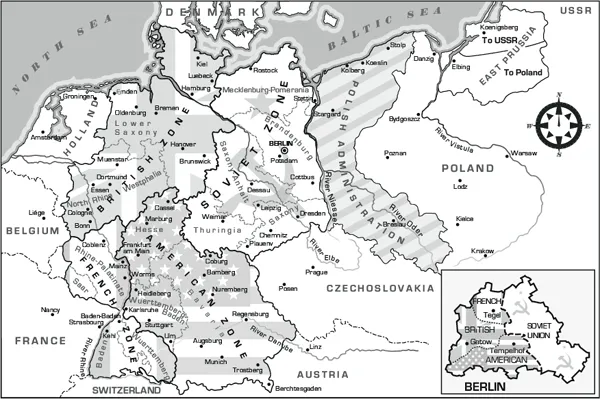
Map 1: Germany: States within the Zones of Occupation.
Two things need to be noted about this stage. Firstly, Western demands for ‘free and uninhibited’ access to Berlin were ‘noted’ but not accepted by the Soviets and, secondly, the manner in which the Western Allies were allowed to establish their garrisons in Berlin was a foretaste of things to come. When the first American and British troops set off on their separate ways to garrison their respective Sectors in Berlin, they encountered immediate and arbitrary interference at the zonal border. The Soviets not only prevented the Western Allies from making a triumphal entry into Berlin, but they demonstrated their ability to completely close down access to Berlin any time they wished to do so.
Colonel Howley, the newly appointed deputy commandant of the American Sector in Berlin, had his advance party arbitrarily reduced in size from 500 officers and men in 120 vehicles, to just 37 officers, 175 men and 50 vehicles before being allowed to enter the Soviet Zone. Then, just outside Berlin, this much-reduced force was again stopped by Soviet troops and blocked from entering the city itself. His column was diverted to Babelsberg, just outside Berlin, and prevented from proceeding for roughly one week. Finally, with an exaggerated display of Soviet hospitality, the Americans were allowed to enter Berlin. They were received at the...
Table of contents
- Cover
- Title
- Copyright
- Dedication
- Contents
- List of Maps
- Acknowledgements
- Preface
- 1. Crisis in Berlin
- 2. The Long, Difficult Road to a Dangerous Dead End
- 3. So What Do We Do Now?
- 4. Humble Expectations
- 5. Berliners, East and West
- 6. The Airlift Begins
- 7. Dedication without Glory
- 8. An Army of Worker Ants
- 9. ‘Is Anyone in Charge Here?’
- 10. Political Prisoners
- 11. The Airlift Falters
- 12. General Winter versus Father Christmas
- 13. Winning the First Confrontation in the Cold War
- 14. ‘Hurrah! We’re Still Alive’
- 15. Conclusion
- Appendix I: Timeline
- Appendix II: Contributions to the Berlin Airlift
- Appendix III: Monthly Flights and Tonnages
- Appendix IV: Casualties
- Notes and Sources
- Bibliography
Trusted by 375,005 students
Access to over 1.5 million titles for a fair monthly price.
Study more efficiently using our study tools.
Frequently asked questions
Yes, you can cancel anytime from the Subscription tab in your account settings on the Perlego website. Your subscription will stay active until the end of your current billing period. Learn how to cancel your subscription
No, books cannot be downloaded as external files, such as PDFs, for use outside of Perlego. However, you can download books within the Perlego app for offline reading on mobile or tablet. Learn how to download books offline
We are an online textbook subscription service, where you can get access to an entire online library for less than the price of a single book per month. With over 1.5 million books across 990+ topics, we’ve got you covered! Learn about our mission
Look out for the read-aloud symbol on your next book to see if you can listen to it. The read-aloud tool reads text aloud for you, highlighting the text as it is being read. You can pause it, speed it up and slow it down. Learn more about Read Aloud
Yes! You can use the Perlego app on both iOS and Android devices to read anytime, anywhere — even offline. Perfect for commutes or when you’re on the go.
Please note we cannot support devices running on iOS 13 and Android 7 or earlier. Learn more about using the app
Please note we cannot support devices running on iOS 13 and Android 7 or earlier. Learn more about using the app
Yes, you can access The Blockade Breakers by Helena P Schrader in PDF and/or ePUB format, as well as other popular books in Storia & Storia militare e marittima. We have over 1.5 million books available in our catalogue for you to explore.