Blitz survivor, ex-evacuee, veteran of five primary schools and product of a typical London suburb, Berwick Coates won a scholarship to a grammar school in 1944. All he knew about was German aircraft recognition, cricket and Hollywood films. During the following years, he had to deal with new surroundings, new subjects, new friends, V-2 rockets, his parents' broken marriage, adolescence and a post-war culture of shortage. Fortunately, he was taught by some memorable teachers, some of whom helped to shape his later life and teaching career. His account of life at a grammar school in the 1940s is interwoven with the historical context of this turbulent decade, which saw not only the devastation and deprivation of the Second World War, but also the hardships faced by a country rebuilding itself afterwards. The author's experiences will resonate with anyone who has followed a similar path.
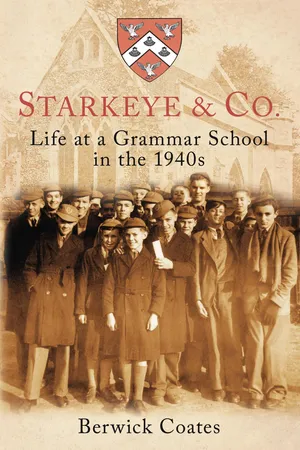
- 224 pages
- English
- ePUB (mobile friendly)
- Available on iOS & Android
eBook - ePub
About this book
Information

1
What Does E.N.S.A. Stand For?
I thought Jimmy’s signature was terrific. It didn’t bother me one bit that I couldn’t read it. Even at 10 I understood that headmasters were busy people, and it was nothing remarkable that they should have illegible signatures. After all, what with routine correspondence, school notices and hundreds of reports to sign every term, it is small wonder Jimmy was tempted to let the thing degenerate into a formal squiggle. At least it was familiar to all those under his authority – which was what mattered.
When I first saw it, on a letter to my mother requesting me to attend for interview, it was its very illegibility that impressed me – its nonchalance, its cavalier dash. All the other teachers’ signatures I had seen had been those of primary level; they always seemed to sign their names as if they were still putting handwriting exercises on the blackboard for their classes to copy. Clearly, a man who could fling such a flourish on to the bottom of a typed letter must be someone of immense learning, sophistication and – well, charisma. The fact that his name was actually James was merely by the way. It was a long time before I discovered that the initials were E.W.H.
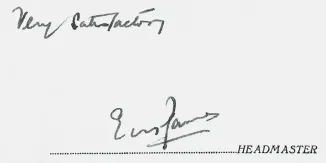
Jimmy’s signature.
It was even longer before I found out that they stood for Edward W. Harold. (To this day I do not know what the W. stood for.) This information I gleaned from a pair of large boards nailed high to the wall at the back of the stage in the hall. On them were engraved the names of every headmaster in the school’s history. Since high on the list was a ‘Mayster John Starkeye (c. 1272)’, one could not help feeling that a certain licence had been taken in the interpretation of extremely sparse documentary evidence in order to provide the school with such a lengthy lineage. A cynic might be tempted to compare it with the suspiciously comprehensive list of early popes on proud display in that big church in Rome.
However, the annalists were on safer ground with the twentieth century, and if the board stated that Edward W. Harold James became headmaster in 1940, it was reasonable to accept that he did. Of course, to small boys just about to enter a venerable grammar school for the first time, headmasters were not appointed; they did not have a past; they just were. One only pieced together their background through years of grapevine gossip. As boys’ sources of information were other equally ill-informed boys, most of whom were anxious to tell a good story, the picture that one gradually built up could hardly be said to be balanced.
We heard, for instance, that Jimmy owed his appointment to the fact that the previous headmaster, one Charles Howse, had fallen down the stairs. He really did fall, by the way; Jimmy didn’t push him. The negligent Mr Howse’s accident had not been fatal, but the effects of the fall were lengthy and painful – it was a stone staircase – and apparently very damaging to his nervous system, already in a fragile state owing to the German bombing. A slightly premature retirement followed, and Jimmy James, the deputy headmaster, was invited by a distraught board of governors to step into the breach and carry on for the duration.
So far the picture, if sad, was a consistent one: elderly gentleman, the pressure of work, the toll of the years, the added strain of wartime austerity and physical danger, the sudden painful injury, the quitting of the stage. What we found difficult to reconcile with all this was the alternative cycle of Howse legends relating to his actual tenure of office.
For instance, he was acknowledged by all memorialists to have been a terrifying disciplinarian. Small boys had been known to wet their pants if he stared at them too long. Whether the stare was fixed or absent did not matter; the predatory-serpent element in the eyes was enough to produce involuntary evacuation of many a pre-pubertal bladder. Members of staff coming down the stairs from the common room on their way to take lessons often encountered him standing outside his study with a turnip watch held significantly in his hand. His deputy, Jimmy James himself, was reputed to leave the games field and walk up the road whenever he wished to enjoy a pipe during a school cricket match on a Saturday afternoon.
Then too, the late Mr Howse had been a law unto himself in all matters concerning school routine. Morning assembly was a case in point. His many years of conducting prayers produced such clockwork mastery of the timings and spacings of the simple ritual that it became his practice to sit at a table on the stage and read his morning’s correspondence during the proceedings. When the prefect had finished reading the passage of scripture appointed for the day, the loud silence flicked a small switch in his preoccupied mind. Without looking up from the latest government circular he would say ‘Our Father’, and the entire school would obligingly recite the rest of the Lord’s Prayer. A second silence flicked a second switch, which sent him into a mumbled rendering of a last blessing, and the school filed out in a further silence broken only by the swishing of the paper-knife.
Occasionally he got his wires crossed, and at the second interval would say ‘Our Father’ for the second time. After a moment’s incredulous unease, the school would respond with Pavlovian fidelity, and recite the Lord’s Prayer all over again.
However, the awe-inspiring Mr Howse, with his fearsome authority and his fine disregard for Holy Scripture and ceremonial, was no mere freethinking bully. He was a man of infinite guile and subtlety too. In his relations with his staff he was, like Charles II with his politicians, always one jump ahead. The most oft-quoted example of this, usually delivered in tones of furtive, self-righteous shock, was his treatment of staff who wished to escape his wintry rule. Bad teachers were always provided with glowing testimonials, which dazzled any interviewers into immediate offers of new posts. Good staff he was unwilling to lose, and their testimonials mysteriously failed to please the governing bodies of other schools. Of course, he would not tell lies, or actually run the man down; but there were ways – the hints, the euphemisms, the circumlocutions, the glaring omissions. It was a sinister art, at which the devious Mr Howse was a past master.
Here then was the paradox. The first crop of Howse stories sketched in a picture of a frail, accident-prone Mr Chips broken by the wickedness of war and the slipperiness of a malignant staircase. The second cycle of legends, with their alternative emphasis on his cunning, his arbitrariness and his capacity for striking terror, produced an alarming portrait of Machiavelli, Sir Roger de Coverley and Attila the Hun all rolled into one.
It would seem to say something for the school’s resilience that it weathered no fewer than twenty-seven years of this stark autocracy. That took the school’s history back to 1913 and to the only other name I remember on that imposing roll of honour above the stage. The incumbent during the late Victorian and Edwardian era had been a shadowy figure called the Rev. Inchbald, of whom no stories survived. During the many longueurs in music lessons (always held in the hall in front of the stage because there was no classroom available to take a piano), I would frequently gaze up at his name – Rev. Inchbald – and build for myself a picture of a shiny-pated, penny-pinching clergyman, lording it over a cowed congregation of pale-faced youths all dressed like illustrations from Tom Brown’s Schooldays.
The assumption about dress was a natural one for a small boy whose reading fare at the time included racy accounts of the goings-on at a fictitious academic institution known as Greyfriars. The reality, in the days of the doodlebug and clothes rationing, was very different, and although the school regulations officially prescribed a grey suit as desirable, it was admitted that a certain latitude had to be allowed owing to the scarcity of clothing coupons. (For the benefit of those who do not appreciate the reference, I must explain that clothes too were on ration, and had been for two or three years.) As I presented myself for interview in a blue suit, and second-hand at that (though my mother always maintained, in our many discussions about this years later, that the suit was brand new), I was acutely conscious that my mother and I had interpreted the phrase ‘certain latitude’ with considerable freedom. I would not have been surprised if I had been ordered to leave on the spot, without even getting in to see the headmaster.
I was already nervous as a result of the visual impact created by the outside of the school. On the edge of a wide pavement, about 20ft from the road, was a low brick and concrete wall, in which had once been fixed, presumably, some iron railings. Behind this stood some large, straight-trunked trees, rather like sentinels. The earth around and between them was always bare, dry and hard, with the result that you somehow never thought of the trees as alive. It did not occur to you to look up to see if there were any leaves. They were the sort of trees you imagine a film director would use for the main drive of Wuthering Heights or Baskerville Hall.
Behind them lurked a double-storey facade of red brick, which a well-wisher would call mellowed, and which an evilly disposed critic would refer to as worn and grubby. To the left, as you looked at it, was a huge corrugated iron shed for bicycles, and to the right a passageway led towards the quadrangle past a tumbledown terrace of outhouses used for storing broken desks, bits and pieces of old stage equipment and general junk which successive caretakers had considered might come in useful some day.
The huge sash windows each had a lower half in frosted glass and were devoid of any curtaining. The front doors boasted a bleak pane of glass apiece and were shaped to form a pseudo-Gothic arch. The brass plate affixed to the wall on the left had had so much of its surface worn away that you could only read the lettering if you stood and craned your neck at the right angle in relation to the rays of the sun. From the road, one had no indication whatsoever of the purpose of the building – there was no notice board. It could have been anything from a union workhouse to the town residence of an impoverished duke.
Frankly, I would much rather the school had been housed in the medieval-looking chapel on the other side of the road. It looked the part so much more. (It was quite a long time before I discovered that it originally had been.)
But no, I was stuck with the red brick.
The front doors were heavy and shut behind you with a noise reminiscent of dungeons. As you crossed the threshold, you knew what Edmond Dantès had felt like on arrival inside the Château d’If.
One thing did reassure me, though. I was told to wait in the passageway outside the headmaster’s study. It was the word ‘study’. It conveyed warmth, authority, learning, remoteness, peace, pipe-smoke and tradition, all in five letters. Perhaps too it provided a feeling of ease and familiarity because of the apparent connection with the delights, nonetheless envied for being fictitious, of Greyfriars, where nearly everyone seemed to have a study, from Mr Quelch to Coker of the Fifth and Loder of the Sixth. It was the one cheering ray of light in an otherwise gloomy experience, for the interview, when it came, was, so far as I could judge, a disaster.
Jimmy sat at a desk of dictatorial dimensions, without appearing diminished by it. He had a moustache and a good head of frizzled hair, set close to the scalp, of a colour that fashionable novelists once used to describe as ‘iron-grey’. The face was impassive, yet managed to convey alertness. The eyes examined you over those little half-glasses that enabled an interviewer to glance down at a paper and look up at a candidate without any perceptible movement of the head. The very stillness made you feel somehow at ease and on your toes both at the same time. The overall impression was of a man to whom one told the truth.
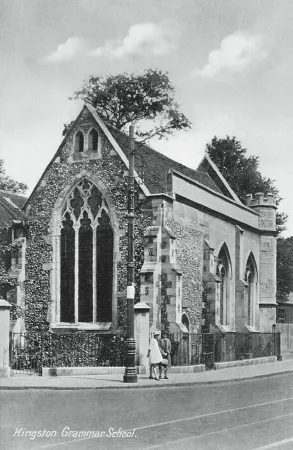
The Lovekyn Chapel. The womb of firstly Queen Elizabeth’s Grammar School, founded in 1561, and later of plain Kingston Grammar School. Its foundation went back to the thirteenth century. It claims to be the only surviving free-standing chantry chapel in the country. (Courtesy of Kingston Grammar School)
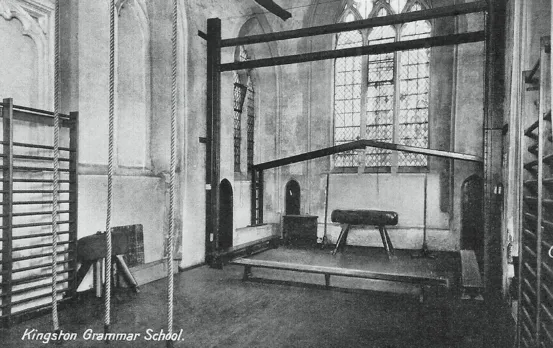
The interior of the chapel. Over the years it has served as prep school, carpentry workshop, rehearsal room, studio, and, as shown here, gymnasium. How many schoolboys can claim to have done their forward rolls in front of gothic windows? (Courtesy of Kingston Grammar School)
Once the questions began, however, the feeling of ease quickly evaporated. Certain faculties perversely deserted me at the very time I needed them most. Discretion, intelligence, memory, gumption – all left me high and dry in the face of what seemed perfectly straightforward enquiries. A capricious Providence left me only with the gift of articulate speech, so that I was able to reply ‘I don’t know, sir’, and could not even plead the dumbness of stage fright.
I reached the nadir when Jimmy said, ‘Do you know what L.P.T.B. stands for?’
Well, of course I did. I was one of those boys who collected useless information like stamps. I had notebooks full of lists of initials and abbreviations and highest mountains and longest rivers and Grand National winners and so on. L.P.T.B. was child’s play – in my case literally. At least it should have been. But something went wrong with the machinery; the brain simply would not transmit the message to the tongue. If only he had asked what C.I.D. stood for, or O.M. or MSS. Or the real showpieces like G.C.V.O. or K.O.Y.L.I. A few more seconds’ fruitless mental battle convinced me that the answer was not going to get anywhere near my vocal chords, so I glumly said ‘I don’t know, sir’ for the umpteenth time.
Jimmy made a noise which appeared to indicate that he considered my answer very significant indeed, and looked down through his glasses again. I could feel my prospects fading like morning mist in the summer sun and braced myself for the impending curt dismissal.
After a lengthy silence Jimmy looked up. He had clearly decided to give this ignoramus one last chance. The ignoramus collected his few remaining resources for one final convulsive effort … Ask me another set of initials. I’ll show you. Go on – any one you like … Jimmy cleared his throat impressively.
‘Do you – er – do you know what E.N.S.A. stands for?’
Well, that was that. Nothing else for it but to admit defeat and withdraw in as good order as possible. No point in wasting any more of his time. I straightened my shoulders.
‘No, sir.’
‘No, neither do I.’
I have no recollection of how the interview ended, but I do remember the incredulity being followed by relief and then by a sense almost of intimacy. In those four words, Jimmy had managed to convey his relief too – relief at having found a kindred spirit. Here were two mature minds which thought alike, which could not be bothered with the tiresome trivia of wartime jargon. He had conjured camaraderie out of the air.
All the time I knew Jimmy, I never lost the initial impression he had so magically created that we somehow spoke the same language. That was not to say that one was ever tempted to become familiar. He was one of those rare people who could inspire affection and awe at the same time.
He beat boys, too. He could growl and he could bite. He was a fine exponent of the Napoleonic maxim about keeping subordinates on the hop. Stories were told of his alarming habit of turning on the gas of the Bunsen burner and then groping absently for the matches. The most unruly miscreants would pause in their evildoing to gaze in fascinated horror as he fought his way through fold after fold of tattered gown to pat each waistcoat pocket. A few more seconds of puzzled grunts and the deadly hiss of escaping gas were enough to crack the strongest nerves. By the time he actually located the elusive Vestas, nothing could be seen of the class except a few stray elbows. It was worse than the flying bombs.
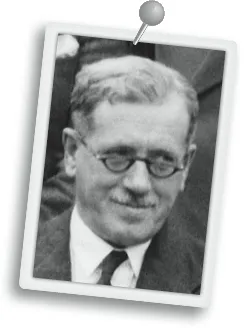
Jimmy James. Our headmaster during the very worst period of the whole twentieth century. Scores, maybe hundreds of similar schools must owe a colossal debt to men like him who kept them going.
Jimmy had his prejudices. I used to hear, many years later, that you ‘either got on with him or you didn’t’. Colleagues who were willing to put their foot on the rail and their hand in their pocket in the Three Tuns up the road were among those he apparently ‘got on with’. Ladies who lacked a sense of humour were not. A long-serving sc...
Table of contents
- Cover
- Half Title
- Title
- Copyright
- Contents
- Introduction
- 1 What Does E.N.S.A. Stand For?
- 2 A Suitable Case for Treatment
- 3 The League of Pity
- 4 Mardi le Douze Septembre
- 5 All Stations to Waterloo
- 6 One Side of the Truth
- 7 A Peak in Darien
- 8 Cercle Françis
- 9 Into the Palm Court
- 10 In Corpore Sano
- 11 Lords of Lord’s
- 12 Spare the Rod
- 13 Broadway Melody: I
- 14 The Play’s the Thing
- 15 Kulturkampf
- 16 Supporting Cast
- 17 Broadway Melody: II
- 18 La Belle France
- 19 The Banging Spoon
- 20 Class of '44
- 21 Being Prepared
- 22 Knickerbocker Glory
- 23 The Cool Sequester’d Vale of Life
Trusted by 375,005 students
Access to over 1.5 million titles for a fair monthly price.
Study more efficiently using our study tools.
Frequently asked questions
Yes, you can cancel anytime from the Subscription tab in your account settings on the Perlego website. Your subscription will stay active until the end of your current billing period. Learn how to cancel your subscription
No, books cannot be downloaded as external files, such as PDFs, for use outside of Perlego. However, you can download books within the Perlego app for offline reading on mobile or tablet. Learn how to download books offline
Perlego offers two plans: Essential and Complete
- Essential is ideal for learners and professionals who enjoy exploring a wide range of subjects. Access the Essential Library with 800,000+ trusted titles and best-sellers across business, personal growth, and the humanities. Includes unlimited reading time and Standard Read Aloud voice.
- Complete: Perfect for advanced learners and researchers needing full, unrestricted access. Unlock 1.5M+ books across hundreds of subjects, including academic and specialized titles. The Complete Plan also includes advanced features like Premium Read Aloud and Research Assistant.
We are an online textbook subscription service, where you can get access to an entire online library for less than the price of a single book per month. With over 1.5 million books across 990+ topics, we’ve got you covered! Learn about our mission
Look out for the read-aloud symbol on your next book to see if you can listen to it. The read-aloud tool reads text aloud for you, highlighting the text as it is being read. You can pause it, speed it up and slow it down. Learn more about Read Aloud
Yes! You can use the Perlego app on both iOS and Android devices to read anytime, anywhere — even offline. Perfect for commutes or when you’re on the go.
Please note we cannot support devices running on iOS 13 and Android 7 or earlier. Learn more about using the app
Please note we cannot support devices running on iOS 13 and Android 7 or earlier. Learn more about using the app
Yes, you can access Starkeye & Co. by Berwick Coates in PDF and/or ePUB format, as well as other popular books in Social Sciences & Social Science Biographies. We have over 1.5 million books available in our catalogue for you to explore.