It is notable that the first two women helping SOE in 1941 were not British. They went openly into France as civilians, under their own names.
They went there early in the war, but worked mainly in the less risky unoccupied zone, at a time when the Germans were trying to employ a charm offensive to win over the uncertain, confused and despairing citizens.
The first, Gillian Gerson – an innocent, who enjoyed playing a part – was moved to do so mainly out of love for her husband and to help France, but she did not stay too long.
The second, Virginia Hall, might be described loosely as one of the intelligentsia. She was moved by indignation at the German invasion, which she followed shortly with clandestine opposition, and she stayed in France much longer.
Both were protected by their nationality.
Whereas the first had definite objectives which she completed fast before leaving, the other came with a number of objectives, which changed and expanded during a stay of over a year.
They were the groundbreakers, preparing the way for others, and both proved very successful.
GILLIAN GERSON
Gillian Gerson was the first woman sent to France on behalf of SOE. She travelled there in May 1941, her role being that of a sightseer.
She was a young actress from South America, born in Chile in 1913, to a wealthy Balmaceda family, and because she married only a short time before the war, she still held a valid Chilean passport in the name of Gigliana Balmaceda Provasoli Gerson, with a visa for Vichy, France.
Her husband, Victor Gerson, born in 1898, the son of a wealthy Lancashire textile manufacturing family, had settled in Paris after fighting in the First World War, and opened a shop there to sell fine rugs and carpets. In the early 1930s his first wife and son died, and later in that decade he married Gillian as his second wife.
Gillian, just over twenty, newly married and settled in Paris in the Rue de Lisbon, fell in love with the city and its people. This brief but exciting new life ended abruptly when the Germans attacked France. On the signing of the Armistice in June 1940, Victor, who had already transferred most of his stock to Britain, where he had a house in Grove End Gardens, London, fled there with his wife. In London, he shortly discovered that the infant SOE organisation was interested not only in him but also in his wife, and particularly in her valid travel documents. When approached, she proved as enthusiastic in helping SOE as he was.
The result was that on 23 May 1941, Gillian left Britain on her own and travelled to Vichy and the city of Lyon, in the unoccupied zone of France, SOE making all the arrangements for her. Her journey went smoothly: no one questioned her travel papers. On arrival, acting the part of a visitor, she found that when she was at times a little lost and asked so many innocent questions, everyone forgave her for her brilliant smile. With her sharp eyes and the retentive memory of an actress, she wandered unrebuked into forbidden areas. She learned about the passes and papers citizens had to keep on their persons at all times. She watched for the extent of railway and bus controls and collected timetables and information on all kinds of transport. She discovered the legal and illegal ways of crossing between the occupied and unoccupied zones, the checks on hotels and lodging houses, the times of curfew and penalties for breaking it. She copied ration cards and noted prices of food and shortages of all kinds. In the cafés she tested the reactions of the French to the German occupation and cultivated useful contacts for the future.
Finally, loaded with information, she returned through Spain and arrived safely back in Britain around 24–25 August 1941, where she remained. As their dates may have overlapped, it might have been possible for Virginia Hall, the second of SOE’s initial agents, to meet her briefly on her way into France.
In September 1941, Victor Gerson, armed with Gillian’s intelligence, and now a trained SOE agent, parachuted with another man into occupied France. A resourceful businessman, he was on a mission to examine the creation of resistance networks to form safe and secure escape routes out of France. This DF Section route was to become known as the ‘Vic’ escape line, which under his firm leadership and strict security, continued with only a few hitches until the liberation of France.
This brave and gifted American was both an authentic SOE and OSS hero of World War II.
Gerald K. Haines (American academic)
One of the greatest women agents of the war.
Denis Rake (agent)
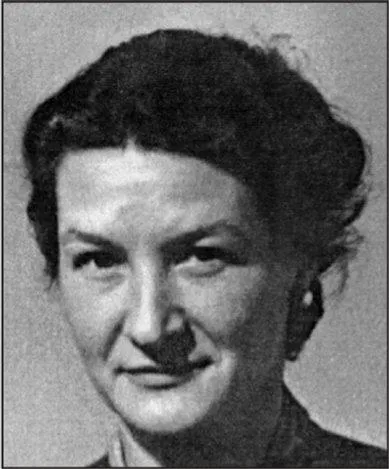
Virginia was born in Baltimore, USA, on 5 April 1906, the youngest child in a well-to-do family of English-Dutch background. Her father, Edwin Lee Hall, owned a cinema there. She knew her French and English history before that of her own country. A talented linguist, she graduated from the best schools and colleges in North America and Europe. By then she was a tall, athletic woman with soft shining almost red hair and a strong mind, together with a burning desire to belong to the American Foreign Service.
However, from the time of her father’s death in 1931, everything seemed to go wrong for her. Despite working in the American Embassy in Poland and then a Consulate in Turkey, her attempts to join her country’s Foreign Service, except as a lowly clerk, were constantly frustrated by ill luck and inflexible rules. In addition, through a snipe shooting accident in Izmir, Turkey, in December 1933, the lower half of her left leg had to be amputated. She returned home for a year, where with an artificial limb and characteristic determination she learned to walk almost smoothly by lengthening her stride. At the end of 1934, undeterred, she was again in Europe as a clerk in a US Consulate in Italy, but in the following May, on hearing that she was due to start a further posting to Estonia, she resigned, and was caught in Paris when war broke out.
Shortly afterwards she joined the French Ambulance Service, but soon discovered that hopping in and out of ambulances did not suit ‘Cuthbert’, as she had named her new leg. Disgusted by the June 1940 Franco-German Armistice, she left her ambulance and made for Britain by way of Spain, ending up in the London US Embassy.
The start of the next year saw her proposing herself as suitable for employment in SOE – anything to return to her beloved France. In addition to fluency in European languages, she had another advantage to offer. Since America had not yet entered the war, her nationality would allow her reasonably free movement in France. These gifts, allied to an imposing figure, a quick and adaptable mind, a talent for making friends, fearsome drive and an unquenchable spirit, marked her out as ideal for a special agent. Maurice Buckmaster, shortly to be head of the F service, recognising this, took her under his wing. Thus in May 1941, at the same time as permission was granted for her to become a card-carrying Foreign Correspondent of the New York Post, she began a crash course at Bournemouth on SOE ‘weapons, communications, resistance activities and security measures,’ with a little extra coaching from Buckmaster himself.
Accordingly on 23 August 1941, in keeping with her apparent status as a journalist of a neutral country, she left Britain before being slipped quietly by air into Lisbon, where she joined a Lufthansa flight to Barcelona in her own name, completing her journey by train. Her first stop was Vichy, a town of which she had a poor opinion, though it purported to be the home of the French government of the area nominally unoccupied by the Germans. When she went to register at the Police Station on her arrival, she won the confidence of the gendarmes there. Nevertheless, the city of Lyon was to become the central base for her HECKLER network, and here she operated her own ‘safe house’. Her cover name was Marie Monin, but she became Marie of Lyon to the resistance and later Philoménè, while the Free French knew her as Germaine.
However, her perceptive and informative accounts to the New York Post became fewer, while her work as SOE organiser and courier for the HECKLER network expanded and engulfed her. A bar in Lyon was known as her contact address and her activities were multifarious. Under an unflappable exterior, she was a whirlwind of activity, which ranged from advising, lodging and despatching newly arrived or lost agents, to passing others onto an escape line, once even arranging a sick organiser’s escape from hospital. She recruited new resisters and holders of safe houses and stores, telling London of landing places, but not taking part in the reception parties for RAF drops of arms, sabotage materials and much needed money for forged papers and bribes. She also had to keep in touch with the Paris underground resisters. As Ben Cowburn, another successful agent whom she helped, observed, ‘If you sit in her kitchen long enough, you will see most people pass through with one sort of trouble or other, which she promptly deals with.’ She also became a regular visitor to the American Consulate and cultivated relationships with a motley variety of people from a gynaecologist, a factory owner, nuns and prostitutes, a brothel keeper, to an Abbé, as well as important individuals of all persuasions including Police chiefs, who turned a blind and sometimes benevolent eye on her many activities.
Although another task was the distribution of the rare and invaluable wireless sets to nominated agents, her handicap was having no wireless operator of her own to enable her to contact London with her requests and information, causing her to use others – and placing herself in real danger of compromising her security. She was indeed a grossly overworked spider in the midst of a gradually growing web, with, unfortunately, an undiscovered Abwehr spy in her network. Yet her work was key to getting numerous early F section networks started in France.
When Germany finally declared war on the United States in mid-December 1941, she had to be ‘a little more careful’. She was already aware of the mounting problems of another agent, Pierre de Vomécourt and his AUTOGYRO network. His arrest in April 1942, through the capture of one of his couriers to her, was the death knell of his network and others around him. Untouched herself, but with her sharp nose for danger, she must have foreseen future disasters.
September 1942 seemed to presage the arrival of another agent to help or possibly replace her, as she had been requesting London. Alas, circumstances turned against her when the courier arrived, only to be lost to another network. However, the Allied landings in north-west Africa on 8 November 1942, precipitated the German occupation of her slightly freer Vichy Zone. Tipped off that same night that the Germans were making for Lyon, she hurriedly decamped, much to the frustration of the Gestapo, hot on the heels of ‘that Canadian bitch’ (their geography was a bit hazy), also known as the ‘Limping Lady’ to the resistance. With three other escapees, whom she picked up on her way, she successfully surmounted the Pyrénées on foot in the depths of winter, in about 48 hours. This was no small achievement for anyone, let alone someone with an artificial leg – she had been told to eliminate ‘Cuthbert’ if troublesome by London. Bad luck saw the party arrested on the border of neutral Spain, and imprisoned in the notorious camp Miranda de Ibro, from where she was extricated by the American Consul in Barcelona.
Again in London by January 1943, it was not until May before SOE decided to use her again and sent her to Madrid, Spain, seemingly as correspondent for the Chicago Times, but really to gather information useful for the DF service on the escape routes. Bored with such inactive, mundane work, she was back in Britain by November, and eager to return to France.
Now she had two aims. One was to become her own wireless operator, the other was to be transferred to the Office of Strategic Services (OSS) of the United States, now that America had joined the Allies. SOE had felt that she was too well known to be safely employed in France, but seemingly OSS had no such fears. She achieved both her aims. She was accepted by OSS and had her wireless training at the SOE school at Thame Park.
On 21 March 1944, she was landed from a British torpedo boat onto the coast of Brittany near Brest, under the codename Diane, and the cover name of Mademoiselle Marcelle Montegrie, a social worker. Her messages were still sent through SOE, as OSS and SOE worked closely together in London, but this time she was to establish an OSS network called SAINT. Alongside Virginia was another OSS officer, whose discretion and reliability Virginia came to distrust, so she tried to shake him off as soon as she could. She then made her way slowly to the rural department of Cher,...