![]()
p.25
1
THE OPENNESS OF SPACE ON TWENTIETH-CENTURY REALITY TELEVISION
Reality television’s precursors appeared sporadically on television schedules in the twentieth century. Candid Camera (first run, 1948–67) went through a series of cancellations and reappearances from 1948–92. The show shifted on the schedules in the 1950s, airing for three years in syndication and then reappearing on NBC in 1958 as a segment on The Jack Paar Tonight Show (1957–62) and on CBS in 1959 as part of The Garry Moore Show (1950–67). Candid Camera’s longest consecutive run was on CBS as a Sunday evening show from 1960–67. An American Family became a sensation in 1973 but failed to generate any cycle of reality television in the 1970s, and The Real World (1992–present) premiered on MTV in 1992. These programs appeared at different historical moments and surfaced in different locations on television, ranging from broadcast to public to cable television. Although these programs have been reclaimed as reality television’s grandparents and parents, or the “first wave” of reality television, they differ from each other in their strategies for entering real spaces and their depictions of ordinary people.
The few examples of reality shows from the twentieth century appeared in different historical climates, which had an interesting effect on the open nature of space on these programs. At a macro-level, these programs open space by going into egalitarian spaces associated with the industrial organization of society to show areas inhabited by all classes and by portraying social relations in these spaces as malleable in order to liberate people from oppression. But from a micro-level, these shows—because they are so spread out in the history of twentieth-century television—are marked by three significant differences: (1) they engage with very different, historically situated constructions of televisual realism and notions of the ordinary; (2) they interact with contrasting discourses of reality associated with early broadcast, public, and cable television; and (3) they engage with different social issues shaping the experience of space in their contemporary culture. These three items influence the way space is presented aesthetically, politically, and culturally on each program. This chapter looks at how the historical poetics of these programs interact with larger social issues to open urban space.
p.26
TURNING ORDINARY PLACES INTO EXTRAORDINARY SPACES ON CANDID CAMERA
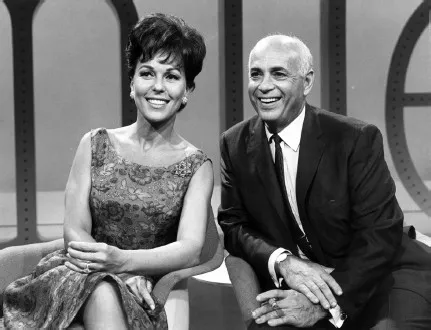
Space is a defining feature of Candid Camera. Each episode involves show creator Allen Funt and a cohost—and sometimes the prank actors—introducing the sketches to a studio audience. Sketches were shot in real locales, typically in the New York City area—either inside a business, on city streets, or on highways. But Candid Camera travelled the United States and the world, shooting in Arizona, London, Paris, and Moscow. Candid Camera went to urban locations open to all classes and re-opened the social relationships structuring those spaces. Candid Camera filtered these spatial politics through discourses of the ordinary and the extraordinary in an effort to capture how life is lived and how life could be lived. The show was part of a post-World War II television cultural moment that embraced the medium for its ability to convey realism, but Candid Camera challenged what realism was and how real life could operate.
Space on Candid Camera is simultaneously specific and generic. This tension develops through the show’s dual format. Studio segments have Funt, his cohost, and the actors introduce each sketch through an explanation of where filming takes place—right down to a specific address, a specific store, or a specific highway. The studio segments create a detailed linguistic map with exact coordinates for each prank. The mapping process operates through what Kent C. Ryden calls a cartographic discourse, which:
p.27
The emphasis on precise locations never ventures into a discussion of local cultures.
The on-location shooting used an aesthetic that made space generic. In “The Talking Mailbox” sketch, Funt places a microphone in a New York City mailbox. A crew sits in a car several feet away. One crew member talks to people who pass the mailbox. Another crew member secretly films these encounters through a car window. The covert nature of filming never visually maps space in complete ways. Funt used long shots to capture the prank in action. Initially he had his camera operator switch the lenses for a close up of the victim’s reaction. Eventually a zoom replaced the lens switch.2 “The Talking Mailbox” begins with a long shot of the mailbox. The foreground of the frame includes a New York City mailbox. The middle third is a street intersection. The remaining third shows a city block. A drug store is across the street, but the framing fails to include the store’s name, though it does show the attached buildings. The image lacks visual clarity; it doesn’t show if the attached buildings have stores on the bottom level or if they are strictly apartment buildings. The visual information is so generic that this could be any street corner in a U.S. city. Funt switches to a medium shot and then a close up as he continues with each person who approaches the mailbox. The medium shot provides some information about the locale, but it is even less specific. We can now see words such as “air mail” and “delivery” on the mailbox, but we now see just the side of the drug store, which reveals in more detail a window display on cold remedies. The close up includes just the victim’s face and torso and the mail box to reveal the participant’s shock.
p.28
Funt preferred indoor shoots because of the technical difficulties of shooting outside; indoor shoots also portray space generically. Funt felt the ambient noise of outside shoots overpowered the sound of filmed participants. Inside shoots allowed for precise placement of hidden mics. Additionally, Funt used two-way mirrors inside to conceal the camera. Funt also believed that lighting presented a problem outside, as natural light often made the image too dark.3 One such indoor location Funt chose was Bickford’s Diner in Queens for the “Amplified Eating Sounds” sketch. They placed mics above and below a counter to magnify the sound of a person eating by thirty times. The camera was set up behind a two-way mirror in the kitchen. Although a few shots include a Bickford’s menu, there is no larger construction of neighborhood space. No exteriors display the neighborhood. The interior long shots are so generic that this could be any diner in the United States. The sketch goes between the long shot establishing the space of the diner to close ups of people’s comically disturbed reactions to the magnified sound. The specifics of space are told to the studio and television audience, but these specifics are not captured visually on screen.
p.29
Space is never exclusionary on Candid Camera. The generic depictions of urban locales make it seem like these spaces are open to any citizen. Funt was very fond of “The Talking Mailbox” skit because many of the people who talked to the mailbox were working class, but he loved that an uptight wealthy man talked to the mailbox just like everyone else.4 The generic depictions of space make it impossible to know the class dynamics of neighborhoods shown on screen. For instance, the sketch “Door on a Vacant Lot” purposefully contrasts class codes. In the studio segment, Funt tells the audience they filmed on an abandoned lot on the East Side. He then tells the audience they put a door frame with the address 440 East 84th Street in the middle of the lot and had a package delivered there. The long shot of the lot shows land littered with crushed concrete. The joke is that the voice that answers the delivery man’s ring is a man with a refined British accent. The joke becomes funnier when the Brit asks the delivery man to come through the door and wait for him at the table in the middle of the lot. After the delivery man enters, the Brit comes in and proceeds to have a cup of tea. The class codes cancel each other out in a story about a city that anyone can inhabit; however, those familiar with the address 440 East 84th would know this is in the exclusive part of the Upper East Side near the mayor’s house, Gracie Mansion. Despite this, the anonymity of space on Candid Camera has an egalitarian ethos.
The indecipherability of classed locations on Candid Camera resonated with a larger sense of spatial reorganization brought about by television in the postwar era. Postwar television industry workers spoke about the medium’s ability to construct spatial relationships that obliterated cultural hierarchies created through class stratification. Western culture placed the arts in a common culture until the nineteenth century, when society divided tastes along class lines and made the arts occupy geographic zones reserved for the upper class. Plays went from being attended by all classes to being priced for the elite. Literature moved from common culture to universities reserved for the elite. Museums opened up in wealthy areas of towns.5 Although these class-based taste cultures continued to thrive in the twentieth century, television challenged them in order to create virtual space where all classes could share the same culture. In the late 1940s, a majority of television was shot live in New York City. Broadcasting technology allowed a live performance in New York City to be distributed live to remote areas of the country so that culture was no longer reserved for the urban elite. Armina Marshall, a member of the Theatre Guild—a Broadway production company also active in radio and television—said their broadcast programs “were designed to bring living theatre into the homes of millions . . . especially in those areas where professionally mounted stage plays were not available to the public.”6 Elsewhere, I have argued that some 1950s television dramas became associated with postwar art cinema, but whereas art films only showed in a select number of elite film theatres in cities and college towns, television dramas brought this sophisticated form of narrative to the mass audience.7
p.30
Funt’s urban landscapes maintained a virtual space that levelled classed distinctions. Although post-World War II industrial society required all classes to live in cities, urban areas still had neighborhoods that housed a specific class population. Rich areas of cities such as New York’s Upper East Side were still unaffordable to middle and working classes, who would more than likely live in the outer boroughs. Funt’s program is unique in that, while other programs sought to level class from the standpoint of a text’s cultural heritage, Funt levelled class by making all urban areas part of the same generic classless space.
Funt’s commitment to this politics of space stemmed from his own contradictory relationship to class structures. Funt’s class status is complicated due to his father’s financial successes and failures as a businessman. Sometimes the family had enough money to vacation in Europe, and at others times they could not pay bills. However, Funt’s family was well off enough to send Allen and his sister to the elite Ivy League university Cornell. Funt earned riches in the radio and television indus...