Essentials for Blended Learning provides a practical, streamlined approach for creating effective learning experiences by blending online activities and the best of face-to-face teaching. Effective blended learning requires rethinking of teaching practices and a redesign of course structure. Suitable for instructors in any content area, this book simplifies these difficult challenges without neglecting important opportunities to transform teaching. The revised second edition is more streamlined and easier to use, and includes more real-world examples of blended teaching and learning, the latest technologies, and additional research-based learning activities.
eBook - ePub
Essentials for Blended Learning, 2nd Edition
A Standards-Based Guide
- 202 pages
- English
- ePUB (mobile friendly)
- Available on iOS & Android
eBook - ePub
About this book
Information
Part 1 Understanding Blended Learning
Chapter 1 Blended Teaching and Learning
1.1 Changing World, Changing Learners
We live in a blended world. Most of us weave online and face-to-face interactions with people every day, throughout the day. Information and media are available at our fingertips and on-demand, through smartphones, tablets, laptops. Connected, digital technology is becoming a natural part of our physical environments. We are each “blending” physical and digital activities to create personalized, optimal life experiences. This is what blended education is all about: designing learning experiences online or onsite, based on the relative strengths and weaknesses of each mode.
Blended courses mix the best of onsite and online to create new, more effective learning experiences for learners. Research suggests blending can have a positive impact on efficiency, convenience, and learning outcomes. By moving more of the learning to online environments, blended courses add flexibility to participants’ schedules, provide clearer organization, and can support more active learning. Blended courses can also tap into the socially networked aspects of our modern lives to help learners venture beyond the traditional confines of the classroom.
As technology becomes further integrated into our lives, we expect that education will eventually abandon the term “blended”. But, for many teachers, actively teaching and fostering learning online is still new and unknown. Even for teachers who are comfortable teaching online, blended learning creates so many possibilities that it may be hard to determine what’s most effective for learning. This book is written to guide all teachers to maximize the benefits of blended learning.
A Day in the Connected Life
The first thing Devlin does after waking up is check his smartphone to preview his calendar and task list. On his bus ride to work, Devlin’s phone notifies him that his teacher has posted a new grade and given feedback on his paper. Devlin quickly reads the feedback and annotations through a mobile app, and begins thinking about revisions he might make.
At lunchtime, Devlin reaches out to a friend in another department via text message, and they both use online social media services to get recommendations for a local restaurant. The restaurant turns out to be pretty good, and Devlin rates it on his favorite social network site so his friends and family can learn about it.
After lunch, Devlin starts a shared document with teammates in his business course so they can begin collaborating on a class presentation. He quickly searches the web for information, summarizes it with hyperlinks in an online document, and adds his teammates as co-authors so they can collaborate digitally.
After work, Devlin arrives at home and asks aloud if there are any new announcements in his courses. A digital voice responds that, yes, there is one new announcement in his business course. He loads his university’s LMS on his tablet and watches the video announcement recorded by his teacher, providing some tips on how to close an oral presentation. Below the announcement, he reads some back-and-forth between classmates who are digging deeper in to the topic and clarifying the teacher’s announcement.
Devlin now has a head start on his course responsibilities, and will process what he’s seen and read that evening.
Thanks to nearly constant access to the internet, Devlin’s daily life is blended with online services and information that allow him to accomplish more, efficiently and in a way that is adapted to his lifestyle.
1.2 Types of Blended Learning
Blended learning is a combination of onsite (i.e. face-to-face) and online experiences. The purpose of blending is to make teaching and learning experiences more flexible, efficient, and effective by designing for the best of each mode.
This is why blended courses are different from both online and onsite courses, both structurally and pedagogically. If you imagine a spectrum of technology-enhanced learning, with traditionally onsite learning on the left and fully online learning on the right (Figure 1.1), blended learning could fall anywhere in between the two. Some will decide that a certain percentage of the course must be online, or that a certain amount of traditionally onsite meetings be replaced with online activities, but these measured determinations are often arbitrary.

Figure 1.1 A spectrum of technology-enhanced teaching or learning
The most important aspect of the blend is the pedagogy, how you teach and how students learn during the online time to increase active learning, develop an engaged learning community, and promote learner autonomy. These pedagogical aspects are supported by the structural aspects of a blended course. We’ll explore this idea further in Chapters 7 and 8.
Hybrid: Blending by Regularly Reducing Onsite Sessions
Blending a traditionally onsite course involves using online learning activities to supplement or support onsite learning. A hybrid course is a blended course where online learning activities are designed to replace a significant amount of onsite learning activities. A hybrid course design reduces the amount of time spent onsite. If you’re used to teaching completely online, introducing onsite, face-to-face meetings effectively turns your course into a hybrid.
Reducing the number of onsite meetings is one way that blended courses move beyond simply “technology-enhanced” or “web-enhanced” courses. A three-credit college course that meets on Tuesdays and Thursdays might, as a blended course, meet only on Tuesdays.
Does that mean the Thursday session now simply happens online? Possibly. But you can also think about the Thursday onsite time as merging into a broader series of teaching and learning activities that already happen outside of the physical classroom (Figure 1.2). In a traditional class, those learning activities may be simply reading a textbook, studying, or working on assignments. Often learning time that happens outside of class is spent how each student deems best.
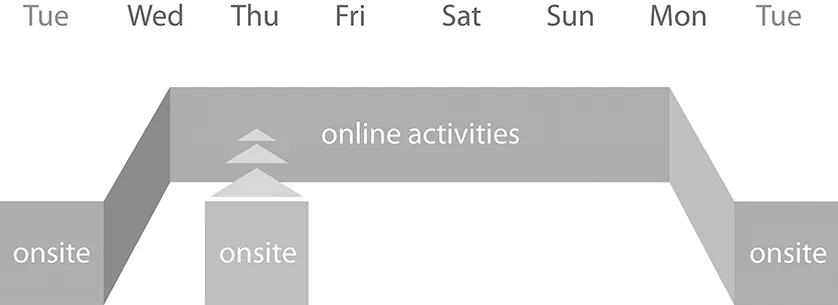
Figure 1.2 Moving learning experiences online
Online technology in a blended course gives teachers more options for guiding and engaging students in learning activities outside of class. Students may watch an online video, engage in an online discussion with their classmates, take an online quiz, or review peers’ papers or projects. In a hybrid course, some of these activities replicate what would normally happen onsite, but more often teachers choose online activities that wouldn’t be feasible onsite.
Similarly, a blended course leverages the strengths of onsite environments. Teachers of a hybrid course in particular must maximize the limited onsite time, focusing students on activities that take advantage of the environment, including the fact that learners and teachers are face-to-face in real-time. Because of this, onsite learning in a hybrid course tends to be less teacher-centered and more active and hands-on for students, with teacher- or peer-supported learning activities.
Flipped Classroom: Blending by Swapping Learning Activities
Especially popular in primary and secondary schools, the flipped classroom model puts lectures or presentations online while turning “homework” assignments into the onsite activities. The flipped classroom model works in higher education as well, though teachers of humanities and social sciences may find their course is already flipped because students read outside of class and engage in discussions or other activities onsite.
Tip
Avoid the “course and a half” syndrome, where a blended course becomes more work simply by adding to—not replacing—onsite activities. Chapter 4 addresses this challenge.
Hyflex: Blending by Letting Students Choose Online or Onsite
Yet another way to blend a course is to design a fully online course with regular, optional onsite sessions for those students who want face-to-face interactions or need extra help. This is sometimes c...
Table of contents
- Cover
- Half Title
- Series Page
- Title Page
- Copyright Page
- Table of Contents
- Foreword
- Introduction to this Guide
- Part 1: Understanding Blended Learning
- Part 2: Designing Your Blended Course
- Appendix 1 Blended Course Standards Checklist
- Appendix 2 Matching Learning Outcomes to Cognitive Processes
- Index
Trusted by 375,005 students
Access to over 1.5 million titles for a fair monthly price.
Study more efficiently using our study tools.
Frequently asked questions
Yes, you can cancel anytime from the Subscription tab in your account settings on the Perlego website. Your subscription will stay active until the end of your current billing period. Learn how to cancel your subscription
No, books cannot be downloaded as external files, such as PDFs, for use outside of Perlego. However, you can download books within the Perlego app for offline reading on mobile or tablet. Learn how to download books offline
Perlego offers two plans: Essential and Complete
- Essential is ideal for learners and professionals who enjoy exploring a wide range of subjects. Access the Essential Library with 800,000+ trusted titles and best-sellers across business, personal growth, and the humanities. Includes unlimited reading time and Standard Read Aloud voice.
- Complete: Perfect for advanced learners and researchers needing full, unrestricted access. Unlock 1.5M+ books across hundreds of subjects, including academic and specialized titles. The Complete Plan also includes advanced features like Premium Read Aloud and Research Assistant.
We are an online textbook subscription service, where you can get access to an entire online library for less than the price of a single book per month. With over 1.5 million books across 990+ topics, we’ve got you covered! Learn about our mission
Look out for the read-aloud symbol on your next book to see if you can listen to it. The read-aloud tool reads text aloud for you, highlighting the text as it is being read. You can pause it, speed it up and slow it down. Learn more about Read Aloud
Yes! You can use the Perlego app on both iOS and Android devices to read anytime, anywhere — even offline. Perfect for commutes or when you’re on the go.
Please note we cannot support devices running on iOS 13 and Android 7 or earlier. Learn more about using the app
Please note we cannot support devices running on iOS 13 and Android 7 or earlier. Learn more about using the app
Yes, you can access Essentials for Blended Learning, 2nd Edition by Jared Stein,Charles R. Graham in PDF and/or ePUB format, as well as other popular books in Education & Education General. We have over 1.5 million books available in our catalogue for you to explore.