Creativity Across Domains: Faces of the Muse sorts through the sometimes-confusing theoretical diversity that domain specificity has spawned. It also brings together writers who have studied creative thinkers in different areas, such as the various arts, sciences, and communication/leadership. Each contributor explains what is known about the cognitive processes, ways of conceptualizing and solving problems, personality and motivational attributes, guiding metaphors, and work habits or styles that best characterize creative people within the domain he or she has investigated.
In addition, this book features:
*an examination of how creativity is similar and different in diverse domains;
*chapters written by an expert on creativity in the domain about which he or she is writing;
*a chapter on creativity in psychology which examines patterns of performance leading to creative eminence in different areas of psychology; and
*a final chapter proposing a new theory of creativity--the Amusement Park Theoretical Model.
This book appeals to creativity researchers and students of creativity; cognitive, education, social, and developmental psychologists; and educated laypeople interested in exploring their own creativity.
- 304 pages
- English
- ePUB (mobile friendly)
- Available on iOS & Android
eBook - ePub
About this book
Information
Chapter 1
The Creative Process in Poets
What makes up the specific talent of the poet? What skills are shown, or acquired on the way to expertise? There is the musical sense of making rhythm and rhyme, consonance and dissonance in conscious or unconscious patterns. There is the interest in inner probing of the self. There is the need to see life more deeply than most, and if so, to tell about it in formal patterns of language. The poet can make an image that relates metaphorically to what is being discussed so that the thing itself breaks open and is illuminated through the choices or analogies that the writer has made. The poet often stubbornly insists on these metaphors, which at first may seem strange but then become commonplace to the observers. Ultimately, although the Impetus for writing may stem from emotion, the poet is inspired by language and its implications. As Nobel laureate for poetry Joseph Brodsky said, “If there is any deity to me, it’s language” (Plimpton, 1988, p. 399).
From where does poetry stem? Poetry’s connection with divinity goes back even farther than the Greeks, who called poetry “divine madness” (Plato, 1952, p. 134). The events of September 11, 2001, caused the nation to turn to poetry as solace, as comfort (personal communication, Caroline Kennedy on the Diane Rheem Show, July 5, 2002, WCPN Cleveland). Our souls need poetry in ways we do not need other forms of literature except perhaps drama, which also has divine roots in sacred rituals played out in places of worship (Piirto, 1999b). Poet Ted Hughes (Heinz, 1995) said that poetry exists on a deep, bottom level: “We all live on two levels—a top level where we scramble to respond…to…impressions, demands, opportunities. And a bottom level where our last-ditch human values live…poetry is one of the voices of the bottom level” (p. 90).
Whereas Freud (1908/1976) thought these visionary works stemmed from personal experience, Jung thought they stemmed from the primordial. Jung (1933) maintained that the artist was a vehicle, “one who allows art to realize its purposes through him” (p. 171). The life of the poet cannot explain the work of the poet: “It is his art that explains the artist, and not the insufficiencies and conflicts of his personal life” (p. 171). My point of view is similar—although the life of the artist (person) is interesting, the work of art stands on its own; through somewhat mysterious channels it speaks for all people who find a relationship to it. This is perhaps best explained in people’s bonding to popular songs, which are the society’s rune songs, or poetry.
However universal the impulse to write poetry may be, this chapter uses examples from only those poets who have met a certain standard of peer review by virtue of publication in recognized literary venues. The standard for being cited or discussed in this chapter is that the poets discussed here would have or have met the criteria in their nations or countries for being listed in the U.S. Directory of Poets and Writers. In order to qualify, a writer must have 12 points of accumulated credit, with the following as means of qualification: one published poem counts as 1 point; a published novel counts as 12 points, a published book of poetry counts as 12 points, and having received an established literary award counts as 4 points. In 1999–2000, there were 4,050 poets and 1,850 fiction writers. Performance writers numbered 71 people, and those who are listed as both poets and fiction writers numbered 1,225. (I am among the 1,225. See Piirto, 1985, 1995a, 1996a, 1996b.) Many of the studies done on poets have not used such a high standard; in this article, I try to focus on studies in which this publication and peer review standard has clearly been met.
Each field defines its “experts” through peers. The idea of individual, domain, and field is pertinent here (Feldman, Csikszentmihalyi, & Gardner, 1994). A domain is “a formally organized body of knowledge that is associated with a given field” (p. 20). Mathematics is a field, but algebra, geometry, number theory, are domains. Literature is a field, but poetry is a domain. Feldman et al. noted, “Domains have representational techniques that uniquely capture the knowledge that is in the domain” (p. 22). This is done through symbol systems unique to the domain, a special vocabulary, and special technologies used only within that domain. A field is transformed by individual creators pushing the boundaries of their domains. In order to transform a field, the creator must have mastery of the theory, the rules, the ways of knowing of that field, and also of the domain that is being used to transform it.
Creative people, no matter what their field, have certain characteristics in common. Although this chapter is about poets, most other creative producers also possess these characteristics. Among these are certain core attitudes: risk taking, or taking chances in their field; self-discipline, an ability to constantly work with their talent, to practice and practice; motivation, both to do the work and to promote the work; a sense of naiveté, or openness, that constitutes the ability and willingness to see the old in new ways; and unconventionally, or the ability to inure oneself against pressures to conform. I have constructed a model called the Piirto Pyramid of Talent Development that illustrates this (Fig. 1.1). This model has guided my work on talent in domains (Piirto, 1994/1999, 1992/1998, 2002). It is a contextual framework that considers person, process, and product, as well as environmental factors.
THE PIIRTO PYRAMID OF TALENT DEVELOPMENT
1. The Genetic Aspect
At the base of the pyramid is the level of genes—the DNA combination of one’s father and one’s mother and their ancestors. Writing ability sometimes runs in families, but most writers do not come from families in which writing was the family profession. Whether talent is inherited or environmental is currently at issue. Much is inherited, but the environment also has an important place in working with what is inherited (Piirto, 1992/1998, 1994/1999, 2002).
2. The Emotional Aspect: Personality
Many studies have emphasized that successful creators in all domains have certain personality attributes in common. These make up the base of the model. Among the personality attributes are androgyny (Barron, 1969; Csikszentmihalyi, Rathunde, & Whalen, 1993; Piirto, 1992/1998; Piirto & Fraas, 1995); creativity1; imagination (Dewey, 1934; Langer, 1957; Plato, 1952; Rugg, 1963; Santayana, 1896); insight (Davidson, 1992; Sternberg & Davidson, 1995); intuition (Myers & McCaulley, 1985); the presence of overexcitabilities, or intensity (Dabrowski, 1965; Dabrowski & Piechowski, 1977; Piechowski, 1979; Silverman, 1993); passion for work in a domain (Amabile, 1983, 1989, 2001; Benbow, 1992; Bloom, 1985; Piirto, 1992, 1994, 1998a,
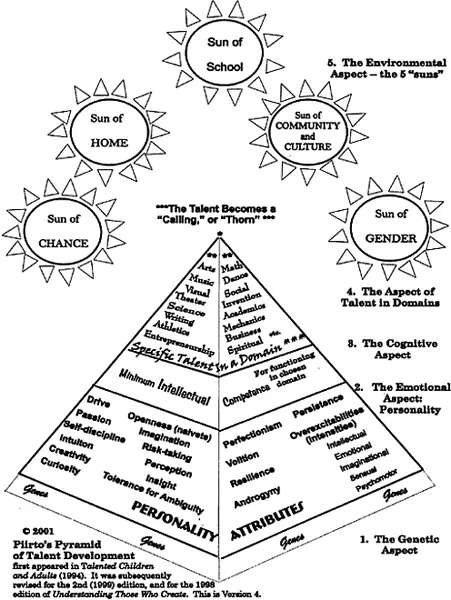
FIG. 1.1. Pyramid of talent development.
1998b, 1999a, 1999c, 2002); perceptiveness (Myers & McCaulley, 1985; Piirto, 1998a, 1999d); perfectionism (Adderholdt-Elliot, 1991; Silverman, 1993); persistence (Renzulli, 1978); resilience (Block & Kremen, 1996; Jenkins-Friedman & Tollefson, 1992); risk taking (Barren, 1969; MacKinnon, 1978; Renzulli, 1978); self-efficacy (Sternberg & Lubart, 1992; Zimmerman, Bandura, & Martinez-Pons, 1992); tolerance for ambiguity (Barron, 1968, 1995); and volition, or will (Corno & Kanfer, 1993).
This list is by no means discrete or comp...
Table of contents
- Contents
- Acknowledgments
- Introduction: How People Think, Work, and Act Creatively in Diverse Domains
- Chapter 1 The Creative Process in Poets
- Chapter 2 Flow and the Art of Fiction
- Chapter 3 Acting
- Chapter 4 Should Creativity Be a Visual Arts Orphan?
- Chapter 5 Creativity and Dance—A Call for Balance
- Chapter 6 Musical Creativity Research
- Chapter 7 Domain-Specific Creativity in the Physical Sciences
- Chapter 8 Creativity in Psychology: On Becoming and Being a Great Psychologist
- Chapter 9 Creativity in Computer Science1
- Chapter 10 Engineering Creativity: A Systems Concept of Functional Creativity
- Chapter 11 Creativity as a General and a Domain-Specific Ability: The Domain of Mathematics as an Exemplar1
- Chapter 12 Creative Problem-Solving Skills in Leadership: Direction, Actions, and Reactions1
- Chapter 13 Emotions as Mediators and as Products of Creative Activity
- Chapter 14 Selective Retention Processes That Create Tensions Between Novelty and Value in Business Domains
- Chapter 15 Management: Synchronizing Different Kinds of Creativity
- Chapter 16 Creativity in Teaching: Essential Knowledge, Skills, and Dispositions1
- Chapter 17 The Domain Generality Versus Specificity Debate: How Should It Be Posed?1
- Chapter 18 The (Relatively) Generalist View of Creativity
- Chapter 19 Whence Creativity? Overlapping and Dual-Aspect Skills and Traits
- Chapter 20 The Amusement Park Theory of Creativity
- Author Index
- Subject Index
Trusted by 375,005 students
Access to over 1.5 million titles for a fair monthly price.
Study more efficiently using our study tools.
Frequently asked questions
Yes, you can cancel anytime from the Subscription tab in your account settings on the Perlego website. Your subscription will stay active until the end of your current billing period. Learn how to cancel your subscription
No, books cannot be downloaded as external files, such as PDFs, for use outside of Perlego. However, you can download books within the Perlego app for offline reading on mobile or tablet. Learn how to download books offline
We are an online textbook subscription service, where you can get access to an entire online library for less than the price of a single book per month. With over 1.5 million books across 990+ topics, we’ve got you covered! Learn about our mission
Look out for the read-aloud symbol on your next book to see if you can listen to it. The read-aloud tool reads text aloud for you, highlighting the text as it is being read. You can pause it, speed it up and slow it down. Learn more about Read Aloud
Yes! You can use the Perlego app on both iOS and Android devices to read anytime, anywhere — even offline. Perfect for commutes or when you’re on the go.
Please note we cannot support devices running on iOS 13 and Android 7 or earlier. Learn more about using the app
Please note we cannot support devices running on iOS 13 and Android 7 or earlier. Learn more about using the app
Yes, you can access Creativity Across Domains by James C. Kaufman,John Baer in PDF and/or ePUB format, as well as other popular books in Psychologie & Psychologie cognitive et cognition. We have over 1.5 million books available in our catalogue for you to explore.