Integrating Neuropsychological and Psychological Assessments is a resource for neuropsychologists, psychologists, teachers and parents who wish to address both the neurologically- and emotionally-based difficulties with which their children are presenting. In addition to a thorough description of neuropsychological and psychological assessment tools, this book also provides professionals with a unified approach to using the results from assessments to understand and integrate cognitive, behavioral, social and emotional functioning in school-age children. It posits that to educate and treat children who are struggling in school due to unique cognitive or emotional vulnerabilities, the whole child must be considered to decipher their needs and implement interventions. Cultivating a therapeutic relationship that integrates the emotional and relational functioning of the child enhances both their learning and ability to successfully navigate the world.
eBook - ePub
Integrating Neuropsychological and Psychological Evaluations
Assessing and Helping the Whole Child
- 294 pages
- English
- ePUB (mobile friendly)
- Available on iOS & Android
eBook - ePub
Integrating Neuropsychological and Psychological Evaluations
Assessing and Helping the Whole Child
About this book
Information
1
Introducing the Whole Child
Cognition, Behavior and Emotion
In this chapter, we describe what we mean by “the whole child” within the framework of the neuropsychological evaluation process. Within this context, we argue that a neuropsychological evaluation must consider a broad approach that includes not just an analysis of cognition as it relates to neural functioning, but also a careful examination of behavioral, social and, most importantly, emotional functioning as assessed by a battery of psychological tests. By taking a narrow perspective that serves to link only neural structure and cognitive functioning, one fails to appreciate the complex relationship between the behavioral, social and emotional factors that impact neurology as well as the neurological factors that contribute to the behavioral, social and emotional functioning of the child. It is the relationship between these factors that, ultimately, determines a child’s ability to negotiate his or her educational and home environments. In the following pages, we will argue that, contrary to current usual practice, a full neuropsychological evaluation not only must include tests of cognitive and academic functioning but also must carefully assess a child’s behavioral, social and emotional functioning as a means to understand the “whole child.”
Without doing so, one is faced with a challenge not unlike that of the characters in the parable of the Blind Men and the Elephant in which a number of blind men are invited by their king to explore different parts of an elephant. Each describes their separate part; one feels the trunk and claims an elephant is like a snake, another feels an ear and describes the elephant as a winnowing basket, yet another feels a leg and describes an elephant as a tree trunk and so forth. They set to arguing, failing to consider that each is correct in describing their one part. Because they have not consulted with one another to integrate their perceptions, however, they are left blind to the bigger picture. Without a comprehensive assessment of a child’s functioning, like the blind men, one is left with only a partial picture of the child.
The Need for Integration
Traditionally, the disciplines of neuropsychological and clinical psychological assessment have occupied separate domains. For decades, the purview of neuropsychology has been limited to understanding the relationship between structure and function, specifically, how behavior is impacted by a lesion in a localized neural structure. As described by Baron, “this concern with the linkage between behavior, or neurocognitive function, and the brain substrate defines the field of neuropsychology” (Baron, 2004, p. 5). Baron has gone on to explain that “a distinction between clinical psychology and neuropsychology can be made” (p. 5). However, it is becoming clear that this definition of neuropsychology is limited and limiting. Therefore, maintaining the boundary between these fields is a position that is increasingly difficult to defend. A failure to integrate them represents a profound disservice to those who are experiencing behavioral, social, psychological and/or emotional fallout from underlying neurologically based conditions. This is particularly true for children who are emotionally and behaviorally disturbed.
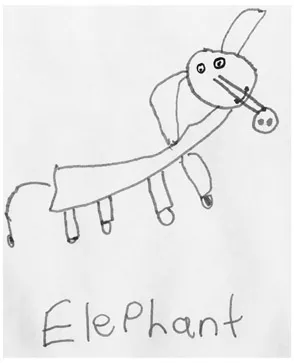
Figure 1.1 A child’s drawing of an elephant.
While there is substantial evidence that genetic and in utero factors can alter the structure of the brain (Becker, 2007), there is mounting evidence that postnatal environmental factors can have just as profound an effect. Traumatic stressors of both a physical or emotional nature, exposure to toxic substances, even addictive or repetitive behaviors can constitute triggers that alter neural development (Teeter et al., 2011). Data suggest that, as a result, there is not only a significant alteration in both neurological structure and function but a profound impact on emotional functioning as well. As Teeter et al. (2011) have argued, “Children with internalizing and externalizing psychiatric disorders appear to present with both functional-behavioral and neuropsychological-organic markers. These domains are intertwined and difficult to separate out” (p. 366). Neuro-psychology and the practice of neuropsychological evaluation can no longer ignore the fact that these neurological changes are inextricably linked to emotional functioning and, conversely, that emotional factors can significantly impact neurological functioning. It is therefore imperative to consider both when evaluating the whole child and considering the best intervention strategies.
Over the last fifteen years, the need for the integration of psychological and neuropsychological assessments has been argued by a number of authors (Miller, 2010; Smith, 2007; Tramontana & Hooper, 1997; Winnicott, 1965). However, there has been no concerted or detailed effort to both make the case for integration and outline how one should go about doing so. In the subsequent chapters, we will make that case and provide a detailed explanation of how integration can be carried out. We further contend that, without an appreciation of the complex interplay between neurological, cognitive, behavioral, social and emotional factors, one cannot devise an intervention strategy that addresses the whole child and increases the chance that those strategies will create a “holding environment” (Reinstein, 2006; Winnicott, 1965) in which the child can feel supported and, ultimately, succeed.
Neurology, Development and Learning
To succeed can be defined as “Have the desired outcome, have a favourable result” (The New Shorter Oxford English Dictionary, 1993, p. 3127) Within this context, then, neuropsychological evaluations are intended to help uncover individuals’ unique profile of vulnerabilities and strengths as a means to help them use those strengths and accommodate their vulnerabilities in order to succeed. In Integrating Neuropsychological and Psychological Evaluations, we are concerned with how neuropsychological evaluations are used to assess children with specific needs and how those results are applied to help the child succeed in the multiple areas of cognition, behavior, socialization and emotional functioning. When discussing children, this includes a consideration of both their development and their learning process.
Many developmental theorists assert that children develop new skills based upon both their genetic and neurological makeup and interactions with the environment (Chomsky, 1972; Erikson, 1963; Gesell & Ilg, 1945; Luria, as cited in Crain, 2000; Vygotsky, 1931). Genetics provides a general blueprint for development, while neurology defines the specific substrate for the development of various skill sets. Critically, a supportive environment fosters the potential of both genes and neurology. Take, for example, the development of skills necessary for written expression. Most people have the genetic potential to learn this skill, at least at a basic level. However, some are innately gifted with the ability to combine words and concepts at a much higher level to develop poetry, novels or essays. Some individuals will find their way to this end without much environmental support. However, all people require environmental exposure to some form of an alphabet, various reading materials, the mechanics of writing and the skills to socially navigate their world. If people who have the genetic potential to develop tremendous writing ability are left unexposed to these experiences, they will not reach their potential.
Furthermore, individuals’ exposure to certain activities within their environment must be carefully timed in order for many of their skills to develop. This is related to the rate and sequence in which the nervous system develops. For example, in infancy, children are developing their regulatory and somatosensory systems. They are learning how their internal and external environment works and are then learning how to operate on and within it. During this time, the brain is learning how to regulate sleep, digestion, elimination, etc. It is also developing a more complex sensory system: learning to see, recognize faces and voices, interpret tastes and smells, organize tactile experience and so on. As the child ages and moves into toddlerhood, gross and fine motor skills develop, expressive and perceptual language skills emerge and play skills grow. This is mediated by the growth of the cerebral cortex. It isn’t until a child is nine that sensory and regulatory systems fully develop. During this period of time, growth is immense, following a genetic blueprint, with neurological tracks that are dependent on exposure to key learning tools within the environment.
Returning to the example of writing, one would not expect a five-year-old child to write a novel. However, we could expose children to various types of literature, give them pencils and crayons to develop fine motor skills, and through play develop stories, plots and the use of their imagination. Over the course of children’s development, exposure to these tools and experiences could lay the foundation for their eventual emergence as a novelist. Thus, exposure to critical environmental experiences and their successful integration into the child’s repertoire depends on the child’s ability to make use of such experiences—an ability that is determined by the child’s stage within the process of his or her neurological development.
For children with specials needs, the ability to match the environment with their unique development and learning style is especially difficult. If, for example, their sensory system has not developed the kinesthetic and proprioceptive networks necessary for them to be able to discriminate bodily position in space or maintain adequate posture, sitting and listening to a book could be extremely difficult. If regulatory systems have yet to develop to support their ability to maintain their attention for the same period of time as their peers, cognitive skills may appear lower than they actually are. Neuropsycho-logical evaluations can help clarify which neurological systems are operative or require intervention within a specific environment, or, alternatively, how to accommodate the environment by modifying a curriculum or teach new skills in a more appropriate manner. As Holmes-Bernstein and Weiler have argued,
A comprehensive assessment of the child must take advantage of the knowledge and techniques of both the child psychology and developmental psychology traditions, as well as that of neuropsychology and of the neurosciences. It cannot restrict itself to discrete cognitive skills, or brain systems, as its primary focus, but must take the child as the “unit of analysis” in order to address (1) the whole of the behavioral repertoire that the child’s brain makes possible, and (2) the full range of contextual transactions (social and environmental) in the course of a child’s life that elicit, facilitate, maintain, and/or modify the way in which the workings of neural mechanisms are manifest in behavior.
(Holmes-Bernstein & Weiler, 2000, p. 267)
Creating a more appropriate match between children and their environment can help them reach “a favorable or desired outcome” that best matches their true potential.
Book Overview
Learning and development is not a simple process requiring the usage of one or two parts of the brain. Instead, it is dynamic, interconnected, context dependent, and reliant on environmental supports and a uniquely individualized process, even for typically developing people. In Integrating Neuropsychological and Psychological Evaluations, the importance of using both neuropsychological and psychological evaluations to assess the unique learning style of individual children with special needs is stressed. Neuro-psychological and psychological evaluations do this by measuring various neurological functional domains related to cognition, behavior and emotional functioning. These functional domains are the seat for various activities we perform throughout the day, the root of goal-directed behavior, the channel for information from the environment and our way of making meaning of the world around us. Aspects of our thinking, like memories and developing plans, or making sense of auditory or visual information are a just a few examples.
Reference Box 1.1 Functional Domains
- Cognitive skills
- Executive functions
- Memory
- Visual motor
- Academic skills/achievement
- Emotional and behavioral functioning
To make sense of these functional domains, as outlined in Reference Box 1.1, neuro-psychological evaluations carefully measure various cognitive processes using myriad assessment tools. In this book, each functional domain is carefully described and related to the learning process. Chapter 2 outlines a complete neuropsychological evaluation, defines the various functional domains and provides examples of assessments used to measure these domains. The following chapters describe the functional domains in greater detail, including relevant neuroanatomy, various assessment tools, the ways in which different domains impact each other and how the domain influences functioning in the daily life of a child at home and at school. To make use of the information to develop treatment planning and effective intervention, these parts must be reassembled into a whole.
Chapters 9 and 10 approach the issue of the whole child. The final evaluation report is often a large and, at times, overwhelming document. Parents and educators often have various levels of understanding of the final results of an evaluation. Chapter 9 discusses the results and summary sections of an evaluation and relates the importance of using a feedback session with parents therapeutically. Chapter 10 then builds upon information presented in the final report on developing an integrated treatment plan. A list of suggested curriculum modifications and interventions for use in the home and school to assist the child and family with a challenge area is provided. Aside from being useful in treatment planning, a whole neuropsychological evaluation can also have legal ramifications. Chapter 11 explores the legal background of how children with special needs receive services and how neuropsychological evaluations directly impact this process.
Throughout the book, functional domains and other related topics are brought to life with two different types of vignettes. Short vignettes that illustrate specific topics or functional arenas are used to connect assessment scores or neurological concepts to real life. In order to provide the whole picture, the story of Charles, a young, homebound boy, is threaded throughout the entire book as an example of how each functional domain relates to the big picture. Charles’s story is unique and special, providing a good example of how careful assessment and thoughtful intervention can impact an entire family. Chapter 12 concludes the book and the story of Charles.
Charles
The following section describes the history and referral process for Charles, the young boy who represents the continuous case study that will be followed throughout the subsequent chapters. It is extracted from the report that was written to document the results of his combined neuropsychological and psychological evaluation. As such, it integrates the findings to present a picture of Charles and the complex factors that were impacting his ability to function, not only within an academic environment but within relationships in the home environment as well. Previous testing, while documenting his cognitive abilities, had not fully considered the impact of his emotional status on his ability to manage school. As will be described in the following chapters, the information from a complete neuropsychological evaluation was used to generate a profile of his cognitive, social and emotional strengths and vulnerabilities. It was then used to create a program that supported his needs in each of these areas.
Charles A. was an eleven-year-old, right-handed boy who recently complete...
Table of contents
- Cover
- Title
- Copyright
- Dedication
- Contents
- Foreword
- Preface
- 1 Introducing the Whole Child: Cognition, Behavior and Emotion
- 2 Understanding and Assessing the Whole Child: The Complete Neuropsychological Evaluation
- 3 Understanding and Assessing Cognition
- 4 Understanding and Assessing Executive Functioning
- 5 Understanding and Assessing Memory
- 6 Understanding and Assessing Visual Motor Functioning
- 7 Understanding and Assessing Academic Skills
- 8 Understanding and Assessing Emotional Functioning
- 9 Putting It All Together: Feedback and the Report as a Therapeutic Intervention
- 10 Putting It Into Action: Translating Evaluation Results Into the Classroom and Home
- 11 Behind the Scenes: Legal Ramifications
- 12 Overview of the Whole Child and Case Conclusion
- Appendix: Example Graphic Organizer for Neuropsychological Evaluation Information
- Index
Trusted by 375,005 students
Access to over 1.5 million titles for a fair monthly price.
Study more efficiently using our study tools.
Frequently asked questions
Yes, you can cancel anytime from the Subscription tab in your account settings on the Perlego website. Your subscription will stay active until the end of your current billing period. Learn how to cancel your subscription
No, books cannot be downloaded as external files, such as PDFs, for use outside of Perlego. However, you can download books within the Perlego app for offline reading on mobile or tablet. Learn how to download books offline
Perlego offers two plans: Essential and Complete
- Essential is ideal for learners and professionals who enjoy exploring a wide range of subjects. Access the Essential Library with 800,000+ trusted titles and best-sellers across business, personal growth, and the humanities. Includes unlimited reading time and Standard Read Aloud voice.
- Complete: Perfect for advanced learners and researchers needing full, unrestricted access. Unlock 1.5M+ books across hundreds of subjects, including academic and specialized titles. The Complete Plan also includes advanced features like Premium Read Aloud and Research Assistant.
We are an online textbook subscription service, where you can get access to an entire online library for less than the price of a single book per month. With over 1.5 million books across 990+ topics, we’ve got you covered! Learn about our mission
Look out for the read-aloud symbol on your next book to see if you can listen to it. The read-aloud tool reads text aloud for you, highlighting the text as it is being read. You can pause it, speed it up and slow it down. Learn more about Read Aloud
Yes! You can use the Perlego app on both iOS and Android devices to read anytime, anywhere — even offline. Perfect for commutes or when you’re on the go.
Please note we cannot support devices running on iOS 13 and Android 7 or earlier. Learn more about using the app
Please note we cannot support devices running on iOS 13 and Android 7 or earlier. Learn more about using the app
Yes, you can access Integrating Neuropsychological and Psychological Evaluations by Daniel K. Reinstein,Dawn E. Burau in PDF and/or ePUB format, as well as other popular books in Psychology & Clinical Psychology. We have over 1.5 million books available in our catalogue for you to explore.