![]()
Section 1: getting things done
Section 1: getting things done
Students who routinely do not settle to work can be highly frustrating for teachers. Their behaviour may include not listening to or following directions, being distracted, avoiding or refusing work, not completing set tasks or simply being helpless.
It has become increasingly commonplace to say such pupils have attention- deficit hyperactivity disorder (ADHD). Labelling a young person in this way often leads to medication, and although psychotropic drugs might provide immediate relief, they are rarely a long-term solution. The National Institute for Health and Care Excellence (NICE) guidelines (2018) now say that environmental issues must be thoroughly explored before medication is considered. Psychiatric labels can place both ‘the problem’ and responsibility for change within the student and undermine the importance of context and value of alternative approaches.
Not settling to or finishing directed tasks may be linked to one or more of the following:
- Low confidence and anxiety about performance. Anxiety is now a major mental health concern for young people.
- Scared of making mistakes; not being perfect; feeling humiliated.
- In a highly competitive culture, not wanting to be seen as a ‘loser’, or alternatively accepting this position and not seeing the point of making an effort.
- Mismatch between task and ability – at both ends of the spectrum, too difficult or not challenging enough.
- Nothing to link the task to – prior work, interest, something meaningful or enjoyable.
- Not having had practice in doing something that requires effort. This may be because others have done things for the student and made few demands on them.
- Willingness to work undermined by chronic procrastination.
- A need for some autonomy and choice.
- High levels of energy that make it difficult to physically stay in one place for long.
- Auditory or language difficulties; not understanding instructions.
- Not understanding the purpose of the task.
- Stress or trauma leading to inability to focus and possibly hypervigilance.
- Other matters taking up headspace.
- Being on the autistic spectrum.
- Not having enough sleep.
- Being unwell, hungry or depressed.
In Maslow’s hierarchy of needs, it is unlikely you will get the best out of a student whose basic physical and emotional needs are unmet. Although schools may not see the last two issues as their responsibility, students will underachieve unless these are addressed.
Flow
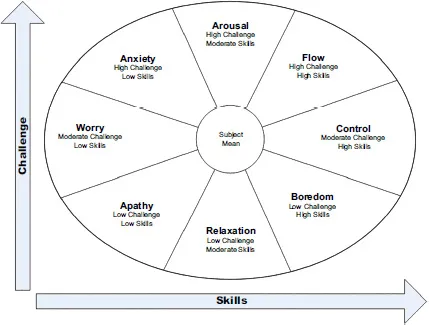
Csikszentmihalyi (1990) describes the concept of ‘flow’ as the optimal place of learning, where there is a balance between the challenge of the task and the skill of the student. If the task is too easy or too difficult for the level of ability, flow cannot occur and boredom, apathy or anxiety results.
Agency
Autonomy is a powerful motivator. Although teachers have little freedom with regard to curriculum targets, they may have some choice as to how to accomplish them. Projects, group work, cooperative learning and focusing on personal bests are all ways that give students more control of the learning process and are more fun. Giving students maximum agency also hands responsibility where it belongs and thereby supports teacher wellbeing.
Independent working
Although some students have the skills to do this, most do not. They need clear guidance, lots of examples, *scaffolding, practice and feedback – not just on the work itself but the process of learning. Where literacy is an issue, offer *alternative forms of recording.
Growth mindset
Many teachers are now aware of the difference between a fixed mindset and a growth mindset (Dweck, 2006). This theory says that those with a fixed mindset believe they either have an ability or not: low marks tell them they don’t have this particular ability, so there is no point in trying. A growth mindset is where students believe that effort makes the difference to progress and achievement; for teachers, this means emphasizing effort in feedback, and pointing out incremental progress.
Staying active
Physical activity stimulates cognitive pathways. Make it routine that everyone moves for a few minutes every half hour or so. Ideas for this are in Resources.
![]()
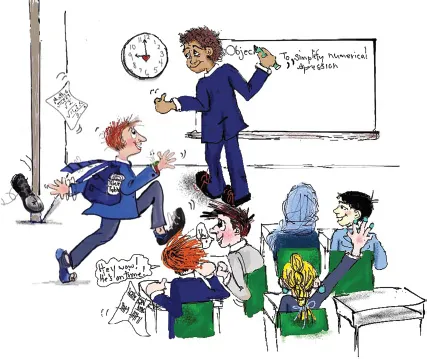
The problem: lateness to school/lessons
The recipe: being punctual
What you need to know
Onset and frequency: Is this a behaviour that needs to be nipped in the bud, or has it already become chronic? If punctuality has deteriorated recently, what changes have occurred?
Specifics: Are we talking about lateness to school or to lessons or both?
School lateness: Is there a transport problem? Are there things that a student needs to do before school? Are they a carer, or do they have responsibility for younger siblings? Are they a student who is needed for interpretation at home? Are sleep patterns an issue?
Motivation: Would the student like to be on time but other things make this difficult?
Class lateness: Which days, which lessons?
Avoidance issues: Might the student be avoiding getting into trouble for incomplete work, or avoiding subjects they struggle with?
Relationships: Is there an issue with specific teachers or other pupils?
Strengths: Is the student more punctual in some lessons? What clues does this give?
Today in the classroom
Acknowledge the student briefly when they do arrive. They may be embarrassed. If lateness is combined with disrespectful behaviours, address these specifically (see Section 2: Dealing with Disruption).
Show the student what they should now be doing, or ask another pupil to do this.
Do not let them leave the lesson without having a private conversation about their lateness and the reasons for this. Be understanding, but also firm about expectations.
Longer-term change
Contact home and express concern for the pupil and their learning. Avoid blame.
Be a role model for punctuality. If you have several pupils for which this is an issue, discuss what you do to get to things on time and ask students for their ideas. Write these up.
Have intermittent high-impact, enjoyable activities at the beginning of lessons.
Have an occasional quiz on what has been learnt throughout the lesson.
Give chronically late students a responsibility to increase their motivation to be punctual.
Schools usually have a lateness policy: check with both parents and students that they know what is in this policy, and also discuss with them why being on time matters. Express this in terms of impacting on their own child rather than on other students or the teacher.
As teenagers find planning problematic, they need support to do this. Here are some ideas:
- A personal planner. This is a daily and weekly list of things to be done with an estimate of how long each will need. Put down everything including sport, meals and so forth. Technology can help with this. There are several relevant apps on the market.
- If sleep is an issue, a set morning routine beginning with a repeat alarm is helpful.
- *Personal records.
- A graph to show progress day by day or week by week for a term.
- Acknowledgement of progress in a three-way meeting, with parents, pupil and staff. Parents are more likely to engage in something positive and this is also highly rewarding for students.
- *Peer mentoring.
- Raise awareness of distractions, procrastinations and setting priorities.
![]()
The problem: inattention
The recipe: listening to and following instructions
Unless a student pays attention in the first place, they will not know what to do.
What you need to know
Hearing and language levels: Does the student understand what is being asked of them?
Ability level: Is the student able to do what they are being asked to do? Check records.
Too much information? Does the pupil listen at first, but then lose concentration? Do they start working, then stop?
Strengths: When is the student most attentive? At what time of day? During what specific activities?
Today in the classroom
With the whole class:
- *Look at me! Gain the attention of everyone.
- Give lesson plan at the outset so all students know what is expected.
- When giving instructions, ensure your face is not in shadow so students can lip-read as well as see. This helps in many situations.
- Give short, clear instructions with visual cues where possible.
- Use names for the students you need to re-focus, but otherwise do not single them out.
With this student:
- Give the student an interim activity to be getting on with that is familiar and manageable, then individual instructions when others are settled.
- Have the student sit near you, or move towards them as they go off-task.
- Move the student away from obvious distractions.
- If hearing mi...