Redefining Success: Integrating Sustainability into Management Education advocates incorporating sustainability concepts that go beyond the financial 'bottom line' into management education and business practice. Highlighting the UN Global Compact (UNGC), the Principles for Responsible Management Education (PRME) and the Sustainability Development Goals (SDGs), it explores conceptual and practical issues, presents case studies and other empirical evidence, and offers solutions that will both encourage and assist management educators in the incorporation of sustainability into their courses and research. incorporating sustainability into their courses and research. Written by 34 individuals from 17 countries, the book addresses these topics from a variety of theoretical, disciplinary, geographic and organizational perspectives. The authors demonstrate how management educators, collaborating with business and civic organizations, can be change agents for a better world. Written for educators, scholars and business practitioners, the volume concludes with lessons learned, challenges encountered, and implications for responsible management education.
eBook - ePub
Redefining Success
Integrating Sustainability into Management Education
- 268 pages
- English
- ePUB (mobile friendly)
- Available on iOS & Android
eBook - ePub
Redefining Success
Integrating Sustainability into Management Education
About this book
Trusted by 375,005 students
Access to over 1.5 million titles for a fair monthly price.
Study more efficiently using our study tools.
Information
Topic
EducationSubtopic
Business GeneralSection 1
Frameworks for understanding
1
Evolving pathways to more effectively align UNGC and PRME in pursuit of the Sustainable Development Goals
Pace University, USA
Pace University, USA
Abstract
In an effort to lead a global transformation, the United Nations Global Compact (UNGC) and Principles for Responsible Management Education (PRME) initiatives are focussing on the pursuit of the sustainable development goals (SDGs) through 2030. Implementation of the SDGs is in concert with pursuit of UNGC’s Ten Principles and the embedded social, environment and governance issues. PRME, established and supported by UNGC with six universal principles as guides, works with Higher Education Institutes (HEI)s to better prepare future generations of professionals and leaders who are committed to responsible and sustainable business practices. The purpose of this chapter is to provide an overview of the UNGC and PRME, and their evolving pathways as they adapt and respond to the ever-changing needs of an expanding membership in a dynamic global environment. Highlights of their efforts to explore strategic pathways for enhanced and more inclusive collaborative initiatives focussed on achieving the SDGs are presented. A wide range of productive UNGC–PRME strategic partnerships have been forged and additional strategic partnering opportunities abound. Key challenges meriting attention are also identified.
United Nations Global Compact (UNGC)
Background
With an initial core group of forty business signatories and representatives of other entities, the United Nations Global Compact (UNGC) was established in the year 2000 as a voluntary initiative fostering the adoption of UN universal sustainability principles and goals by business leaders across the globe (UNGC, n.d.a). In pursuit of this broad mission, the UNGC was conceived as a flexible and dynamic initiative, rather than as a regulatory body responsible for ensuring compliance. To operationalize the general guidance provided by this mission, the UNGC adopted Ten Universal Sustainability Principles focussed on Human Rights, Labor, Environment and Anticorruption as its main compass for directing and coordinating partnering initiatives (UNGC, n.d.b).
In response to the growing awareness of the need to more objectively assess the effectiveness of signatore efforts to embed the principles into their business practices, 5 years into its launch UNGC introduced the Communication on Progress (COP) report requiring signatories to document and share their actions and accomplishments in attaining the principles. Today the UNGC continues to function as the predominant responsible and sustainable leaders’ platform where participants can engage in sharing, exchanging, collaborating and communicating their best operational policies and practices in pursuit of the Ten Principles and the evolving UN Development Goals.
UNGC’s Evolving Pathways and Ecosystem
The evolution of this network-based entity operating on a multi-centric model (UNGC, n.d.c.) is evidenced in Figure 1.1. As membership grew, various business members took the initiative to establish local independent clusters of member networks as self-governing entities. This, in turn, further stimulated business membership growth, creating the need for more formal governance, leading to the establishment of a permanent UNGC headquarters in 2002. These informal local networks demonstrated their ability to help companies better understand what responsible business means within different national, cultural and language contexts and facilitate outreach, learning, policy dialogue, collective action and partnerships (UNGC, n.d.d; UNGC, 2013, August). These results stimulated the formal establishment of Local Networks as part of the UNGC governance framework in 2005 (Whelan, 2010). The Local Networks Forum soon emerged as the major venue “for Local Networks from around the world to share experiences, review and compare progress, identify best practices and adopt recommendations intended to enhance the effectiveness of Local Networks” (Wynhoven and Stausberg, 2010, p.256).
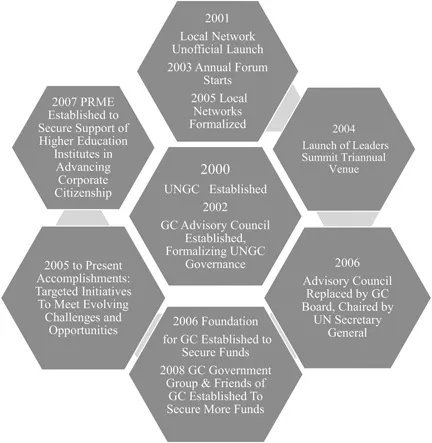
Figure 1.1 Evolution of UNGC’S Pathways and Ecosystem
The year 2004 saw the formal launch of Leaders Summit Triennial events as a high-level business leader platform to lay the ground-work for and endorse strategic initiatives. The 2016 Summit declared the goal for all stakeholders “to achieve the 2030 Sustainability Agenda of the UN” (UNGC, n.d.e). Initiated in 2002, the Global Compact (GC) Advisory Council was replaced by the GC Board in 2006, now chaired by the UN Secretary General (Wynhoven and Stausberg, 2010). To better finance operations, the Foundation for the Global Compact was established in 2006 as a nonprofit organization dedicated to securing funding to meet a range of needs (UNGC, n.d.f). Furthermore, in 2008 a UNGC Trust Fund was established together with the Global Compact Government Group and Friends of the Global Compact to manage the UN contributions of governments and their Missions (UNGC, n.d.g).
Selected UNGC accomplishments to date
As of 2005, this evolution in governance structure, formalization of networks and institutionalization of forums stimulated the launch of a series of independent targeted initiatives to meet evolving challenges and opportunities. The strong appeal of the UNGC’s Socially Responsible Behaviour concept is evidenced by its growth from 40 to over 9,000 companies and 3,000 non-business signatories today, drawn from 170 nations (UNGC, 2016, November), making this the largest sustainability initiative for businesses in the world. This rapid and broad expansion is also evidence of the UNGC’s ability to continuously adapt and reposition itself with innovative and meaningful strategies to cope with the evolving challenges resulting from the constant ‘changing global economic realities’ (Rasche and Kell, 2010).
A key contributing factor to this success is the enhanced rigor of the now-biannual COP report on company accomplishments in attaining the UNGC Principles and broader Corporate Social Responsibility (CSR) initiatives, launched in 2005. To date, over 28,000 COPs have been posted while 7,678 signatories have been removed for failing to meet this reporting requirement. (UNGC, n.d.h; UNGC, n.d.i; Wynhoven and Stausberg, 2010; Hamid and Johner, 2010). To accommodate the reporting needs of increasingly diverse types of signatores, the UNGC has modified the COP by creating ‘Express COPs’ for large companies, a simplified version for smaller businesses and a bi-annual Communication on Engagement (COE) for the more limited CSR engagement initiatives of non-business signatores. (UNGC, 2015; UNGC, n.d.j).
In response to the interests of institutional investor participants, the Principles for Responsible Investment (PRI) was launched in 2005 with the commitment to integrate social, environmental and corporate governance issues in financial analyses and financial decision-making processes (Haertle and Miura, 2014). This initiative, in 2012, led to the formation of a partnership with the UNGC, the UN Environment Program Finance Initiative (UNEP FI) and the UN Conference on Trade and Development (UNCTAD) focussed on the creation of the Sustainable Stock Exchanges Initiatives fostering development of a more responsible and sustainable capital market (Sustainable Stock Exchanges Initiative, 2013; UNGC, n.d.k). UNGC academic representatives recognized the education requirements evidenced by such an initiative, launching in 2007 the Principles for Responsible Management Education initiative as described below.
These accomplishments, in 2011, stimulated the formation of the Global Compact LEAD (UNGC LEAD), an exclusive group of corporate sustainability leaders, from major corporations such as Unilever, Nestle, KPMG and Fuji Xerox., drawn “from across all regions and sectors that represent the cutting edge of the UNGC” (UNGC, n.d.l). This group has been the driving force encouraging “close collaboration with investors, business schools and UN agencies, and facilitates proactive engagement with governments, NGOs and other key stakeholders” (UNGC, n.d.m). An example of a significant UNGC LEAD contribution is the 2016 CEO Study, conducted in partnership with Accenture Strategy. A key result shows that 89 per cent of the CEOs “say commitment to sustainability is translating into real impact in their industry” (UNGC and Accenture Strategy, 2016).
Principles for Responsible Management Education (PRME)
Background
PRME Secretariat, together with its Steering Committee, was established in 2007 to encourage and guide those higher education institutions (HEI) that have endorsed the PRME Six Principles (PRME, n.d.a) and are on the path to becoming key change agents and responsible management educators capable of preparing the socially responsible managers needed by businesses (Haertle and Miura, 2014). As the UNGC hosts the PRME Secretariat, this allows “for close coordination and complementarity between PRME and the UNGC … PRME’s Principles explicitly incorporate UNGC’s values, UNGC’s support, … has allowed it to call itself an ‘United Nations supported initiative’. … and PRME’s still evolving governance structure is modelled after that of the UNGC” (Haertle and Miura, 2014, pp. 14–15).
Evolution of PRME’s pathways & ecosystem
PRME also adopted a network-based organization model. Its multicentric governance structure has evolved, creating the desired pathways envisioned by its diverse stakeholders. Key features of the evolution of the PRME ecosystem and pathways are presented in Figure 1.2. PRME can be described as a principle-driven global initiative comprised of interorganizational networks employing a collaborative governance model. Its shared values and purpose guide the actions of network collaborators in support of the UN goals. In addition to the UNGC Office, Steering Committee membership has evolved to comprise the following prominent business school accreditation and regional bodies from across the globe: the Association to Advance Collegiate Schools of Business (AACSB-International), the European Foundation for Management Development (EFMD), the Central and East European Management Development Association (CEEMAN), the Association on MBAs (AMBA), Association of African Business Schools (AABS), Latin America Council of Management Schools (CLADEA), Accreditation Council for Business Schools and Programs (ACBSP), the Academy of Business in Society (ABIS) and the Globally Responsible Leadership Initiative (GRLI). It functions as the governance body responsible for providing strategic direction and contributing financial support. In light of PRME’s collaborative governance model, an Advisory Committee was formed in 2014 to secure the benefits of informed governance and strategic guidance from a wider range of stakeholders. Its members are drawn from the platforms that PRME has been creating to encourage and enable collaborative learning and practice innovation. (PRME, n.d.b,c,d,e).
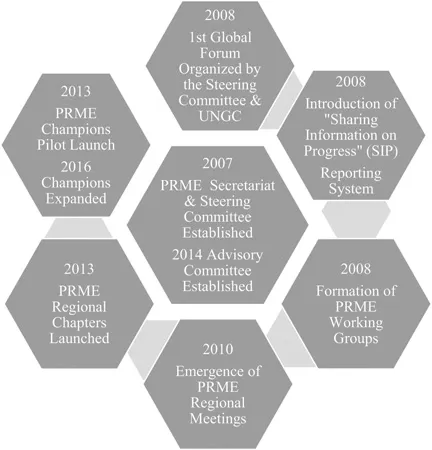
Figure 1.2 Evolution of PRME’S Pathways and Ecosystem
Sharing Information on Progress (SIP) is PRME’s mandatory biannual reporting system intended to document, share accomplishments and demonstrate commitment to the principles of Responsible Management Education (RME). PRME signatories are delisted if they do not meet this biannual requirement and have the opportunity to rejoin if they meet relisting requirements (PRME, n.d.f; Haertle, 2016, July 8). Concurrent with the 2008 launch of the SIP, PRME Working Groups (WGs) started to form.
Regional Meetings were initiated in 2010 to further disseminate the PRME Principles and expand PRME quantitatively. This led to the formalization of Local and Regional Chapters in 2013 committed to adapt the PRME mission and principles to local needs and expand meaningful corporate citizenship initiatives by regional HEIs. (PRME, n.d.g,h). This success led in 2013 to establishing and in 2016 expanding PRME Champions, a group comprised of selected institutional leaders judged to “have played leading roles in their respective regions” (Haertle and Miura, 2014, p. 12). The Champions work to identify the development programs needed to equip faculty with the knowledge and skills required to conduct RME initiatives in a range of subject categories and regions of the world (PRME, n.d.i)
Selected PRME accomplishments to date
PRME, in alignment with UNGC and other entities, has fostered the evolution of numerous pathways leading to the development of new educational materials, tools and best practices by PRME signatories intended to guide the formation of the future generations of socially responsible leaders. By design, these pathways are intended to be dynamic because PRME’s “aim was not to provide definitive answers to … questions – far from it. Instead, … [It expects that their discussions] will encourage further inquiries. … which will feed into more collaborative learning and innovation within the PRME community” (Haertle and Miura, 2014, p.16).
The goal of the PRME WGs is to further Sustainable Development Goals (SDGs), thus focusing on collaborative engagements across academic and non-academic institutions. The WGs focus on furthering the understanding of specific issues relevant to advancing PRME implementation. They select one or more principles and associated SDGs, and then develop pathways to integrate the chosen WG topic into curricula. Established WGs that are developing curricula include Poverty, Gender Equality and Anti-...
Table of contents
- Cover
- Title
- Copyright
- Contents
- Introduction
- Section 1: Frameworks for understanding
- Section 2: Disciplinary and transdisciplinary perspectives
- Section 3: Institutional perspectives
- Section 4: Country and regional perspectives
- Section 5: Looking ahead
- Concluding remarks
- About the editors
Frequently asked questions
Yes, you can cancel anytime from the Subscription tab in your account settings on the Perlego website. Your subscription will stay active until the end of your current billing period. Learn how to cancel your subscription
No, books cannot be downloaded as external files, such as PDFs, for use outside of Perlego. However, you can download books within the Perlego app for offline reading on mobile or tablet. Learn how to download books offline
Perlego offers two plans: Essential and Complete
- Essential is ideal for learners and professionals who enjoy exploring a wide range of subjects. Access the Essential Library with 800,000+ trusted titles and best-sellers across business, personal growth, and the humanities. Includes unlimited reading time and Standard Read Aloud voice.
- Complete: Perfect for advanced learners and researchers needing full, unrestricted access. Unlock 1.5M+ books across hundreds of subjects, including academic and specialized titles. The Complete Plan also includes advanced features like Premium Read Aloud and Research Assistant.
We are an online textbook subscription service, where you can get access to an entire online library for less than the price of a single book per month. With over 1.5 million books across 990+ topics, we’ve got you covered! Learn about our mission
Look out for the read-aloud symbol on your next book to see if you can listen to it. The read-aloud tool reads text aloud for you, highlighting the text as it is being read. You can pause it, speed it up and slow it down. Learn more about Read Aloud
Yes! You can use the Perlego app on both iOS and Android devices to read anytime, anywhere — even offline. Perfect for commutes or when you’re on the go.
Please note we cannot support devices running on iOS 13 and Android 7 or earlier. Learn more about using the app
Please note we cannot support devices running on iOS 13 and Android 7 or earlier. Learn more about using the app
Yes, you can access Redefining Success by Patricia M. Flynn,Tay Keong Tan,Milenko Gudić in PDF and/or ePUB format, as well as other popular books in Education & Business General. We have over 1.5 million books available in our catalogue for you to explore.