Ethical Standards in Forensic Science seeks to address the myriad practices in forensic science for a variety of evidence and analyses. The book looks at ethics, bias, what constitutes an expert in the field—both as a practitioner and to the court system—as well as the standards of practice as purported by the top forensic organizations. Coverage addresses evidence collection, chain of custody, real versus "junk" science, the damage questionable science can cause to a discipline and the judicial process, testing methods, report writing, and expert witness testimony in civil and criminal cases in a court of law.
The authors' background in engineering provides a unique perspective on a variety of evidence and testing methods. As such, in addition to coverage the range of evidence and topics cited in the 2009 National Academy of Sciences (NAS) Report, they address numerous challenges that have arisen specifically in forensic engineering cases—their specific area of expertise. Numerous case example are provided to illustrate the inherent danger of bias, inexact science, or expert witnesses taking dangerous and harmful liberties on the stand. Students, lawyers, and professionals in all forensic disciplines will find this a refreshing and accessible approach to elucidate the problem and offer suggestions for reform and change for the good of the entire profession.
Trusted by 375,005 students
Access to over 1.5 million titles for a fair monthly price.
Forensic sciences were introduced into the mainstream public consciousness through the writings of Sir Arthur Conan Doyle in the latter part of the 19th century and the first part of the 20th century, through his main character Sherlock Holmes and his sidekick Dr Watson. Sherlock Holmes was the consummate detective and scientist. He relied on careful and detailed observation coupled with deduction to solve cases. Essentially, he utilized many of the components of the scientific method to find the culprit and absolve the innocent. Doyle was also an advocate of justice who personally investigated two cases leading to the exoneration of two men. Doyle was trained in medicine and credited one of his former teachers, Joseph Bell, as the inspiration for Sherlock Holmes. In contrast to his scientific training, Doyle was intrigued by spiritualism, freemasonry, and the paranormal. Although Doyle had the normal human biases and frailties, his main character, Holmes, did not. As a way of introduction to the book, we wish to look at the history of some of the forensic devices and techniques that have been and continue to be used. The items and techniques detailed are not all inclusive but have generated the most controversy from a scientific perspective. As the science of forensics continues to develop, serious problems have arisen putting some of the topics into the realm of conjecture, supposition, art, falsification, and pure hogwash. As with any discipline, charlatans, pseudoscientists, and snake oil salesmen have entered the field. What they propose and testify to in court proceedings is not science, as will be described in a later chapter.
Forensic science has also been denigrated by the media, television, and the cinematic industry.
These industries have been complicit in promulgating falsehoods for the sake of artful storytelling in the pursuit of profits. This is not to say that their purpose is to falsify forensic science, but to stretch the truth, blend pseudoscience into real science, and produce a product which exhilarates and thrills the audience. Although these are noble pursuits for entertainment purposes, they tend to cast a shadow on what is possible and what is not.
Forensic sciences are misunderstood by the general population. The common understanding by the person on the street is that forensics deals with death and DNA. While these topics are true to the belief, they are but a part of the varied topics in forensics. Webster’s Dictionary defines forensic as derived from forum or marketplace. It is of, or suitable for, public debate, involving the application of scientific knowledge to legal matters. It is a debate or formal argument. It is the application of science to laws that are either criminal or civil. Note that the emphasis is on the application of scientific laws to determine the root cause or the conclusion that is derived from the analysis. It is not simply the argument for one side or another as was originally developed in Roman times. In those times, when a person was accused of a crime, the case was brought before public individuals in the forum where arguments for the guilt or innocence of the individual were determined by the best argument for either side.
Unfortunately, the consideration or determination of the best argument is sometimes utilized to arrive at a judgment, either civilly or criminally. The best argument may be firmly rooted in science or it may be on the fringes of science or simply not science at all. This is where ethical behavior enters the picture and where in the past, and continuing today, forensic sciences have been in flux and controversy. Sometimes, and for some specific examples of the various disciplines in forensics, the science and its methods simply do not adhere to testable, duplicatable, mathematically correct, and statistical determinable analysis. It is simply not ethical or scientifically correct to say that anything is possible. Possible outcomes must be rooted in science. It is always necessary to state the potential for error and the probability of the event.
As previously noted, the origins of forensic science are rooted in the criminal side. Criminal behavior has always been subject to prosecution in one form or another, whether the prosecution was just or not. Traditionally, the evidence was derived either from eyewitness descriptions or from confessions. Today, we know the pitfalls of coerced confessions and the inaccuracy of witness accounts of the events. Coerced confessions through enhanced techniques are sometimes referred to by advocates as necessary to obtain correct information. Needless to say, such techniques have been critically debunked on several levels. Similarly, many scientific studies on the accuracy of an eyewitness or a participant to an event show that they are simply not accurate. As a rule, in forensic scientific investigations, the authors consider the accounts of an eyewitness or involved party only as a last resort to see if their account fits the physical scientific evidence. Many so-called forensic experts rely too much on events or descriptions by observers in their analysis and conclusions. This is simply the wrong approach and is not consistent with the scientific method. On a lighter side, some common statements by involved parties include the following:
“It wasn’t like that before.”
“I just want what is owed to me.”
“I was not speeding.”
“The storm did all that damage.”
“My back and neck hurt so much.”
“I am innocent.”
“I was not there.”
Some of these statements may actually be true, but they are not in consort with science and should not be considered until they can be verified through careful data-based scrutiny.
A classical example of the false power of observation is demonstrated in the flat earth terra centric philosophy of earlier times. Animal life, and in fact all life on earth, is subject to circadian cycles. To refresh the reader’s memory, recall that a circadian cycle deals with the response of life to the changes from day to night, hot and cold, tidal effects, and the change in the seasons. These cycles affect all life from microbes to plants and animals. For example, some plants and animals are nocturnal while others are not. It seems that most humans are not nocturnal.
So, as humanoids evolved, they noticed that the sun rises in the east, climbs through the sky, and sets in the west. That led to their observation and experience that as they lived on the land, they were stationary while the sun traversed the sky. The same observation followed for the night sky with the stars and the Milky Way taking a similar path. Their logical conclusion was that they were the center of their universe and the sun and stars revolved around them. This observation was true for all the celestial objects they witnessed, reinforcing their earth-centered hypothesis. However, some anomalies were noted with the retrogression of some of the planets as they traversed through the night sky. Since these aberrations in the planetary motion could not be explained, they were disregarded. Needless to say, their observations led them to the wrong conclusion because all the evidence was not included in their model of the cosmos. Although there was ample evidence from careful observations by early civilizations that the earth was not the center of the universe, it took a couple of millennia for the true nature to be revealed through the telescope and a heliocentric explanation that agreed with observation. Similarly, the flat earth hypothesis was not generally disproven until careful observation of shadows cast by the sun and, more significantly, confirmed by the telescopic observations of Galileo.
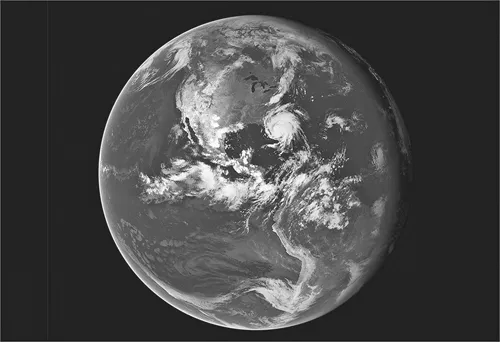
Eratosthenes was the first person to calculate the circumference of the earth more than 2000 years ago. This Greek astronomer, while living in Alexandria, Egypt, noted that the shadow of the sun in Alexandria never reached the bottom of the wells on a particular day of the year. However, in Syene, on the same day of the year, the sun reached the bottom of the wells indicating that it was directly above. By measuring the difference in the angle between the two cities, about 7°, Eratosthenes correctly concluded the curvature of the earth as a sphere. Consequently, relating the ratio of the angle of inclination (7° in 360°) to the distance between the two cities, approximately 500 miles, he obtained a value for the circumference of about 25,000 miles. We now know that the accepted value of the circumference of the earth is about 24,901 miles. His error was 0.397%, or roughly 4 parts in 1000. We would be lucky if some forensic practitioners were that good at analysis. Figure 1.1 is a view of the earth as seen from space.
FIGURE 1.1 View of Earth. (Courtesy NASA.)
We must be careful when we malign observation. Careful, critical observation is one very important component in science. Observations must be made in a controlled scientific manner. A detailed protocol is required when making meaningful observations. However, observations alone do not constitute science. Other components must be adhered to for an observation to hold up under critical scrutiny. We tend to emphasize the importance of scientific observation because too many forensic investigators tend to rely too much on observation and witness statements. A reoccurring theme that is sometimes provided is “they claim that… and we need to consider the alleged claim as true in order to be thorough in our investigation.”
At the beginning of the second millennium, circa 1200 AD, the Chinese began to use some science in the prosecution of justice. These cases involved medicine and entomology to solve cases. Indian and Chinese interrogators for the justice system examined mouths and tongues along with the amount of saliva to determine guilt or innocence. The thought was that guilty persons would have drier mouths than innocent persons. For what reason, no one knows.
In the 1700s, forensic sciences were further developed by the studies of violent deaths and their effect on humans. The involvement of weapons, footprints, and clothing marks, and the transfer of materials to crime scenes started to be studied. At this time, the beginnings of toxicology relative to poisonings and ballistics were also developed in Europe by German, French, and British investigators. In France, Alphonse Bertillon developed better techniques to identify individuals by the use of anthropometry to accurately describe the physical characteristics of individuals. This descriptive characterization of physical characteristics led to the development of fingerprint identification. Several researchers from India, England, and the United States developed classification systems for fingerprints. By the early 1900s, fingerprints were commonly used for the identification of individuals. At this time, the Uhlenhuth test was also developed to differentiate human from animal blood with further refinements introduced in the 1960s by Maurice Muller. The crowning achievement in forensic sciences came about in the 1980s with the development of DNA. Since then, significant refinements and accuracy have been developed in the field of DNA. Today, DNA is essentially unquestioned as a scientific tool with an exceptional rate of success. Unfortunately, that is not the case for some forensic science disciplines.
In the areas of failure analysis, considerable advances have been made as a result of the increased use of technology, computers, and basic laws of physics. Today, we have a consistent understanding of the properties of materials, their propensity for failure, and their strength. Along with excellent mathematical models, most catastrophic occurrences can be accurately depicted and described. The areas of interest include the human body, vehicular collisions, and natural forces such as wind, rain, and snow and their effect on structures. Another area where advances have occurred is in fire dynamics and simulation. The investigation of fire development and corroboration by scientific tests provide deep insight into the evolution and destruction caused in a fire. The change of state in the materials in a fire is irreversible. Computer advances have enabled the development of simulation programs that can calculate dynamic processes with extreme accuracy and predictive capabilities. These techniques essentially make the analysis of fire development reversible from an analytical perspective. With these tools, investigators can now trace the fire development and more accurately determine the origin of a fire and the possible source of ignition. In the parlance of fire investigators, the origin and the cause (O&C) can be determined.
Similarly, tests conducted on structures and materials have produced a plethora of standards in the construction of vehicles, houses, and structures. Standards development continues as the science of failure analysis becomes more mature. Many organizations devoted to standards development continue to evolve and refine the documents they have created. It is heartening to see that cities and states across the United States have developed stricter enforcement and have driven the development of standards.
However, certain areas of forensic sciences are not science at all. More concisely, they may be pseudoscience, conjecture, experience, art, or something else. They have no basis in experimentation or mathematical calculations, and have not been subjected to peer review. However, these questionable areas in forensics are still allowed to be introduced and testified upon in courts of law in civil and criminal cases. In more instances than should be allowed, they have been responsible for incorrect criminal prosecutions that have led to long penal sentences and in some instances executions. We briefly touch upon some of the more egregious areas where there is a disconnect between actual science and forensic disciplines. In many of these areas, partial analysis, assumptions, misconceptions, erroneous or incorrect science, incorrect analysis, and untested hypothesis are the basis for the conclusions that are offered. In some instances, these conclusions are offered due to lack of knowledge or misunderstanding of science. In others, the conclusions are offered to bolster one side or the other of the forensic argument. To be clear, there are areas where scientific analysis varies to a certain extent because some of our scientific models are somewhat inaccurate. However, in many instances, the analysis and opinions offered are misleading, erroneous, and unethical.
Let us turn our attention to polygraph tests, commonly known as lie detector tests. The polygraph was invented circa 1921 by a medical student and police officer from Berkeley, California, by the name of John Larson. Through the years, several modifications and additions have been made to the original design. The theory behind a polygraph test centers on the physical response that a person undergoes when he or she answers questions that may be untruthful. Basically, as the theory or hypothesis implies, the response to deceptive answers will differ from the response to truthful answers in terms of the physiological characteristics produced by the respondent. Common physiological responses measured are pulse rate, blood pressure, respiration rate, and skin conductivity or perspiration. Polygraph tests have a certain amount of reliability and are often used as a tool to determine if the individual being investigated is being truthful. Although the figures vary, the accuracy of lie detector tests is in the 75% accuracy range. It is well known that individuals are capable of misleading the equipment and the interrogator so that the polygraph is not allowed as evidence ...
Table of contents
Cover
Half-Title
Title
Copyright
Contents
Foreword
Preface
Acknowledgments
Authors
Symbols and Units
Chapter 1 Introduction to Forensic Science
Chapter 2 The State of Forensic Sciences
Chapter 3 The Role of Science
Chapter 4 The Need for Experimentation and Testing: The Confluence of Experiment and Theory
Chapter 5 The Role of the Forensic Practitioner and Expert Witness
Chapter 6 Bias and Error
Chapter 7 Ethics
Chapter 8 The Court System and the Role of the Attorney: Limitations Placed on the Expert
Chapter 9 Questionable Science and Common Misconceptions
Appendix A Values of Fundamental Constants
Appendix B Conversion Factors
Bibliography
Index
Frequently asked questions
Yes, you can cancel anytime from the Subscription tab in your account settings on the Perlego website. Your subscription will stay active until the end of your current billing period. Learn how to cancel your subscription
No, books cannot be downloaded as external files, such as PDFs, for use outside of Perlego. However, you can download books within the Perlego app for offline reading on mobile or tablet. Learn how to download books offline
Perlego offers two plans: Essential and Complete
Essential is ideal for learners and professionals who enjoy exploring a wide range of subjects. Access the Essential Library with 800,000+ trusted titles and best-sellers across business, personal growth, and the humanities. Includes unlimited reading time and Standard Read Aloud voice.
Complete: Perfect for advanced learners and researchers needing full, unrestricted access. Unlock 1.5M+ books across hundreds of subjects, including academic and specialized titles. The Complete Plan also includes advanced features like Premium Read Aloud and Research Assistant.
Both plans are available with monthly, semester, or annual billing cycles.
We are an online textbook subscription service, where you can get access to an entire online library for less than the price of a single book per month. With over 1.5 million books across 990+ topics, we’ve got you covered! Learn about our mission
Look out for the read-aloud symbol on your next book to see if you can listen to it. The read-aloud tool reads text aloud for you, highlighting the text as it is being read. You can pause it, speed it up and slow it down. Learn more about Read Aloud
Yes! You can use the Perlego app on both iOS and Android devices to read anytime, anywhere — even offline. Perfect for commutes or when you’re on the go. Please note we cannot support devices running on iOS 13 and Android 7 or earlier. Learn more about using the app
Yes, you can access Ethical Standards in Forensic Science by Harold Franck,Darren Franck in PDF and/or ePUB format, as well as other popular books in Jura & Strafrecht. We have over 1.5 million books available in our catalogue for you to explore.