A new edition of this popular single volume survey of the British economy from industrialisation to the present day. This key text has been updated to cover a further decade of Britain's economic and social fortunes. In particular the chapters on the industrial revolution have been extensively revised and there is a new chapter on environmental history. The Industial Age marshals a wealth of statistical and other evidence, using economic theory to analyse recent British economic change.
- 456 pages
- English
- ePUB (mobile friendly)
- Available on iOS & Android
eBook - ePub
Part One ..........................................
Industrialisation 1750–1830
Chapter 1 ..........................................
Agriculture and rural society
In the National Gallery, in London, hangs a portrait, ‘Mr and Mrs Robert Andrews’, by Thomas Gainsborough. It depicts a young squire, Mr Andrews, and his wife, in an English landscape. The landscape is not there merely as an ornament, for Gainsborough has painted his subjects on Mr Andrews' farm, Auberies in Suffolk. In 1751, the date of the picture, Auberies was a modern working farm, and in the picture Mr and Mrs Andrews are portrayed beside a field whose crop, sown in neat rows, has just been reaped. Further back is a rectangular field, gated and hurdled, which encloses a flock of sheep, while to the left cattle can be seen beside newly-built sheds. The picture is suffused by an air of quiet prosperity.
The Andrews were exemplars of the landed gentry of eighteenth-century England. The gentry and the aristocracy together constituted around 20,000 families, owning between them nearly three-quarters of the land surface of the country. Gainsborough's picture, therefore, depicts land and land ownership. Missing from it, though, are the people who worked on the land, the farmers, the labourers, the women harvesters, the carters, and many other types of worker, who comprised about one-third of the adult population. Their numbers were so large because the amount produced by each worker was low, compared with agriculture today. Unmechanised harvesting necessitated a vast labour force to cope with the harvesting period. It took endless human toil to plough the land and sow the crops, which then produced a meagre return. Although the agricultural workforce was not subject to the subsistence crises that still affected parts of Continental Europe, many of them were not far above subsistence level.
Behind their poverty lay fundamental and age-old constraints on pro-duction. Technology and the understanding of plant and animal biology was limited, while isolation and lack of education hampered the transmission of better techniques from one area to another. These constraints meant that the yield ratio – that is the amount produced from each seed that was planted – was low, and hence the yield from each unit of land was low as well.
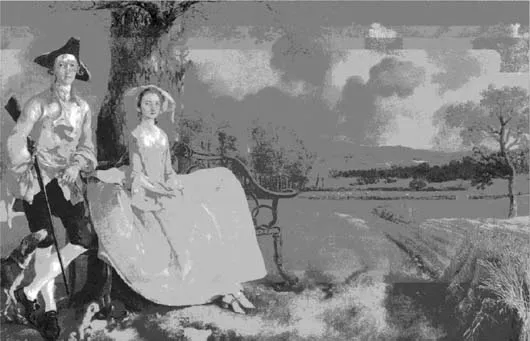
Figure 1.1. Mr and Mrs Andrews, 1751, by Thomas Gainsborough. Reproduced by courtesy of the Trustees, The National Gallery, London.
To carry pessimism too far would be wrong, however. Gainsborough's picture conveys the justifiable pride English agriculturalists felt at the relative productiveness of their farms, a productiveness in sharp contrast to other coun-tries'. Comparative yield ratios illustrate this more prosaically: in eighteenth-century Britain they were about 10: 1, in eighteenth-century France about 7:1, little better than England in the late Middle Ages. Contemporary writers recorded the poverty of French agriculture compared to English. Only Holland, and a few localised farming regions in other Continental countries, could equal the productiveness of British agriculture. And although the labour force in British agriculture was large, relative to the population it was much smaller than in most Continental countries.
Farming practices in Britain were not the same all over, of course, for Britain too was divided into fairly well-defined farming regions, which still exist today in a modified form. As one progressed northwards and westwards pasture increased, with a mixed grain and sheep economy in areas like the Cotswolds and Lincolnshire wolds, and with cattle predominating further west. Cattle rearing was mainly for meat, since milk was hardly sold outside the individual farm, although cheese production and sale was important. Within the broad farming regions, there were clearly defined smaller regions, some only a few square miles in extent. Thus the coastal strip of Lincolnshire specialised in corn and the fattening of cattle; the Somerset levels in cattle rearing and horse breeding. The rapid alternation of different types of landscape and soil in Britain fostered this agricultural diversity, which was evident from the fifteenth century or earlier. It had significant effects. Farmers in different regions could grow crops suitable to the potential of their soil and landscape, and sell these to neighbouring regions. The crucial factor was that the short distances involved kept transport costs low; in much of Europe, a lack of diversity discouraged exchange, because transport costs between regions were so much greater, thus hampering agricultural specialisation and forcing peasants to remain subsistence producers. In Britain specialisation, which enhances efficiency and facilitates an active market economy, was present from an early date.
In most regions, the ownership of agricultural land and the organisation of production followed a common pattern. A large proportion of land was owned by medium to large landowners, such as Mr Andrews. Obviously there were many small landowners as well, owning less than 40 hectares each, but their numbers were declining for much of the eighteenth century. This concentration of land ownership in Britain, although increasing over time, goes back a long way – certainly to the sixteenth century. Even more important than ownership, however, were the patterns of tenure that had grown up. Elsewhere in Western Europe, most land was either owned or rented by peasant farmers using their own or their family's labour. There were still many such farms in Britain, especially in Wales and the South West, but increasingly landowners rented their land to farmers on a large scale, who themselves employed labour and sold large quantities of their produce rather than consuming it on the farm. This was particularly the pattern in Eastern, Southern and Midlands Britain.
The techniques of farming depended partly on the landscape, but also on factors such as the knowledge possessed by the farmer, the tenurial arrangements, and the methods which had become established in an area in times past. In many areas, such as the South West of England or the Weald of Kent, land had been gradually taken in over the centuries from waste or forest, the individual cultivators who did this growing hedges or putting up walls, to mark their field boundaries. This gave rise to a landscape of enclosed fields; that is, the field boundaries were delimited in some way. In other areas, including the major areas of arable farming, the earliest settlements had been marked by some type of communal farming of the village lands, and this type of farming gave rise to large open fields, divided into long strips which were rented or owned by individual cultivators. These open fields persisted over much of Britain, especially in the East and Midlands, into the eighteenth century. There was a gradual tendency for many villages to be partially enclosed by agreement among the proprietors, however, so by 1700 around 70 per cent of the land area of England was enclosed, although less in Wales and Scotland. The eighteenth and early nineteenth centuries were to see a continuation of the trend towards enclosure, so that by 1830 around 90 per cent of all land in England was enclosed. Much of the remainder consisted of the surviving commons, that is rough grazing land over which there were communal rights. (Where such land was enclosed, this denoted the apportionment of formerly communal rights rather than the construction of physical boundaries.)
In the period 1750–1830, a large amount of enclosure was by private Act of Parliament, probably because enclosures increasingly tended to encompass whole villages and thus involve more complexity, and possibly opposition, than voluntary agreements could cope with. It was at this time that the broad open fields of Eastern and Midlands Britain, as well as much heath land and other land of poor quality hitherto little used for systematic cultivation, gave way to the straight roads and rectangular fields which can still be seen in many areas today. In Lowland Scotland, where enclosure before 1750 had been limited, the change in the peak enclosure years of the late eighteenth and early nineteenth centuries was even more dramatic.
These peak years were also years of very high wheat prices. Enclosure was probably always a good investment for landowners, but for the smaller ones the cost was higher per acre, because fencing costs for small areas of land were high. It seems likely that much of the land which was enclosed late was in villages with a number of small owners, who were only shaken into activity by the high prices which resulted from demand from the growing population, and the inflation associated with the war years up to 1815.
Why was enclosure a good investment, given that with the cost of legal expenses and surveyors' fees, new roads and fencing, it was expensive? The inflation of the war years makes a definite figure meaningless – costs altered as prices rose and fell – but one estimate is that around 1800 it cost £30 per hectare, which is the amount that an agricultural labourer would earn in a year. Both contemporaries and historians have suggested that enclosure freed farmers from the constraints imposed by the use of traditional and inefficient rotations on the open fields, where communal sanction was needed for change, and allowed them to follow best practice elsewhere. In fact, techniques on the open fields were often flexible, and open field farming could be as efficient as enclosed farms, but in general there was an improvement when enclosure took place, while other factors – fewer scattered fields leading to less travelling time, better roads and the better drainage that was often installed – must have helped to improve the yield of the land or to lower costs. The replacement of communal pasture rights by enclosed pasture also helped by reducing risk of disease from cross-infection. All this enhanced the attractiveness of the enclosed land to farmers and enabled landowners to raise rents.
Important though enclosure was, there were other significant changes in agriculture which had been taking place over many generations and continued in this period. These changes would no doubt have continued without enclosure, although as has been seen it did facilitate change. Probably the chief development was the spread of improved rotations. The traditional method of open field farming in England was to have two years of grain crop, which absorbed nutrients^ especially nitrogen which is crucial for grain crop yields, from the soil, and then a year of fallow, which enabled the soil to regain its usual low level of fertility by the limited nitrogen-fixing activities of weeds and algae. Improved rotations, which date back to the Middle Ages but became widespread in Eastern England in the seventeenth century, might incorporate, over a period of four years or more, one year of turnips or other root crops which provided winter fodder for the animals, and also demanded thorough weeding and thus cleared the ground. Much more important was the incorporation of leguminous grasses such as clover, either in alternate rotation with grain and fodder crops or in convertible husbandry, where grass was laid down for several years, then grain crops likewise. Legumes fix nitrogen from the air and so, via the animals which ate the clover and then deposited their dung and via the plant residues left in the ground, the soil's fertility could be permanently enhanced.
There were many other agricultural improvements open to farmers in this period, many of which, like the use of leguminous grasses and root crops, were not new but simply became more widely diffused. Apart from the increased use of dung from animals, there was growing use of lime and marl, that is clay, to alter the composition of soils, especially where river navigations or canals reduced the cost of transport. Cheaper iron facilitated the greater use of iron ploughs which were lighter and more effective than those constructed mainly of wood. This led to savings, of ploughmen's time and in the number of draught animals needed. Farming generally remained unmechanised, however, with the other major stages of arable farming – sowing, reaping and threshing – carried on largely by hand-wielded implements, although threshing machines were being introduced in the early nineteenth century. The beginning of the systematic cross-breeding of animals is often associated with the mid-eighteenth-century Leicestershire breeder Robert Bakewell, although interbreeding to improve characteristics was certainly not new. Bakewell and others improved both sheep and cattle, laying the emphasis on early fattening to reduce the time taken to get animals to market. Many of these earlier crossbreeds, whose bloated forms still stare out patiently from faded prints on the walls of country hotels, were so fat as to be unpalatable. Nevertheless the methods of the early breeders laid a foundation for further improvements.
All these advances contributed to a slow but cumulatively very large increase in total output. The various different estimates all agree that output rose over three times between 1700 and 1850. Some historians think that the increase was slower in the later than in the earlier eighteenth century, accelerating again after the turn of the century, but no one suggests that there was an alteration in the general pattern of improvement. Another way of measuring is to look at population, which rose in Britain from around six and a half to almost eleven million between 1700 and 1800. While there was a small net export of food in 1700 and a small net import in 1800, a substantial increase in food output must still have come about, even if dietary standards fell somewhat.
The advances discussed earlier supply the proximate reasons for this output increase. What needs to be explained, however, is why farmers in Britain adopted these improvements. The first thing to do is to look at long-term influences on output, because the period shared many characteristics with earlier periods and cannot be sharply separated from them. One model of agricultural change, associated with Ester Boserup, suggests that it has occurred throughout history under the influence of increasing demand from a growing population. Increased demand leads to rising price, which stimulates farmers to adopt innovations in technique in order to increase production. At the same time, a denser population makes it more worthwhile to invest in expensive overhead capital, such as ships, docks and roads, which need to be intensively used to be profitable. These improved transport facilities encourage farming regions to specialise in produce suitable to their soil and climate, which further increases productivity. Furthermore, the population of towns increases, absolutely if not in relation to population in the country as a whole, and these areas of concentrated population provide a further market for intensive, specialised agriculture.
To some extent the long-term course of agricultural change in Britain fits in with this model. Population was growing, except for a lull from the mid-seventeenth to the early eighteenth centuries, and the population of towns, especially London, was usually growing even faster; agricultural prices rose sharply relative to other prices in the sixteenth century and, after dropping back, accelerated again in the later eighteenth century; the most advanced agriculture, at least in the sixteenth century, was to be found close to London. In spite of these facts, the role of population growth and demand in stimulating change should be put in perspective. Demand is more likely to stimulate change if there is a market. In economists' terms, this means not just the existence of physical market places, but any situation in which buyers and sellers are in contact and are exchanging goods for money, thus enabling prices to reflect changes in demand and supply. The more goods are actually bought and sold, and the more people who enter into trade, the more efficient markets will become. That is, the more prices everywhere for the same product will tend to be equalised, taking account of transport costs. The consequence of efficient markets is that when demand for a product rises in one part of the country, the subsequent rise in price will be transmitted elsewhere, giving producers everywhere the chance to respond to the higher price by increasing production. The more efficient markets become, the more one can talk of a national market, and this had certainly become established in Britain by the eighteenth century, if not earlier.
The growth of a national market in Britain was not just a function of increasing population, for in much of Europe the same conditions applied but did not have the same effects. Perhaps it can be traced to early agricultural specialisation, which was facilitated by geographic ...
Table of contents
- Cover
- Half Title
- Title Page
- Copyright Page
- Table of Contents
- List of tables
- List of maps
- List of figures
- Preface and acknowledgements
- Dedication
- Part One Industrialisation 1750–1830
- Part Two The Industrial Economy 1830–1914
- Part Three Industrialisation and Society 1750–1914
- Part Four Prosperity and Problems: the Economy 1914–95
- Part Five Economy and Society 1914–95
- Appendix: Changing price levels 1750–1995
- Bibliography
- Sources for quotations
- Glossary of terms
- Maps
- Index
Trusted by 375,005 students
Access to over 1.5 million titles for a fair monthly price.
Study more efficiently using our study tools.
Frequently asked questions
Yes, you can cancel anytime from the Subscription tab in your account settings on the Perlego website. Your subscription will stay active until the end of your current billing period. Learn how to cancel your subscription
No, books cannot be downloaded as external files, such as PDFs, for use outside of Perlego. However, you can download books within the Perlego app for offline reading on mobile or tablet. Learn how to download books offline
Perlego offers two plans: Essential and Complete
- Essential is ideal for learners and professionals who enjoy exploring a wide range of subjects. Access the Essential Library with 800,000+ trusted titles and best-sellers across business, personal growth, and the humanities. Includes unlimited reading time and Standard Read Aloud voice.
- Complete: Perfect for advanced learners and researchers needing full, unrestricted access. Unlock 1.5M+ books across hundreds of subjects, including academic and specialized titles. The Complete Plan also includes advanced features like Premium Read Aloud and Research Assistant.
We are an online textbook subscription service, where you can get access to an entire online library for less than the price of a single book per month. With over 1.5 million books across 990+ topics, we’ve got you covered! Learn about our mission
Look out for the read-aloud symbol on your next book to see if you can listen to it. The read-aloud tool reads text aloud for you, highlighting the text as it is being read. You can pause it, speed it up and slow it down. Learn more about Read Aloud
Yes! You can use the Perlego app on both iOS and Android devices to read anytime, anywhere — even offline. Perfect for commutes or when you’re on the go.
Please note we cannot support devices running on iOS 13 and Android 7 or earlier. Learn more about using the app
Please note we cannot support devices running on iOS 13 and Android 7 or earlier. Learn more about using the app
Yes, you can access The Industrial Age by Charles More in PDF and/or ePUB format, as well as other popular books in History & World History. We have over 1.5 million books available in our catalogue for you to explore.