This book provides a comprehensive overview of Hispanic applied linguistics, allowing students to understand the field from a variety of perspectives and offering insight into the ever-growing number of professional opportunies afforded to Spanish language program graduates. The goal of this book is to re-contextualize the notion of applied linguistics as simply the application of theoretical linguistic concepts to practical settings and to consider it as its own field that addresses language-based issues and problems in a real-world context. The book is organized into five parts: 1) perspectives on learning Spanish 2) issues and environments in Spanish teaching 3) Spanish in the professions 4) the discourses of Spanish and 5) social and political contexts for Spanish. The book's all-inclusive coverage gives students the theoretical and sociocultural context for study in Hispanic applied linguistics while offering practical information on its application in the professional sector.
- 700 pages
- English
- ePUB (mobile friendly)
- Available on iOS & Android
eBook - ePub
The Routledge Handbook of Hispanic Applied Linguistics
About this book
Information
Part I
Perspectives on Learning Spanish
1
Sociocultural Perspectives
Introduction
The past two decades have seen an increasing interest in sociocultural theory and its application to the study of learning and teaching second and foreign languages (L2). Sociocultural Theory (SCT) was engendered as a theory of learning, primarily developed by the Russian psychologist Lev Vygotsky in the 1920s. At the core of the theory is the idea that language and thought are interrelated in human development and that language, as well as other cultural artifacts, mediate the development of cognitive human activity. The relevance that the theory places on the interaction between social and cognitive aspects of language learning has resonated with L2 educators and researchers at a time when there has been a call for a ‘social turn’ in applied linguistics (Block 2003; Firth and Wagner 1997).
SCT has enjoyed widespread attention in educational research in Western Europe and North America since the last decades of the 20th century. In the field of second language acquisition (SLA), it was not until the mid-1980s that researchers started applying the theory to the learning and teaching of L2s. Frawley and Lantolf’s (1985) investigation of the regulatory functions of discourse in a story-telling activity by L2 learners of English constitutes the first landmark study of L2 research framed within SCT. Since then, hundreds of book chapters, journal articles, and doctoral dissertations have dealt with aspects of SLA and teaching in relation to different constructs of the theory. Several books (Lantolf 2000; Lantolf and Appel 1994; Lantolf and Poehner 2008; Lantolf and Thorne 2006; Swain et al. 2011), special journal issues (Lantolf 1994; McCafferty 2004) and review articles (Antón 2010; Antón et al. 2003; Gánem-Gutiérrez 2013; Lantolf 2006a; Lantolf and Beckett 2009; Lantolf and Pavlenko 1995) have presented a comprehensive overview of advances in sociocultural approaches to acquiring and teaching L2s. Antón et al. (2003) and Antón (2010) focused specifically on research conducted with learners of Spanish.
The purpose of this chapter is to familiarize the reader with the main principles of SCT and to examine the contributions of the theory to our understanding of how L2s (particularly Spanish) are acquired. The chapter is organized in three sections. The first section sets SCT apart from other related theoretical approaches to SLA and discusses the main tenets of the theory. The second section presents the constructs of the theory that have been more vigorously researched and examines studies that have explored those constructs with learners of Spanish as a L2. The final section considers challenges and opportunities for future research using a sociocultural approach to SLA.
Historical Perspectives
Lev Vygotsky (1978, 1986) and his disciples developed a psychological theory of learning that had at its core the importance of culture and the social context in the development of human cognition. Contrary to predominant theories of the time, Vygotsky claimed that higher order thinking skills had their genesis in social interaction with other, more knowledgeable, peers and with artifacts available in the culture. His cultural–historical psychological theory, and posterior developments such as activity theory, have been adopted by researchers in Western countries to study the role of interaction in the social construction of learning in educational contexts (Lave and Wenger 1991; Rogoff 1990; Rogoff and Lave 1984; Tharp and Gallimore 1988; van Lier 2004; Wells 1999; Wertsch 1985, 1991, 1998). Vygotsky’s ideas have commonly been referred to as SCT. The social turn in SLA research has drawn attention to the role of context and discourse in L2 development. However, it is important to distinguish SCT from other approaches that place high value in discourse and social interaction such as social constructivism, language socialization, and interactionism. Lantolf (2006a) and others (Dunn and Lantolf 1998) have pointed out that Vygotsky’s ideas are incompatible with SLA theories based on input, input processing, and interaction. A critical difference, Lantolf (2006a) highlighted, is that the important role of language in SCT is embedded into a larger perspective on the transformative power of culturally mediated human activity, in Marxist historical materialism terms. Additionally, the view of the learner as agent in collaborative activity sets SCT apart from SLA theories that place the automatic processing of linguistic input in a predominant role. Because of its attention to meaning (cultural and personal), Lantolf (2006a) found that SCT, which is not a linguistic theory, resonates with cognitive linguistic theory in bringing both form and meaning to the forefront in a unified view of language. As a theory of human development through cultural mediation, SCT aligns better with linguistic theories that focus on meaning, communication, and cognition than with those that give prevalence to the formal properties of language structures (Lantolf and Thorne 2006).
Sociocultural research is mainly interested in three domains of study. The phylogenetic domain deals with the study of differences between humans and other species. Ontogeny is concerned with human development as a result of mediation in childhood and internalization of cognitive skills. Finally, at the microgenetic domain cognitive development is studied as it occurs during a specific activity. Most L2 research has focused on the microgenetic domain, applying several constructs of SCT to the investigation of language learning activities.
Given the premise that there is a close connection between language and cognition, and that human development originates in a social context, language is viewed as a medium for the development of higher order thinking skills. These include intentional memory, voluntary attention, planning, problem solving, and conceptual thought. By observing and participating in cultural activities, first with the help of others (other-regulation) or cultural artifacts (object-regulation), the learner appropriates and internalizes skills to the point of independent functioning (self-regulation). Mediation and internalization are two key constructs in SCT. Higher order cognitive skills are first manifested in social interaction. Mediation refers to the support humans receive from others and from physical and symbolic cultural tools in the performance of activity and the development of skills. Lantolf and Thorne (2006) defined mediation as ‘the process through which humans deploy culturally constructed artifacts, concepts, and activities to regulate (i.e., gain voluntary control over and transform) the material world or their own and each other’s social and mental activity’ (p. 79). In child development, a parent, a teacher, or other peers interact with children to socialize them into activities that they will need to perform independently as adults. Similarly, physical objects, such as a pencil, a computer, a dictionary, or a calculator, and symbolic objects, such as language, assist the child in carrying out activities and in developing the skills they are expected to master. Mediated learning occurs within the Zone of Proximal Development (ZPD), an important concept in SCT that refers to the space between assisted and independent functioning. That is, in assisted activities an individual shows abilities beyond what she or he is able to do alone, without assistance. Much of the work on the ZPD has made heuristic use of Wood et al.’s (1976) metaphor of scaffolding to operationalize how discourse supports development during assisted performance. In the ZPD, an expert (a teacher, a parent, a peer) guides the learner in performing parts of the task that the learner would not be capable of completing without assistance. The assistance provided by the expert is most often enacted through dialogue serving one or more of six functions, as determined by the expert assessment of the learner’s needs. The functions are as follows: drawing the learner’s attention to the task, simplifying the task, maintaining the learner’s focus on the goal, highlighting relevant features, reducing frustration, and modeling by completing the task or explaining the learner’s partial solution (Wood et al. 1976: 98). Although the link between ZPD and the metaphor of scaffolding is not firmly established (Lantolf and Thorne 2006), the metaphor has been useful for the analysis of interaction in the ZPD.
Working within the ZPD during assisted performance presents opportunities for transference of cognitive functioning from the social plane (intermental) to the individual plane (intramental). This process is known as internalization. Therefore, assisted performance affords opportunities for learning by advancing one’s ZPD. Internalization refers to the individual’s appropriation of assistance resulting in independent functioning. The process of dialogic assistance, once appropriated by the individual, emerges again in the performance of complex tasks as private speech or private writing, which is abbreviated language directed to oneself. Private speech differs from social speech in the presence of linguistic and paralinguistic cues such as reduced volume, ellipsis, and so on. Private speech is not entirely comprehensible to others because it is addressed to the self. When speech is completely submersed in the intramental plane, it is called inner speech, which is silent, played only in one’s head for self-regulatory purposes.
A posterior expansion of SCT that has been a suitable framework for SLA studies is Activity Theory (AT). First proposed by Vygotsky and later on developed by his disciple Leont’ev, AT posits a model to analyze human cognition mediated by physically and socially motivated actions. There are three levels of activity: motive, action, and conditions. The model underscores the importance of the interaction among individual and social factors in the realization of activities. Engeström’s (1987) expanded original triangle is a common representation of action in an activity system (see Figure 1.1).
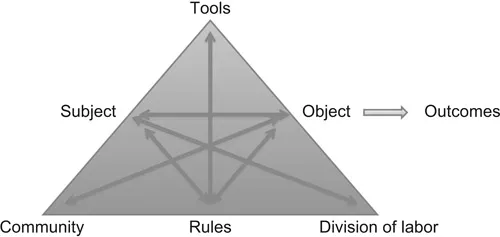
Figure 1.1 Adapted from Engeström (1987).
In the activity system, the subject, a person or group of people, engages in goal-oriented activity with a particular motive for the activity and with a desired outcome in mind. Activity is mediated by physical (computers, pencils, dictionaries, etc.) and symbolic (language, numeric systems, diagrams, etc.) tools that people use to accomplish the activity. In turn, activity is constrained and supported by rules, that is, the laws and customs that people adhere to, and by the community, other people who affect the activity. The division of labor with other participants in the activity also plays a role in the outcomes because human action is typically a social enterprise. On the whole, the activity system emphasizes that no human action is an isolated self-contained event but rather is shaped and shapes its institutional and cultural context. Human action in goal-oriented activity (motive) is shaped by the tools available and the social context of the actions (rules, community and division of labor), and thus performance on tasks or activities may vary from learner to learner (Roebuck 2000) because this performance is a result of the interaction between the individual, motive, tools, and the social support and constraints given by the activity.
Considering the sociocultural principles presented in this section, it is not surprising that application of the theory to L2 learning contexts has been particularly illuminating of the process of learning in social contexts such as classrooms, tutoring sessions, and other collaborative activities. It also has expanded our understanding of the learner as an active agent in learning and of the representation of L2 knowledge itself as a carrier of culturally specific concepts. The following section highlights how the theory has been applied to studies on learning and teaching L2s, particularly Spanish.
Core Issues and Topics
Research informed by SCT has contributed to our knowledge of the processes involved in SLA regarding the nature of learning, the learner, and what constitutes L2 knowledge itself (Gánem Gutiérrez 2013). Studies have illustrated activity and mediated learning and assessment through teacher–learner and learner–learner discourse in classrooms and technology-enhanced environments. Internalization has been a central focus in the study of private speech, language play, and private writing. Research framed in SCT has also expanded investigation of the nature of language beyond the predominant emphasis in SLA on the acquisition of the linguistic system itself by looking into metaphoric use of the L2, gesturing, and the acquisition of conceptual thinking. The following section discusses much of the work that has focused on Spanish learners from a sociocultural perspective and some representative studies from other languages that are particularly illustrative of these three areas.
Mediation
SCT has been a useful lens through which to observe how learners use language and other tools to mediate learning a L2. Mediation is a central concept in the theory, and as such, it has been an intense focus of study. The lion’s share of research has investigated mediation using a micro-genetic approach. Gánem Gutiérrez (2008) discussed microgenesis as a method and as object of study to understand the use of language as a mediating tool for the co-construction of meaning as it unfolds during learning activities. Based on qualitative data from recorded interaction, chat sessions, learner diaries, narratives, field notes and such, these studies provide rich interpretive analysis of the interplay of social and cognitive factors in mediated learning activities.
Early studies of mediation in L2 collaborative classroom activities challenged interactionist views of the value of group work as increased input and emphasized other mediating functions played by language during interaction (De Guerrero and Villamil 1994; Donato 1994; Kowal and Swain 1994; Ohta 2001; Swain and Lapkin...
Table of contents
- Cover
- Title
- Copyright
- Dedication
- Contents
- Acknowledgments
- List of Contributors
- Editorial Board
- Introduction
- PART I Perspectives on Learning Spanish
- PART II Issues and Environments in Spanish Teaching
- PART III Spanish in the Professions
- PART IV The Discourses of Spanish
- PART V Social and Political Contexts for Spanish
- Contributors
- Index
Trusted by 375,005 students
Access to over 1.5 million titles for a fair monthly price.
Study more efficiently using our study tools.
Frequently asked questions
Yes, you can cancel anytime from the Subscription tab in your account settings on the Perlego website. Your subscription will stay active until the end of your current billing period. Learn how to cancel your subscription
No, books cannot be downloaded as external files, such as PDFs, for use outside of Perlego. However, you can download books within the Perlego app for offline reading on mobile or tablet. Learn how to download books offline
Perlego offers two plans: Essential and Complete
- Essential is ideal for learners and professionals who enjoy exploring a wide range of subjects. Access the Essential Library with 800,000+ trusted titles and best-sellers across business, personal growth, and the humanities. Includes unlimited reading time and Standard Read Aloud voice.
- Complete: Perfect for advanced learners and researchers needing full, unrestricted access. Unlock 1.5M+ books across hundreds of subjects, including academic and specialized titles. The Complete Plan also includes advanced features like Premium Read Aloud and Research Assistant.
We are an online textbook subscription service, where you can get access to an entire online library for less than the price of a single book per month. With over 1.5 million books across 990+ topics, we’ve got you covered! Learn about our mission
Look out for the read-aloud symbol on your next book to see if you can listen to it. The read-aloud tool reads text aloud for you, highlighting the text as it is being read. You can pause it, speed it up and slow it down. Learn more about Read Aloud
Yes! You can use the Perlego app on both iOS and Android devices to read anytime, anywhere — even offline. Perfect for commutes or when you’re on the go.
Please note we cannot support devices running on iOS 13 and Android 7 or earlier. Learn more about using the app
Please note we cannot support devices running on iOS 13 and Android 7 or earlier. Learn more about using the app
Yes, you can access The Routledge Handbook of Hispanic Applied Linguistics by Manel Lacorte in PDF and/or ePUB format, as well as other popular books in Languages & Linguistics & Teaching Languages. We have over 1.5 million books available in our catalogue for you to explore.