eBook - ePub
Selling Forest Environmental Services
Market-Based Mechanisms for Conservation and Development
- 336 pages
- English
- ePUB (mobile friendly)
- Available on iOS & Android
eBook - ePub
Selling Forest Environmental Services
Market-Based Mechanisms for Conservation and Development
About this book
The risks posed by forest destruction throughout the world are highly significant for all. Not only are forests a critical source of timber and non-timber forest products, but they provide environmental services that are the basis of life on Earth. However, only rarely do beneficiaries pay for the goods and services they experience, and there are severe consequences as a result for the poor and for the forests themselves. It has proved difficult to translate the theory of market-based approaches into practice. Based on extensive research and case studies of biodiversity conservation, watershed protected and carbon sequestration, this book demonstrates how payment systems can be established in practice, their effectiveness and their implications for the poor.
Chapter 1
Market-based Mechanisms for Forest Conservation and Development
Forests are under severe threat in many parts of the world. An average of almost 15 million hectares of forest were lost every year during the 1990s, mostly in the tropics (FAO, 2001a, 2001b). This loss of forests has been accompanied by a loss of the many valuable services that forests provide – such as regulation of hydrological flows and carbon sequestration – and of the biodiversity they contain (Myers, 1997).
Recent years have seen widespread experimentation with market-based mechanisms to address these problems. Many believe that market-based approaches can provide powerful incentives and efficient means of conserving forests and the public goods they provide, while at the same time offering new sources of income to support rural livelihoods. A recent review found almost 300 examples of such mechanisms worldwide (Landell-Mills and Porras, 2002) and the list is constantly growing.
While interest in market-based approaches to forest conservation is growing throughout the world, relatively little information is available on how these approaches have emerged and how they work in practice. This book brings together case studies of some of the most advanced experiments. Each case study discusses the challenges involved in creating markets for forest environmental services, including how to identify and quantify the different services that forests provide; establishing sustainable financing mechanisms; developing payments systems that provide adequate incentives to land managers; developing and adapting the institutional framework to suit local circumstances; and ensuring an equitable distribution of costs and benefits among different stakeholders.
Benefits Provided by Forests
We adopt here a very wide definition of ‘forest’, which includes any land use with substantial tree cover. Of course, not all forests are equally valuable. The structures, compositions, and locations of forests play important roles in determining the kinds of services they can provide, and to whom. Monoculture plantations clearly do not contain much biodiversity. They can, however, affect hydrological flows, and they can sequester carbon. Rather than restricting the discussion to a subset of forests, we find it more useful to ask which services any particular forest can provide. We would in any case have to ask this question, as even within natural forests there is considerable variation in the types and levels of services being provided to consumers.
Forests provide a wide variety of benefits (Baskin, 1997; Myers, 1997; Roper and Park, 1999; Schmidt and others, 1999; Sharma, 1992). In this book, we focus on three main categories of benefits, as follows:
- Watershed protection. Forests can play an important role in regulating hydrological flows and reducing sedimentation. Changes in forest cover can affect the quantity and quality of water flows downstream, as well as their timing.
- Biodiversity conservation. Forests harbor a significant proportion of the world’s biodiversity. Loss of habitat, such as forests, is a leading cause of species loss.
- Carbon sequestration. Standing forests hold large carbon stocks, and growing forests sequester carbon from the atmosphere.
Chapter 2 reviews the role of forests in providing these services.
Why are Forest Services Lost?
The causes of deforestation are many and complex (Angelsen and Kaimowitz, 2001; Brown and Pearce, 1994; Contreras-Hermosilla, 2000; Kaimowitz and Angelsen, 1998). This book focuses on situations in which market failure plays a key role. This is not to underestimate the importance of other factors, notably the prevalence of agricultural subsidies and timber trade policies that encourage forest conversion and unsustainable logging (Barbier and others, 1994; Binswanger, 1991; Browder, 1985; Mahar, 1988; Repetto and Gillis, 1988; Schneider, 1994). Nevertheless, the fact remains that even in the absence of perverse public policies, forest environmental services would still be under-supplied by the market, in most cases due to their nature as ‘externalities’ or ‘public goods’ (Baumol and Oates, 1988; Cornes and Sandler, 1996).1
Consider the case of farmers deciding whether to clear native forests in a frontier area for use as agricultural land. In making this decision, they will certainly consider the benefits they expect to derive from increased crop production, whether it be for sale or for their families’ own consumption. They will also factor in the costs of tools needed to clear land, the fertilizers and other inputs needed to grow crops, and the labor needed to clear the forest and prepare the new cropland. But what about the other benefits that the forest provides, which will be lost or reduced if the forest is cleared? If the farmers collect fuelwood or other non-timber products, or graze their livestock in the forest area, they will factor the loss of these services into their decision.2 They are unlikely to consider benefits such as watershed protection, on the other hand. Cutting down the forest might increase downstream flooding and sedimentation, for example, but these costs will not be borne by the farmers clearing the area; they will be borne by people living far downstream. Therefore, local land users will typically ignore these costs in their clearing decisions. The result is that, from the perspective of farmers deciding whether to clear a given stretch of land, the value of the forest appears to be far lower than it really is. Since the benefits of clearing are valued fully but the benefits of maintaining forest areas are not, it is likely that more forest will be cleared than is optimal. A full accounting of all the benefits would not necessarily lead to the preservation of all the forest, but it would almost certainly result in a lower rate of deforestation than that which currently takes place.
Figure 1.1 illustrates the problem in stylized form. Each circle represents one of the services provided by a particular forest. For the purposes of illustration, six such services are shown. Depending on the characteristics of the forest and of the users of each service, the circles may differ in magnitude: the forest illustrated here, for example, has large hydrological benefits and carbon sequestration benefits, but relatively minor biodiversity benefits. Other forests will have different benefits, in both absolute and relative terms. The figure also illustrates that some of these benefits overlap each other to varying degrees. The total benefits of the forest are given by the sum of its constituent benefits. Different stakeholder groups will tend to perceive a different mix of forest benefits, attributing more or less importance to each component according to their own priorities and preferences. In particular, local decision-makers may give priority to benefits arising from direct, usually extractive uses of the forest, such as the harvest of fuelwood and other non-timber forest products (illustrated by the dark shaded area). Hydrological benefits, for example, often do not accrue to local decision-makers in the forest itself, but instead to water users downstream (light shaded area). Likewise, carbon sequestration benefits accrue to global society as a whole (unshaded area), through their effect in mitigating climate change.3 So long as local decision-makers receive no compensation for providing these benefits, they are unlikely to give them much consideration when making land use decisions.4
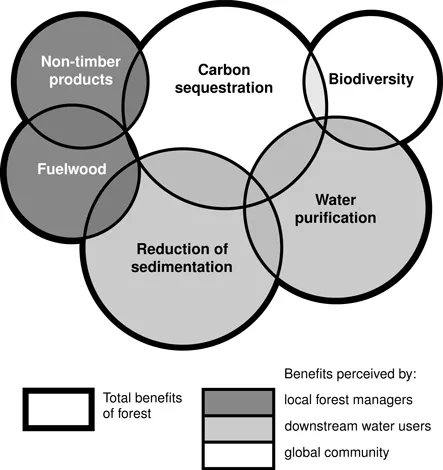
Figure 1.1 Beneficiaries of forest services
Responses to the problem of market failure in forests can take many forms. A common response has been for governments to assume responsibility for protecting and managing forest resources, either in protected areas or in forest management units. Yet governmental ambitions have rarely lived up to expectations. All too often governments lack sufficient information about which services are important and how to provide them, or they lack funds to pay for the necessary conservation. Governments are also not immune to political pressures, such as lobbying by agricultural or industrial interests that would profit from forest use.
Other approaches have included reforestation projects, a variety of initiatives that seek to educate local land users about the benefits of forests, and integrated conservation and development projects. The record of these projects has been mixed (Southgate, 1998). Often, they have failed to address the fundamental problem of market failure. They have also proved costly and difficult to implement.
Market-Based Mechanisms for Forest Conservation
The basic purpose of the market-based mechanisms examined in this book is to remedy market failure.5 By selling the services provided by forests, either individually or in bundles, these mechanisms aim to generate funds that can then be used either: (i) to increase the private benefits of conservation to individual forest managers, and so change their incentives; or (ii) to generate resources that can be used to finance conservation efforts by public or private conservation groups.
The basic logic of market-based mechanisms is illustrated in Figure 1.2. Two hypothetical market-based mechanisms are shown: one that sells sedimentation reduction services to downstream water users, and one that sells carbon sequestration services to buyers needing credits to meet Kyoto emission reduction requirements.6 These payments essentially transfer some of the benefits received by these groups to the local forest managers. As a result, the total benefits of forest conservation as perceived by forest managers increase, perhaps substantially. Assuming that the benefits of converting forests to other uses remain unchanged, it is now more likely that local forest managers will choose to preserve forests.
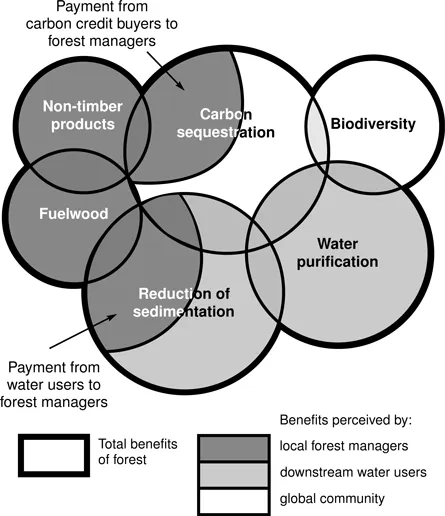
Figure 1.2 Logic of market-based mechanisms for forest services
Several aspects of this diagram are worth noting:
- Even with payments for sedimentation-reduction and carbon sequestration, local forest managers still perceive only a subset of all forest benefits. This may not matter from a practical perspective. All that is needed from the perspective of changing forest management decisions is to increase the benefits of conservation that are perceived by local forest managers so that they outweigh the benefits they perceive from deforestation.
- A socially inefficient solution, in which forest managers choose to convert a forest even though its total social benefits are greater than the benefits of alternative uses, remains possible. Its likelihood is reduced, but not eliminated. Only when local land managers are compensated for supplying all non-local benefits can we be sure that forest management decisions are always socially optimal.
- For the same reason, market-based mechanisms fall short of providing a complete valuation of a forest’s benefits. The flow of payments from various beneficiaries through such mechanisms is unlikely to exceed the perceived value of the benefits provided, because the beneficiaries would refuse to pay. These payments are quite likely to capture only part of the benefits provided, however, because of the difficulty of identifying all beneficiaries of all services and collecting appropriate payments. Such mechanisms, therefore, only provide a lower bound to the actual value of the services that forests provide.
- Merely collecting payments from the beneficiaries of forest services will not help to change forest management decisions unless these payments reach forest managers.
Compared to previous approaches to forest conservation, market-based mechanisms promise increased efficiency and increased effectiveness, as well as increased equity in the distribution of costs and benefits. Experience with market-based instruments in other sectors has shown that such policies, if carefully designed and implemented, can achieve environmental goals at significantly less cost than conventional ‘command-and-control’ approaches, while creating positive incentives for continual innovation and improvement (Ekins, 1999; Huber and others, 1998; OECD, 1993, 1994; Stavins, 1999). The reason for this is simple: the costs of achieving any given environmental objective are rarely constant across all situations. Market-based instruments take advantage of this difference by concentrating efforts where the costs are lower. Likewise, the benefits of conservation can differ substantially from case to case. Market-based instruments seek out and concentrate on the higher-benefit cases.
The claim for greater equity through the use of market-based based approaches is more controversial. Many are familiar with the so-called ‘polluter pays principle’, which states that those who impose environmental burdens on society, in the form of waste or pollution, should bear the costs (which will ultimately be passed on to consumers in the form of higher prices for goods and services). In the case of environmental services, the relevant corollary is the less well-known ‘provider gets principle’, which holds that those who provide an environmental benefit should be rewarded for doing so (or at least be compensated for their costs). Markets for environmental services are t...
Table of contents
- Cover
- Half Title
- Title Page
- Copyright
- Contents
- List of Tables, Figures, and Boxes
- Foreword
- Acknowledgements
- List of Contributors
- Acronyms and Abbreviations
- 1. Market-based Mechanisms for Forest Conservation and Development
- 2. Forest Environmental Services: An Overview
- 3. Paying for Water Services in Central America: Learning from Costa Rica
- 4. Sharing the Benefits of Watershed Management in Sukhomajri, India
- 5. Paying to Protect Watershed Services: Wetland Banking in the United States
- 6. Financing Watershed Conservation: The FONAG Water Fund in Quito, Ecuador
- 7. Selling Biodiversity in a Coffee Cup: Shade-grown Coffee and Conservation in Mesoamerica
- 8. Conserving Land Privately: Spontaneous Markets for Land Conservation in Chile
- 9. Linking Biodiversity Prospecting and Forest Conservation
- 10. Using Fiscal Instruments to Encourage Conservation: Municipal Responses to the ‘Ecological’ Value-added Tax in Paraná and Minas Gerais, Brazil
- 11. Developing a Market for Forest Carbon in British Columbia
- 12. Helping Indigenous Farmers to Participate in the International Market for Carbon Services: The Case of Scolel Té
- 13. Investing in the Environmental Services of Australian Forests
- 14. Insuring Forest Sinks
- 15. Making Market-based Mechanisms Work for Forests and People
- Index
Trusted by 375,005 students
Access to over 1.5 million titles for a fair monthly price.
Study more efficiently using our study tools.
Frequently asked questions
Yes, you can cancel anytime from the Subscription tab in your account settings on the Perlego website. Your subscription will stay active until the end of your current billing period. Learn how to cancel your subscription
No, books cannot be downloaded as external files, such as PDFs, for use outside of Perlego. However, you can download books within the Perlego app for offline reading on mobile or tablet. Learn how to download books offline
Perlego offers two plans: Essential and Complete
- Essential is ideal for learners and professionals who enjoy exploring a wide range of subjects. Access the Essential Library with 800,000+ trusted titles and best-sellers across business, personal growth, and the humanities. Includes unlimited reading time and Standard Read Aloud voice.
- Complete: Perfect for advanced learners and researchers needing full, unrestricted access. Unlock 1.5M+ books across hundreds of subjects, including academic and specialized titles. The Complete Plan also includes advanced features like Premium Read Aloud and Research Assistant.
We are an online textbook subscription service, where you can get access to an entire online library for less than the price of a single book per month. With over 1.5 million books across 990+ topics, we’ve got you covered! Learn about our mission
Look out for the read-aloud symbol on your next book to see if you can listen to it. The read-aloud tool reads text aloud for you, highlighting the text as it is being read. You can pause it, speed it up and slow it down. Learn more about Read Aloud
Yes! You can use the Perlego app on both iOS and Android devices to read anytime, anywhere — even offline. Perfect for commutes or when you’re on the go.
Please note we cannot support devices running on iOS 13 and Android 7 or earlier. Learn more about using the app
Please note we cannot support devices running on iOS 13 and Android 7 or earlier. Learn more about using the app
Yes, you can access Selling Forest Environmental Services by Stefano Pagiola,Joshua Bishop,Natasha Landel-Mills in PDF and/or ePUB format, as well as other popular books in Economics & Economic Theory. We have over 1.5 million books available in our catalogue for you to explore.