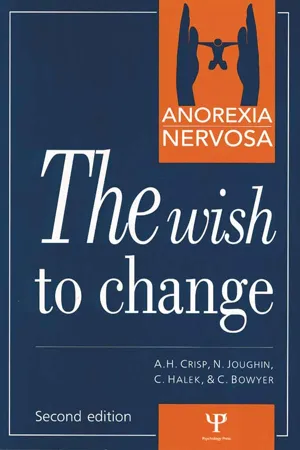
This guide to 'self-help' has become highly valued by sufferers from anorexia nervosa, their families and their carers. It relates to Arthur Crisp's much praised text Anorexia Nervosa: Let Me Be, now in its third reprint. Many sufferers report that Anorexia Nervosa: The Wish to Change has provided them with their first private opportunity to reconsider their position and future properly, and then to do more about them. Carers have found it particularly helpful as a joint tool in their work with patients, especially when used alongside the more recently published Anorexia Nervosa: Guidelines for Assessment and Treatment in Primary and Secondary Care and the Patient's Log Book from the same centre.
eBook - ePub
Anorexia Nervosa
The Wish to Change
- 112 pages
- English
- ePUB (mobile friendly)
- Available on iOS & Android
eBook - ePub
About this book
Information
CHAPTER 1
WHAT IS ANOREXIA NERVOSA?
Our view and our messages

We are our parents and their bond;
please let us be fulfilled.
please let us be fulfilled.
Hello
We want you to think carefully before you decide to give up anorexia. The chances are that a lot of people have told you that you will feel better if you gain weight. This may be true in the long term, but you know only too well that it isn’t in the short term.
It may be that you don’t feel you have anorexia. Some books or films offer a particular picture of the problem. For instance some people will say that they haven’t got the disorder because they don’t binge and vomit, as they saw happening in the film Catherine. These aren’t necessary symptoms. More often the problem is in accepting the implications of the label of anorexia nervosa. You may fear that you will then be regarded as no more than an “anorectic” or else “just an awkward person who refuses to eat”. You may feel you would be more exposed to people offering you advice or threats about the need to eat. You, and your family, would have to face the fact that there is a serious problem, which at best results in a limited life, at worst can result in death. It is easy to see why “anorectic” is a hard label to accept.
This book has to deal with anorexia in general. It will therefore be easy to be critical of those aspects which are “not about me”, and therefore ignore all the advice. This is your choice, but we think you should seriously consider the possibility that someone else is able to understand you — even if this hasn’t been your recent experience.
Why do people have anorexia nervosa?
Because they are overweight? This explanation is far too simple. Indeed it is seriously wrong. You felt fat and overweight — but why? The majority of people have their first episodes of anorexia in their teens, and women who never develop anorexia often feel uncomfortable especially during their teens with their newly acquired body shape, wish they were thinner and diet intermittently. Very few people find adolescence and its tasks of forging an adult personality easy. It is a time of challenges. It starts, several years before the first menstruation in females, at the onset of puberty with those very changes in body shape due to body fat about which many young women, and some young men, become sensitive. These concerns can get powerfully attached in your mind to the other new experiences which come with puberty, and which, in one way or another, have become frightening for you. The end of adolescence is more difficult to identify. Adolescent problems can be reactivated later in life, for instance at the time of marriage, childbirth or death of a parent, and such events can then cause an episode of anorexia nervosa later in life. The assumption that an eighteenth or twenty first birthday marks our readiness for adulthood does not always reflect reality.
Anorexia nervosa is an unwitting reversal and thereafter an avoidance of development. It can be understood as a way of banishing insecurity and conflict, often including conflict or potential conflict between you and your family. Weight loss and loss of plumpness returns your body and its feelings to its state before puberty. Symbolically enough, if you are female, your periods stop early on or your development may arrest even before your periods have started and many of the problems of adulthood come to be completely avoided. Thus weight loss works even more effectively than a tranquillising drug or alcohol. The emotions that have been most hard to tolerate are dampened down and eliminated and a kind of security achieved. Within your state of starvation, distress is channelled exclusively into panic about losing control of your low body weight — a price you have obviously needed to pay, not least because Nature does not understand what you are trying to achieve and constantly struggles to re-establish natural growth.
Many people ask whether something to do with sex is at the bottom of the problem. The answer is yes and no. Sex is an inescapable aspect of growth into an adult. It is the product of puberty and relates to the sensitivity that many females and males develop at this stage about their bodies — with females being more concerned about their “fatness”. Many people also ask whether anorexia nervosa is caused by previous sexual abuse. Such abuse has sometimes occurred in the backgrounds of those with anorexia nervosa. When this is the case it is invariably a most important influence on the condition. It can leave the affected person very fearful of their development or even deadened. But intense fear of sexuality can have many other origins. For instance sexuality may threaten a family which is too tightly bound up in itself or too distanced from the various values of the outside world which beckons the adolescent, or where parents’ love is too conditional on compliance, or the family too committed to furthering your social or educational development above everything else. Then again, children may see one of their parents apparently damaged by the sexual conduct of the other parent, may even fear being like the latter parent themselves and thus cause further harm. Sex may become “bad” and relief from its impulse profound, and an especially close bond may become forged with the “damaged” parent. Such complete reversion to “childhood” as anorexia nervosa reflects may also re-cement some parental marriages which need the presence of the child in the family for their survival. As puberty develops and adolescence arises, sex can rarely be denied and becomes a major factor of either a real or imagined kind in relationships with people of your own age. If you are to feel secure in the outside world you will need to have worked out a personal solution rather than an imposed one to this dilemma. We prefer to view sex as a powerful and inescapable force but equally aim to put it in its place when trying to understand its influence. Sex in our view is best seen in terms of other human needs for love, security, respect, self-esteem, self-control, immortality, and the usual human search for intimacy that links these things. This applies not only to you but to those around you including your parents. If sex has got out of hand — becoming too stifled or too unmanageable — then an underlying question concerns what other needs are not being met.
People also sometimes ask whether anorexia nervosa is inherited. Many disorders are a product of both inheritance and development and this is true for anorexia nervosa. We touch on this in the section addressed to parents.
Coming to terms with the idea of having anorexia nervosa
As mentioned above, there are a variety of reasons for not accepting the idea that you are suffering from anorexia nervosa. It perhaps becomes a more acceptable idea if you understand the problem in a broader context than eating behaviour, and if you are clear that it is a major problem that warrants help rather than scorn or dismissal from others. Anorexia nervosa is often called an eating disorder as if this was its primary basis, and of course eating is severely disordered in it, and this may be causing great problems in the family. For instance, if your family is together then you may notice that your mother now appears to feel helpless and your father perhaps angry and helpless. However, it is our belief that the (hidden) psychological problem revolves importantly around the meaning of body shape and hence weight, and this is what you need to understand. This understanding will need to link your shape and weight with problems in your development, usually involving you and your family, which we believe underwrite the condition. They may or may not have been acknowledged at the time. Present family relationships and strains are different and will not greatly reflect the existential problem that operated before your anorexia nervosa developed. That is the one thing that has been solved.
You are likely to have anorexia nervosa if you have a (secret) terror of being more than about 7 stone*; less if the onset was very early in your life or you are especially short, or perhaps rather more if you are male and taller. For you, your weight is indeed the be all and end all of “being”. As a result of your terror, you keep your weight down, and this results in a state of chronic bodily starvation hedged around by defences against weight gain to the exclusion of everything else. If your means of low weight control is that of restriction of calorific food intake then that is a unique form of starvation resulting in a specially selective shut-down of your biological and adult sexuality (see p. 11).
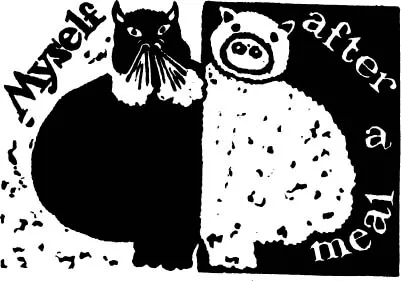
You may have got used to defiantly claiming that your condition is fulfilling, but you may in fact experience it more as a vitally necessary safe, or not so safe, retreat. This is the trap of anorexia nervosa. You are caught within a distressing way of life, but if you share your fears with other people you find, or fear, that they will not understand. You therefore say that you are “fine”. You will be used to creating such smokescreens: convincing other people that you are puzzled as to why you don’t gain weight, claiming that you can at last crack it by yourself, gaining a little weight at the cost of great anxiety in order to reassure others, denying to others your all-absorbing preoccupations. You need to shed such defences. They simply distance you even more from those around you. Accepting and acknowledging the idea of anorexia nervosa is necessary if you are going to tackle the problem.
The costs of anorexia nervosa
Others will not always share your apparent ease with your situation and will try to interfere. For you yourself, as the condition progresses, the costs become more evident. Anorexia is a full-time job. Your preoccupation with food prevents other activities. Friends sense that something is wrong and back away. You fail to tackle difficult emotions that would have been prompted by your adult body including its sexuality: for instance in learning to cope in relationships with people of your own age and in renegotiating your relationship with your parents. Those people who remain in contact may do so in response to you as an invalid, not for love of the adult you. Life leaves you behind. Sometimes this realisation happens many years after the onset of the problem, leaving an awful feeling that it is too late to catch up.
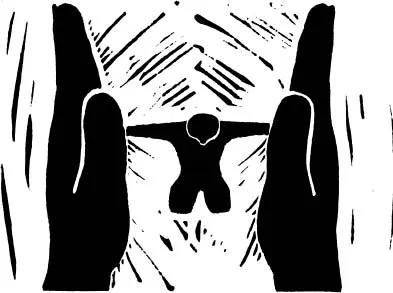
Males with anorexia nervosa
If you are a male with anorexia nervosa and have been reading this you may by now feel baffled and worried. How do many of the features which seem to be specifically female relate to your own problem? Is there something especially wrong with you since the condition is so rare amongst males?
The answer is that a great deal of what has been written applies to you. Loss of periods in the female is part of the early response to reduced energy intake (energy-rich food) affecting reproductive and sexual behaviour and feelings in general (see p. 8) which is equally mirrored in you. The question is the same — what is behind this process? The answers, we suggest, are also the same and reflected in the general content and the 30 steps presented in this book.
Males are less often concerned about their “fatness” than females but this can arise if you have been definitely fat and teased or else, sometimes, if you have been experiencing some doubt and panic about, say, your masculinity. Such gender doubt during adolescence is not uncommon and also arises amongst females, but may be less conspicuous.
As with females, we are able to tell you that it is very definitely possible to recover from anorexia nervosa and, in our view, you can best take the same steps to try to achieve this — all 30 of them!
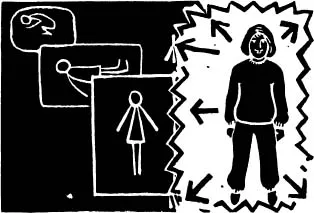
Older patients with anorexia nervosa
Older patients with anorexia often comment that they do not feel able to relate to what is written in most books on the subject. So much of what is written is about adolescents and adolescence. We take the point. For those older people with anorexia which began in their teens the problem may not be so great, but it is still a problem. For those people with an onset of the disorder later in life the problem is quite pronounced.
If you are now older, but your anorexia began in your teens, then the origins of the disorder are presumably much the same as for other sufferers where it began in adolescence. However, elements of the problems faced by sufferers change over the years. The factors that perpetuate the illness may not be the same as those that caused it. If you have had anorexia for over a decade it will usually be the case that your life is, to a large extent, dictated by anorexia. It will mean that life centres around food, social contacts will be constrained by this and isolation may be a major problem. Too often the disorder wears down family strengths and sufferers can become isolated from their families, perhaps with a degree of mutual anger. Commonly sufferers will agree that they have the problem, but this recognition is not by itself enough to enable them to give up the disorder. You recognise that anorexia is a barren, controlled way of life, but you know little else and giving it up is terrifying. You can no longer get better and simply reengage in school, teenage relationships, and a career. You are viewed by the world as being your chronological age, but only part of you has this maturity. The rest of you has missed out on a lot of the developmental experiences of others. If this applies ...
Table of contents
- Cover
- Title Page
- Copyright Page
- ACKNOWLEDGEMENTS
- Table of Contents
- Foreword
- Chapter 1 WHAT IS ANOREXIA NERVOSA?
- Chapter 2 HOW TO CHANGE: THE 30 STEPS
- Chapter 3 WORK SECTION
- Chapter 4 PRACTICAL INFORMATION SECTION
Trusted by 375,005 students
Access to over 1.5 million titles for a fair monthly price.
Study more efficiently using our study tools.
Frequently asked questions
Yes, you can cancel anytime from the Subscription tab in your account settings on the Perlego website. Your subscription will stay active until the end of your current billing period. Learn how to cancel your subscription
No, books cannot be downloaded as external files, such as PDFs, for use outside of Perlego. However, you can download books within the Perlego app for offline reading on mobile or tablet. Learn how to download books offline
Perlego offers two plans: Essential and Complete
- Essential is ideal for learners and professionals who enjoy exploring a wide range of subjects. Access the Essential Library with 800,000+ trusted titles and best-sellers across business, personal growth, and the humanities. Includes unlimited reading time and Standard Read Aloud voice.
- Complete: Perfect for advanced learners and researchers needing full, unrestricted access. Unlock 1.5M+ books across hundreds of subjects, including academic and specialized titles. The Complete Plan also includes advanced features like Premium Read Aloud and Research Assistant.
We are an online textbook subscription service, where you can get access to an entire online library for less than the price of a single book per month. With over 1.5 million books across 990+ topics, we’ve got you covered! Learn about our mission
Look out for the read-aloud symbol on your next book to see if you can listen to it. The read-aloud tool reads text aloud for you, highlighting the text as it is being read. You can pause it, speed it up and slow it down. Learn more about Read Aloud
Yes! You can use the Perlego app on both iOS and Android devices to read anytime, anywhere — even offline. Perfect for commutes or when you’re on the go.
Please note we cannot support devices running on iOS 13 and Android 7 or earlier. Learn more about using the app
Please note we cannot support devices running on iOS 13 and Android 7 or earlier. Learn more about using the app
Yes, you can access Anorexia Nervosa by Professor A. H. Crisp,Neil Joughin,Christine Halek,Carol Bowyer in PDF and/or ePUB format, as well as other popular books in Personal Development & History & Theory in Psychology. We have over 1.5 million books available in our catalogue for you to explore.