Advising in Language Learning (ALL) brings together examples of advising practice and research from various international contexts in a fast-developing field. A theoretical model based on constructivism and sociocultural theory (the Dialogue, Tools and Context Model) is proposed and supported thoughout the book, as each of the contributions focuses on one or more areas of the model. In this volume the editors set out the general aims and understandings of the field, illustrating the innovative manner in which advisors around the world are working with learners and researching the practice of ALL.
- 328 pages
- English
- ePUB (mobile friendly)
- Available on iOS & Android
eBook - ePub
About this book
Information
PART ONE
Introductory chapters
CHAPTER 1
Introduction
As advising in language learning (ALL) is a relatively new area of applied linguistics, in this general introduction we attempt to address some relevant questions:
■ What is ALL?
■ How has ALL been influenced by the field of counselling?
■ To what extent should ALL involve directive and non-directive approaches?
■ What is the relationship between ALL and learner autonomy?
■ How is ALL different from language teaching?
■ What is the role of the learning advisor?
The field of ALL emerged around twenty years ago in order to meet individual, institutional and professional language-learning needs (Rubin, 2007). Although relatively little has been written about ALL, it is becoming established as a professional field in academic institutions around the world. Much of the discussion about ALL thus far has emerged from the literature connected with language learner autonomy and self-access language learning. We would like to add to this body of knowledge and make a case to establish ALL as a field of professional practice in its own right. After pro viding a broad definition of what we see ALL as being, we explore how it has been influenced by humanistic counselling. From this position we explore other schools of counselling and other kinds of advising and discuss the nature of these fields and these approaches in relation to ALL, particularly the extent to which schools of counselling advocate directive or non-directive approaches. Finally, we define the role and context of the practitioners – the (language) learning advisors – by examining the aims, practices, skills, locations and discourses of ALL.
This book contains a collection of chapters where authors around the world explore research and practice in ALL. We have positioned each contribution within a proposed model incorporating “dialogue”, “tools” and “context”. The model draws on the theoretical perspectives of constructivism and sociocultural theory (the model and the underpinning theoretical framework is discussed in Mynard's chapter).
Part 1: What is advising?
Terms and definitions
The term “advising” itself has actually been much discussed in the literature of language learner autonomy and self-access language learning and it is the overarching term we use in this book. This then allows us to use the companion terms “advisor” and “advisee”, and to avoid other perhaps more loaded terms such as those offered by Riley, “counselor, helper, facilitator, knower, mentor, consultant” (Riley, 1997, p. 115). Some existing studies refer to “language advising” (Mozzon-McPherson, 2001, p. 7 ; Reinders, 2008, p. 13) rather than the word order that we have decided to use which is “advising in language learning.” These collocations are almost synonymous, but we (the editors) favour the latter because the advising process may incorporate attention to factors that are not only related to language as we will discuss later in this introduction. The term “language advising” runs the risk of being interpreted in a very narrow sense, particularly by readers and students new to this field (i.e. being limited to the mechanics of language), rather than following the actual practices of those advisors who encompass in their work all the elements involved in assisting language learners with enhancing their learning processes.
We believe educators in the field would generally be in agreement that a (language) learning advisor is an educator who works with (usually individual) learners on personally relevant aspects of their language-learning development. Thus, advising in language learning involves the process and practice of helping students to direct their own paths so as to become more effective and more autonomous language learners. What we mean by a “good language learner” and how learners can be assisted in achieving this goal will vary from context to context and individual to individual, as the various contributions to this book will show. It is important to note that different languages and different learning cultures render the term “advising” and “advisor” in differing ways. For example, the term counsellor is used in the Finnish institution described in chapter 7 by Kidd and von Boehm, and also in chapter 10 by Karlsson. The Spanish term asesor translated locally as “counselor” is normally used in the Mexican institution referred to in the vignette by Valdivia, McLoughlin and Mynard, but we have translated it as advisor/advising for consistency. Despite this variation, there is consistency in all the contributions in this book in that the central goal is that of fostering learner autonomy.
Advising in language learning as a professional practice
The fields of counselling, guidance and professional advising in other fields (e.g. finance, academia) are all developing their own practices and discourses depending on the institutional context, theoretical approach and political dimensions (Silverman, 1997). ALL is also developing its own set of practices and discourses and is emerging as a separate field of professional practice. The type of discourse employed in ALL is an example of what Candlin and Maley (1997) define as interdiscursivity which is “… the use of elements from one discourse and social practice which carry institutional and social meanings from other discourses and other social practices” (Candlin and Maley, 1997, p. 212). ALL, as a new profession, has drawn to some extent on existing discourse practices from counselling and will continue to be informed by other fields as it develops. A new order of discourse (Carter, 2004) is now emerging. Other examples of discourse specific to emerging fields of counselling were observed by Candlin and Lucas (1986) in the field of family planning counselling, and also by Sarangi (2002) in the area of genetic counselling. Figure 1 depicts how the field of ALL is currently situated and how it may be informed by discourses and practices from other professional fields.
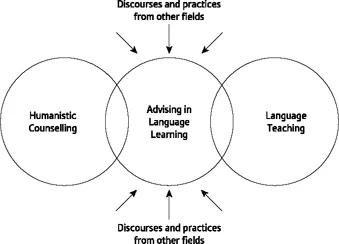
FIGURE 1 Framing the position of advising in language learning as a professional practice
What is clear is that ALL, as an emerging field, is in the process of defining itself. While there is some consensus among the practitioners about its aims, there is still some flux whereby practitioners in different contexts may use different terminologies, which at times may imply different practices. This is not unusual in other developing fields; even the field of counselling, for example, is still relatively new and does not have one agreed theory (Silverman, 1997). Indeed, even as the field becomes more established, there is unlikely to ever be one definition because theories and practices naturally vary because of the range of contextual factors necessarily involved (Silverman, 1997).
A field which incorporates contested definitions has its advantages; it can, and does, lead to innovation. At the same time, this may create difficulties in regard to describing best practices within the field. To address this issue, we attempt in this book to unify the field in terms of its general aims and understandings, but also to illustrate, through the various contributions, the innovative manner in which advisors around the world are working with learners and researching the practice of ALL. We believe firmly that despite the inevitable variety of approaches to ALL, there are benefits to be gained through discussing and agreeing on what may be the central foundations, principles, practices and issues in the field, in order to inform new educators and researchers, and also to guide future innovation and research.
Part 2: Examining other relevant fields
Counselling
The field of counselling has significantly influenced the field of ALL so it is important to explore it in this Introduction. One definition of counseling that is often referred to is as follows (provided by the British Association of Counselling):
… the skilled and principled use of relationships which develop self-knowledge, emotional acceptance and growth, and personal resources. The overall aim is to live more fully and satisfyingly. Counselling may be concerned with addressing and resolving specific problems, making decisions, coping with crises, working through feelings and inner conflicts, or improving relationships with others.
The counsellor's role is to facilitate the client's work in ways that respect the client's values, personal resources, and capacity for self-determination.
(British Association for Counselling, 1986)
Silverman (1997) notes that in this definition, a counsellor is characterized as an “enabler” (p. 5) and that the client takes an active rather than passive role in the process.
There are, of course, other definitions and, as Bond mentions, “at the international level there is a definite tendency to make the term counselling all-encompassing, in order to accommodate diversity of cultures and practice” (Bond, 2000, p. 18). Definitions provided by the American Counseling Association (formerly the American Association for Counseling and Development – AACD), for instance, highlight a strong multicultural dimension.
There are different theoretical approaches that guide counseling (Nelson-Jones, 2008), and in the following sections we will examine just two counselling theories out of many. Counselling theories possess basic underlying assumptions, client behaviours, and ways in which a counselor helps clients to benefit from the process (Nelson-Jones, 2008).
A school of counselling is formed when similar counselling theories are grouped together (Nelson-Jones, 2008). There are three main schools; the psychodynamic school where approaches tend to emphasise unconscious influences and with helping clients to exercise conscious control over their lives; the humanistic school which is based on humanism and is concerned with human potential and self-actualisation; and the cognitive behavioural school which is concerned with changing behaviours.
Person-centred counselling
Person-centred counselling is an example of humanistic counselling and is the theory that is referred to most frequently in the ALL literature. There are three fundamental principles of person-centred counselling, which are respect, empathy and genuineness (Egan, 1994; Mozzon-McPherson, this volume; Rogers, 1951). The underlying goal of person-centred counselling is to develop and maintain effective self-concept (Colledge, 2002). This theory of counselling is largely non-directive, i.e. concerned with the development of self-knowledge where the counsellor takes an unobtrusive role. In ALL, when drawing on the principles of person-centred counselling, the learning advisor is concerned with self-actualisation, personal fulfilment and autonomy and not just with the person's language-learning aims.
Cognitive Behavioural Therapy (CBT)
CBT is concerned with the ways in which people act, sometimes erroneously, based on their interpretations of experiences (Beck et al, 1990; Colledge, 2002). CBT works in an experiential sense through the practical correction of un wanted behaviours and beliefs, by providing the client with an understanding of these behaviours and beliefs, and the opportunity to remediate them. Although this kind of therapy has successfully helped clients overcome problems such as depression, anxiety disorders and personality disorders, it might be worth exploring further to inform ALL practice, particularly if the learner is attempting to overcome a behavioural issue that is impeding language learning, for example, expressing self-defeating behaviour, or being very dependent (see McLoughlin, this volume).
Counselling and advi...
Table of contents
- Cover
- Half Title
- Title Page
- Copyright Page
- Table of Contents
- List of tables and figures
- List of contributors
- Acknowledgements
- Publisher's acknowledgements
- About the chapters in this book
- Part One Introductory chapters
- Part Two Dialogue
- Part Three Tools
- Part Four Context
- Conclusion
- Index
Trusted by 375,005 students
Access to over 1.5 million titles for a fair monthly price.
Study more efficiently using our study tools.
Frequently asked questions
Yes, you can cancel anytime from the Subscription tab in your account settings on the Perlego website. Your subscription will stay active until the end of your current billing period. Learn how to cancel your subscription
No, books cannot be downloaded as external files, such as PDFs, for use outside of Perlego. However, you can download books within the Perlego app for offline reading on mobile or tablet. Learn how to download books offline
Perlego offers two plans: Essential and Complete
- Essential is ideal for learners and professionals who enjoy exploring a wide range of subjects. Access the Essential Library with 800,000+ trusted titles and best-sellers across business, personal growth, and the humanities. Includes unlimited reading time and Standard Read Aloud voice.
- Complete: Perfect for advanced learners and researchers needing full, unrestricted access. Unlock 1.5M+ books across hundreds of subjects, including academic and specialized titles. The Complete Plan also includes advanced features like Premium Read Aloud and Research Assistant.
We are an online textbook subscription service, where you can get access to an entire online library for less than the price of a single book per month. With over 1.5 million books across 990+ topics, we’ve got you covered! Learn about our mission
Look out for the read-aloud symbol on your next book to see if you can listen to it. The read-aloud tool reads text aloud for you, highlighting the text as it is being read. You can pause it, speed it up and slow it down. Learn more about Read Aloud
Yes! You can use the Perlego app on both iOS and Android devices to read anytime, anywhere — even offline. Perfect for commutes or when you’re on the go.
Please note we cannot support devices running on iOS 13 and Android 7 or earlier. Learn more about using the app
Please note we cannot support devices running on iOS 13 and Android 7 or earlier. Learn more about using the app
Yes, you can access Advising in Language Learning by Jo Mynard,Luke Carson in PDF and/or ePUB format, as well as other popular books in Education & Education Counseling. We have over 1.5 million books available in our catalogue for you to explore.