- 164 pages
- English
- ePUB (mobile friendly)
- Available on iOS & Android
eBook - ePub
About this book
Geothermal Heat Pumps is the most comprehensive guide to the selection, design and installation of geothermal heat pumps available. This leading manual presents the most recent information and market developments in order to put any installer, engineer or architect in the position to design, select and install a domestic geothermal heat pump system. Internationally respected expert Karl Ochsner presents the reasons to use heat pumps, introduces basic theory and reviews the wide variety of available heat pump models.
Information
1
Reasons to Use a Heat Pump
1.1 Environmental Benefits
1.1.1 Our Environment is in Danger
Over millions of years, the ancient forests and plants of our planet have produced the oxygen that we breathe today. The decaying plants and forests were swallowed up by the young Earth, and transformed over long periods of time into coal, oil and natural gas.
These are the fossil fuels that people burn today. During the burning process, the oxygen store is consumed and carbon dioxide is produced again. Another phenomenon is the enormous increase of methane gas in the atmosphere. There are several causes for this: the excessive production and use of natural gas world-wide has resulted in an increasing concentration of methane too. These gases intensify the natural greenhouse effect and present a climate threat (see Figure 1.1). In addition, the environmental pollution and damage caused by leaks in oil and gas pipelines and by tanker spills must be considered.
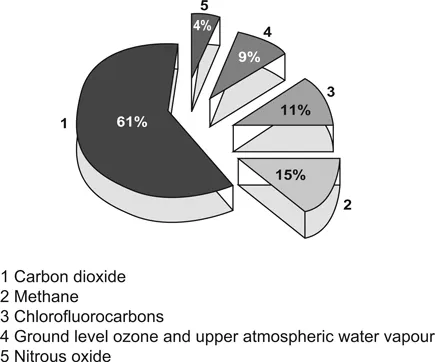
Figure 1.1 Emissions that contribute to the greenhouse effect and climate change
Source: Professor D. Schönwiese, Institut für Geophysik, Universität Frankfurt/M
According to United Nations (UN) studies, the expected consequence is an average temperature increase of 1.5 to 6°C in the next century. This is predicted to give rise to dramatic climate changes: increasingly frequent storms, hail and heavy precipitation, as well as droughts and a rising sea level (see IPCC – Intergovernmental Panel on Climate Change – report released in February 2007).
The environmental pollution and damage caused by leaks in oil and gas pipelines and by tanker spills must also be considered.
1.1.2 Tracking Down the Culprit
Heating with fossil fuels is achieved mainly by burning oil and natural gas. During the chemical process of combustion, considerable amounts of sulphur dioxide, nitrogen oxides, soot and other pollutants are emitted, causing acid rain, damaging forests and endangering our health.
All types of combustion, including that with natural gas and biofuels, produces carbon dioxide (CO2). This intensifies the greenhouse effect and leads to climate change. Heating an average family home using oil produces some 6000 kilogrammes (kg) CO2 each year, and using natural gas some 4000kg CO2. Domestic heating accounts for as much as 40 per cent of our CO2 emissions in central Europe.
For this reason, new building codes are designed to limit primary energy consumption.
Heating with wood logs, wood chips or pellets is arguably CO2-neutral provided that sustainable forestry is adopted, but still results in the emission of the pollution described above, as well as microparticles.
1.1.3 Heat Pumps Offer Emission-Free Operation On-Site
Heat pumps deliver heat without producing any on-site soot or other toxic exhaust. Depending on the heat source, heat pumps produce pollutant-free heating energy using solar energy, environmental energy, geothermal energy or waste heat.
So on the one hand you can store your white laundry in the heating room, creating another usable room, and on the other hand there are no pollutants which could harm your garden or backyard. Even your neighbours will be thankful for your commitment to national and global environmental protection (see Figure 1.2).
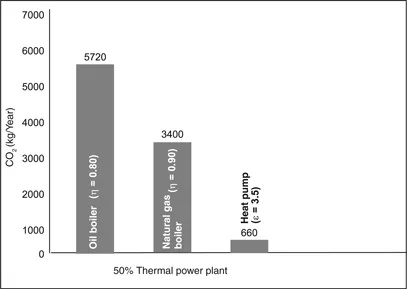
Figure 1.2 Emission comparison: typical single family house with 8.8kW heating demand
Note: Electricity: 50 per cent emission free (i.e. hydropower); 50 per cent thermal power plant.
Source: Institut für Wärmetechnik TU Graz, Energiebericht der österr. Bundesregierung 1990, actualised 12/1998.
The leading heat pump manufacturers use only chlorine-free refrigerants with zero ozone depletion potential.
Depending on the mix of generating capacity on the grid, heat pumps generally offer excellent overall CO2 emissions, i.e. as per the next figure with 50 per cent hydropower. It is also worth pointing out that even with 100 per cent modern fossil power generation there is an overall reduction in CO2 emissions compared to individual condensing boilers, thanks to the efficiency of today’s power plants.
Figure 1.3 shows how much on-site energy in kilowatt-hours per square meter per year must be expended. This energy is the quantity the user requires to heat the required area (i.e. how many kilowatt-hours of electricity, litres of heating oil or cubic metres of natural gas).
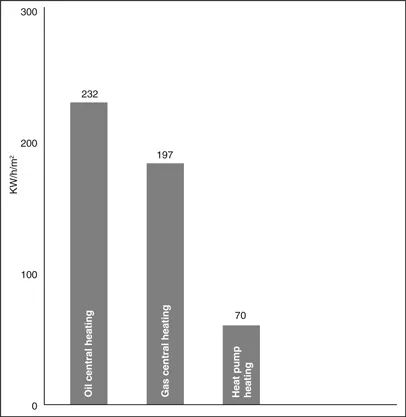
Figure 1.3 Energy demand for various heating system
Source: GEMIS-VDEW
One kilowatt-hour of electricity is equivalent to approximately 0.1 litres of oil. It is clear that heating with heat pumps requires significantly less energy than heating with gas or oil. The reason is that the heat pump draws up to 75 per cent of the required energy from its surroundings.
In Figure 1.4 the environmental impact of a heat pump is compared with that of gas and oil boilers. The CO2 emissions from the (caloric) production of electricity are taken into account.
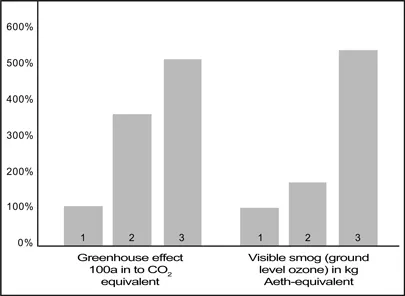
Figure 1.4 Comparison of environmental impact of heat pumps with oil or gas combustion
Note: Comparison of the impact of various environmental influences. 1. Heat pump (CH): Swiss electricity;
2. Gas: low-NOX, condensing boilers; 3. Oil: low-NOX.
Source: AWP Zürich
1.2 Operating Costs
Depending on the efficiency of the heat pump, up to three-quarters of the required heating energy is drawn from the environment (without cost) when heating with a heat pump system. This environmental energy comes from the sun or in the case of geothermal systems with vertical loops from the ground. Heat pumps make use of the free renewable energy stored in air, water or the earth. With the help of a heat exchanger, the heat pump boosts the energy extracted from the environment to the temperature level required for heating. In Figure 1.5, a typical cost comparison (for Germany) is shown. With a heat pump, you can utilize solar energy economically year-round.
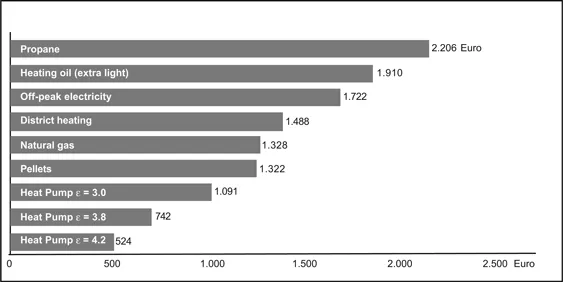
Figure 1.5 Operating costs per year, residential house 175m2, heating capacity 9 kW, example Energie AG, 09/2006
1.3 Independence
The ambient energy sources of heat pumps – solar energy stored in the air, water and ground – all exist crisis-free, right outside your own door. Considering the forthcoming impacts of limited oil supply, and the rapidly increasing demand for oil and gas, it is easy to recognize that dangerous dependence on volatile foreign energy sources is an additional risk factor (see Figure 1.6). Because of their efficient use of local, ambient energy resources, heat pumps help to reduce dependence on imported fuel supplies.
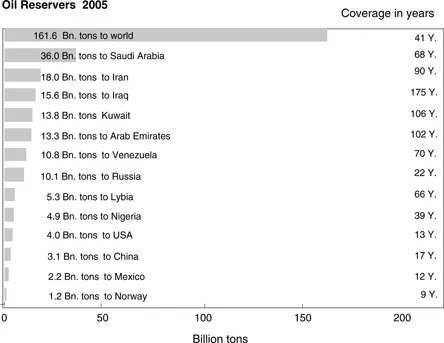
Figure 1.6 Oil reserves in billion tons – 2005
Source: Bundesanstalt für Geowissenschaften und Rohstoffe
1.4 Comfort
Heating with heat pumps offers ...
Table of contents
- Cover
- Half Title
- Title Page
- Copyright
- Contents
- Preface
- Introduction by Robin H.Curtis
- List of Acronyms and Abbreviations
- 1. Reasons to Use a Heat Pump
- 2. Theory of the Heat Pump
- 3. Heat Pump Types
- 4. Complete System Planning
- 5. Planning Instructions for Ground Heat Source – Brine Systems (Horizontal Collector, Trench, Vertical Loop)
- 6. Planning Instructions for Ground Heat Source – Direct Expansion Systems
- 7. Planning Instructions for Water Heat Source Systems
- 8. Planning Details for Air Heat Source Systems
- 9. Planning Instructions – Heating Systems
- 10. Heating and Cooling – Reversible Heat Pump
- 11. Control of Heat Pump Heating Systems – Electrical Connections
- 12. Domestic Hot Water Production
- 13. Controlled Dwelling Ventilation
- 14. Specialized Installations
- 15. Appendices
Trusted by 375,005 students
Access to over 1.5 million titles for a fair monthly price.
Study more efficiently using our study tools.
Frequently asked questions
Yes, you can cancel anytime from the Subscription tab in your account settings on the Perlego website. Your subscription will stay active until the end of your current billing period. Learn how to cancel your subscription
No, books cannot be downloaded as external files, such as PDFs, for use outside of Perlego. However, you can download books within the Perlego app for offline reading on mobile or tablet. Learn how to download books offline
Perlego offers two plans: Essential and Complete
- Essential is ideal for learners and professionals who enjoy exploring a wide range of subjects. Access the Essential Library with 800,000+ trusted titles and best-sellers across business, personal growth, and the humanities. Includes unlimited reading time and Standard Read Aloud voice.
- Complete: Perfect for advanced learners and researchers needing full, unrestricted access. Unlock 1.5M+ books across hundreds of subjects, including academic and specialized titles. The Complete Plan also includes advanced features like Premium Read Aloud and Research Assistant.
We are an online textbook subscription service, where you can get access to an entire online library for less than the price of a single book per month. With over 1.5 million books across 990+ topics, we’ve got you covered! Learn about our mission
Look out for the read-aloud symbol on your next book to see if you can listen to it. The read-aloud tool reads text aloud for you, highlighting the text as it is being read. You can pause it, speed it up and slow it down. Learn more about Read Aloud
Yes! You can use the Perlego app on both iOS and Android devices to read anytime, anywhere — even offline. Perfect for commutes or when you’re on the go.
Please note we cannot support devices running on iOS 13 and Android 7 or earlier. Learn more about using the app
Please note we cannot support devices running on iOS 13 and Android 7 or earlier. Learn more about using the app
Yes, you can access Geothermal Heat Pumps by Karl Ochsner in PDF and/or ePUB format, as well as other popular books in Technology & Engineering & Ecology. We have over 1.5 million books available in our catalogue for you to explore.