![]()
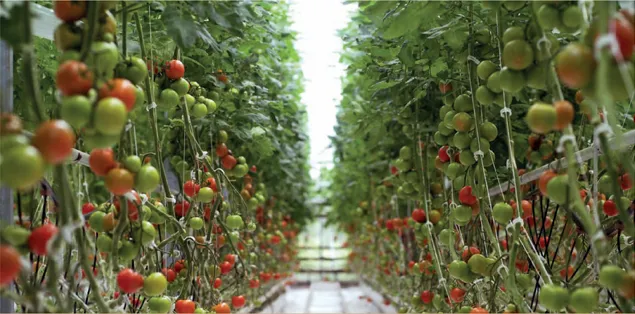
Figure 1.1 Tomatoes in hydroponics
This chapter includes the following topics:
• The horticultural industry
• Organizing, communicating and utilizing plant knowledge
• Climate and microclimates
• Science in horticulture
• Manipulation of the physical environmental of plants
• Managing horticultural units
• Plant propagation
| Principles of Horticulture. 978-0-415-85909-7 © C.R. Adams, M.P. Early, J.E. Brook and K.M. Bamford. Published by Taylor & Francis. All rights reserved. |
The horticultural industry
Horticulture may be described as the practice of growing plants in a relatively intensive manner. This contrasts with agriculture, which, in most Western European countries, relies on a high level of machinery use over an extensive area of land, consequently involving few people in the production process. The boundary between the two is far from clear, especially when considering large-scale outdoor production. When vegetables, fruit and flowers are grown on a smaller scale, especially in gardens or market gardens, the difference is clearer cut and is characterized by a large labour input and the grower's use of a technical manipulation of plant material. Protected culture is the more extreme form of this where the plants are grown under protective materials such as polythene or in greenhouses (clad in glass or modern plastics).
There is a fundamental difference between production horticulture and service horticulture which is the development and upkeep of gardens and landscape for their amenity, cultural and recreational purposes. Increasingly horticulture can be seen to be involved with social well-being and welfare through the impact of plants on human physical and mental health; horticultural therapy is a valued means of helping many people through working with plants.
Horticulture encompasses large- and small-scale landscape design and management. Those involved will be engaged in plant selection, establishment and maintenance; many will be involved in aspects of garden planning such as surveying and design. Inevitably this may take horticulturists into environmental protection and conservation – for example, motorway verge planting.
There may be some dispute about whether countryside management belongs within horticulture, dealing as it does with the upkeep and ecology of large semi-wild habitats. In a different way, the use of alternative materials to turf seen on all-weather sports surfaces tests what is meant by the term ‘horticulture’ in a quite different way; many working ‘in horticulture’ have responsibilities for much beyond the growing of plants.
This book concerns itself with the principles underlying the growing of plants in the following sectors of horticulture:
► Outdoor production of vegetables, fruit and flowers.
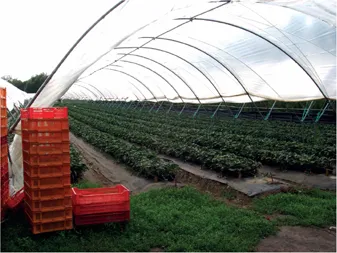
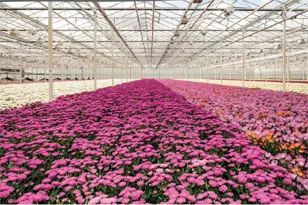
► Protected cropping, which enables plant material to be supplied outside its normal season and ensures high quality – for example, tomatoes (see Figure 1.1) and strawberries (see Figure 1.2) to a high specification over an extended season, chrysanthemums all the year round (see Figure 1.3 and 7.17), cucumbers from an area where the climate is not otherwise suitable. Plant propagators use a variety of structures to provide seedlings and cuttings for outdoor growing as well as the glasshouse industry. Protected culture using low or walk-in polythene covered tunnels is increasingly important in the production of vegetables, salads, bedding plants and flowers.
Figure 1.2 Strawberries grown in polytunnels
Figure 1.3 All year round (AYR) chrysanthemums
► Interior landscaping is the provision of semi-permanent plant arrangements inside conservatories, offices and many public buildings and involves the skills of careful plant selection and maintenance. It is considered desirable for the health of workers to maintain indoor landscapes.
► Landscaping and garden construction require the skills of construction (hard landscaping) together with the ability to develop planted areas (soft landscaping). Closely associated with this sector is grounds maintenance, the maintenance of trees and woodlands (arboriculture and tree surgery), specialist features within the garden such as walls and patios (hard landscaping) and the use of water (aquatic gardening).
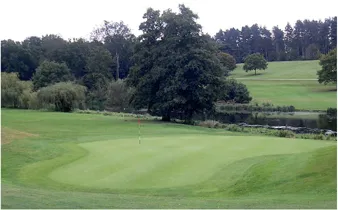
► Turf culture includes decorative lawns and sports surfaces for football, cricket, golf etc. Turf management is very much a specialist horticultural profession which is an essential part of the sports industry. On golf courses, for instance, expertise is needed to provide and maintain a range of turf types and, more recently, other areas of golf courses are being managed for biodiversity too (Figure 1.4).
Figure 1.4 Different areas of turf on a golf course
► Professional and heritage gardening covers the growing of plants in both public and private gardens and embraces many aspects of horticulture. It often includes both the decorative and the productive sides of horti...