Through twelve chapters that historicize and re-evaluate postfeminism as a dominant framework of feminist media studies, this collection maps out new modes of feminist media analysis at both theoretical and empirical levels and offers new insights into the visibility and circulation of feminist politics in contemporary media cultures. The essays in this collection resituate feminism within current debates about postfeminism, considering how both operate as modes of political engagement and as scholarly traditions. Authors analyze a range of media texts and practices including American television shows Being Mary Jane and Inside Amy Schumer, Beyonce's "Formation" music video, misandry memes, and Hong Kong cinema.
eBook - ePub
Emergent Feminisms
Complicating a Postfeminist Media Culture
- 238 pages
- English
- ePUB (mobile friendly)
- Available on iOS & Android
eBook - ePub
About this book
Information
Ambivalences
9
The New Afro in a Postfeminist Media Culture
Rachel Dolezal, Beyoncé's "Formation," and the Politics of Choice
Cheryl Thompson
The August 2015 issue of Allure magazine featured a “how to” piece, titled “You (Yes, You) Can Have an Afro.” Modelled by white actress Marissa Neitling, the editorial instructed readers on how to achieve a curly, loose Afro. The article made no mention of the hairstyle’s black politics, most notably, its link to the 1960s Black Power movement when the Afro became a symbolic aesthetic of sociopolitical change. After public outcry from African American hair bloggers, hairstylists, and cultural critics, Chris McMillan, the hairstylist responsible for Neitling’s temporary Afro, told Huffington Post on August 3, 2015 that Barbra Streisand in A Star Is Born (1976) inspired his take on the Afro for white women. The Allure piece came on the heels of the racial “outing” of Rachel Dolezal, a civil rights activist, Africana Studies instructor, and president of the National Association for the Advancement of Colored People (NAACP) chapter in Spokane, Washington who became fodder for media outlets when photographs circulated showing her childhood self (a white, blonde-haired girl) alongside her adult self (darkened skin and a curly, loose Afro). Dolezal became a symbol of cultural appropriation after it was revealed that she was, in fact, not black as she had been claiming for years. Critics accused her of racial theft while others said her racial “passing” was an act of violence against black people. Like Allure ’s “how-to” guide, Dolezal’s curly, loose Afro became a floating signifier for the new Afro.
Unlike the old Afro, as depicted by and through radical black activism, the new Afro in contemporary media culture appears as a race-neutral choice for white women. “Yes We Can,” the slogan attached to Barack Obama’s 2008 presidential campaign also became a single for Black Eyed Peas frontman will.i.am, “Yes We Can” (2008). The “we” in these two examples denoted a collective America, but on a connotative level, both were a “knowing wink” to black America that unprecedented levels of political capital were now possible. With this in mind, Allure magazine’s “how-to” guide was not just about hair; by removing the “we” (blackness) and replacing it with “you” (whiteness), editors signalled that the Afro, with all its latent blackness, was now available to white women as mere style. The new Afro, in this sense, is similar to the new racism because it has become a symbol of complicated, ambivalent racial representations that circulate within a contemporary media culture where radical movements like Black Lives Matter seem to care more about structural changes than activists’ strict adoption of a uniform black aesthetic.
Patricia Hill Collins asserts that the new racism, a new strain of racism, is pervasive but harder to recognize than the old kind of overt racism because it is subtle (2004, 121). Just as the new racism uses coded language and race-neutral rhetoric to mask its presence, the new Afro is embedded in coded language around choice and post-raciality; its discourse also centers on white women appropriating black culture. Yet, interestingly, the new Afro presents a challenge to postfeminism because it re-centralizes race, raising key questions about choice and gender, questions that critiques of postfeminism have yet to fully explore. At the same time, the new Afro also debunks the logic of a post-racial America because, while it reflects a desire to deracialize a collective black aesthetic by depoliticizing individual white choices marked by the pronoun shift in media discourse from “we” to “you,” in the visual landscape, it is always encoded as “black.”
Using the cases of Rachel Dolezal and Beyoncé’s “Formation” music video, where the pop singer appears wearing several blonde hairstyles (an aesthetic of whiteness), this chapter explores the slipperiness of racial identity in contemporary media culture. The questions underpinning this chapter are threefold. First, how does Dolezal’s new Afro, an embodiment of blackness, evoke an unruliness and disobedience associated with black bodies, and therefore, diminish her white skin and blonde hair, as ideal embodiments of whiteness? Stated otherwise, is the controversy that surrounds her about her adopted blackness or is it her disavowed whiteness that angers so many people? Second, how does the new Afro challenge the discourse on postfeminism, especially as it relates to choice and “authentic” white feminine subjectivity and black womanhood? Third, if Beyoncé can play in whiteness but Dolezal cannot live in blackness, what politics around choice have yet to be fully explored within contemporary media culture? In order to contend with these questions, I first explain how the new Afro challenges current critiques of postfeminism.
The New Afro as a Challenge to Postfeminism: Troubling Transformation Narratives
Feminist media scholars have pointed to the fact that the self-transformation narrative in postfeminist media representations often appears as compulsory for hegemonic white femininity, so much so that audiences are often encouraged to forget that the transformation happened in the first place. In her examination of films like Sweet Home Alabama, The Wedding Planner, and How to Lose a Guy in 10 Days, Samantha Senda-Cook (2009) found that each film encouraged the audience to see female self-transformation as natural and inevitable. In most cases, the transformation narrative in films adopting a postfeminist sensibility depicts a woman who exhibits idealized gender traits—namely kindness, obedience and humility (Marston 2012). Scholars have also noted that postfeminism, like neoliberalism, advances a myth of individual success and the ability to self-regulate foregrounds discourses of choice and agency (Arthurs and Gill 2006). Thus, part of the critique of postfeminist media texts has focused on choice and agency as compulsory for contemporary hegemonic femininity. What happens, however, when the self-transformation is not about romantic heterosexual courtship, self-regulation, idealized femininity, about freely choosing, but is premised almost entirely on blurring the boundaries of race and racial identity? For Homi Bhabha, the performance of race is a colonial imposition on the identity of the colonized, which aims to show them as imperfect and flawed or “almost the same, but not white” (1994, 86). If white women have, historically, had the power to play in “darkness” because it was understood as play to be put on and taken off when they so desired, what if one’s racial choosing is not for play but for real? If whites who “choose” to become black always “satiate a fascination with both an existence and way of being that does not belong to them,” as blogger Sincere Kirabo argued, to whom does blackness belong? What and/or who is arbiter of an authentic blackness and white femininity?
The new Afro presents a challenge to the scholarship on freely choosing white feminine subjectivity. This scholarship has not sufficiently addressed the politics of choice, and the racialized boundaries of embodiment that surround acts of choosing. As Janell Hobson (2012, 8) observes, “far from reflecting a world in which race or gender no longer restricts the upward mobility of certain bodies . . . the global scope of our media-reliant information culture insists on perpetuating raced and gendered meanings that support ideologies of dominance, privilege, and power.” On the one hand, the new Afro aligns with the discourse on post-feminism as “individualistic in focus” and “lifestyle”-driven. On the other hand, it debunks one of the core tenets scholars who critique postfeminist media culture often fail to problematize; namely, the hyperfocus on “white, heterosexual, and middle-class women’s issues” that are then “generalized to all women, including those whose identities include none of these traits” (Vavrus 2012, 226). By pitting the new Afro’s blackness against the whiteness of blonde hair, this chapter aims to demonstrate the slipperiness of identity in contemporary media culture, and the ways in which choosing is not singularly an individualized act, as it has been framed by many feminist media scholars, but is always already a racialized act as well. For example, Angela McRobbie makes the claim that the fashion and beauty industries are central to postfeminist femininity, and women are encouraged to “choose” to adhere to the norms directed by them in order to mark oneself as an ambitious, empowered, and a desirable subject (as quoted in Keller 2014). Since black women have historically been excluded from the fashion and beauty industries, they have rarely, if ever, been encouraged to “choose” how they appear. If anything, these industries have forced black women to opt out of choosing altogether.
The scholarship on postfeminism has often failed to fully interrogate the politics of choice and the social politics of race in America. As Rosalind Gill (2007, 72) aptly notes, “we urgently need to complicate our understandings of choice and agency if we are to develop a meaningful feminist critique of neo-liberal, postfeminist consumer culture.” Where feminist critiques of postfeminism have noted that the contemporary culture applies no breaks to the fantasies of rearrangement and self-transformation, such that “we are constantly told that we can ‘choose’ our own bodies” (Bordo 1993, 297), how does race complicate the parameters of the self-transformation narrative? Rachel Dolezal and Beyoncé’s “Formation” are two contemporary examples of the challenge hair choice presents to contemporary media culture, revealing an ambivalence around racial representations that require unpacking. The new Afro on a white woman’s body, and blonde hair on a black woman’s body, problematizes postfeminist ideas about choice, demanding us to explore how white and non-white women alike “adopt, internalize, negotiate, and challenge hegemonic postfeminist conceptions of race, gender, and sexuality” (Butler 2013, 49).
Media Reporting on Dolezal's "Choosing" and How She Became Black
According to a June 16, 2015 editorial in the New York Times, in 2004, when Dolezal moved into her uncle’s basement in the largely white town of Coeur d’Alene, Idaho, she was blonde, “pale-skinned,” and identified as a white woman. When Dolezal appeared on NBC’s Today Show to address accusations of “pretending to be black,” she was darker skinned, her hair styled in a curly, loose Afro (Figure 9.1). In her interview with host Matt Lauer, Dolezal stated, “I identify as black.” When asked when she started “deceiving” people about her racial identity, Dolezal pushed back, “It’s a little more complex than me identifying as black, or answering a question of, ‘Are you black or white? Well, I definitely am not white. Nothing about being white describes who I am.” At some point in the 1990s her parents, Larry and Ruthanne, adopted four black children – Ezra, Izaiah, Zachariah, and Esther. Dolezal claims that her black siblings played no role in her black identity; instead, she asserts that it was “always there,” a subconscious yet conscious feeling that she was “different” from whites in her community. In an interview with Vice on December 7, 2015, Dolezal stated that even though she went to an all-white school, she paradoxically experienced a form of racial cognitive dissonance as a child: “In terms of drawing myself, my self-portrait, I instinctively felt my skin color was brown. That looked better in the picture.”
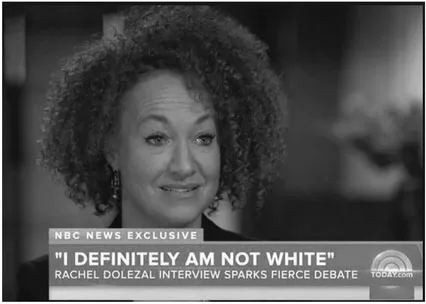
FIGURE 9.1 Rachel Dolezal on NBC’s Today Show. Author screenshot from television segment
Dolezal told Vice that after graduating high school, her sense of self was transformed when she read More Than Equals: Racial Healing for the Sake of the Gospel. In it, authors Spencer Perkins, an African American scholar, and Chris Rice, a white Christian, proposed that white people should move into a large house in a black neighbourhood in order to learn how to live together. “It struck a chord with me,” she said, adding that she was so moved by the authors that she got in touch with Perkins, who was living in Jackson, Mississippi, and asked if he could become her mentor if she went to school at nearby Belhaven University. Perkins agreed, and shortly thereafter, Dolezal moved to Mississippi, and enrolled in the private, predominately white, Christian university. As she recalls, “I wasn’t white! It’s so hard to explain this to people: I don’t feel white. I didn’t hang out with anybody white in Mississippi.” Dolezal’s explanation of her blackness coincides with the postfeminist narrative around authenticity, especially as it relates to black women. In her analysis of Tyra Banks, for example, Jessalynn Keller (2014) argues that Banks positions her hair straightening (“relaxing”) practices as a matter of personal choice, encouraging black women to make their own individualized hair choices, divorced from the broader political and social implications that these decisions may imply. For Banks, authenticity was affirmed by, and through, her ability to “crossover” into mainstream (read: white ) America not by “selling out” her culture but by interpellating other black women to come along with her (Keller 2014). At Dolezal’s own admission, she ascribed an authentic blackness to the choices she made while living in Mississippi because she was permitted to become black. Her choosing was sanctioned by real black women; therefore, in her mind, it was authentic.
When Ruthanne and Larry told a local Idaho newspaper that their daughter was indisputably white, her story began to attract the interest of the mainstream media. “It is very disturbing that she has become so dishonest,” said Ruthanne, in a phone interview with the Coeur d’Alene Press on June 11, 2015 . Larry also told the newspaper by email that they were “saddened she has chosen to misrepresent her ethnicity.” Her second “outing” occurred a few days later when local Spokane TV station KXLY4 reported that she was the biological daughter of Ruthanne and Larry. In that news story, the “before and after” photographs of Dolezal were used. For Melissa Luck, a white woman and KXLY4 Assistant News Director, Dolezal’s racial identification matters. In an editorial piece on the station’s website Luck wrote, “Our community was misled,” adding, “We trusted this voice to speak for those without a voice. We trusted her to teach our students. We stood by her when she said she and her family were targeted and afraid. We’re a trusting community and she broke that trust.” The “our” in this instance, denotes a collective black community for which “we” (white people) granted Dolezal the right to speak because she “looked” black.
Alternatively, Allison Samuels, an African American journalist, concluded in an editorial for Vanity Fair on July 19, 2015 that “Dolezal is still unapologetically identifying as a black woman . . . her cover is blown, but that turned out not to matter. It was never a cover to her, anyway.” For Samuels, Dolezal committed an act of racial theft for which she should apolo...
Table of contents
- Cover
- Title
- Copyright
- Contents
- List of Figures
- List of Contributors
- Acknowledgments
- Introduction: Mapping Emergent Feminisms
- Identities
- Solidarities
- Ambivalences
- Index
Trusted by 375,005 students
Access to over 1.5 million titles for a fair monthly price.
Study more efficiently using our study tools.
Frequently asked questions
Yes, you can cancel anytime from the Subscription tab in your account settings on the Perlego website. Your subscription will stay active until the end of your current billing period. Learn how to cancel your subscription
No, books cannot be downloaded as external files, such as PDFs, for use outside of Perlego. However, you can download books within the Perlego app for offline reading on mobile or tablet. Learn how to download books offline
Perlego offers two plans: Essential and Complete
- Essential is ideal for learners and professionals who enjoy exploring a wide range of subjects. Access the Essential Library with 800,000+ trusted titles and best-sellers across business, personal growth, and the humanities. Includes unlimited reading time and Standard Read Aloud voice.
- Complete: Perfect for advanced learners and researchers needing full, unrestricted access. Unlock 1.5M+ books across hundreds of subjects, including academic and specialized titles. The Complete Plan also includes advanced features like Premium Read Aloud and Research Assistant.
We are an online textbook subscription service, where you can get access to an entire online library for less than the price of a single book per month. With over 1.5 million books across 990+ topics, we’ve got you covered! Learn about our mission
Look out for the read-aloud symbol on your next book to see if you can listen to it. The read-aloud tool reads text aloud for you, highlighting the text as it is being read. You can pause it, speed it up and slow it down. Learn more about Read Aloud
Yes! You can use the Perlego app on both iOS and Android devices to read anytime, anywhere — even offline. Perfect for commutes or when you’re on the go.
Please note we cannot support devices running on iOS 13 and Android 7 or earlier. Learn more about using the app
Please note we cannot support devices running on iOS 13 and Android 7 or earlier. Learn more about using the app
Yes, you can access Emergent Feminisms by Jessalynn Keller,Maureen E. Ryan in PDF and/or ePUB format, as well as other popular books in Social Sciences & Feminism & Feminist Theory. We have over 1.5 million books available in our catalogue for you to explore.