This volume provides a primarily nontechnical summary of experimental and theoretical work conducted over the course of 35 years which resulted in a developmental framework capable of integrating causal influences at the genetic, neural, behavioral, and ecological levels of analysis. It describes novel solutions to the nature-nurture problem at both the empirical and theoretical levels. Following field observations, laboratory experiments led to the discovery of the nonobvious prenatal experiential basis of instinctive behavior in two species--ground-nesting mallard ducklings and hole-nesting wood ducklings. This work also describes the experiences that lead to the rigid canalization of behavioral development as well as the social and sensory experiences that favor the continuance of flexibility. The author also describes in detail a developmental psychobiological systems view that supports a behaviorally and psychologically mediated pathway to evolutionary change in humans and other species. Written in a way that is readable to even the nonspecialist, the text is accompanied by numerous photographs that illuminate and add personal meaning to the written words. Readers will be engaged by the emphasis on the human aspect of the scientific enterprise.
- 200 pages
- English
- ePUB (mobile friendly)
- Available on iOS & Android
eBook - ePub
About this book
Information
Publisher
Psychology PressYear
2014Print ISBN
9780805828702
9780805825480
Edition
1eBook ISBN
9781317778578
1
_____________________________________________
____________________________________________
Formulating Probabilistic Epigenesis
I was very fortunate early in my postgraduate career to have stumbled onto a research finding that kept me gainfully employed for 35 years. I recapture the high points of that intellectual adventure in the chapters to follow, but first I would like to describe the personal context out of which the research program actually developed.
Perhaps the reader should be forewarned that this monograph is not standard fare, because in each chapter I include relevant background considerations and autobiographical details that almost never get into journal articles or scientific monographs, but are nonetheless pertinent to an understanding of the intellectual path taken by the investigator and, thus, to an understanding of why the research program developed in the way that it did. Everyone knows that there is a significant personal side to science, but it is only rarely made public, largely because the tradition of scientific reporting discourages the recounting of personal considerations. Otherwise, this is the story of how the instinctive behavior of ducklings is created out of their experience in the egg.
GETTING STARTED: UNDERGRADUATE BEGINNINGS
I became a serious university student only after a 6-year hiatus in the real world between my sophomore and junior years. The most influential experience was service in the U. S. Occupation Forces in Europe after World War II. My job brought me into contact with displaced persons, and I was struck by the immense individual differences in coping under unusually stressful circumstances. I wanted very much to understand these individual differences and resolved to enter the field of psychology after my discharge. (It was, of course, naive to think that psychology could supply the answer, but it was an appropriate place to at least get oriented to the problem.)
After being discharged from the Army at the age of 24, I entered the University of Miami in my junior year in January of 1954. Although I was quite interested in the formal courses I took, I was thirsting for something beyond what I was being exposed to in the classroom, and suspected the professors were not telling all they knew. I spent a lot of time reading, not quite randomly, in the university library. I was drawn to books about evolution, books about embryology, late 19th and early 20th century theosophy, Freud’s writings on psychoanalysis, and the Journal of Experimental Psychology. Although I was doing quite well in class, I understood little of what I encountered in my self-directed reading program and actively misunderstood what I encountered in the Journal of Experimental Psychology. My misunderstanding of the contents of JEP supported my ill-founded belief that the psychology professors were indeed holding back the choicest intellectual morsels in their classroom lectures. Why, in the pages of every issue of JEP, psychologists were reporting the outcomes of their experiments with the unconscious and conscious minds, not only of humans, but of rats! Fortunately, I kept these insights to myself, for such was my understanding that I thought the Pavlovian notations UCS (for unconditioned stimulus) and UCR (unconditioned response) were abbreviations for the unconscious and CS (conditioned stimulus) and CR (conditioned response) were abbreviations for the conscious. No wonder I did not understand anything I read in the JEP.
Along with my courses in psychology, I took many courses in philosophy as well as intellectual history (the history of ideas), because, while I was obviously quite intellectually naive, I did know the question I was interested in. I wanted to know the appropriate intellectual framework for coming to an understanding of events and things in the world. I dimly grasped that development (a person’s history of experiences) was central to this understanding, so that is why I read Freud (on my own). Otherwise, my theoretical understanding was guided largely by an intuitive feeling of Tightness. Alfred North Whitehead’s (1929) notion of “the process character of reality” seemed right to me as an undergraduate, as it still does today. Among other things, development signifies change.
In my senior year I had the good fortune, at the suggestion of an English professor, Richard Royce, to home in on three books that, at the time, completely satisfied my search for an appropriate metatheoretical framework for gathering valid insights into events and things in the world. My personal bibles were Dewey and Bentley’s (1949) Knowing and the Known, Egon Brunswik’s (1952) monograph on The Conceptual Framework of Psychology, and Harry Stack Sullivan’s (1953) The Interpersonal Theory of Psychiatry.
Dewey and Bentley described in a historical way how science has proceeded from self-actional explanatory frameworks (animism, self-acting souls or minds, instincts) to interactional frameworks (primarily Newton’s mechanics), and, finally, to transactional frameworks (their term for seeing events and things in their full historical, cultural, evolutionary setting; a social and biological science derivative in harmony with field theory in physics). Whereas in the classical interactional explanatory framework the interacting bodies remain fundamentally unchanged (e.g., billiard balls only change their direction after they collide), in the transactional framework the components themselves become transformed (e.g., our present-day understanding of the consequences of infant–caretaker or peer–peer social encounters). At the University of Miami, I became such a vocal devotee of the transactional point of view that I raised these issues in and outside of class and was disappointed to find that, by and large, my psychology professors were ignorant of Dewey and Bentley’s work, and, furthermore, at least one of them did not welcome this way of thinking about scientific explanation in psychology. I now recognize that I probably behaved as an arrogant nuisance in my eagerness to press my new-found “knowledge” on anyone within hearing distance.
Brunswik’s (1952) treatise likewise gave a historical account of psychology’s groping for appropriate methods and theories, eventually converging on a molar, nonreductive behaviorism (à la E. C. Tolman, for example) and a probabilistic functionalism, both in tune with organismic or biological field theory or what we would today call a developmental systems outlook (more on this later).1
Sullivan’s (1953) interpersonal theory of psychiatry moved beyond Freud’s primarily intrapsychic (within the mind) theory to the observable social events that influence our personality development beginning in infancy, with significant psychobiological changes occurring in each further developmental era or epoch, as he called them: childhood, the juvenile era, preadolescence, early and late adolescence. Here was a theory of the development of the self that appealed to me for its practical utility (I was planning to be a clinical psychologist) and its amenability to a scientific test (I was also planning to be an experimental psychologist as well, both of which I subsequently achieved at Duke University).
With respect to my early attraction to Sullivan’s writings, it is interesting to note that my research and theorizing are in the tradition of what has been called developmental psychobiology. Clarence Luther Herrick (1858–1904) christened the field in the late 1800s, identifying it as the comparative study of the nervous system, behavior, and psychology from the standpoints of embryology, anatomy, physiology, and eventually philosophy (Gottlieb, 1987a). Adolf Meyer, the first Dean of American Psychiatry at Johns Hopkins University, adopted and enlarged upon Herrick’s holistic approach, and is sometimes referred to as the father of the distinctively American school of psychobiological psychiatry. Harry Stack Sullivan readily absorbed Meyer’s congenial ideas when, in 1922, he took a position at the Sheppard and Enoch Pratt Hospital, a private psychiatric clinic outside of Baltimore, Maryland, where Meyer headed the Henry Phipps Psychiatric Clinic at Johns Hopkins (Perry, 1982).
GRADUATE SCHOOL MUSINGS
In graduate school at Duke University my interests in development and evolution (very generally speaking) became more congealed, but yet another intuitive understanding of “rightness” intruded itself, one that I knew once again was correct but I could not say why in an intellectually defensible way. Obviously not really having understood fully what I had read in Brunswik about the desirability of the “representative design of experiments,” I decided it was essential in psychology to study real-world things and events, and not use completely artificial stimuli or stimulus objects or non-species-typical behavioral responses, even if one were going to use laboratory procedures. This is, of course, precisely what Brunswik had in mind, although I did not grasp his way of putting it at the time.
Finally, on the developmental side, I began to think that the study of infants was essential, with the aim of pursuing the prenatal antecedents, if that were to prove possible. Although I don’t recall that Sullivan had anything to say about the prenatal period, for intuitive reasons I cannot explain, I became convinced of the importance of prenatal experience for the adaptive (or maladaptive) behavior of the infant. (Helen Swick Perry, in her biography of Sullivan [1982], mentions that Sullivan lectured on the prenatal period to attendants at his clinic but no details have come down to us. He began his Interpersonal Theory of Psychiatry [1953] with infancy.)
It was around this time that a fellow graduate student, Ann Lodge, called my attention to an article in Scientific American on imprinting by Eckhard Hess (1958). Thus it was that I happily blundered into the developmental study of species identification in ducklings. That kind of research involved a developmental study of infants, with the remote possibility (for a non-biologically trained person) of determining possible overt embryolog-ical precursors in the embryo–egg behavioral or experiential situation. The following-response was something ducklings did in nature, and, apparently, the ducklings became “imprinted” to their mother in nature, as one read in Konrad Lorenz’s (1937) very famous paper. And the laboratory research of psychologists such as Eckhard Hess and Julian Jaynes seemed to support Lorenz’s contention about the swiftness of the learning, its limitation to a brief critical period early in development, and its retention for hours and days (if not longer).
During the oral defense of my doctoral dissertation on imprinting in mallard ducklings, one of the inquisitors noted that I had indeed demonstrated something like a critical or sensitive period, but even at the height of that period not all of the ducklings followed the model of a mallard hen. He asked if they would not all follow the hen in nature, and, although I agreed with the implication, I realized I did not really know the answer to that question or actually what went on in nature, because Lorenz’s main observations (and those of his predecessors Oskar Heinroth and Douglas Spalding) were made on waterfowl and chicks hatched in incubators and imprinted to human beings.
TAKING TO THE HELD: EARLY POSTGRADUATE RESEARCH
While I was writing my doctoral dissertation, in November 1959, I took a job as a clinical psychologist at Dorothea Dix Hospital in Raleigh, North Carolina, a state-run psychiatric facility. I took the job because the administrators allowed me to set up an animal behavior laboratory at the hospital and granted me one day a week to work in my laboratory. In 1959, a Division of Research was established at Dorothea Dix Hospital by the North Carolina Department of Mental Health. In January of 1961 I was hired as the first basic research scientist in the division, and that afforded me the time to make observations of “imprinting” in nature. With the necessary assistance of my wife, Nora Lee Willis Gottlieb, and my friend, Gus Martin, and with the cooperation of Eugene Hester, of Wendell, North Carolina, and John Whalen, of Bath, North Carolina, I was able to photograph and tape-record the events before, during, and after hatching in two species of waterfowl, wood ducks and mallard ducks. (Figures 1.1 and 1.2 show the exodus from the nest in a ground-nesting mallard and a hole-nesting wood duck.)
Until the time of our naturalistic observations in 1961–1963, imprinting had been understood as primarily, if not solely, a visual phenomenon: The young birds showed evidence of learning the visual characteristics of the objects that they followed in the laboratory. Peter Klopfer (1959) had shown that hole-nesting wood ducklings could learn the characteristics of artificial sounds he played to them but ground-nesting species such as mallards did not learn the artificial auditory signals, and all of the other laboratory research was with ground-nesting species.
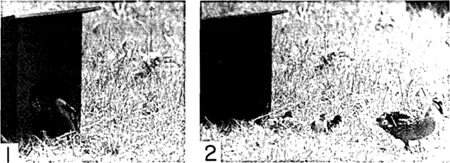
FIG. 1.1 Ground-nesting mallard hens readily take to artificial nest...
Table of contents
- Cover
- Half Title
- Title Page
- Copyright Page
- Dedication
- Table of Contents
- Series Preface
- Preface
- Chapter 1 Formulating Probabilistic Epigenesis
- Chapter 2 Preliminaries to an Explicit Experimental Demonstration of Probabilistic Epigenesis
- Chapter 3 Experimental Demonstration of Probabilistic Epigenesis (in Two Parts)
- Chapter 4 Perceptual Capabilites of Mallard Duck Embryos: Clarifying the Role of Experience
- Chapter 5 Experimental Demonstration of Probabilistic Epigenesis in Wood Ducklings
- Chapter 6 Experiential Canalization of Species-Specific Behavior
- Chapter 7 Modifiability of Species-Specific Behavior
- Chapter 8 Evolution of Probabilistic Epigenesis: History and Current Status of a Developmental-Psychobiological Systems Viewpoint
- Chapter 9 Toward a New Developmental and Evolutionary Synthesis
- References
- Name Index
- Subject Index
Trusted by 375,005 students
Access to over 1.5 million titles for a fair monthly price.
Study more efficiently using our study tools.
Frequently asked questions
Yes, you can cancel anytime from the Subscription tab in your account settings on the Perlego website. Your subscription will stay active until the end of your current billing period. Learn how to cancel your subscription
No, books cannot be downloaded as external files, such as PDFs, for use outside of Perlego. However, you can download books within the Perlego app for offline reading on mobile or tablet. Learn how to download books offline
Perlego offers two plans: Essential and Complete
- Essential is ideal for learners and professionals who enjoy exploring a wide range of subjects. Access the Essential Library with 800,000+ trusted titles and best-sellers across business, personal growth, and the humanities. Includes unlimited reading time and Standard Read Aloud voice.
- Complete: Perfect for advanced learners and researchers needing full, unrestricted access. Unlock 1.5M+ books across hundreds of subjects, including academic and specialized titles. The Complete Plan also includes advanced features like Premium Read Aloud and Research Assistant.
We are an online textbook subscription service, where you can get access to an entire online library for less than the price of a single book per month. With over 1.5 million books across 990+ topics, we’ve got you covered! Learn about our mission
Look out for the read-aloud symbol on your next book to see if you can listen to it. The read-aloud tool reads text aloud for you, highlighting the text as it is being read. You can pause it, speed it up and slow it down. Learn more about Read Aloud
Yes! You can use the Perlego app on both iOS and Android devices to read anytime, anywhere — even offline. Perfect for commutes or when you’re on the go.
Please note we cannot support devices running on iOS 13 and Android 7 or earlier. Learn more about using the app
Please note we cannot support devices running on iOS 13 and Android 7 or earlier. Learn more about using the app
Yes, you can access Synthesizing Nature-nurture by Gilbert Gottlieb in PDF and/or ePUB format, as well as other popular books in Psychology & Developmental Psychology. We have over 1.5 million books available in our catalogue for you to explore.