![]()
1
Introduction to environmental ethics
Gamze Yücel Isildar
I would feel more optimistic about a bright future for man if he spent less time proving he can outwit Nature and more time tasting her sweetness and respecting her seniority (E.B. White).
Central goals
The reader should understand: the complexity of environmental ethics (Lesson 1) and basic environmental problems in different media (Lesson 2); scientific developments and basic philosophical background behind environmental approaches to comprehend how the relationship between human beings and nature is affected and changed in time (Lesson 3).
1.1 Lesson 1: The complexity of environmental problems
Objectives
On completing this lesson, the reader will understand:
- The different actors and approaches in diverse environmental cases
- - The complexity of environmental problems and variety of different solutions to these problems
- - What are the basic environmental problems (air, water, land)
- - Anthropogenic environmental pollution sources and technical prevention measures
- How and why environmental monitoring activities should be integrated with environmental ethics
Case study 1.1 Clean and Clean Chemical Inc.
Richard Jenkins is an environmental expert in the Ministry of Environment and Forestry in the Department of Environmental Planning and Environmental Impact Assessment. The department is in charge of drawing up and implementing regulations on environmental sites that possess ecological value and that are threatened by environmental pollution and corruption. It is also responsible for introducing measures for passing on natural heritage to later generations. Environmental experts working for the ministry are authorised to impose environmental penalties of up to €50,000 a day on facilities responsible for unlawful discharges, dumping of toxic wastes and emissions, and they have the power to order production to cease and to authorise closure of the factory. Unlike fines, which are handed down by the courts, these penalties can be imposed by Ministry of the Environment and Forestry experts within a few days of a spill or dumping.
Richard, in one of his inspections, notices that Clean and Clean Chemical Inc. is dumping hazardous wastes in an uncontrolled manner into a holding pond at the back of the factory. He knows that the toxic waste produced at the plant contains high levels of mercury. If not disposed of properly, the mercury poses a threat to nearby plants and wildlife and the people who live in the nearby community. So he speaks to the company’s owner to warn him about the penalties. During the years of prosperity Clean and Clean could ignore the cost of the proper disposal of the hazardous waste generated at the facility; however, because of the slowing economy and reduced profitability of the company the owner has felt pressure to reduce expense wherever possible. Desperate to maintain profitability, he is now at the point where he is willing to sacrifice his ethics for the benefit of the ‘bottom line’. He explains to Richard that with around 70 employees he has to give priority to paying their salaries and he has no extra money to pay any penalties. It appears that he is not well informed about the legislation and penalties and that he is not aware of the negative impacts and toxicity of waste produced.
Barbara, the environmental consultant of Clean and Clean, knows the importance of the situation and warning the owner is her responsibility. However, because of the economic crisis many of Barbara’s clients have not used her services. Losing the Clean and Clean Chemical Inc. account at this point would be devastating to Barbara. She wonders how she can meet her customer’s needs to save money on its hazardous waste disposal, while maintaining her business relationship with the company and upholding her professional code of conduct as an environmental professional.
In this situation the illegal dumping of hazardous waste might not warrant criminal actions against the company because the owner is not knowingly and willingly committing an illegal act.
The ethical dilemma at this point is what should Richard do? Should he:
- Push the owner to pay the penalty?
- Give him extra time to change his method of waste handling?
- Ignore all that he has seen?
Richard thinks about:
- How guilty he would feel if any company employees or members of the community became ill due to the illegal dumping that he chose to ignore
- How guilty he would feel if all of the company employees became unemployed if production in the company stopped (closed as a penalty)
- The harmful effects on the nearby plants, animals and people who live in the community if he chose to ignore illegal dumping
- The potential compensatory and punitive damages that the company could be forced to pay, which could drastically affect profitability
- The negative public relations that could arise and their likely effects (e.g. who wants to do business with a company that is polluting the town?)
What other examples can you add to the list of things for Richard to think about?
The second ethical dilemma is what should factory owner do? Should he:
- Pay the penalty and continue in the same manner?
- Ask for the governmental directives on the sanitary disposal of hazardous wastes?
- Offer a bribe to Richard (or to Richard's boss) to persuade him to ignore the offence?
- Dismiss the environmental consultant?
Case study 1.2 Dennis's dilemma (part 1)
Dennis is an environmental engineer working for a textile factory. His factory, like others, discharges waste-waters into a lake near a tourist area. He is responsible for the monitoring of the factory’s discharges into the water and air and drawing up reports to submit to the Environment Protection Agency.
In his last monitoring, he measures that total suspended solids (TSS) and chemical oxygen demand (COD) slightly exceed the limits. The impact of this excess is not expected to be too dangerous to people in that area, but it might have an adverse effect on the fish population in the lake. To solve the problem will cost at least €100,000. It might even cost a few jobs. The factory owner thinks that the excess is a ‘mere technicality’ and asks Dennis to adjust the data to make it appear that the factory is in compliance.
The ethical dilemma is: what should Dennis do? He has to consider the following:
- He may lose his job
- The factory owner may offer a bribe (extra money, a new car, a better position, etc.)
- The children swimming in the lake
- Tourism activities and economic benefits in the area
- What happens if factory has to cease production?
How do you think Dennis should respond to what factory owner asks?
While the above case studies are fictional, they represent situations that almost any environmental expert could encounter. They demonstrate the peculiarity and complexity of environmental problems and the many dimensions involving social and normative implications. Sooner or later, almost everyone in the workplace is confronted by an ethical dilemma of some kind. Because of differences in organisations and in personal values and training, there may be opposing views on how these dilemmas should be resolved (Stocks and Albrecht 1993). What is clear is that we cannot afford to ignore the environment because our lives, as well as those of future generations, depend on it (Raven and Berg 2006: 2).
The goal of this book is to introduce the necessity of harmonising environmental ethics with pollution control and monitoring activities to overcome environmental problems. In this chapter, in the second part of Lesson 1, the sources, impacts and importance of environmental problems in different media (water, land, air, etc.) caused by human activities will be discussed briefly to understand the mutual relationship between humans and nature. During these discussions about the origins of environmental problems it will be beneficial to consider some basic knowledge about nature and to look at how people and nature are connected and how this relationship is mutually beneficial. What might happen if today’s perception of the environment does not change? Lesson 2 will discuss chaotic environmental cases. This will help environmental experts and decision-makers to understand some of the threats facing the world in the future and the implications of not being able to foresee future issues. It will also be beneficial to take a brief look at the history of environmental development and environmentalism to be able to understand our responsibilities towards the environment. It is clear that there is no single, objective, monolithic truth about relationships between society and nature/environment. There are different truths for different groups of people in different social positions and with differing ideologies (Pepper 1996: 11). Therefore, it is necessary to understand scientific developments and at least the basic philosophical backgrounds behind those ideologies or approaches to comprehend how the human–nature mutual relationship is affected and changed over time. These issues will be discussed in Lesson 3.
We can’t solve problems by using the same kind of thinking we used when we created them (Albert Einstein).
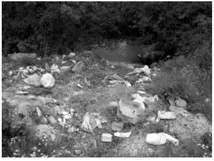
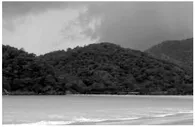
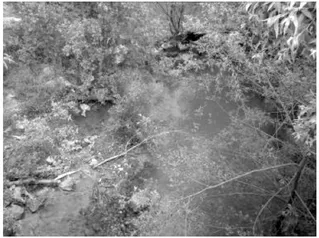
Look at the photographs in Figure 1.1. Which do you prefer? It is evident that environmental problems are increasing rapidly day by day and that human beings have been affected directly by those problems. The world is more crowded, more polluted, more urban, more biologically stressed and warmer than ever before in recorded history (Marsh and Grossa 2005: 1). There are encouraging signs that people are becoming aware of their responsibilities towards the environment—for example, the rise in membership of conservation and environmental organisations, public awareness campaigns, environmental policies proposed by almost all political parties. However, environmental problems still exist: the ozone layer is still depleted, biodiversity is decreasing and terrestrial land is reducing as lowlands are being covered by water. It is clear that to be an environmentalist might not be enough to protect the environment or to prevent environmental problems caused by current perceptions of nature and human–nature relations. Whatever they might profess, people do not transfer their environmental consciousness to their actions in daily life, and personal interests still outweigh the interests of the environment. This situation makes us question whether there is ‘hypocrisy’ or not? If there is inconsistency between environmental attitudes and actual behaviour, this will create a greater problem. In such a situation the solution of environmental problems will be more difficult than expected.
It is necessary for people, especially environmental decisionmakers and experts, to harmonise and adopt ethical dimensions to the scientific, technological, economical, social and legal aspects of controlling environmental pollution to achieve real environmental protection. Fortunately, the methods of decision-making available to environmental experts (technicians) stretch from the most objective (technical) to the most subjective (ethical) (Vesilind and Morgan 2004: 467). This means that solutions to problems involving environmental changes or manipulation of environmental problems must involve not only technical engineering decisions but also other concerns such as the economic and ethical dimensions. This can be managed only by morally developed environmental experts and decision-makers. This book will discuss the need for a mechanism to change the code of behaviour and put in place a set of values that can be internalised and adopted to guide environmental professionals in their actions. That is, there is a need for effective ethical values driven by individuals in spite of the interests of capitalism. These values are different from laws by being informal and unwritten values underlying the conduct of individuals towards environment. In other words, it is very important to feel a part of nature and thus internalise ethical values.
1.1.1 Water pollution
Figure 1.2 Polluted waters
Water is used for nature itself, for agriculture (irrigation and livestock supply), for drinking and personal hygiene, for transport, for energy production, for industrial production, for recreational activities (bathing or fishing), etc. It has a tremendous effect on our planet: it helps shape the continents, it moderates our climate, and it allows organisms to survive (Raven and Berg 2006: 300). As c...