![]()
PREPARING FOR THE GCSE EXAM | 1 |
About your GCSE course
The AQA course consists of two units:
Unit 1: Making sense of other people
The content of this is:
• Memory
• Non-verbal communication
• Development of personality
• Stereotyping, prejudice, discrimination
• Research methods
Unit 2: Understanding other people
The content of this is:
• Learning
• Social influence
• Sex and gender
• Aggression
• Research methods
Structure and content of the AQA examinations
There are two examination papers, one for each unit. Paper 1 and Paper 2 are the same in length and structure: each is worth 50% of the GCSE marks, is 1 hour 30 minutes long and is out of 80 marks in total.
There are five questions and you must answer them all. There are five sections; the first four are the topic areas and the fifth section is Research Methods.
| Paper 1 | Paper 2 | Marks on each section | Suggested time allocation in the exam |
| Memory | Learning | 15 marks | 15 min |
| Non-verbal communication | Social influence | 15 marks | 15 min |
| Development of personality | Sex and gender | 15 marks | 15 min |
| Stereotyping, prejudice, discrimination | Aggression | 15 marks | 15 min |
| Research methods | Research methods | 20 marks | 20 min |
| Total | | 80 marks | 80 min (+ 20 min checking time) |
Quality of written communication (QWC)
You will be examined on the quality of your writing. This means that, in order to maximise your
marks in an exam, you should:
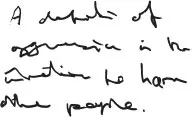
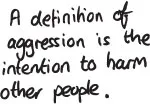
• Make sure that your writing is legible (that it can be read) and that spelling, punctuation and grammar are accurate so that the meaning is clear.
• Organise the information clearly. Try to avoid bullet points where possible and write in full sentences with appropriate use of capital letters and full stops. On the longer answers, paragraph your work.
• Use psychological terms wherever possible and appropriate.
• Do NOT use text language!
| | Examples of how NOT to write to gain marks for QWC | Examples of how to write to gain marks for QWC |
| Writing should be legible | | |
| Spelling, punctuation and grammar should be correct | Femals have 2X cromasomes and men has XY this is what makes them men and women | Females have XX chromosomes whilst males have XY. These are sex chromosomes, which are responsible for the sex of the individual |
| Use psychological terms | There’s not much room in your immediate memory | Short-term memory has a small capacity, about seven items |
| People don’t like it if u stand 2 close | People become uncomfortable if their personal space is invaded |
| Milgram should not have lied to people | Milgram has been criticised for deceiving the participants |
On the exam paper, for some of the longer questions you will be asked to write “in continuous prose”. This is an indication that QWC will be assessed in the answer. Be particularly careful to avoid using note form or bullet points in these answers because this will reduce your QWC marks. (In the other answers you probably will not lose marks by using bullet points, but it’s a good habit to try to avoid them so that you are not tempted to use them on the answers in which QWC is assessed.)
Revision
Organise yourself
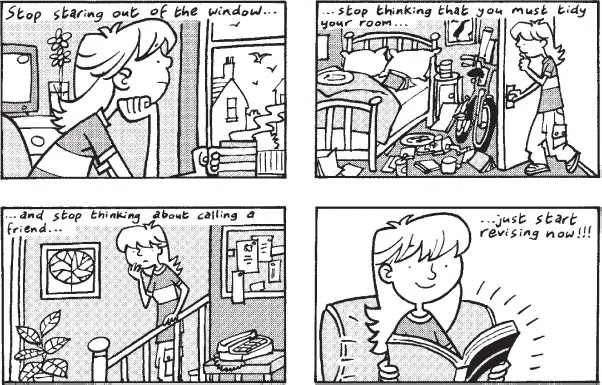
1. Know exactly what you have to learn for each of your exams.
2. Make sure you have notes on everything. There is no choice of questions in the exam, so be aware that you need to know everything.
3. Make a list of what you need to learn. You can tick things off as you go.
4. Look at past papers.
5. Sort out the times you will revise. Try to allow a reasonable length of time but give yourself frequent short breaks. Do about 30 minutes and then take a 5-minute break. Repeat this for three sessions and then take a good break (at least half an hour).
6. Sort out a quiet, comfortable place to revise. If home is too noisy, try the local library.
How to revise
There are many ways to revise – the key is to find a method that suits you.
Suggested revision activities
Write revision notes
Revision notes are brief notes made from your class notes or a textbook. The key is that you reword them (don’t just copy), as this means you have to understand what you are writing and this is crucial for remembering. When you write your notes, make them well organised (lots of numbered points) and visually memorable – use different colours and illustrations that might help you to remember.
Summarise the main studies
In an exam you may have to summarise a study in a few lines. Always learn core studies in terms of aim, method, findings, conclusion.
Draw pictures
Whenever possible, draw pictures to illustrate what you are trying to remember. For example, draw labelled storage jars for the multistore model of memory, each jar representing one store and surrounded by pictures that illustrate the characteristics of the store.
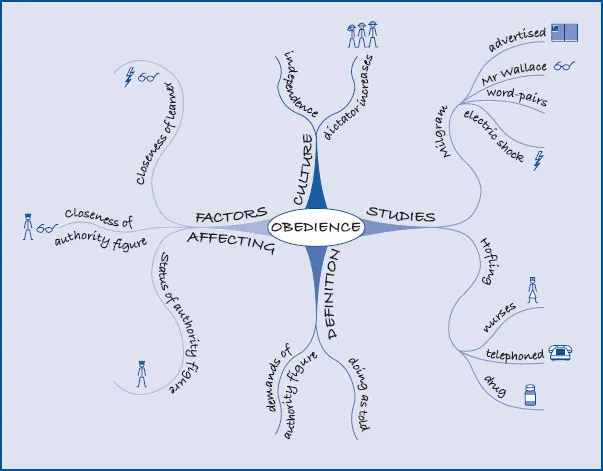
Do mind maps
This is a different way of writing revision notes. Mind maps are useful for seeing an overview of a topic; they really do help to summarise the whole topic area and to see how concepts fit together.
Make revision cards
Write a question or concept on one side and the answer on the other. With respect to methods, you could do three cards for each method (observation, questionnaire and so on), one asking for the definition, one for an advantage and one for a disadvantage.
Do more than just rea...