![]()
Part I
Knowledge
![]()
1
Cartearte1
Below and on the left in purple2
Batallones Femeninos3
Commander Sisters of the Zapatista Army of National Liberation
Insurgent Sisters of the Zapatista Army of National Liberation
Militant Sisters in the Zapatista communities
Support-grassroots sisters of the Zapatista Army of National Liberation
Sisters of ‘the Sixth’4
Feminist Sisters from below and on the left
Sisters of indigenous peoples
Sisters in the basements of the world, where we all of us live and be.
Many are the sufferings, many the rages we share, and which are the base of our struggles with our male comrades in our communities, collectives and other organizations. We all fight against the repression, exploitation, contempt and dispossession from those above. To these struggles, we want to add our own struggle against violence from governments, media and political parties enacting violence from above and attacking us because we are women. Because we as poor women do not fulfill their standards of success, education, beauty (weight, seize, height, skin color, features, age). Because we do not live a heterosexual family life that serves the system. Because we are in their way to produce more capital.
We welcome, honor and respect all those struggles below and on the left aiming to destruct the conditions that make possible the war against those who live in the basements of the world and the indigenous people. We are constructing spaces with no room for such war and for weapons fulfilling their task.
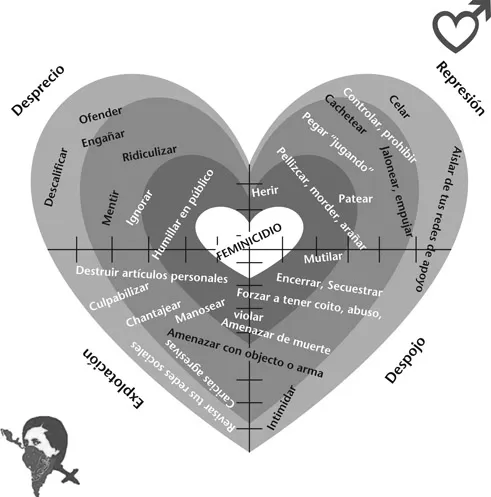
Figure 1.1 ‘Vivas Nos Queremos’ by Batallones Femeninos
Today, however, as an act of female rebellion, I return the gaze to us, the recipients of this letter, which I claim is an art for the sake of life and that I call ‘CarteArte.’ By doing so, many faces come to my mind, with and without balaclavas, with and without scarves covering parts of them, with and without make-up. Serious faces, faces in pain, in tears, with anger, with smiles. I hear memories of female voices in every tone and volume. I recall naked, covered, tattooed, pierced, painted bodies; light, dark, burned, pale, healthy, damaged, wounded skins; children, girls, adults, elder women of all sizes and heights. I see us shouting and talking, crying and laughing, working and organizing and always doing.
This act of addressing many of us reminds me of a conviction that there shall be no protagonist, no usurpers. With this conviction in mind, and with the fear – or because of the fear – to be misinterpreted and sanctioned, I transform my action into an artistic practice of writing, to dare to collectively speak to many of us who are called in to explain how they resisted and experienced the third and fourth workday of struggle – struggles inside the first struggle mentioned above. Inner struggles, which occupy our time and energies, and are absolutely necessary to us.
To clarify: in my view, the third struggle inside the other struggles is the resistance we build to face each and every attempt by men in our collectives, groups and communities to dominate us through leadership, defeating us, to supplant us and impose themselves upon us. It is the struggle against them being the only protagonists, silencing our voices and proposals. It is the struggle against their assumption that our resistance has to be shaped in the same ways as our households – just another place where they suppress us – and our jobs, where they exploit our work-force, that is to say, to serve them.
We fight against the smug looks and condescending attitudes when talking about our feelings, when expressing ideas that have been constructed-deconstructed-reconstructed based on different criteria than the one imposed on us by a system that prioritizes what men assume as their own, just because they have been programmed for that. Thought and speech are but a few elements of what is supposed to be human, which men – even those from below and on the left – have claimed as their own.
We fight against each and every harassment, such as unwanted touching, sexual attack, misogynist expression and violation and threat, that our comrades perform in all spaces, assuming that they are entitled to do so, or that we are flattered by it, or both things at once, or else. We fight to unmask the outrageous violations carried out by comrades from below and on the left, which is a space where we recognize anger, but also suffer harassment and abuse. Friendly fire? Collateral damage?
We have to fight against what I call first domination, prior to that of humans over nature or of men over other men (slavery). Primary domination is the one sustaining the current system, committed and also sustained by male over female individuals. It was created when sexual intercourse was symbolized and signified as an act of domination, and then it became naturalized. What is natural is the mating between male and female animals to reproduce something that is alive. All the rest – romantic love, heterosexuality as a way to give men a permanent and unrestricted access to our bodies – is not natural, but a social construction like the idea of complementarity between men and women based on the subordination of the latter by the former.
Male and female genitals perform the same role and functioning during the reproductive intercourse, but to force on us the coitus in the name of ‘romantic love’ and to have children in the name of ‘family’ is not natural: it is a social construction which ends up negatively affecting our lives. Men’s sexual arousal is not irrepressible, nor is their lascivious gaze natural; these are all social constructs.
Sisters, how do we fight against all this? I raise the voice in my collective and get the microphone when I think it’s the right moment to talk. I express my opinions, I make proposals, I discuss (without male comrades hearing me, of course). Above all, I look for my sister comrades. I insist to restart all over again together with them and all the other women who, like me, are committed to all struggles – not just the primary one. I try to create alternative spaces and times that make no room for the war waged by our comrades to dominate us.
How does media from below report our struggles, our complaints? Do they name us? When it comes to women, do they have a different approach or do they just do the same as all media? How can men below and on the left join our struggles? I understand that the fight against capitalism involves everyone, men and women from below, because we all suffer from it – but we suffer more than they do. Therefore, I wonder: what are the struggles of the men below and on the left? Are these the same as those of the people above who are committed to maintain their privilege?
How do we share the experience of resistance of our third form of struggle with everyone taking place in other and much needed struggles? As much as capitalism encompasses, conditions, bounds and subjugates all men and women living in the basements of the world, so does the relation of domination of men over women – even spaces of resistance and struggle are shaped by it. In capitalism we as women experience a double or triple workload, with or without salary, in order to maintain the system. We also experience triple and quadruple workload to sustain and not undermine other struggles. But, up to what point? Up to what degree of contempt? Up to what extent of repression, dispossession, and exploitation? These are all manifestations of the war of men from above and below to dominate women from below.
I confess that, from my basement, I find myself comparing more and more often men with the government and the system. Just like the Zapatistas have pointed out that those above do not see and do not listen to those who are below, I think-feel the same: that men down below and on the left behave with us in the same way as those above. They tolerate us from time to time because we are useful, even necessary to them, like are those below to those who are above, they need us. Yet our sufferings do not affect them; they do not recognize their domination over us women is socially constructed nor that it has to be destroyed. It seems as if they wouldn’t want to lose any of their privileges.
To clarify: I am writing about what I experience, see, think, and feel. I would like to know how you, sisters, endure this struggle inside the struggle. I cannot avoid to say that this struggle has been acknowledged within the Zapatista communities. I know this because in their statements they have been mentioning this to us for years; because they are committed to build up a world where girls are born and raised without fears; because of the work carried out by the Zapatistas in the Freedom Schools;5 because of what has been developed in the permanent seedbeds6 because of the Zapatista Revolutionary Law of Women.7 The male comrades have discovered our struggle, and one of them recognizes his machismo and reluctance to get rid of it. He recognizes the war against women when men dominate us. But this is a side note, and now I would like to go back to my thoughts on the fourth form of struggle – yes, there’s a fourth and it is an unpaid struggle within the other struggles, one that we often fight on our own against the whole system.
I am talking about recognizing inside myself the social construction I was taught, which made me feel incomplete without a man by my side and respected only when given my husband’s surname. This construction had made me believe that my sexuality was only possible together with a man who would love me and for whom I could always be available; that my voice and words were worth less than those of other men, and much less than those of cultivated men, and even much less than those of cultivated European men. It taught me that I had to get rid of my instinct, mistrust it, and always seek guidance/advise/confirmation from a man: brother, father, priest, teacher, comrade, and friend. I learned I had to like men and even be thankful of their gazed on me – even when their gaze would awaken my faltering and suppressed instinct. I assumed then that other women were potential enemies, yes, fighting for male attention. I accepted uncritically that things can change and ‘improve’ without undermining the basic assumptions. That is, without putting into question the relation of domination which gives shape to the struggle we live in this war: the relation of domination of men over women. This domination includes: the appropriation of our bodies for their sexual gratification and of our capacity to think, make proposals and organize for the sake of their privilege; the exploitation of our unpaid domestic labor and fighting force that maintain the system; the repression of our emotions, claims, needs and pains; repression in the form of physical, verbal and psychological abuse. They discriminate against us when they do not question, but even demand their privileges, and as each of their privileges is maintained, our qualities are belittled and while more responsibilities are imposed on us.
I learned that my body ought to be fragile and even my muscles, which could protect me, are to be given up. Now I am in the process to unlearn this, step by step. I am unlearning that I do not depend on the gaze or validation of any man: if I need a gaze, it’s only that of women. Always.
I was taught, and I erroneously learned as an adult, that the comrades below and on the left were able to feel our sufferings and understand the violence committed against us just for being women. I absurdly believed that all women, including those from above or aspiring to that position, would be able understand our sufferings from down below.
I am learning that the ‘us’ we have in common is a political and ethical construction based not so much on our sex or gender role, as on our social class.
I have believed and experienced and suffered all this, which for me represents the fourth form of our struggle, inside the struggle. It requires time, effort, pain, questioning of all my social constructs, thinking and acting differently, unlearning and continuously learning anew and coming up with new principles to avoid any form of domination, including the first fundamental domination.
The fourth form of struggle compels me not to be frightened by men or to doubt my thoughts of my way of being that has been constructed in submission. At the same time, I try not to reproduce what men have constructed and legitimized as the ‘right’ way of being. I look at myself, destroy myself and protect myself from the permanent attempts to dominate and reconstruct myself, starting from ways that do not yet exist. I find my own way, to learn from my sisters, my mother, my comrades, my daughter.
Sisters, if you want, you can come to know how to steal some time from so many other struggles. Let’s share between each other the ways we face this fourth form of struggle. I am asking for your experiences to learn from each other at how to build ‘us’.
How can we live down below and on the left in purple? How can we build up other worlds without the domination of men over women? How can we bring together these struggles into a direction that constructs other territories where our struggles don’t exist insofar as the warring parties themselves stop to exist?
I devoted much thought to the seven ethical-political principles8 of the Zapatista autonomies as a way to conduct my life and relations. I proposed to use them as a guide to make decisions about our sexual and affective practices, and more recently to fight against the violence committed against us. I enclose the poster with this proposal, and hopefully this CarteArte will be looked at and find its way through feelings and thoughts (sentipensares), and will eventually fly back and be transformed by each one of this ‘us’ that makes a ‘we’.
If there is enough time to exchange correspondence, I suggest to make the answers/proposals/stakes among us ...