- 316 pages
- English
- ePUB (mobile friendly)
- Available on iOS & Android
eBook - ePub
Healing The Bereaved Child
About this book
First published in 1996. One spring morning a gardener noticed an unfamiliar seedling poking through the ground near the rocky, untidy edge of his garden ... So begins the parable that sets the tone for this inspiring, heartfelt new book for caregivers to bereaved children. By comparing grief counseling to gardening, Dr. Wolfelt frees caregivers of the traditional medical model of bereavement care, which implies that grief is an illness that must be cured. He suggests that caregivers instead embrace a more holistic view of the normal, natural and necessary process that is grief. He then explores the ways in which bereaved children can not only heal but grow through grief. Healing the Bereaved Child also contains chapter after chapter of practical caregiving guidelines: • How a grieving child thinks, feels and mourns: What makes each child's grief unique; How the bereaved child heals: the six needs of mourning; Foundations of counseling bereaved children; Counseling techniques (play, art, writing, nature and many others; more than ,15 pages!); A family systems approach to counseling; Support groups for bereaved kids, including a 10 session model; Helping grieving children at school, including a crisis response team model; Helping the grieving adolescent; Self-care for the child's bereavement caregiver. A must-read for child counselors, hospice caregivers, funeral directors, school counselors and teachers, clergy, parents-anyone who wants to offer support and companionship to children affected by the death of someone loved.
Information
1
My Guiding Model: Growth-Oriented Grief Gardening with Bereaved Children
The more bereaved children I have the privilege to work with, the more I see myself not as a counselor but as a counselor-gardener.
“Now the gardener is the one who has seen everything ruined so many times that (even as his pain increases with each loss) he comprehends—truly knows—that where there was a garden once, it can be again …”
Harry Mitchell, The Essential Earthman (1981)
Too often, counselors are taught (and subsequently internalize) the medical model of bereavement care, which suggests that bereaved children are “sick” and need to be “cured.” This same mindset implies that the goal in bereavement caregiving is to help the child “resolve” or “recover from” the illness that is grief.
The medical model of understanding human behavior actually damages bereaved families because it takes responsibility for healing away from the bereaved person (child, adolescent or adult) and puts it in the hands of the doctor or caregiver who “treats” the “patient.” Look up the word “treat” in the dictionary and you’ll find it derives from the Latin tractare, which means, interestingly enough, to drag. The word patient, defined as a noun, refers to a sick person who is being cured by a professional. As compassionate caregivers, we cannot (and should not try to) drag our “patients” into being “cured.”
Grief gardeners believe that grief is organic—as natural as the setting of the sun and as elemental as gravity.
Grief gardeners, on the other hand, believe that grief is organic. That grief is as natural as the setting of the sun and as elemental as gravity. To us, grief is a complex but perfectly natural—and necessary—mixture of human emotions. Grief gardeners do not cure the grieving child; instead we create conditions that allow the bereaved child to mourn. Our work is more art than science, more heart than head. The bereaved child is not our patient but instead our companion.
The seedling in the parable that precedes this chapter represents, of course, the bereaved child. The seedling is struggling to live in its new, hostile environment much as a bereaved child struggles to cope with her new, scary world. A world without someone she loved very much. A world that does not understand the need to mourn. A world that does not compassionately support its bereaved.
This child needs the love and attention of caring adults if she is to heal and grow. It is the bereavement caregiver’s role to create conditions that allow for such healing and growth. In the parable, the gardener removes stones near the seedling’s tender stalk and offers it life-sustaining water. In the real world, the grief gardener might simply listen as the child talks or plays out her feelings of pain or sadness, in effect removing a heavy weight from her small shoulders. Instead of water, the grief gardener offers his empathy, helping quench the child’s thirst for companionship.
The gardener in the parable also dug out weeds that threatened to choke the young seedling; the grief gardener might attempt to squelch those who threaten the child’s healing, such as a dysfunctional or grief-avoiding family member. Dispelling prevalent grief myths (described between every chapter in this book) is another weeding task for the grief gardener. The grief gardener’s compost is the nourishment of play—that necessary work that feeds the souls of all children.
But notice, too, that the gardener in the parable does not take complete control of the seedling’s existence, but rather trusts in the seedling’s inner capacity to heal and grow. The gardener does not water the seedling too frequently; the grief gardener does not offer companionship to the point of codependency. The gardener does not use chemical fertilizers; the grief gardener does not advocate the use of pharmaceuticals (unless made necessary by a medical condition, of course) or other inorganic therapies for bereaved children. The gardener does not transplant the seedling but instead allows it to struggle where it has landed; the grief gardener does not seek to rescue the bereaved child from her pain.
The grief gardener does not seek to rescue the bereaved child from her pain.
Largely as a result of its own arduous work, the seedling in the parable grows into a beautiful columbine. Bereaved children, with time and the loving care of adults, also have inside themselves the potential for this same kind of transformation. The greatest joy of grief gardening, in fact, is witnessing this growth and new beauty in bereaved children who have learned to reconcile their grief.
The greatest joy of grief gardening is witnessing the growth and new beauty in bereaved children who have learned to reconcile their grief.
Mourning and Gardening A Historical Connection
“We find no fault with those who like to bustle through life in a whirl of steam: but for our own part we love to dally on the road, to pluck a flower here, and plant one there, and while away a little of our time in the pursuit of pleasure, among sanctified creations of nature.”
You might never guess that this 1841 quote from the New York Daily News describes Green-Wood, a public cemetery in Brooklyn. Indeed, in the mid-1880s in America, cemeteries began to be seen as ideal places for combining burial grounds with public gardens.
Massachusetts’ Mount Auburn Cemetery/Horticultural Garden, which opened in 1931, was America’s first rural cemetery. The grounds at Mount Auburn were designed in the newly fashionable “pastoral” style—emphasizing the use of native materials in a natural-looking landscape.
Green-Wood Cemetery followed suit a decade later. It, too, gained acclaim as a beautiful place for quiet contemplation and relaxation—a “pastoral refuge.” Newspaper accounts of the time tell of large numbers of people visiting the cemetery daily for “excursions of pleasure and health.”
This style of cemetery remained in vogue until the late 1800s, when public parks (sans burial grounds) began springing up around the country. It’s too bad cemeteries and parks parted company. What a healthier outlook on mourning our society might have if we zigzagged through graves on our way to a soccer game or picnicked among headstones.
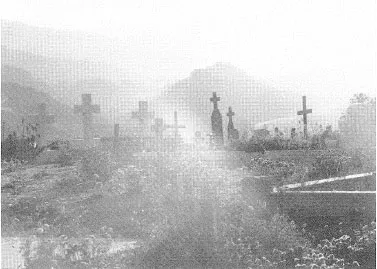
What a healthier outlook on mourning our society might have if we zigzagged through graves on our way to a soccer game or picnicked among headstones.
Growth through Grief
Grief gardeners provide a nurturing environment in which bereaved children can not only heal, but grow. Like the columbine seedling in the parable, grieving kids can—after time and with the compassionate care of the adults in their lives—adapt to their new, often hostile surroundings and go on to not just survive, but thrive.
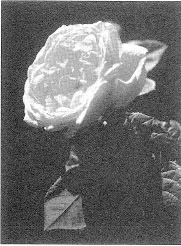
Growth in bereaved children is as exquisite as the rosebud’s explosion into bloom.
Bereaved children can and do grow through grief. I have been privileged to witness this transformation many times. And when it happens, it is as jubilant, as exquisite, as awe-inspiringly natural, as the butterfly’s crawl from the chrysalis or the tiny rosebud’s explosion into bloom.
In fact, it is the potential for this type of growth that guides me in my work with bereaved children. It is, at bottom, why I am a grief counselor. If I did not believe that grieving kids can heal and eventually flourish, I could not do the work I do.
But what precisely do I mean by growth through grief? I mean many things, the most important of which I will explore here:
The marigold after the hailstorm
Growth means change
The marigold shredded by a fierce June hailstorm is never quite the same. It will likely grow new buds and leaves—and go on to flower in profusion later in the season. But the plant’s growth habit may be different than its unharmed cousins’. It may be shorter or taller or jauntier. In any case, it will have been permanently affected by the hurt.
My experience has taught me that we as human beings are also forever changed by the death of someone we love. To talk about resolving someone’s grief, which denotes a return to “the way things were” before the death, doesn’t allow for the transformation I have both personally experienced and witnessed in others who have mourned. Mourning is not an end, but a beginning.
The marigold shredded by a fierce June hailstorm is permanently affected by the hurt.
By using the concept of growth, I can go beyond the traditional medical model of bereavement care that teaches that the helping goal is to return the bereaved person to a homeostatic state of being. A return to inner balance doesn’t reflect how I, or the children and families who have taught me about their grief journeys, are forever changed by the experience of bereavement. In using the word growth, I acknowledge the changes that mourning brings about.
Drought and aphids in the garden…
Growth means encountering pain
The role of suffering continues to be misunderstood in this culture. We seem to lack any understanding of how hurting is part of the journey on the way to healing. The painful yet normal thoughts and feelings that result from loss are typically seen as unnecessary and inappropriate. The bereaved child who, because of his grief, has trouble with concentration is at risk for being mislabeled “attention deficit disordered.” The bereaved child who tries to elicit caregiving through acting out is at risk for being mislabeled “undersocialized-aggressive behavior disordered.”
Our culture lacks an understanding of how hurting is part of the healing journey.
“Buck-up therapy” messages in the face of pain are alive and well in North America. The messages we continue to give bereaved children include, “You have to be strong for your mother,” “You need to take care of your little brothers and sisters,” or “Your grandpa wouldn’t want you to cry.” And combined with these messages is often an unstated but strong belief that “You have a right not to hurt. So do whatever is necessary to avoid it.” In short, we continue to encourage bereaved families to deny, avoid or numb themselves to the pain of grief.
As our culture moves away from embracing the pain of grief, our children are trying to get our attention. We must listen, learn and respond in helpful ways. When bereaved children internalize messages that encourage the repression, avoidance, denial or numbing of grief, they become powerless to help themselves heal. They may instead learn to act out their g...
Table of contents
- Cover
- Half Title
- Title Page
- Copyright Page
- Dedication
- Table of Contents
- Preface
- Acknowledgments
- The Gardener and the Seedling: A Parable
- 1 My Guiding Model: Growth-Oriented Grief Gardening with Bereaved Children
- 2 Mourning Styles: What Makes Each Child’s Grief Unique
- 3 Sad/Scared/Mad/Tired/Glad: How a Grieving Child Thinks, Feels and Mourns
- 4 How the Bereaved Child Heals: The Six Reconciliation Needs of Mourning
- 5 Grief Gardening Basics: Foundations of Counseling Bereaved Children
- 6 The Grief Gardener’s Tools: Techniques for Counseling Bereaved Children
- 7 Grief Gardening and the Family: A Systems Approach to Healing the Bereaved Child
- 8 The “Cold Frames” of Grief Gardening: Support Groups for Bereaved Children
- 9 The Child’s Garden: Helping Grieving Children at School
- 10 Grief Gardening in June: The Grieving Adolescent
- 11 The Grief Gardener’s Gazebo: The Importance of Self-Care
- A Final Word
- Grief Myths
- My Grief Rights
- Wolfelt’s Grief Gardening Model
- The Grief Gardener’s Glossary
- Index
Trusted by 375,005 students
Access to over 1.5 million titles for a fair monthly price.
Study more efficiently using our study tools.
Frequently asked questions
Yes, you can cancel anytime from the Subscription tab in your account settings on the Perlego website. Your subscription will stay active until the end of your current billing period. Learn how to cancel your subscription
No, books cannot be downloaded as external files, such as PDFs, for use outside of Perlego. However, you can download books within the Perlego app for offline reading on mobile or tablet. Learn how to download books offline
Perlego offers two plans: Essential and Complete
- Essential is ideal for learners and professionals who enjoy exploring a wide range of subjects. Access the Essential Library with 800,000+ trusted titles and best-sellers across business, personal growth, and the humanities. Includes unlimited reading time and Standard Read Aloud voice.
- Complete: Perfect for advanced learners and researchers needing full, unrestricted access. Unlock 1.5M+ books across hundreds of subjects, including academic and specialized titles. The Complete Plan also includes advanced features like Premium Read Aloud and Research Assistant.
We are an online textbook subscription service, where you can get access to an entire online library for less than the price of a single book per month. With over 1.5 million books across 990+ topics, we’ve got you covered! Learn about our mission
Look out for the read-aloud symbol on your next book to see if you can listen to it. The read-aloud tool reads text aloud for you, highlighting the text as it is being read. You can pause it, speed it up and slow it down. Learn more about Read Aloud
Yes! You can use the Perlego app on both iOS and Android devices to read anytime, anywhere — even offline. Perfect for commutes or when you’re on the go.
Please note we cannot support devices running on iOS 13 and Android 7 or earlier. Learn more about using the app
Please note we cannot support devices running on iOS 13 and Android 7 or earlier. Learn more about using the app
Yes, you can access Healing The Bereaved Child by Alan Wolfelt in PDF and/or ePUB format, as well as other popular books in Psychology & Mental Health in Psychology. We have over 1.5 million books available in our catalogue for you to explore.