Play is a paradox. Why would the young of so many species--the very animals at greatest risk for injury and predation--devote so much time and energy to an activity that by definition has no immediate purpose? This question has long puzzled students of animal behavior, and has been the focus of considerable empirical investigation and debate.
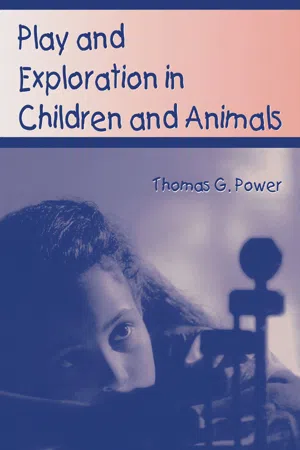
In this first comprehensive and state-of-the-art review of what we have learned from decades of research on exploration and play in children and animals, Power examines the paradox from all angles.
Covering solitary activity as well as play with peers, siblings, and parents, he considers the nature, development, and functions of play, as well as the gender differences in early play patterns. A major purpose is to explore the relevance of the animal literature for understanding human behavior. The nature and amount of children's play varies significantly across cultures, so the author makes cross-cultural comparisons wherever possible.
The scope is broad and the range multidisciplinary. He draws on studies by developmental researchers in psychology and other fields, ethologists, anthropologists, sociologists, sociolinguists, early childhood educators, and pediatricians. And he places research on play in the context of research on such related phenomena as prosocial behavior and aggression.
Finally, Power points out directions for further inquiry and implications for those who work with young children and their parents. Researchers and students will find Play and Exploration in Children and Animals an invaluable summary of controversies, methods, and findings; practitioners and educators will find it an invaluable compendium of information relevant to their efforts to enrich play experiences.
- 512 pages
- English
- ePUB (mobile friendly)
- Available on iOS & Android
eBook - ePub
Play and Exploration in Children and Animals
About this book
Information
1
Introduction
Probably no activity is as closely associated with childhood as play. Children spend a great deal of their time playing—at home, at school, in parks, in stores, at the dinner table—wherever and whenever the opportunity arises. Although children from different cultural backgrounds may differ in the amount and nature of their play, the major types of play are found across cultures. Play is not limited to humans however; many young mammals and birds also play, often in ways similar to the play of children.
Given the ubiquity of play, it is not surprising that the major developmental theorists have devoted considerable attention to it (e.g., Bruner, 1972; Erikson, 1977; Freud, 1959; Piaget, 1962; Vygotsky, 1967), as have students of animal behavior (Bekoff & Byers, 1981; Burghardt, in press; Fagen, 1981; Martin & Caro, 1985; Panksepp, Siviy, & Normansell, 1984). The study of play, however, is still in its infancy. There is little agreement about many basic issues, and, partially as a result of this confusion, interest in children’s play appears to have declined in the last 2 decades. Although a core group of play researchers continues to address important questions, much of the major research in children’s play was conducted prior to 1980. Several play-related topics have generated considerable interest since this time (e.g., theory of mind, emotional regulation, attachment), but play has shifted from a topic of interest to a context in which to study other developmental phenomena.
The decline in interest in play as a topic is illustrated by comparing the last two editions of the Handbook of Child Psychology (i.e., Damon, 1998; Mussen, 1983). Rubin, Fein, and Vandenberg (1983) wrote a chapter for the 1983 edition that reviewed work through the 1970s—the decade of greatest attention to children’s play. In the much-expanded 1998 edition, play had been dropped as a chapter topic. A review of the index of the 4,000-plus-page 1998 edition showed approximately 15 pages referring to play or pretense. Of these, most were short references to the topic, with the only reviews being brief, 2-page sections on the topics of play with child caregivers and the development of pretense. Related items not in the index included exploration, curiosity, and object manipulation, although a short 3-page review of the literature on the manual exploration of objects was found in the text.
This is not to say that play does not continue to be of interest to some child development researchers. An emerging focus is on children’s beliefs about play, particularly their understanding of the “fantasy-reality distinction” and their “theory of mind” (e.g., Harris & Kavanaugh, 1993; Joseph, 1998; Leslie, 1987; Lillard, 1993, 1998; Woolley, 1997). The emphasis, however, is more on understanding the development of children’s thinking, than on the study of play per se. That is, play is viewed as one of many contexts in which to explore the nature of young children’s thinking. Also, researchers outside the traditional child development community—including some anthropologists, folklorists, and sociologists—continue to study play.
There is a natural ebb and flow of interest in topics in child development, and the decline in research on children’s play may have been inevitable. However, additional factors may have contributed, including: a growing recognition of the problems involved in defining, identifying, and studying play (e.g., Smith, Takhvar, Gore, & Vollstedt, 1985); research demonstrating that earlier arguments about the importance of play for development may have been overstated (Martin & Caro, 1985); and the belief—usually unstated—that play is not a serious topic for scientific inquiry (Rubin et al., 1983). My goal in this book is to attempt to rekindle an interest in children’s play among child development researchers by offering a comprehensive and current review of the literature, and by demonstrating the value of an evolutionary approach to its understanding. By identifying what is known and still needs to be known about children’s play, I hope to point out future directions for research.
UNANSWERED QUESTIONS
ABOUT CHILDREN’S PLAY
Despite the numerous books and articles that have been written on play, many important questions remain unanswered. Peter Smith identified a number of these in his 1982 review. These and several others are briefly considered here.
Is Play a Distinct
Motivational/Behavioral Category?
One problem with research on play is that some researchers and theorists do not even agree whether play exists! Although this controversy more often arises in research on animals than on humans, the issues are relevant equally to animal’s and children’s play. The two major arguments against treating play as a separate behavioral category are: There is nothing unique about behaviors labeled as “play” that cannot be described and accounted for by other, more basic principles of animal and human behavior (e.g., Lazar & Beckhorn, 1974; Schlosberg, 1947); and the category “play” is not useful because it refers to a wide range of behavior patterns that have little in common in either their structure or the psychological and physiological processes involved in their control (e.g., Berlyne, 1969). Moreover, even researchers who find the term play useful for describing certain patterns of behavior sometimes argue that play may not represent a distinct motivational system (e.g., Pellis, 1991).
The problem in demonstrating that play exists lies at least partially in its definition. Because play is often defined as behavior that is intrinsically motivated and not the consequence of external pressures or appetitive drives (see Rubin et al., 1983, for a review), the skeptic can always identify possible external motivators or immediate biological needs that account for a behavior pattern thought by others to be the result of intrinsic motivation.
Are Comparisons Between Animal and
Human Play Meaningful?
Nothing distresses some writers more than examining the behavior of other animals for further insights into the behavior of humans. Although they may find evolution a useful concept when it comes to understanding other animals, they often hold the belief that the evolution of higher level cognitive functioning in humans (particularly language and the development of reason) makes the evolutionary analysis of human behavior inappropriate. They argue that because humans can think abstractly, communicate verbally, and engage in complex forms of self-regulation, we are so different from our animal relatives that cross-species comparisons of behavior patterns are meaningless. In fact, some theorists have gone so far as to argue that any comparative analysis of human behavior is of questionable utility and even irresponsible (e.g., Hirsch, 1976; Lerner & von Eye, 1992).
These arguments have been made regarding play. Even though many forms of children’s play are similar to the play-fighting, play-chasing, and object play of other animals—especially other primates— some feel that these similarities are superficial and can bring about misleading conclusions. Even some researchers who began their careers studying children’s play from an evolutionary perspective report an increasing awareness of the limitations of the comparative approach (e.g., Vandenberg, 1985).
What Exactly Is Play?
The problems in defining play and differentiating it from other behavior patterns have been well documented (e.g., Fagen, 1981; Martin & Caro, 1985; Smith et al., 1985). The main problems are that: Although numerous criteria for defining play have been identified, given the wide range of play behaviors none of the criteria alone, or in specific combination, reliably differentiate between play and nonplay; and although play is usually defined as behavior that lacks an immediate purpose or benefit, it is difficult to make this determination without fully understanding the behavior under study—something troublesome to accomplish without a satisfactory definition with which to start.
Rubin et al. (1983), in their comprehensive review of the literature on children’s play, argued that there are three kinds of play definitions: play as disposition, play as observable behavior, and play as context. Under the dispositional category, six features of play were identified: intrinsic motivation, attention to means rather than ends, active engagement of the organism, freedom from externally imposed rules, nonliterality, and behavior dominated more by the organism than by the environment. Under the topic of play as observable behavior, Rubin et al. described various play taxonomies that have been used in defining children’s play, including Piaget’s (1962) distinction among practice play, symbolic play, and games with rules. And finally, under the topic of play as context, Rubin et al. described the characteristics of settings most likely to elicit children’s play. These include: availability of engaging materials or play partners, freedom of choice granted regarding the child’s behavior, minimal adult direction, a secure atmosphere, and scheduling at a time when appetitive biological needs (e.g., hunger, sleep) have been met.
Bekoff and Byers (1981) and Fagen (1981) discussed many of the features that have been used to define play in animals. A comparison of these features reveals many similarities with the discussion of Rubin et al. (1983). Play, according to most researchers who study animals, consists of behaviors similar to those in other nonplay contexts (e.g., foraging, fighting, or prey capture) but that occur out of context, are triggered by different stimuli, may be directed toward substitute objects, and/or are modified in their structure. Compared to behaviors in functional contexts, behaviors during play are often exaggerated, reordered, incomplete, brief, repeated, varied in sequence, inhibited, and/or otherwise transformed. Moreover, play is apparently not motivated by appetitive drives or extrinsic goals, and as a consequence lacks the consummately acts and biological consequences of functional behavior. Fagen noted that animals will search for a play partner and that play appears pleasurable to the performers. Finally, Fagen wrote that play occurs when general environmental conditions are supportive or benign, and is rarely seen is situations involving subjective uncertainty or fear. Young animals in populations experiencing food shortages, for example, often show very low levels of play (e.g., Baldwin & Baldwin, 1976; Barrett, Dunbar, & Dunbar, 1992; Lee, 1984; Sommer & MendozaGranados, 1995). Other environmental stressors— such as death of a group member, relocation to a new environment, or introduction of a new animal to a group—can also decrease the frequency of play (Merrick, 1977).
Because few examples of play include all (or even most) of these features, and one or more of these characteristics are often found during nonplay, Martin and Caro (1985) argued that play is “polythetically” defined, and therefore difficult to define by its individual attributes alone. Fagen (1981) pointed out that these definitional issues are not unique to play. Many well-studied areas of animal behavior— including aggression, sexual behavior, and cooperation—also lack satisfactory definitions.
What Are the Effects of Play on Development?
A factor that apparently drove much of the research on children’s play in the 1960s and 1970s was the widely held (and by no means new) view that play was important for child development. Influenced largely by Freudian theory and Piaget’s observations of the behavior of infants and children, researchers believed that play contributes greatly to children’s emotional and intellectual growth (e.g., Singer, 1973; Smilansky, 1968; Sylva, 1977). This belief was reinforced by observations in the late 1960s that children from impoverished backgrounds showed deficits in their play behavior (particularly pretend play) and other areas of social and intellectual functioning (e.g., Rosen, 1974; Smilansky, 1968).
Although there was (and continues to be) more skepticism about the importance of play among researchers who study animals, early researchers studying animal play often showed equal levels of optimism (e.g., Aldis, 1975; Birch, 1945; Poirier & Smith, 1974). This belief was based on the observation that despite many risks of play (e.g., injury, alerting predators, energy expenditure), the young of so many species devote a great deal of time and energy to this activity. Therefore, play could have evolved only if it served some important biological function(s) in influencing the rate of survival and, ultimately, success in later reproduction.
Biologists who write about play make the distinction between its functions and its effects (e.g., Allen & Bekoff, 1995; Symons, 1978). Put simply, the term function is reserved only for those consequences of a behavior pattern that led to its selection during the course of evolution; the term effects refers to any additional consequences that may have resulted. For example, play-chasing may have evolved because it provides practice in the skills involved in predator avoidance (its function), but it may also provide a good deal of aerobic exercise. Its contribution to the general physical fitness of the individual, in this case, is labeled a beneficial effect. Because it is virtually impossible to prove that a given behavior pattern serves a given evolutionary function, in practice it is difficult to separate functions and effects (see Buss, Haselton, Shackelford, Bleske, & Wakefield, 1998, for a recent discussion of these and related concepts).
Martin and Caro (1985) pointed out that there have been three major empirical approaches for examining the functions and effects of play: experimental, correlational, and optimal design studies. More specifically, these involve:
(1) Experimental manipulations of early play experience, for example, to give fewer or more opportunities for particular types of play; (2) searching for correlations between play and other forms of behavior, exploiting natural variations within populations; and (3) using the indirect “argument from design” approach, in which the observed structure of play is matched against the requirements of its hypothesized function, (p.)
Although the experimental approach provides the strongest evidence for the effects of play (experimental documentation does not necessarily demonstrate function), it has been underutilized, and most studies take the second or third approach. This makes it difficult to draw causal inferences.
In spite of the early enthusiasm about play in both children and animals, research in the late 1970s and early 1980s showed that many of the presumed functions and effects of play were hard to demonstrate empirically. Several researchers identified methodological problems in the earlier studies of play, and conducted carefully designed experiments that showed little or no benefits of play experience (e.g., Caro, 1980; Simon & Smith, 1983; Smith, Simon, & Emberton, 1985; Smith & Witney, 1987; Vandenberg, 1990). Caro (1980), for example, found that providing cats with extensive opportunities for object play did not increase their success in prey capture, and Smith and associates (e.g., Simon & Smith, 1983) found that the often-documented association between play and problem solving in children may have been the result of subtle experimenter effects. Moreover, more recent studies of energy expenditure during play raised the possibility that play was not as costly as is commonly assumed, although this issue is far from being resolved (Bekoff & Byers, 1992; Martin, 1982, 1984b; Miller & Byers, 1991; Siviy & Atrens, 1992). Although most of these researchers called for further studies of the effects and functions of play, their critical methodological reviews may have had the unintended effect of discouraging further research on this topic.
PURPOSE OF THIS BOOK
For each of five major play categories—solitary object exploration/ play, play-fighting, locomotor play, social object/social pretend play, and parent-child play—relevant evidence from the animal literature is reviewed from an evolutionary perspective to identify any possible functions or effects. Because the ultimate purpose of this book is to better understand the play of human children, the play of primates—especially the apes—is considered in the most detail. When deemed appropriate, however, the play of other species is also considered, in order to develop hypotheses about how a given behavior pattern evolved.
In each section, the review of the animal literature is followed by a review of the empirical literature on children’s play in Western, industrialized cultures (in which the vast majority of play studies have been conducted), and finally by a review of the research on children’s play in non-Western cultures. Cross-cultural comparisons, to the extent they can be made, are critical, because if the nature of children’s play reflects the operation of evolutionary factors, then commonalties across diverse human cultures should be identified. Data on children’s play in hunting-and-gathering cultures are particularly important in this regard because these are the settings in which human behavior evolved (Eibl-Eibesfeldt, 1989).
ASSUMPTIONS OF THE PRESENT APPROACH
The major assumptions guiding the discussion in this book are that play is a distinct motivational/behavioral system that has evolved in humans and other animals, and that patterns of children’s play in a given culture reflect the influence of both biological evolution and cultural ...
Table of contents
- COVER PAGE
- TITLE PAGE
- COPYRIGHT PAGE
- PREFACE
- 1. INTRODUCTION
- I: SOLITARY OBJECT EXPLORATION AND PLAY
- II: PHYSICAL ACTIVITY PLAY
- III: SOCIAL OBJECT, SOCIAL PRETEND, AND PARENT-CHILD PLAY
- REFERENCES
Trusted by 375,005 students
Access to over 1.5 million titles for a fair monthly price.
Study more efficiently using our study tools.
Frequently asked questions
Yes, you can cancel anytime from the Subscription tab in your account settings on the Perlego website. Your subscription will stay active until the end of your current billing period. Learn how to cancel your subscription
No, books cannot be downloaded as external files, such as PDFs, for use outside of Perlego. However, you can download books within the Perlego app for offline reading on mobile or tablet. Learn how to download books offline
Perlego offers two plans: Essential and Complete
- Essential is ideal for learners and professionals who enjoy exploring a wide range of subjects. Access the Essential Library with 800,000+ trusted titles and best-sellers across business, personal growth, and the humanities. Includes unlimited reading time and Standard Read Aloud voice.
- Complete: Perfect for advanced learners and researchers needing full, unrestricted access. Unlock 1.5M+ books across hundreds of subjects, including academic and specialized titles. The Complete Plan also includes advanced features like Premium Read Aloud and Research Assistant.
We are an online textbook subscription service, where you can get access to an entire online library for less than the price of a single book per month. With over 1.5 million books across 990+ topics, we’ve got you covered! Learn about our mission
Look out for the read-aloud symbol on your next book to see if you can listen to it. The read-aloud tool reads text aloud for you, highlighting the text as it is being read. You can pause it, speed it up and slow it down. Learn more about Read Aloud
Yes! You can use the Perlego app on both iOS and Android devices to read anytime, anywhere — even offline. Perfect for commutes or when you’re on the go.
Please note we cannot support devices running on iOS 13 and Android 7 or earlier. Learn more about using the app
Please note we cannot support devices running on iOS 13 and Android 7 or earlier. Learn more about using the app
Yes, you can access Play and Exploration in Children and Animals by Thomas G. Power in PDF and/or ePUB format, as well as other popular books in Psicologia & Psicologia dello sviluppo. We have over 1.5 million books available in our catalogue for you to explore.