![]()
1
Introduction
In a broad sense, energy conversion is the capacity to promote changes and/or actions (heating, motion, etc.), and biomass includes all kinds of materials that were directly or indirectly derived not too long ago from contemporary photosynthesis reactions, such as vegetal matter and its derivatives: wood fuel, wood-derived fuels, fuel crops, agricultural and agro-industrial by-products, and animal by-products. Bioenergy is the word used for energy associated to biomass, and biofuel is the bioenergy carrier, transporting solar energy stored as chemical energy. Biofuels can be considered a renewable source of energy as long as they are based on sustainable biomass production [1].
Worldwide, there is a growing interest in the use of solid, liquid and gaseous biofuels for energy purposes. There are various reasons for this, such as:
- political benefits (for instance, the reduction of the dependency on imported oil);
- employment creation – biomass fuels create up to 20 times more employment than coal and oil; and
- environmental benefits such as mitigation of greenhouse gas emissions, reduction of acid rain and soil improvements.
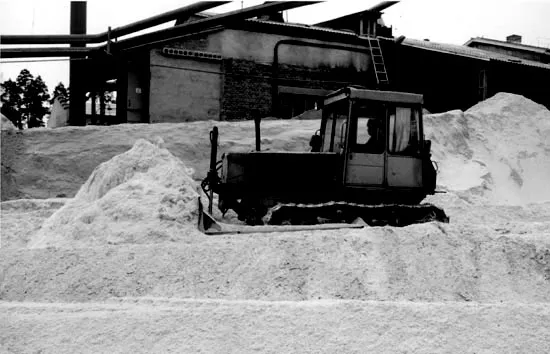
Figure 1.1 Many countries have abundant resources of unused biomass readily available
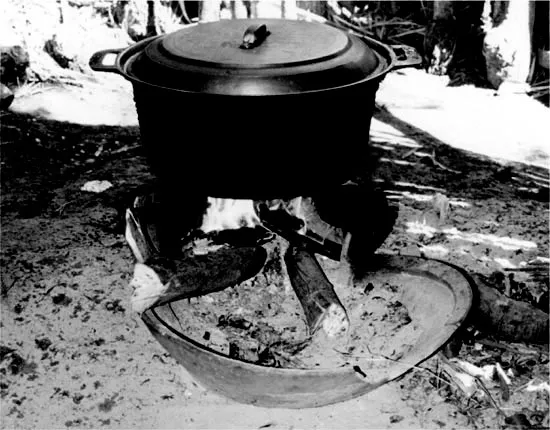
Figure 1.2 Wood-stove commonly used in Cambodia
Large amounts of wood and other solid biomass residues remain unused so far and could potentially be made available for use as a source of energy. In addition to this, wood and other biomass energy crops could be grown. There is, for instance, a policy debate on whether trees should be used to sequester carbon or to replace fossil fuels. Trees and other forms of biomass can act as carbon sinks but at the end of their growing life there must be plans for using the biomass as a source of fuel to offset fossil energies or as very long-lived timber products.* Otherwise, the many years of paying to sequester and protect the carbon in trees will simply be lost as they decay and/or burn uncontrollably.
Solid biofuels could provide a significant part of the energy demand if appropriate technologies were introduced. For this reason, many countries around the world have become involved in modern applications of wood and biomass to energy technologies. These are not only research or pilot projects; there are actual investment projects that exploit wood and other biomass fuels to generate heat and/or electricity for use by industries, utilities, communities and single households through more efficient, convenient and modern technologies. These projects prove that biomass energy can be a technically efficient, economically viable, and environmentally sustainable fuel option in the environment in which it operates.
1.1 Current status of bioenergy
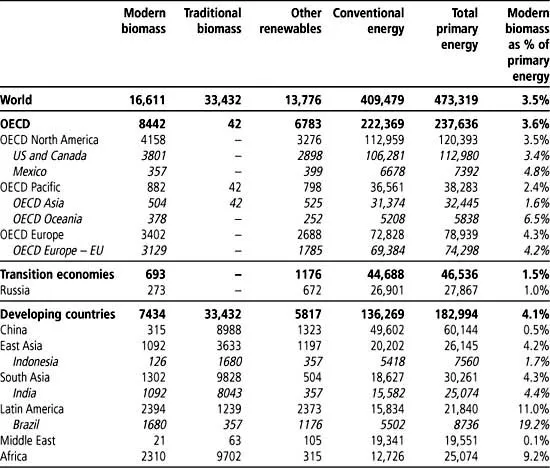
Table 1.1 illustrates that the current share of bioenergy in various regions in the world is still very limited. The contribution of biomass in industrialized countries is estimated at only 4 per cent.
In developing countries, around 22 per cent of the energy used originates from biomass, but the majority of it is used non-commercially in traditional applications (such as cooking stoves). These traditional cooking stoves are often characterized by low efficiencies and high release of toxic organic compounds. With 1.3 million deaths globally each year due to pneumonia, chronic respiratory disease and lung cancer, indoor smoke in high-mortality developing countries is responsible for an estimated 3.7 per cent of the overall disease burden, making it the most lethal killer after malnutrition, unsafe sex and lack of safe water and sanitation [2]. In a country like Nepal, traditional biomass fuels cover over 90 per cent of the primary energy input.
Table 1.1 Primary energy consumption by energy source and region in 2006, PJ/year
Note: OECD = Organisation for Economic Co-operation and Development.
Source: Interpolated from data in [3], other renewables includes solar, wind, hydro, geothermal, wave and ocean energy; conventional energy includes coal, oil, gas and nuclear energy.
Many countries around the globe have developed a growing interest in the use of biomass as an energy source, and therefore various technological developments in this field are ongoing. Although major technological developments have already been achieved, most bioenergy technologies are not yet commercially feasible without political support. In order to achieve wider application of modern bioenergy technologies, individual countries have set varying targets and implemented promotional policies. As a result of increased support for bioenergy technologies, major progress has been made. Chapter 10 provides an overview of approaches and progress made in selected countries.
1.2 Combustion as main bioenergy technology
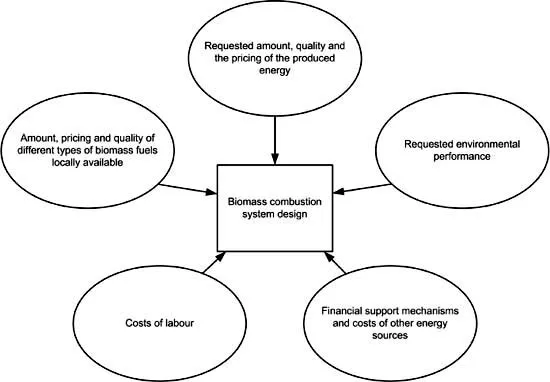
Biomass combustion is the main technology route for bioenergy, responsible for over 90 per cent of the global contribution to bioenergy. The selection and design of any biomass combustion system is mainly determined by the characteristics of the fuel to be used, local environmental legislation, the costs and performance of the equipment necessary or available as well as the energy and capacity needed (heat, electricity). Furthermore, the fuel characteristics can be influenced in order to fulfil the technological and ecological requirements of a given combustion technology. The most suitable technology package therefore can vary from case to case but generally, due to economy of scale effects concerning the complexity of the fuel-feeding system, the combustion technology and the flue gas cleaning system, large-scale systems use low-quality fuels (with inhomogeneous fuel characteristics concerning, e.g., moisture content, particle size, and ash-melting behaviour), and high-quality fuels are necessary for small-scale systems.
Figure 1.3 Influencing parameters for the optimal design of biomass combustion systems
Biomass combustion technologies show, especially for large-scale applications, similarities to waste combustion systems, but especially when chemically untreated (natural) biomass fuels are utilized, the necessary flue gas cleaning technologies are less complex and therefore cheaper. Furthermore, old combustion technologies have proven unable to handle inhomogeneous biomass fuels, and problems concerning emissions and fail-safety have occurred. New fuel preparation, combustion and flue gas cleaning technologies have been developed and introduced that are more efficient, cleaner and more cost-effective than previous systems and can be utilized for multifuel feed. This opens up new opportunities for biomass combustion applications under conditions that were previously too expensive or inadequate, increases the competitiveness of these systems, and raises plant availability. In this respect, knowledge exchange through the IEA, the EU and other international organizations as well as the creation of conducive market mechanisms and legislation are essential for a more widespread introduction of biomass energy systems.
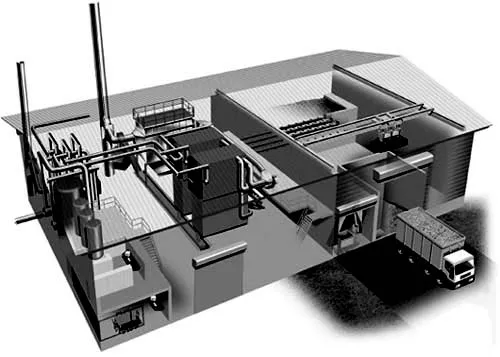
Figure 1.4 Wood-fired heating plant used for district heating in Wilderswil, Switzerland
Note: Thermal capacity 6.4MWth on woodchips + 3MWth back-up on fuel oil.
Source: Courtesy of Schmid AG, Switzerland
1.3 This handbook
This handbook describes the current state of biomass combustion technologies for both domestic and industrial use. It is a thorough update of the first edition of the handbook with the same title. The book was carefully compiled through the collaborative work of members of the IEA Bioenergy Agreement, Task 32 ‘Biomass Combustion and Cofiring’, using available literature sources, national information and experiences as well as suggestions and comments from equipment suppliers. As technological developments in the field of biomass combustion occur very rapidly and are often difficult to keep track of, this handbook is not to be regarded as complete. Nevertheless, it represents a comprehensive overview of important issues and topics concerning biomass combustion, and the reader may especially benefit from the large number of international experts in this field who participated as authors.
In Chapter 2, the basic principles of combustion are explained and the various biomass fuels are characterized regarding their physical and chemical parameters and their influence on the combustion process.
Chapter 3 provides information on possible biomass fuel pre-treatment options and fuel-feeding technologies.
Chapter 4 describes currently available biomass combustion technologies for domestic space heating.
Chapter 5 describes the biomass combustion technologies currently applied or under development for industrial utilization of biomass fuels. Moreover, technological possibilities to increase the efficiency of biomass combustion plants are discussed, and technological and economic standards regarding the proper dimensioning of biomass combustion systems are given.
Chapter 6 covers the various technologies for power production based on biomass combustion.
In Chapter 7, various concepts for biomass co-firing technologies and applications are explained and discussed. Typical technical problems are explained and guidelines for co-firing presented.
Inorganic components in biomass have direct influence on the eventual formation of slag deposits, corrosion of boiler components, aerosol formation and utilization options for the ashes formed. Chapter 8 is dedicated to ash characteristics and the behaviour of ash in biomass combustion systems.
Chapter 9 is devoted to environmental aspects of ...