![]()
Part 1
Traversing the Edge:
Introduction
![]()
Why Traverse the Edge? 1
Creative Underpinnings
Come to the edge.
We might fall.
Come to the edge.
It’s too high!
COME TO THE EDGE!
And they came
And he pushed
And they flew1
Christopher Logue (1926–)
Introduction: Creative edges in community engagement
Creativity is an active invitation for all of us to be part of creating healthy communities. As our communities around the Earth shift and grow, we begin to experience the world differently. Our habits, our work, our homes and our social circles change colour and shape. These changes offer us, as community engagement practitioners, an invitation to re-evaluate our work – to continue the work of bridging our relationships with ourselves, with others and with our environments. For us, creativity is the necessary work of evolving community engagement practice using methods that honour people’s individual and collective knowledge about their lives and their environments.
Invitation:
We invite you to come to the edge to experience concepts that are contributing to the imagination of community engagement practice: Meg Holden’s ‘tough and tender minded’, Wendy Sarkissian’s ‘ecotone’, Leonie Sandercock’s ‘borderlands’, Norma-Jean McLaren’s ‘realizing diversity’ and John Forester’s ‘deliberative planning’.
John Forester contends that no formula for effective engagement exists.2 How could it when every locality, with its own histories, environments and politics, is home to a host of unique relationships? Intuitively and methodologically, we need to examine the differences and emotions that keep people in opposition and we need to provide opportunities to build something new and unexpected. We also need to create open spaces where we can have the types of conversations that will bring people (especially those who tend to remain uninvited in traditional processes) close enough to engage together with an issue. The stories in this book traverse the edge because of the desire to move from paralysis to action, from isolation to friendship and from homogeneous to polyphonic.
Like John, we do not believe in magical formulas for creativity. In writing this book, we offer only an open invitation for each of us to seek clues, to learn in action and to share creative engagement methods with each other. In Creative Community Planning, we invite engagement practitioners to share their stories. We also reflect on our own practices. Far from coming to tidy, comprehensive conclusions, these stories present many diverse methods for working at the edge of creative community engagement. They reflect both community engagement methods practised over several decades and some in the experimental stages, illuminating creativity’s essential role in bridging conflict, changing the flavour of community discussions, opening participants to new possibilities and forming lasting partnerships to transform our communities and our futures.
Wendy’s practice of more than 30 years has also produced some striking examples of what happens when we effectively engage with community. In the ‘Gilt-edged Resources’ (in the last section of this book), we have included some examples of practices that we have found extraordinary in creating creative space for people to flourish in engagement processes.
Identity politics and debate: From ‘either/or’ to ‘and–and’
As planning and community engagement are not absent from politics and debate, we expect that creative methods will further dialogues about effective practice. The stories shared here will enrich a contemporary planning debate that questions whether we should be establishing a cohesive identity3 as planners or interpreting diverse ideologies and multiplicities of method as signs of intellectual advancement.4 Extended definitions and alternative histories of planning have also resulted in dichotic debates (that sound different to different ‘ears’) within academic and professional circles – casting planning either as an art or a science. These either/or debates tend to emphasize the importance of rational/emotional, technical/social and singular/multiple approaches to current and future issues such as sustainability.5
In this book, we question dichotomies. We wonder, instead, what would happen if we added creative methods to our existing engagement processes. Many of the examples in this book would perhaps work best if they were set in a wider context or formed part of a wider approach to capture and cultivate ‘missing pieces’ of information and knowledge. As we primarily work with people in emotionally charged and diverse contexts, we have found that employing creative methods in planning makes intellectual and practical sense. In a creative spirit, we invite this discussion.
Meg Holden: The tough and the tender minded
In her article, ‘The tough minded and the tender minded: A pragmatic turn for sustainable development planning and policy’, Meg Holden introduces into the debate William James (1907–1977) and the philosophy of pragmatism. James coined the terms ‘tough minded’ and ‘tender minded’ to suggest two ways of understanding the world – ways that were not dichotic but that were present in all of us; ways that could build mutual benefit.6
To be tough minded, Meg summarizes, is to believe and trust in ‘facts’ and to learn through continuous testing and experimentation, whereas to be tender minded is to act on beliefs and intuition, be spontaneous, hopeful and ‘idealistic’.7 In sustainability, Meg argues the work of pragmatism is to bridge these ways of being through ‘processes that develop new relationships of trust, respect and regular patterns of action, rather than specific one-time products or outcomes’.8
Highlighting James’s instructions for each way of being, Meg translates a possible meaning of pragmatism for community engagement and sustainability:
James instructed the tender minded to take up the good habits of the sciences when determining and ‘fixing’ beliefs within a group. This meant working as a ‘community of inquirers’ who share a common investment in understanding and improving their life context by communicating ideas and experiences and testing them against one another’s diverse perspectives.
On the other hand, James instructed the tough minded to adopt the good habits of humanists and political actors, namely critically assessing ends- and means-based values.9
Meg suggests that rationality, integration and experience are three components that would benefit us in community engagement practice:
[S]o that rationality is an invitation to communicate more effectively rather than a straitjacket for channels and forms of communication, so that integration is constructively pursued without making unrealistic demands for comprehensive knowledge and so that personal experiences are recognized as valid and necessary tests and contexts for successful sustainability plans.10
She warns of the challenges facing planners in ‘interpreting’ and ‘applying’ these components using both tough and tender minded approaches. But we must, she suggests, persist in connecting the tough and the tender minded to engage with publics and build a ‘continuous communication and interaction among citizens and experts’ and a knowledge ‘generated and tested in public contexts’ where ‘stories have standing alongside scientific models and statistics’.11
Although we find tender minded approaches sorely lacking in many community engagement processes, this book is not a book only for the tender minded parts of us. Much of the work also meets the tough minded at the edge, in the pursuit of inquiry,12 experimentation and testing within wider processes that may include more conventional (even scientific) research models and technologies. Our deepest desire is to meet at a place of creation that calls new, informed and meaningful ideas into existence through rationality, integration, community knowledge and experience.
Ecotone: Adopting an edge metaphor as place of creation
Wendy would like to share a personal story about her discovery of the ecotone as a place of creation and how it relates to the work of this book. She says: I introduce the concept of ecotone because in this book we are exploring notions of change and growth, at the margin, at the edge. We are wayfaring on the margins, as the American educator and naturalist Florence Krall says.13 For Krall, margins are rich and dynamic abodes, places of crossing over and transition, as well as spaces of separation and alienation. Life in an ecotone is all about that.
Our book is all about that – and more. It’s about the courage to break away from traditional and prescribed ways of working with communities. It’s about finding new ways of working and finding new ‘communities’ of like-minded souls with whom to work. As the stories in this book reveal, life in an ecotone is always interesting.
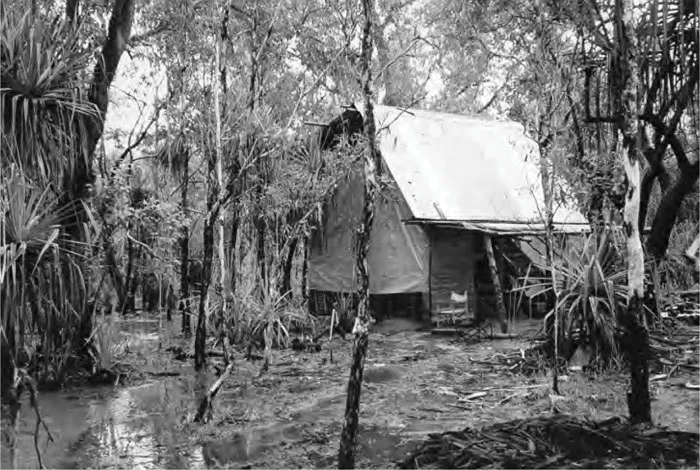
Seventeen years ago, spending a year living in voluntary simplicity in the bush of northern Australia, I discovered that I was living in an ecotone.14 An ecotone is a transition area of vegetation between two different plant communities, such as a wetland and a forest. Ecotones are places of differentiation, change and growth. They can support forms of life not found in either of the adjacent systems.
In ecotones, growth and change always occur at the edges. Rich and dynamic, they have an ecology of their own, as well as some characteristics of each bordering community. The response of vegetation to variations in climate will be the most extreme at the boundaries.
In the forest where I lived throughout 1992, the soil and the plant communities to the south-east differed dramatically from those north of the creek. The area around the creek where I lived was my personal ecotone. During this time, living alone in a forest, I found myself – psychologically and spiritually – in my ecotone: a marginal place between domesticity and wildness, between conformity and a true meaning of radicalism, rootedness in the natural world. I was an ecotone, embodying ecotone. Years before, an ecologist had explained that ‘growth and change always occur at the edges – in ecotones’. Thus, I was not surprised to read in Gretel Ehrlich’s A Match to the Heart (1994) of the richness she found in tide pools: ‘Tide pools … are ecotones, in-between places like those clefts in the brain and the rug-pulled-out limbos in our lives where, ironically, much richness occurs’.15
Humpty Doo, 1992
In that place, I was my own ‘growing edge’. Sometimes I imagined the creek and its banks as a mandorla, an almond-shaped segment created when two circles partly overlap. For Jungian psychologist, Robert Johnson, it’s a place of significant soul growth, of overlap between Heaven and Earth. I moved back and forth across the creek, a boundary more visible with the rain but which faded as the creekbed dried up. My life was lived in mandorla, negotiating with mandorla-space. My own growth was occurring within its tiny perimeters. Johnson explains that ‘the mandorla binds together that which was torn apart and made unwhole – unholy. It is the most profound religious experience we can have in life’.
In this book, we make our offerings and invitations from our place in the ecotone of creative community planning. Here at our growing edge. We invite you to join us in this fertile place, where change is more likely to occur and to be more dramatic than in the communities that border this place.
Leonie Sandercock: Edge as borderland
In 1995, Leonie Sandercock responded to a call to locate new voices for contemporary planning theory. She wrote about the importance of looking to the ‘frontiers’, ‘borderlands’ and ‘margins’ to expand planning theory, to make theory reflective of an ever-changing cityscape. She says:
We are being challenged in the city and in the academy by frontiers of difference. We must listen to these voices, for they are not only telling us what is wrong with our cities, but also what is wrong with our way of looking at the world and providing clues as to what might be better ways of dealing with both. In other words, we are faced with a challenge to both our theory and our practice by what I call the voices from the borderlands.16
These frontiers, borderlands and margins act as a metaphor for the voices not typically heard or even listened to in planning practice. Examining the writings of bell hooks, Gloria Anzaldus, Cornel West and Gueillermo Gomez-Pena, Leonie challenged us to think about new ways of understanding storytelling, planning theory, multiplicity, new and old ways of knowing ...