![]()
1 Preface
The book’s approach
General
This book is aimed at senior decision-makers in organisations undertaking major complex construction projects. It gives them an insight into how to achieve successful out-turn results, by discussing the various aspects of their role as the leader and client. Senior figures running businesses or capital programmes that involve construction projects may or may not associate themselves with the term ‘client’ – it is used in this book as the designated focal point of responsibility within the commissioning organisation.
This book is also relevant to those responsible for forging strong positive relationships with client organisations, by recognising and responding to the aims of successful clients.
The term ‘out-turn’ is used throughout the book to mean the end result in terms of performance, achievements and functionality of the completed project.
Large projects or capital programmes are notoriously seen as difficult and complex. They often do not achieve the desired objectives. However, this need not be the case. This book sets out many of the factors common to success. It does so by considering the attributes of leaders and client organisations that have enabled clear thinking. By doing so it provides an understanding of how to achieve the right results with increased confidence.
It recognises that there is no single magic formula or ‘one size fits all’, and provides explanations of how to approach the key aspects of projects so that the consequences and expectations associated with the main client inputs can be anticipated and understood. In doing so it provides information on how other parties are best able to contribute to a project’s success.
The book has wider relevance than just to the leaders of organisations in the client role. It will be of interest to all parties involved in the development and delivery of large projects – designers and management professionals, suppliers and contractors. It is aimed at large projects but much of it can also be applicable to programmes of multiple projects. The book provides a useful understanding of how to take early inception and creative thinking through to a completed project and, as such will be of interest to undergraduates or post-graduates studying Engineering, Architecture, Management or Business courses.
The international nature of the construction industry means that much of the book is directly relevant to and applicable beyond the UK. Other sectors involved in major one-off projects, such as major spending departments in government, the defence, transport, health, international sports, aviation and utilities industries, will also find the book useful reading.
Major spending authorities such as government departments often find it difficult to have confidence in the delivery of large capital programmes and in knowing how to lead them. In the UK, the Treasury has set up Infrastructure UK (IUK), with a focus on cost, improving infrastructure delivery, and the processes associated with project procurement and staged approvals. This book both covers these aspects and provides complementary explanations of other broader ingredients needed for successful outcomes.
Advantages of this book’s approach
Much of the thinking and guidance associated with project delivery is linked into the processes and procedures of project management. The implication being that with the right project management, the desired outcomes will be delivered purely through management processes. An extension to this approach is often to have the contractual basis for a project well enough tied up so as to place responsibility not with the client, on a one-sided basis. The premise being that the management processes can simply keep the pressure up on the delivering parties if they are contractually bound to pick up and handle whatever arises.
This book takes a different position. Success cannot be achieved just by passing responsibility contractually to others and by management imposing processes. An enlightened, informed leader in the client organisation is needed as an on-going controlling influence and participant in the project. This book is unusual in discussing and describing the attributes needed on the client side. It does so in a way that means that others can in turn consider how their inputs fit and are likely to contribute. The book proposes that the supply chain and stakeholders’ expectations need to be understood, and they need to be motivated to be willing to assist in achieving the objectives.
Many books and published texts focus on project delivery. This takes for granted that it is known what it is that is required to be delivered. This book, by contrast, assists the reader in considering the important development phase of projects and being clear on the interfaces between what is wanted and how to deliver it. It is the combination of these that enables successful projects.
Note that throughout the book the general use of the term ‘he’ should be read interchangeably as ‘he’ or ‘she’. The term ‘capital programmes’ refers to a planned collection of projects, but elsewhere the term ‘programme’ is used in relation to timeframe, whereas in some countries the term ‘schedule’ is used in this context. ‘Scope’ is used as the term for project requirements, whereas the term ‘programme’ is used for this in countries where ‘schedule’ is used for timeframe.
Structure of the book
This book is structured as a series of guidelines, each of which is a chapter heading. Using the term ‘client’ to represent the senior decision-makers in the commissioning organisation, it sets out to complete the statement:
‘The most successful clients know …..’
and it does so by discussing and defining this knowledge under the following headings:
The most successful clients know…
– How to define what is wanted and when
– How to set up and organise the project team
– Whether they want to be ‘hands-on’ or not
– How to involve the best contractors and SMEs
– How to best buy the project
– The relationship they want with the project team
– How best to align risk, cost and contingency
– How to measure and control progress
– How to approach communication
– How to handle the interfaces with stakeholders
– The post-completion and legacy objectives
Key to all this is for there to be no ambiguity regarding who is acting in the client role, so this is introduced at the beginning of the book. It is also important for the client to understand which decisions are required when, so the book sets out to link these issues of good project governance to the concept of a project timeline.
Why this book?
This book is largely based on the personal experience of the author. The author has had extensive experience in many aspects of projects, from inception and design through to construction and handover. With the best part of 40 years’ experience in the UK and internationally, he is still involved in the leadership of major projects as a senior practicing engineer.
So why write this book?
Over the years the author has given many talks, lectures and presentations on different aspects of projects, and has chaired events relating to the delivery of major projects. He has written articles for publication and was a member of an expert drafting panel for the Institution of Civil Engineers’ Client Best Practice Guide. In 2007 he was invited by Imperial College to be a member of a small alumni panel undertaking a centenary review of their Civil Engineering degree curriculum and its relevance to the future needs of the profession. And he has contributed to a couple of leading contractors in improving their understanding of and ability to manage design.
This book started as an assembly of these various pieces. Though none were necessarily unique, they were considered worth consolidating. Expression of a broader interest has resulted in these being amplified and transformed into a reasonably consistent format, the result of which is this book. It is not claiming to be an academic reference or a review of related publications. The book is a reasonably authoritative piece of writing based on a desire to describe and help handle the many practical issues associated with significant construction projects.
It is not written in the first person but in many aspects it could have been. It is a reflection of the experience and attitudes that the author sees as most relevant, and describes ways through these that the author believes are most likely to work towards achieving successful projects. The book seeks to provide a bridge from industry guidelines and academic thinking to practical behaviours and awareness that clients and their projects can use.
It does not claim to provide all the answers. Rather, it seeks to be thought-provoking to raise consideration of the key issues that directly influence success. It primes the reader of these issues and the factors associated with each. By doing so, it brings together and embraces many elements of projects which in practice need to be addressed. It is not a long book but the ideas in it cover much of what matters. Taking these on board will increase the likelihood of positive outcomes.
[The diagrams in this book were produced by and remain the copyright of Ove Arup & Partners Ltd. In most cases these diagrams have been created by the author on various projects or for presentations he has given.]
![]()
2 The challenge of leadership
Providing a general context
Setting the context
The client is the organisation commissioning the project and paying for it. The role and performance of the senior decision-makers in the client organisation is probably the single most important factor in determining whether or not large construction projects are successful.
This may not generally be recognised and, even when it is, there may be uncertainty over how the client can perform so as to positively influence the out-turn success of their project. Many senior figures in client organisations may feel when a project is less successful that this is the consequence of failings in those they engaged to deliver the project; that they felt powerless to influence things but were left having to accept something they were not satisfied with.
However, on projects where the client has ended up less than satisfied, there is convincing evidence of a high likelihood that many of the other parties involved also found the project unacceptably difficult or unsatisfactory. So there is a tendency for a general ‘lose–lose’ situation. It is therefore of general interest and benefit to have projects with excellent, high-performing and knowledgeable clients.
This guide for leaders of projects and capital programmes has been assembled both to assist clients directly with the challenges associated with delivering projects successfully and to support construction professionals in providing advice and advocacy to their clients. This guide is therefore written so as to point towards those issues that the client needs to consider and to identify aspects of client performance that help achieve a ‘win–win’ successful project out-turn. It examines various aspects of the client’s input and provides guidance on measures that have been found to be particularly influential.
Clients can be surprised when asked
‘At what point will they know their project will be successful?’
Either they have not considered this, or do not have a mechanism to plan for success. This guide attempts to illustrate that delivering successful projects need not be difficult.
Leadership or management?
It is interesting to debate whether the issues of leadership or management are relevant to achieving successful outcomes, and the degree to which they therefore apply to the subject of this book.
Both are clearly needed in order to achieve results.
However, it might be proposed that the greatest success comes from getting the best from as many people as possible.
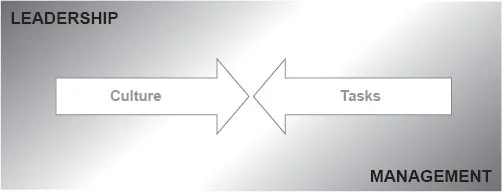
Leadership at its best is setting a clear vision of the art of the possible that many others can find inspirational and worthy of having the ambition to attain – the ‘Why’ and the ‘What’. The leader focuses on a culture of high yet achievable expectations, but not so much on the ‘How’. This then leaves others to feel they are able to truly contribute to the ‘How’ through their creativity and engagement. They have the excitement and interest of being able to feel they have ‘some skin in the game’. Provided they are of the right quality, this can lead to high-performing teams that have a common clear focus and can be very committed to achieving results, even on the most challenging of projects. The ambition is clear and, therefore, it is also clear what will represent success.
Management, by comparison, is more about directing others, telling them what to do next and the way to do it. This is more about prescribing the ‘How’. This can be effective when something has been done before and a precedent has been set, so the rules are known and the task is to comply with them in an established way to get the desired result. However, it can be less stimulating and less engaging for those involved and is therefore likely to get less of a contribution from them. If it does not go well, then it does not feel like their fault as they were only doing what they were told, and who were they to argue? If successful then those participating are likely to have a great respect for those making the management decisions but are less likely as participants to feel the buzz of having personally made a difference.
Figure 2.1 Environment for a high performing team – the overlapping zones of Leadership and Management. High performing teams are achieved by leadership focussing on creating the right culture. Management can then focus on the tasks.
A combination of both leadership and management is needed. For ...