- 416 pages
- English
- ePUB (mobile friendly)
- Available on iOS & Android
eBook - ePub
The Illustrated Encyclopedia of World History
About this book
Peter deLeon argues that while it is often individuals who actually engage in political corruption, it is the US political system that condones or encourages such actions. Once this perspective is recognised, one can begin to understand ways in which the costs of corruption might be alleviated.
S
SA (Sturmabteilung) National Socialist paramilitary movement. Founded in 1921, it eventually grew to more than 2 million members by the early 1930s. Under the leadership of Ernst Röhm, the S. demanded a greater role in the National Socialist state and represented a threat to the regular army. Hitler ordered the top SA leadership murdered on June 30, 1934, and thereafter the organization played a subordinate role to the SS, founded by Himmler.
Sá, Mem de (d.1572) Portuguese colonial ruler in Brazil from c.1557. He was the founder of Rio de Janeiro.
Saba Pre-Islamic kingdom in southwest Arabia (c.12th century BC). It was wealthy because of its trade in spices and agricultural products. S. was conquered by the Arabs in the 7th century BC.
Sabbatai Zevi (1626-1676) Jewish mystic who believed himself to be the Messiah. The founder of the Sabbatean sect, he proclaimed the year 1666 as the millennium and attempted to land in Constantinople (Istanbul) with his followers. He was taken prisoner, however, and adopted Islam in order to save his life. The Sabbatean movement survived into the 18th century.
Sabbath Jewish holy day of rest, lasting from sunset on Friday until the start of the following night (Genesis 1:5).
Saberth (d.616/617) First Christian king of the kingdom of the East Saxons (Essex). He followed his uncle Aethelbert I in converting to Christianity and is thought to have founded Westminster Abbey.
Sabines Ancient people of Italy. They lived in the Apennines northeast of Rome. The S. colonized part of southern Italy and mixed with the Latins. According to tradition, the S. women were seized and raped by the followers of Romulus. Rome was involved in a number of wars with the Sabines, but by 290 BC they had been subdued and became Roman citizens.
Sabratha Carthaginian trading station (4th century BC) in northern Africa. After the fall of Carthage in 146 BC, S. became Roman. The city was governed by the Vandals in the 5th century and fell into ruins after it was conquered by the Arabs in 643.
Sacajawea (c.1784-1812) Shoshone Indian woman who served as a guide and interpreter during the Lewis and Clark expedition (1804-1806).
Sacco-Vanzetti Case Murder case in the U.S. during the 1920s involving two self-professed Italian-immigrant anarchists. The case drew worldwide attention because of the anti-immigrant, anti-radical emotions it aroused in the United States. S. and V. were executed in 1927 and were thought by many to be innocent of the crime of murder. Forensic studies in the 1960s, however, concluded that S. had probably committed the murder.
Sachs, Hans (1494-1576) German poet. The leading meistersinger of the Nuremberg school, he was also a shoemaker and guild master. He is estimated to have produced more than 6,000 works, including fables and farces, Shrovetide stories, comedies, and songs.
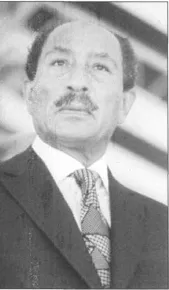
Sadat, Muhammad Anwar al- (1918-1981) President of Egypt, 1970-1981. An army officer, he became President of Egypt in 1970 on the death of Nasser. S. waged war against Israel in 1973 but wanted to negotiate a settlement. His historic visit to Israel (1977) became a turning point in the political situation in the Middle East and led in a peace treaty between the two countries (1979) and the return of territories taken by Israel during the Six-Day War (1967). S. and Israeli leader Menachem Begin received the Nobel Peace Prize in 1978. His agreement with Israel as well as his pro-American stance alienated fanatical Muslims in Egypt, and he was assassinated in 1981 by fundamentalist soldiers while watching a parade.
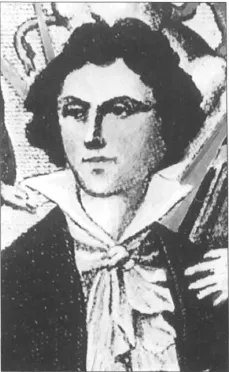
Sade, Donatien Alphonse François, Comte of (1740-1814) French writer. He is more commonly known as the marquise de Sade. S. spent more that 27 years in prison because of his writings and his licentious life style. He believed that because sexual deviation existed in nature, it was therefore natural. The term sadism—the inflicting of pain for sexual pleasure—is derived from his name.
Sadi dynasty See Mali, Kingdom of.
Sadova See Königgrätz.
Safavid dynasty (1502-1736) Descendants of the Iranian founder Safi ad-Din (1253-1334). The dynasty introduced Shiite Islam to Iran and defeated the Turks (1603), after which Baghdad was captured. They also drove the Portuguese from Hormuz island (1602 and 1622).
Saffavids (9th century) Iranian dynasty founded by Ya’qub as-Saffar. They conquered parts of India but were defeated by the Samanids at Balkh during a campaign to reach Baghdad (900).
Sagasta, Práxedes Mateo (1825-1903) Spanish statesman. He served seven times as prime minister of Spain between 1871 and 1902. S. helped oust Isabella II (1868). He granted autonomy to Cuba in 1897 but was unable to prevent U.S. intervention and the defeat of Spain in the Spanish-American War (1898), for which he was generally blamed.
Saguntum Ancient city in Spain. An ally of Rome, it was attacked by the Carthaginians under Hannibal (219 BC), leading to the outbreak of the Second Punic War. S. was reconquered by Rome in 214 BC.
Said ibn Sultan (1791-1856) Lord of Muscat and Oman from 1806. In 1840 he shifted his capital to Zanzibar, in east Africa, where he introduced the cloves that became the foundation of the island’s economy.
Saigon, Treaty of Agreement in 1862 between France and the last independent emperor of Vietnam, Tu-Duc, in which France was ceded Saigon and parts of Cochin China.
Saint Albans Town north of London, England. There, during the Wars of the Roses, Richard of York defeated a royal army (1455) and Warwick and Edward IV were defeated by the Lan-casters (1461).
Saint Augustine City in Florida. Founded in 1565 by the Spanish explorer Pedro Menéndez de Avilés, it is the oldest city in the United States. S. remained a Spanish colony until 1819, when it was purchased by the United States under the Adams-Onís Treaty.
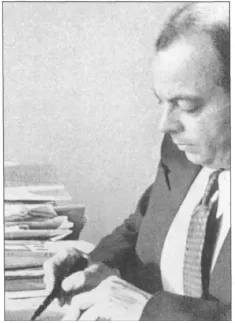
Saint-Exupéry, Antoine de (1900-1944) French writer. His work reflects his love of freedom of action and of the open skies. His most famous work is the Le Petit Prince (The Little Prince) (1943), which is read by children as well as adults. S. was a pilot for the Allies during World War II and was killed in action.
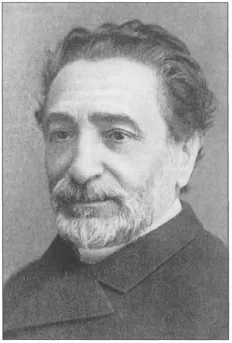
Saint-Germain, Treaty of (1570) Pact that ended the first phase of the French Wars of Religion.
Saint-Germain, Treaty of (1679) Pact that ended the third of the Dutch wars.
Saint-Germain, Treaty of (1919) Treaty that ended the war between Austria and the Allies at the end of World War I.
Saint Helena Island in the South Atlantic Ocean. It was discovered by the Portuguese in 1502, belonged to Holland from 1633 to 1673, and has been British since then. In 1815, Napoleon was exiled on S., and he died there in 1821.
Saint Peter’s Church Principal church of Roman Catholicism. The largest church in the Christian world, it is located in Vatican City. The present structure was built between 1506-1626 on the site of a 4th-century St. Peter’s built by Constantine. Raphael and Michelangelo were among S.’s architects, and Bernini designed the piazza and colonnade. In the grottoes beneath the church are the tombs of St. Peter and other popes.
Saint-Quentin Town in northern France. It has a long history of sieges and battles. At S., the Spaniards defeated the French in a siege during the Wars of Religion (1577). During the Franco-Prussian War (1870), the Germans defeated the French at S. In World War I, the French were defeated again (1914) by the Germans near S.
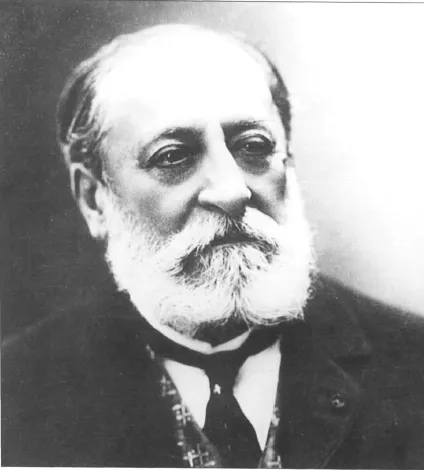
Saint-Saëns, Charles Camille (1835-1921) French composer, pianist, and organist. He was organist at the Madeleine for many years, and he composed in almost every form. S.’s Third Symphony with organ and piano became particularly famous and well-liked. Other works include the symphonic poem Danse macabre (1875) and the opera Samson et Dalila (1877).
Saints, Battle of the Battle in the Caribbean (1782) between the British and French fleets near Guadaloupe. The British won and consolidated their position in the Caribbean as a result.
Sais Ancient city of Egypt, in the Nile delta. It became the capital of a united Egypt under King Psamtik (Psammetichus I) from 664 BC.
Sakaliba Name for Slav slaves taken from Germany to Spain during the Moorish era in Spain.
Sakharov, Andrei Dimitriyevich (1921-1989) Soviet physicist, dissident, and human rights activist. He helped develop the hydrog...
Table of contents
- Cover
- Half Title
- Title Page
- Copyright Page
- Introduction
- A
- B
- C
- D
- E
- F
- G
- H
- I
- J
- K
- L
- M
- N
- O
- P
- Q
- R
- S
- T
- U
- V
- W
- X
- Y
- Z
- Illustration Credits
Trusted by 375,005 students
Access to over 1.5 million titles for a fair monthly price.
Study more efficiently using our study tools.
Frequently asked questions
Yes, you can cancel anytime from the Subscription tab in your account settings on the Perlego website. Your subscription will stay active until the end of your current billing period. Learn how to cancel your subscription
No, books cannot be downloaded as external files, such as PDFs, for use outside of Perlego. However, you can download books within the Perlego app for offline reading on mobile or tablet. Learn how to download books offline
Perlego offers two plans: Essential and Complete
- Essential is ideal for learners and professionals who enjoy exploring a wide range of subjects. Access the Essential Library with 800,000+ trusted titles and best-sellers across business, personal growth, and the humanities. Includes unlimited reading time and Standard Read Aloud voice.
- Complete: Perfect for advanced learners and researchers needing full, unrestricted access. Unlock 1.5M+ books across hundreds of subjects, including academic and specialized titles. The Complete Plan also includes advanced features like Premium Read Aloud and Research Assistant.
We are an online textbook subscription service, where you can get access to an entire online library for less than the price of a single book per month. With over 1.5 million books across 990+ topics, we’ve got you covered! Learn about our mission
Look out for the read-aloud symbol on your next book to see if you can listen to it. The read-aloud tool reads text aloud for you, highlighting the text as it is being read. You can pause it, speed it up and slow it down. Learn more about Read Aloud
Yes! You can use the Perlego app on both iOS and Android devices to read anytime, anywhere — even offline. Perfect for commutes or when you’re on the go.
Please note we cannot support devices running on iOS 13 and Android 7 or earlier. Learn more about using the app
Please note we cannot support devices running on iOS 13 and Android 7 or earlier. Learn more about using the app
Yes, you can access The Illustrated Encyclopedia of World History by Donker Van Heel in PDF and/or ePUB format, as well as other popular books in History & Teaching Arts & Humanities. We have over 1.5 million books available in our catalogue for you to explore.