eBook - ePub
Spaces of Mobility
Essays on the Planning, Ethics, Engineering and Religion of Human Motion
- 320 pages
- English
- ePUB (mobile friendly)
- Available on iOS & Android
eBook - ePub
Spaces of Mobility
Essays on the Planning, Ethics, Engineering and Religion of Human Motion
About this book
Human mobility is dramatically on the rise; globalization and modern technology have increased transportation and migration. Frequent journeys over large distances cause huge energy consumption, severely impact local and global natural environments and raise spiritual and ethical questions about our place in the world. 'Spaces of Mobility' presents an analysis of the socio-political, environmental, and ethical aspects of mobility. The volume brings together essays that examine why and how modern modes of transport emerge, considering their effect on society. The religious significance of contemporary travel is outlined, namely its impact on pilgrimage, Christology and ethics. The essays examine the interaction between humans and their surroundings and question how increased mobility affects human identity and self-understanding. 'Spaces of Mobility' will be of interest to students and scholars seeking to understand the impact of mobility on modern culture and society, the ethics behind contemporary transport systems and the conditions of immigrants in a world of constant travel.
Information
1
The beauty of speed or the cross of mobility? Introductory reflections on the aesth/ethics of space, justice and motion
Sigurd Bergmann
The soft line is straightened
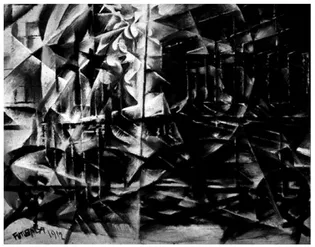
Figure 1. Giacomo Balla, Auto en Course, Etude de Vitesse, 1912, oil on canvas, 55.6 × 68.9 cm, Museum of Modern Art, New York (© DACS, London 2007)
In 1912, Giacomo Balla (1871–1958) painted Auto en Course, Etude de Vitesse (Fig. 1). Balla belonged to the famous group of artists whose work was inspired by the Italian writer Filippo Tommaso Marinetti (1876–1944), who himself had begun the futurism movement. The group’s members were united in their glorification of the future; they were particularly fascinated by the acceleration of progress through modern technology. The futurists took very seriously the radical change of the individual and social life, in the way that it was promoted by the development and application of modern technologies. The machine became the object for a new cult in the perception of the arts; future and progress were elevated to the pedestal of divine revelation.
In 1909 the futurists declared in their manifesto:
- 4. We affi rm that the world’s magnificence has been enriched by a new beauty: the beauty of speed. A racing car whose hood is adorned with great pipes, like serpents of explosive breath – a roaring car that seems to ride on grapeshot is more beautiful than the Victory of Samothrace.
- 5. We want to sing the hymn of the man at the wheel, who hurls the lance of his spirit across the Earth, along the circle of its orbit.
(Marinetti 1909)
In his painting, Balla expresses the energy that catches the eye in the movement of the cars in the central part of Rome. The wild speed of the vehicles is transformed by the painter into a field of waves and lines, which dominates the entire space. His picture fragments the light, and it transforms movement into reproducing sequences. The car becomes a central symbol for modernity.
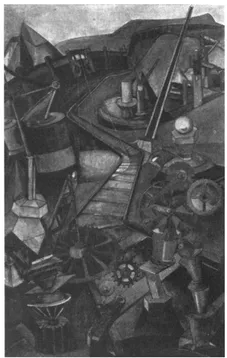
Figure 2. Hannah Höch, Mechanischer Garten, 1920, watercolour, 73.5 × 46.4 cm, Museum of Modern Art, New York (© DACS, London 2007)
Today, unrestricted belief in the progress of technology is considered a bit more problematic than it was a hundred years ago, especially if we consider the manifold problems that appear in the technical spaces of (hyper)mobility, which engage the authors of this book. Appropriately, the futurist alliance of arts, technics/technology, and the dominating elite (which at that time was fascist) met an intense resistance from their contemporaries, mainly from the Dadaist artists who expressed their opposition through their understanding of life and arts and who were succeeded by a stream of critics of civilization up to the modern day.
The painting Mechanischer Garten by Hanna Höch (1889–1978) offers us a contrasting picture, where the space of modern mobility looks more like a cemetery or a scrap yard (Fig. 2). The symbols of modernity rust into ruins, the rails do not lead anywhere, paradise has been transformed into a mechanical garden, a dead territory where nothing can grow. The depression of the post-war period is already anticipated here. In Der Unfall Höch is even more provocative (Fig. 3). Her collage embodies our central question: what mobility and why?
It is interesting to note that the phenomena of mobility and motion have for almost 150 years represented an arena for conflict between two contradictory views of technology, and the significance of that technology for modern society.1
The radical historical transformation of humans’ natural and built environment can be visualized by focusing on the straight line.
The two largest interferences in the history of European landscape design occurred in the nineteenth century, and were planned to establish straight lines in nature. The construction of channels and the transformation of rivers into straight channels were later followed by the establishment of straight railway tracks through the country, which aimed at increasing the speed of transporting people and goods.
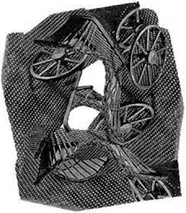
Figure 3. Hannah Höch, Der Unfall, 1936, collage (© DACS, London 2007)
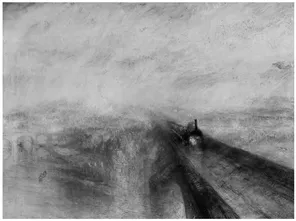
Figure 4. J. M. W. Turner, Rain, Steam and Speed, 1844, oil on canvas, 91 × 122 cm, National Gallery, London. (© Peter Willi – ARTOTHEK)
The straight line, which connects two points, became the physical presupposition of acceleration. The straightened lines resulted in a radical change that affected human surroundings and the environment, while at the same time these straightened lines radically changed the individual’s understanding of the self and its reality.
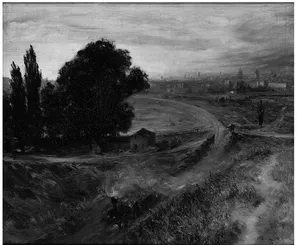
Figure 5. Adolph von Menzel, Die Eisenbahn Berlin-Potsdam, 1847, oil on canvas, 43 × 52 cm, Nationalgalerie, Staatliche Museen zu Berlin. (© Bildarchiv Preußicher Kulturbesitz/Nationalgalerie, Staatliche Museen zu Berlin. Foto: Jörg P. Anders)
J. M. W. Turner’s (1775–1851) Rain, Steam and Speed (Fig. 4) and Adolph von Menzel’s (1815–1905) Die Eisenbahn Berlin–Potsdam (Fig. 5) question the relationship of the straight line’s rapid movement and the complex surroundings, whereby Menzel mainly concentrates on the collision of modern acceleration and the pedestrian’s old, smooth, step-by-step striding (cf. Bätschmann 1989: 100).
The painters’ expressions of mobility provide a vision of movement that today we would do well to take seriously. The technically constructed and socioculturally developed mode of human movement, and the transport of people and goods through space, produces a complex diversity of problems. This makes it necessary for research to mine the field of mobilities in a much more comprehensive way, even though this field is surprisingly still found on the margins of environmental science, in the humanities as well as in social sciences and technology.
Problems in the technical space of mobility
Why is it meaningful to develop different scientific perspectives on a phenomenon such as ‘technical spaces of mobility’? In the following, I first sketch the landscape of problems from a broad perspective, and secondly focus on three selected themes.
It goes without saying that the contributions in this book do not claim to offer a representative map or a reflection of the whole field. Research about an ongoing social development, which on top of everything else is accelerating and even threatening to derail itself in its self-propelled impetus, asks for an alliance of many good forces, inside the academy as well as in the spheres of citizens’ political life. It is my hope that this book partly can give voice to the problem’s dignity, and partly be a catalyst for a more extensive discourse on problems in technical spaces of mobility.
Environment and mobility
A technically constructed mobility creates a large number of ethically relevant problems. One of them can be described from an environmental perspective.
With regard to natural surroundings, the establishment of large-scale transport systems by definition results in a radical change of landscapes and cities. Mobility demands technically constructed spaces and places, a fact that in itself causes conflicts between different interests that control landscape and urban planning.
A dramatically increasing conflict can be seen in connection with mobility’s need for energy. With regard to global climate change, which climate researchers say is already affecting the earth’s weather systems, private car-use represents a large percentage of humanity’s total carbon dioxide emissions.2 In spite of the fact that households in rich countries are thereby responsible for causing a major part of climate change, which costs lives in the world’s poorer regions, one cannot detect more than marginal changes in the developed world’s patterns of mobility. The opposite is the case when car industries produce for and export to new markets, for example in China, which results in further increases in both energy consumption and greenhouse gas emissions. Furthermore, the car industry still represents an overly high, and thus problematic, percentage of employment in rich industrialized countries.3 The problem with global change demonstrates national and geopolitical incompetence in terms of cooperation, where the trap of an unsustainable pattern of mobility and production offers a lurid contrast to the vision of a sustainable world society that is capable of meeting the future (zukunftsfähig).4 The transformation of small- and large-scale patterns of mobility has without doubt a central function in the journey to such a vision.
What kind of mobility contributes to an increased ‘sustainability’ (according to the United Nations (UN) Conference on Environment and Development (UNCED), held in Rio in 1992) and an increased ‘respect for other non-human life forms’ (according to the UN World Charter for Nature, 1982)? How should we design such technical spaces, where mobility is transformed from a life-threatening to a life-enhancing gift?
Is mobility really a ‘right’ for citizens and, if so, does this imply that every citizen has the right to move freely by choosing for themselves the technical mode of moving? Is the structure of mobilities today, at a national as well as at a global level, characterized by exclusion and unjust distribution rather than by equal access for everyone? What would happen if the entire population of the earth developed a similar pattern of mobility to that of the richest fifth of the world today?
Life-threatening traffic
Another field of problems of enormous social relevance is the large number of road casualties, fatalities as well as injuries. Our technically constructed mobility is constantly claiming many victims, regardless of the modes of motorized transportation. Some modes pose larger risks than others, and one can note that nations with bigger economic resources and fair and highly valued welfare systems produce fewer road casualties than poorer countries, but also fewer than rich countries with significant social inequality. Independent of social factors, it seems reasonable to ask whether there is some kind of cultural acceptance for the idea that mobility claims victims, even human lives. Do we consent to and accept that some of us become victims for the right of all to move freely and without limits (cf. Möller 1986)? Would we like to continue sacrificing brothers and sisters on the altar of mobility?
Do we agree to distribute these risks in accordance with an assumed Western ideal of equity, so that only chance decides who will become the next victim? How many casualties will we tolerate, and what are the criteria for how risks are apportioned among different social groups? Does a cost-benefit analysis really offer the best approach in a national economy? How can one defend the equal value of every human and at the same time calculate social and health care in terms of ‘investments’ and ‘profits’ in traffic security? Or should one depart from the position that the value of a human cannot be differentiated, a position that would lead to a just and equal distribution in the ‘risk society’ (Beck 1986)? Is the so called Vision Zero in traffic contexts (zero deaths) more likely to be a dangerous illusion of false safety than a realistic goal?
Might it have been more civilized to sacrifice some of the people’s strongest warriors to the gods bringing fortune in war, as was done in ancient Sparta, instead of to the EU’s standard of safety norms, which allow chance to decide who will be victimized?
Mobility and democracy
A third field of problems, which is emphasized in this volume, lies in the challenge of preserving and deepening democracy in the context of a mobility development that has been thrown off course and that at present is best characterized as social exclusion on the one side and ‘hypermobility’ on the other.
On a small scale, one can perceive today that the assumed just and fair sharing of resources is neither real nor honest, if one looks at access to transport systems for citizens from different social classes. Mobility planning has taken an ideal type of one ‘normal’ human as its point of departure. Differences with regard to gender, education, ethnicity and economic potential have been ignored in accordance with usual modernist stereotypes.
Why do scholars now become interested in children, the elderly, the disabled and immigrants and their behaviour in mobility systems? Should it not be self-evident that differences between humans are significant for the construction of technical spaces and forms of mobility? Is social exclusion acceptable and consistent with our understanding of the human and social?
The problems of hypermobility, as they are investigated in Sager’s essay below (Ch. 2), are not only about dysfunctions in transport systems under increasing pressure with the consequences of what can euphemistically be called traffic infarcts. The challenge of hypermobility is deeper than that.
If one can no longer foresee and predict favoured or non-favoured developments in mobility, the opportunity for the discursive and rational planning and design of the population’s pattern of movement will also disappear. The loss of an anticipatory perception of movement results in a loss of the ability to hold a practical discourse about the design of townscapes and landscapes.
How can we preserve the right of citizens to move freely if the technical application of this right makes it impossible to democratically negotiate and distribute the conditions for different modes of mobility?
Space remains a limited resource, and mobility sooner or later faces obstacles that cannot be surmounted. Does the praise of speed’s ‘new beauty’ (Marinetti 1909) really point to a fundamental right that, if it is applied in the contemporary space of mobility, disables every rational discourse about the distribution and the future design of the system?
Is the provocative thesis, formulated by the philosopher Georg Picht (1989: 5) in the horizon of natural science, valid even for mobility? Could a science be correct, if its applications destroy its object, nature? Could a technology for motion be true and good, if its applications imply the destruction of the life of citizens, society, nature and climate?
What antidotes are at our disposal? What could reflection about the implicit ten...
Table of contents
- Cover
- Half Title
- Title
- Copyright
- Contents
- List of illustrations and tables
- Contributors
- Preface
- Acknowledgements
- 1. The beauty of speed or the cross of mobility? Introductory reflections on the aesth/ethics of space, justice and motion
- Part I
- Part II
- Part III
- Index
Trusted by 375,005 students
Access to over 1.5 million titles for a fair monthly price.
Study more efficiently using our study tools.
Frequently asked questions
Yes, you can cancel anytime from the Subscription tab in your account settings on the Perlego website. Your subscription will stay active until the end of your current billing period. Learn how to cancel your subscription
No, books cannot be downloaded as external files, such as PDFs, for use outside of Perlego. However, you can download books within the Perlego app for offline reading on mobile or tablet. Learn how to download books offline
Perlego offers two plans: Essential and Complete
- Essential is ideal for learners and professionals who enjoy exploring a wide range of subjects. Access the Essential Library with 800,000+ trusted titles and best-sellers across business, personal growth, and the humanities. Includes unlimited reading time and Standard Read Aloud voice.
- Complete: Perfect for advanced learners and researchers needing full, unrestricted access. Unlock 1.5M+ books across hundreds of subjects, including academic and specialized titles. The Complete Plan also includes advanced features like Premium Read Aloud and Research Assistant.
We are an online textbook subscription service, where you can get access to an entire online library for less than the price of a single book per month. With over 1.5 million books across 990+ topics, we’ve got you covered! Learn about our mission
Look out for the read-aloud symbol on your next book to see if you can listen to it. The read-aloud tool reads text aloud for you, highlighting the text as it is being read. You can pause it, speed it up and slow it down. Learn more about Read Aloud
Yes! You can use the Perlego app on both iOS and Android devices to read anytime, anywhere — even offline. Perfect for commutes or when you’re on the go.
Please note we cannot support devices running on iOS 13 and Android 7 or earlier. Learn more about using the app
Please note we cannot support devices running on iOS 13 and Android 7 or earlier. Learn more about using the app
Yes, you can access Spaces of Mobility by Sigurd Bergmann,Thomas A. Hoff,Tore Sager in PDF and/or ePUB format, as well as other popular books in Ciencias sociales & Historia y teoría filosóficas. We have over 1.5 million books available in our catalogue for you to explore.