This textbook provides an integrated and organized foundation for students seeking a brief but comprehensive introduction to the field of relationship science. It emphasizes the relationship field's intellectual themes, roots, and milestones; discusses its key constructs and their conceptualizations; describes its methodologies and classic studies; and, most important, presents the theories that have guided relationship scholars and produced the field's major research themes.

- 576 pages
- English
- ePUB (mobile friendly)
- Available on iOS & Android
eBook - ePub
The Psychology of Interpersonal Relationships
About this book
Information
Publisher
Psychology PressYear
2016Print ISBN
9780131836129
9781138436558
Edition
1eBook ISBN
9781317345015

PART 1
RELATIONSHIPS: THE WEB OF LIFE
Chapter 1 | First Relationships |
INTRODUCTION
In the afterword to his play Angels in America, Tony Kushner (1993) wrote: “The smallest indivisible human unit is two people, not one…. From such nets of souls societies, the social world, human life springs” (p. 307). Quite literally, human life springs from human relationships. Modern reproductive technology not withstanding, most of us were conceived the old-fashioned way. Thus, all of us owe our very existence to a relationship that once existed between a man and a woman. The sexual mating relationship has been written and sung about more than any other because it often is accompanied by love, frequently of the “romantic” variety, which has captivated philosophers, poets, novelists, and other artists for centuries—perhaps even throughout human history, some anthropologists (Jankowiak & Fischer, 1992) and psychologists now maintain (Hatfield & Rapson, 1987). This topic is discussed in Chapter 11, “Love.”
From the perspective of relationship science, each of us represents a specific manifestation of the laws of mate selection. The color of our hair and the shape of our eyes, our mental capabilities and our physical infirmities, as well as a host of other attributes known to be strongly genetically determined, reflect the mate selection principles discussed in Chapter 12, “Mate Selection and Sex.” Charles Darwin (Figure 1.1) was the first to urge scientists to identify the laws that govern mate selection. In The Origin of Species by Means of Natural Selection: The Descent of Man, and Selection in Relation to Sex (1871/1952) he argued:
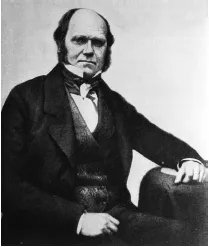
FIGURE 1.1 Charles Darwin.
No excuse is needed for treating this subject in some detail; for, as the German philosopher Schopenhauer remarks, “The final aim of all love intrigues, be they comic or tragic, is really of more importance than all other ends in human life. What it all turns upon is nothing less than the composition of the next generation.… It is not the weal or woe of any one individual, but that of the human race to come, which is here at stake.” (p. 578)
From the moment of our conception, we become dependent on others for our continued existence. Most directly, we become dependent on our mothers. Because a mother, in turn, is dependent on others for support during her pregnancy, we, too, are indirectly dependent on those others. For example, low birth weight is a primary cause of infant death, and birth weight has been shown to be a function of the support our mother receives—or fails to receive—from her family, her mate, and others during our gestation period (Feldman, Dunkel-Schetter, Sandman, & Wadhwa, 2000).
The human’s gestation period is one of the longest of all species. If a woman dies during pregnancy—by disease, accident, domestic violence, suicide, or other means—it is likely that the baby, too, will die. If she suffers from malnutrition, the infant may be born with a host of physical infirmities. If she drinks alcohol, especially during the months of gestation when the brain is rapidly developing, we may be afflicted with fetal alcohol syndrome—the cerebral hemispheres will be smaller than normal and the cortex covered with an abnormal layer of tangled cells and fibers (Blakemore, 1998). If a pregnant woman contracts AIDS, the baby may be born afflicted with that disease, and if she ingests cocaine or heroin, the baby may be born chemically addicted and suffer the pain of withdrawal at birth or die. If she ingests nicotine, the baby may arrive prematurely and may be especially vulnerable to ear infections and a host of other diseases. If she takes the acne drug Accutane, the baby may be born with a number of even more serious birth defects. Researchers now suspect that these immediate consequences of life in the mother’s womb may be just the tip of the iceberg. Evidence is accumulating that the effects of gestational life may not reveal themselves until years later. Conditions in the womb may program how the brain, liver, heart, and other organs function in midlife (Nathanielsz, 1999). As a consequence, some developmental psychologists have concluded that the prenatal period may be the most consequential period of a person’s life (Thompson & Nelson, 2001).
During the gestational period our dependency on another person—the degree to which we are affected by another’s behavior—is as great as we ever will experience. This is one reason the mother–child relationship is viewed by many as the prototype, the very best example, of a close relationship, as discussed in Chapter 5, “Varieties of Relationship,” and why most people view maternal love as the prototype of what love really is (Fehr & Russell, 1991). The extreme dependency of humans on the mother during gestation is perhaps most vividly reflected in the fact that if the mother decides to terminate a pregnancy, the fetus almost surely will die. She may do so to save her own life or for other reasons, some of which vary from culture to culture and country to country. For example, females face a relatively high risk of dying before birth if their mother is a citizen of China or India or one of the many other countries where females are less culturally valued than males. Population experts at the Chinese Academy of Social Sciences estimate that almost one-third of girls are missing because of gender-based abortions (Beech, 2002).
A newspaper article, “China’s ‘Dying Rooms’: Cries Finally Heard ‘Round the World,” illustrates the plight of many female infants (Hilditch, 1995):
Mei-ming has lain this way for 10 days now; tied up in urine-soaked blankets, scabs of dried mucus growing across her eyes, her face shrinking to a skull, malnutrition slowly shriveling her 2-year-old body. The orphanage staff call her room the ‘dying room,’ and they have abandoned her for the very same reason her parents abandoned her shortly after she was born. She is a girl.
When Mei-ming dies four days later, it will be of sheer neglect. Afterward, the orphanage will deny she ever existed. She will be just another invisible victim of the collision between China’s one-child policy and its traditional preference for male heirs. She is one of perhaps 15 million female babies who have disappeared from China’s demographics since the one-child policy was introduced in 1979.
Unlike many other animals that are born relatively mature and independent, without a mother to care for it, or a father, or someone—anyone!—to care whether it lives or dies, the human infant will not survive. Fortunately, most human infants are born into a ready-made web of interpersonal relationships that provide them with the essentials of life.
THE HUMAN INFANT’S SOCIAL INHERITANCE
Our first life-sustaining relationship web is our social inheritance or, as the early psychological theorist and evolutionist James Mark Baldwin (e.g., 1897) called it, our “social heredity.” As with other kinds of inheritances, some infants are born richer than others. Some of us are born into a large network of socially, economically, and psychologically secure people for whom our birth was an occasion for celebration and joy. Many of them arranged to be in close proximity when we drew our first breath. Roused from sleep in the middle of the night or called from work or play, they abandoned their activities to be present at our birth, and many celebrate that day with us each year. Even before we were born, some had already showered us with gifts and contributed to our welfare through donations of time, energy, money, and other resources to furnish our nest, to clothe us, to provide toys to amuse us, or even to fund our later education. Before they ever laid eyes on us, they helped ensure not only that would we survive, but we would survive as happily and healthily as possible.
In contrast to those infants born with a silver relationship spoon in their mouths, others are not so fortunate, as the short, painful life of Meiming and the thousands, perhaps millions, like her all over the world illustrate. Some infants inherit a relationship web that involves few people and is impoverished in quality. For an increasing number of infants in the United States and other countries, their social inheritance does not include their fathers. As a result, it also does not include their paternal grandparents, aunts, uncles, and cousins. Moreover, their mother, more than most mothers, is likely to be poverty-stricken. According to the U.S. census (1999), families with a female head of household in the richest country in the world had a poverty rate of 30% and comprised the majority of poor families. Poverty is associated with substandard housing, homelessness, inadequate childcare, unsafe neighborhoods, and poor schools. Impoverished children are at risk for a wide range of problems, including detrimental effects on brain development and intelligence, low academic achievement, deficient socioemotional functioning, developmental delays, behavioral problems, and physical illnesses (e.g., McLoyd, 1998). Two-thirds of poor mothers report that they suffered severe violence at the hands of their childhood caretaker, and almost half report that they were sexually molested in childhood; in turn, their children are more likely to be sexually abused than other children are (Browne & Bassuk, 1997). Thus, whereas some infants inherit a rich relationship web, many others inherit one that is indifferent or actively hostile to them.
THE EVOLUTIONARY PERSPECTIVE
In contrast to the infant’s social inheritance, which ranges from very rich to very poor, almost all humans are born with an exceedingly rich biological inheritance that helps them make the most of their social inheritance. Interest in the evolutionary development of the human’s innate predispositions to respond to specific features of the social environment has increased in recent years. Evolutionary psychologists and developmental psychologists are in agreement that human infants are born with sufficient biological equipment to almost immediately interact with the people they find around them and to do their part in developing and sustaining the relationships they need in order to survive. Often referred to as “the social animal,” the human is one of the most social creatures in the animal kingdom.
Most psychologists believe that the human’s social nature was programmed into our biological makeup over evolutionary time. For any species to survive, its members need, at minimum, to find food, avoid injury, reproduce, and, at least for the higher animals whose young tend to be born immature, rear the young. Although the exact date is subject to perennial debate, the emergence of Homo sapiens is evident in the fossil record beginning at least 250,000 years ago, which coincides with the time certain primates left the forests of Africa, which were shrinking in size, for the plains, where food was scarce and they were easily visible to predators. The brains of these humanlike primates increased dramatically in size in a relatively short period of time, presumably as a result of the strong selection pressures produced by their extremely harsh environment (see Plutchik, 1980). Not only were those primates with larger and more powerful brains more likely to survive, so too were those who banded together with others to improve their food-finding chances and to defend against predators. Those early humans who could not form relationships with their companions for food and defense purposes and to mate and rear their young probably didn’t survive to contribute to the genetic heritage of present-day humans. As a consequence, it seems likely that the human’s social nature is “wired” into our biological makeup in ways we are only beginning to understand.
Consideration of early humans’ survival challenges has led many theorists to propose that evolutionary psychology should be based on the premise that the most important feature of human evolutionary history was—and still is—selection for small group living; that is, humans who possessed features that facilitated their interactions with others survived, reproduced, and contributed to the biological makeup of present-day humans, whereas those who could not form relationships with others died. Such theorists argue that our dependence on other people has been a fundamental fact of the human condition since the evolution of Homo sapiens began. Brewer and Caporael (1990) are among those who argue that the small cooperative group has been the primary survival strategy characteristic of the species from the beginning of human time to the present day. According to these theorists, social organization “provided a buffer between early hominids and the natural physical environment, including protection from predators, access to food supplies, and insulation from the elements” (p. 240). If the social group constituted the selection environment for human evolution at the individual level, then
the species characteristics that we would expect to be biologically built in would be those associated with human sociality—propensities toward cooperativeness, group loyalty, adherence to socially learned norms, and fear of social exclusion. (pp. 240–241)
Caporael’s (1997) analysis of the probable role in human evolution of such group configurations as dyads (two-person groups), work/family groups, and larger groups concludes that “dyads are the most ancient core configuration” (p. 284). In addition to such functions as mating and ensuring infant survival, the dyad is important to the infant’s development of skills fundamental to all social interactions (Burgoon, Steen, & Dillman, 1995). For example, within their early dyadic relationships infants mirror their partner’s actions and learn to synchronize their behavior with their partner’s (e.g., taking turns). Mimicry of our interaction partner’s postures, facial expressions, and other behaviors—unconsciously performed—appears to continue into adulthood, and it has been shown to facilitate the smoothness of interactions and to increase the partners’ liking for each other (Chartrand & Bargh, 1999).
The Need to Belong
Social psychologists Baumeister and Leary (1995) posit that over evolutionary time, the human developed a fundamental motivation for interpersonal attachments—a need to belong. They theorize that the human’s need to belong is manifested in a drive to form and maintain at least a minimum number of lasting, positive, and significant interpersonal relationships. These theorists believe that in order to fulfill our need to belong, we must satisfy two criteria: First, we must engage in frequent and affectively pleasant interactions with at least a few other people; and second, those interactions must take place in the context of a temporally stable and enduring framework of each partner’s concern for the other partner’s welfare. Baumeister and Leary maintain, “Interactions with a constantly changing sequence of partners will be less satisfactory than repeated interactions with the same person(s), and relatedness without frequent contact will also be unsatisfactory” (p. 497). In sum, these theorists believe that the need to belong can be satisfied only by frequent interaction combined with persistent caring.
A great deal of evidence supports Baumeister and Leary’s thesis. Many studies show that we humans form social relationships easily. People in virtually every society typically belong to small, primary groups that involve face-to-face interactions. Moreover, social psychologists have found that people prefer to like rather than to dislike others even when disliking them may satisfy other intrapsychic needs (Newcomb, 1968). In addition, many studies demonstrate that changes in an individual’s belongingness status reliably produce emotional responses. Increases in belongingness—such as entry into a desirable group, the beginning of a new friendship, or the promise of a new romantic relationship—are often associated with positive affective states such as joy and happiness. Conversely, decreases in belongingness usually are associated with negative affect; for example, rejection by a group or by one’s friend or lover often produces feelings of sadness, depression, anger, or fear. Moreover, people universally appear to respond with distress and protest to the end of a relationship, sometimes even to the end of an unsatisfying relationship, as discussed in Chapter 9, “Affective Processes,” and Chapter 14, “Intervention and Dissolution.”
Evidence that interpersonal concerns strongly influence how our minds store and process information also supports the thesis that people have a need to belong. For example, Gardner, Pickett, and Brewer (2000) experimentally demonstrated that people who were subjected to brief rejection experiences in a simulated computer chat room, as contrasted to those who received acceptance, subsequently showed selective memory for social events over individualist events in a diary they read. Thus, “social hunger” appears to influence the mind in the same ways as other biological drive states such as those for food, water, and sex—by increasing attention and retention in memory of drive-relevant information, as discussed further in Chapter 8, “Cognitive Processes.” Some psychologists have argued that during evolutionary development, the human mind was shaped to deal with the recurring social problems our ancestors faced. One recurring social problem, ...
Table of contents
- Cover Page
- Title Page
- Copyright Page
- Brief Contents
- Contents
- Preface
- Part 1 Relationships: The Web of Life
- Part 2 Relationship Science
- Part 3 Relationship Initiation and Development
- Part 4 Relationship Processes
- Part 5 Mating Relationships
- Part 6 Relationships Over Time
- Glossary
- References
- Credits
- Index
- Name Index
Trusted by 375,005 students
Access to over 1.5 million titles for a fair monthly price.
Study more efficiently using our study tools.
Frequently asked questions
Yes, you can cancel anytime from the Subscription tab in your account settings on the Perlego website. Your subscription will stay active until the end of your current billing period. Learn how to cancel your subscription
No, books cannot be downloaded as external files, such as PDFs, for use outside of Perlego. However, you can download books within the Perlego app for offline reading on mobile or tablet. Learn how to download books offline
Perlego offers two plans: Essential and Complete
- Essential is ideal for learners and professionals who enjoy exploring a wide range of subjects. Access the Essential Library with 800,000+ trusted titles and best-sellers across business, personal growth, and the humanities. Includes unlimited reading time and Standard Read Aloud voice.
- Complete: Perfect for advanced learners and researchers needing full, unrestricted access. Unlock 1.5M+ books across hundreds of subjects, including academic and specialized titles. The Complete Plan also includes advanced features like Premium Read Aloud and Research Assistant.
We are an online textbook subscription service, where you can get access to an entire online library for less than the price of a single book per month. With over 1.5 million books across 990+ topics, we’ve got you covered! Learn about our mission
Look out for the read-aloud symbol on your next book to see if you can listen to it. The read-aloud tool reads text aloud for you, highlighting the text as it is being read. You can pause it, speed it up and slow it down. Learn more about Read Aloud
Yes! You can use the Perlego app on both iOS and Android devices to read anytime, anywhere — even offline. Perfect for commutes or when you’re on the go.
Please note we cannot support devices running on iOS 13 and Android 7 or earlier. Learn more about using the app
Please note we cannot support devices running on iOS 13 and Android 7 or earlier. Learn more about using the app
Yes, you can access The Psychology of Interpersonal Relationships by Ellen S. Berscheid,Pamela C. Regan in PDF and/or ePUB format, as well as other popular books in Psychology & Developmental Psychology. We have over 1.5 million books available in our catalogue for you to explore.