- 242 pages
- English
- ePUB (mobile friendly)
- Available on iOS & Android
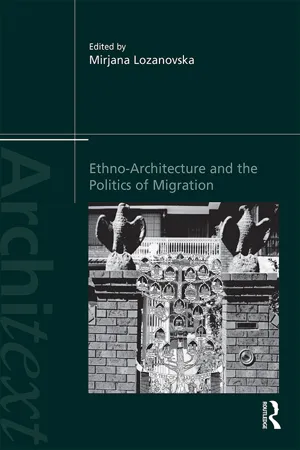
Ethno-Architecture and the Politics of Migration
About this book
Ethno-Architecture and the Politics of Migration explores the interface between migration and architecture. Cities have been substantially affected by transnational migration but the physical manifestations of migration in architecture – and its effect on streetscape, neighbourhood and city – have so far been understudied.
This contributed volume examines how migrants interact with, adapt, and construct new architecture. Looking at the physical, urban and cultural impact of these changes on a variety of sites, the authors explore architecture as an identity category and investigate what buildings and places associated with migration tell us about central questions of belonging, culture, community, and home in regions such as North America, Australia and the UK.
An important contribution to debates on place identity and the transformation of places as a result of mobility and globalised economies in the 21st century.
Frequently asked questions
- Essential is ideal for learners and professionals who enjoy exploring a wide range of subjects. Access the Essential Library with 800,000+ trusted titles and best-sellers across business, personal growth, and the humanities. Includes unlimited reading time and Standard Read Aloud voice.
- Complete: Perfect for advanced learners and researchers needing full, unrestricted access. Unlock 1.4M+ books across hundreds of subjects, including academic and specialized titles. The Complete Plan also includes advanced features like Premium Read Aloud and Research Assistant.
Please note we cannot support devices running on iOS 13 and Android 7 or earlier. Learn more about using the app.
Information
Table of contents
- Cover Page
- Half Title page
- Series Page
- Title Page
- Copyright Page
- Contents
- Figures
- Contributors
- Preface and acknowledgements
- Introduction
- Ethno-landscapes of migration
- Materialities of home
- Temporality of migrant constructions
- Conclusion
- Index