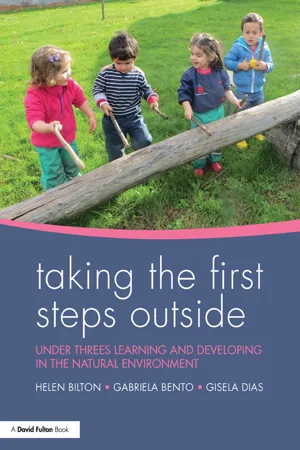
Can one be too young to play outside? This unique and compelling book charts the experiences of a group of under-three-year-olds as they explore their natural outdoor environment, followed by caring and attentive adults. It deconstructs the myths that underestimate under threes and celebrates the importance of connecting children with the natural world and the influence of positive relationships in this early stage of life.
Taking the First Steps Outside draws on all aspects of working outdoors, focusing on different steps of the project, main achievements and obstacles, implemented strategies and benefits for the development of young children. Features include:
Stunning photographs of children exploring the outdoor environment, who are interested, thoughtful, persistent and successful
Detailed descriptions of real events, illustrating how the outdoor space can be an educational context for under threes
Insight into the role of the adult, as they observe and reflect upon children's learning
Advice on choosing the right resources and facilities to create a good outdoor learning environment for the young child
Advice about risky play and promoting challenging and positive opportunities in the natural environment
Guidance on how to set up an outdoor project for children under three
Written to support all students, teachers, practitioners and managers working with under threes, this essential guide will help you to develop your knowledge, build confidence and gain the ability to co-explore outdoors with children.
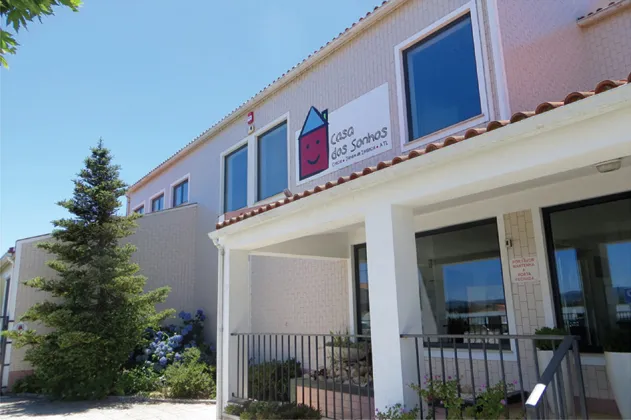
Figure 1.0 Centro Social Infantil de Aguada de Baixo – the setting where this project took place (main entrance).
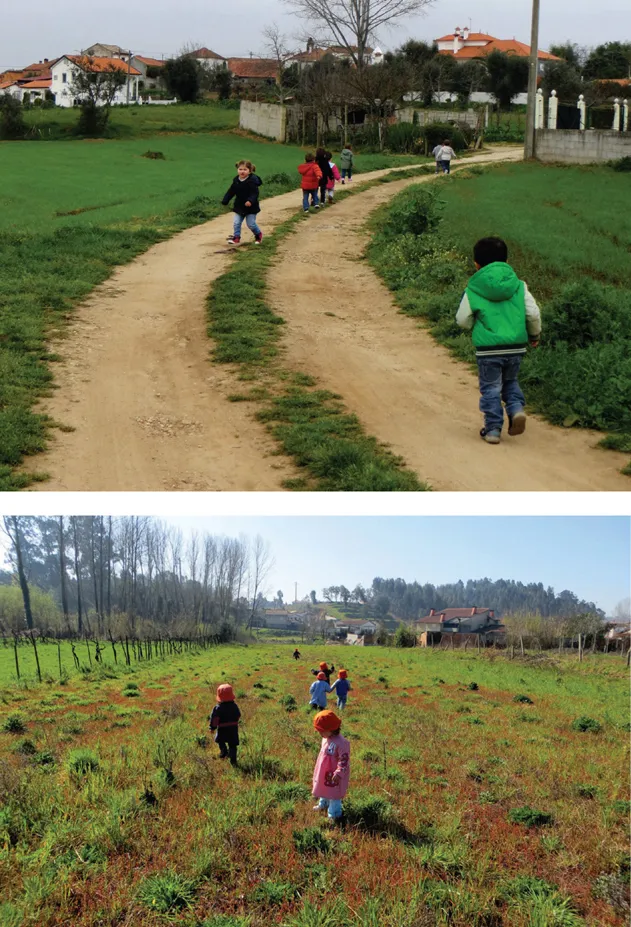
The experiences reported in this book took place in a Portuguese children’s day care centre (Centro Social Infantil de Aguada de Baixo – CENSI), located in the central region of Portugal, in a small and rural village named Aguada de Baixo, near the city of Águeda (see Figures 1.1a–b).
The setting accepts children from nursery to preschool (between four months and six years old) and has an after school service, including children already attending school (from six to ten years old). The setting also functions as a community support service that aims to help families in vulnerable situations. With this service, professionals try to develop a sustained intervention, in order to prevent or overcome problems generated by social exclusion and economic deprivation. The main goal of this service is to help families and individuals to develop the skills needed to create better conditions in their lives. With this goal in mind, the community support service develops small training courses, delivers food to those who need it and helps with the distribution of social allowances. Finally, the setting runs a small organic farm. In addition to the production of vegetables and other products, the farm also aims to promote social and professional integration and act as an environmental and food education centre. The organic farm can be used freely by the children that attend the setting and it can be visited by children from other schools.
Figures 1.1a–b The environment that surrounds the setting (open fields, farmlands and family houses).
The setting (CENSI) is a private institution, but it is financed by the Ministry of Solidarity, Employment and Social Security. The families pay according to their incomes and the adult-child ratio is determined by law, according to children’s ages. The centre has eight rooms, one for each age group, with varied ratios of children to adults, for zero-to ten-year-old children (including the after school service) (see Table 1.1).
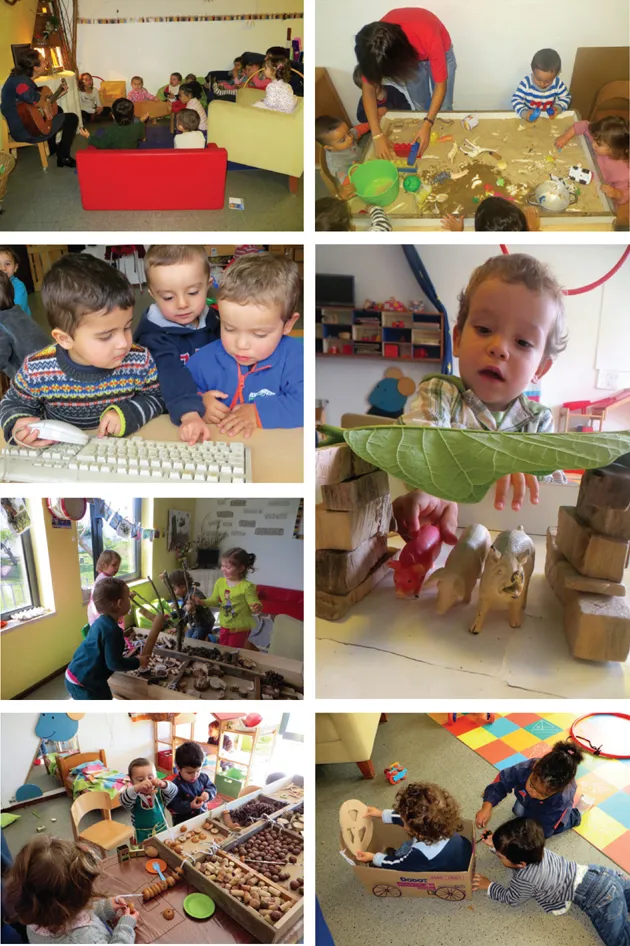
Additionally, the centre has a kitchen and a dining hall, where all the children and adults have lunch and morning/afternoon snacks. For administrative work there is a reserved area and two meeting rooms where the early childhood teachers get together, usually once a week. Also, there is a big hall, used for staff and parents’ meetings or other special activities. For the community support service there is an office and a meeting room to receive families with needs. The setting is open from Monday to Friday, all year (except for one week in August). It opens at 7.30 a.m., when children start to arrive, and closes at 19.00 p.m. Some children spend long days in the setting’s facilities (ten to eleven hours per day), since many parents work late and do not have other family members available to come and collect the children for them. From 7.30 to 9.00 a.m. children stay with an educational helper or with an early childhood teacher, waiting for the teacher of each group. Between 9.00 and 9.30 a.m. all the early childhood teachers are ready and the day officially starts. In Figures 1.2a–g indoor play activities are displayed, illustrating moments of free play, natural material exploration and interactions between children and adults.
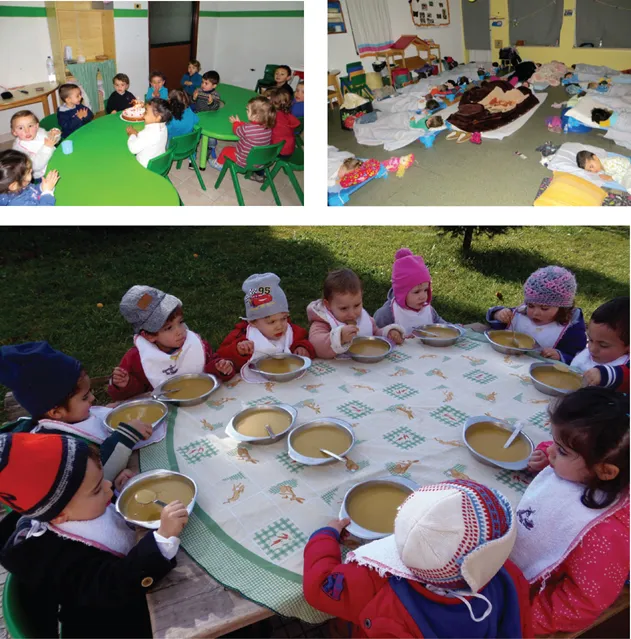
The daily routine of children from zero to three years old and the pre-schoolers has a different pattern. The younger children have a small morning snack at around 9.30 a.m. and they have lunch at 11.30 a.m. From 12.30 to 15.00 p.m. all the children take a nap and when they wake up they have another snack (around 16.00 p.m.). In the babies’ room times for sleeping and eating are more flexible, according to the babies’ needs. The older children usually do not sleep during the day (only the three-year-olds sometimes do) and they have lunch a bit later (around 12.30 p.m.). The after school service functions during the morning, before school starts (9.00 a.m.), at lunch time and at the end of the day (16.00/17.00 p.m.). Figures 1.3a–c show the feeding and sleeping routines for the under threes.
Table 1.1 Number of children per group and adult-child ratio in Portugal, as stipulated by the Ministry of Solidarity, Employment and Social Security.
Number of groups in the setting
Ages
Number of children per group
Adult-child ratio
Two groups
Babies (from 4 months up to starting to walk)
Max. 10 per group
2 educational helpers 1 early childhood teacher (part-time)
One group
Toddlers
Max. 14 per group
1 early childhood teacher 1 educational helper
One group
Two years old
Max. 18 per group
1 early childhood teacher 1 educational helper
Three groups
Preschool groups (from 3 to 6 years old)
Max. 25 per group
1 early childhood teacher 1 educational helper
One group
After school service (from 6 to 10 years old)
Variable
1 or 2 educational helpers according to the number of children
Figures 1.2a–g Play experiences in the activity room.
Parents are welcome in the setting and they are invited to participate in activities related to special occasions (e.g. Christmas, Father’s and Mother’s Days). Usually there are two or three parents’ meetings in the year and there is a specific day in the week when parents can meet with the teacher if they want to. Most parents enjoy joining in with the daily life of the setting, but they usually do not stay long, after settling the children. Times of arrival and departure are often used to exchange information and ideas between families and professionals, creating a relationship between home and school. Families are also available to help with different types of initiatives, offering their knowledge and skills for the benefit of the children (e.g. improving the outdoor area, participating in a community parade, helping with an Easter sale).
Figures 1.3a–c Building a relationship with children through daily routines.
The children that attend the setting come from different social, cultural and economic backgrounds. Among the families that attend the centre, we can sometimes find issues related to unemployment, poverty, alcoholism and low levels of education. However, we also find parents with high levels of education, with jobs in schools, universities, business companies, among others. The population that attends the setting therefore is very diverse, which makes it a rich learning environment. In the region most people work in industry or in commerce. There are many ceramic, metallurgic and wine businesses in the area. Given the level of industry the centre receives children that live in other areas and attend the centre due to its proximity to the parents’ workplace. On average, the centre caters for 130 children.
In Portugal we have a Mediterranean climate, which is reflected in many sunny days and moderate temperatures. In the region where the setting is located, during the summer the temperature can exceed 30oC and in the winter the average temperature is 10oC. The rain is more intense during the cold months, especially between November and March.
The project
The interest in the outdoor space began in 2011, when in-service training about good pedagogical practices inspired the professionals as to the educational potential of natural spaces. Recognising the growing divide between children and the outdoor spaces and assuming that play in the open air brings benefits for health, well-being, learning and global development, the implementation of a project focused on quality outdoor practices took place.
Nowadays, children spend a large part of their day in formal educational settings, doing structured activities, oriented by adults. Time for free play is reducing both inside and out and it is important to counteract this tendency, offering children opportunities to play outdoors, where they can face risks, solve problems, take initiative and develop physically and socially. In this process, children should be accompanied by attentive and responsive adults, concerned with their needs and interests (Howard 2010; Laevers 2003; Leggett & Ford 2014; Maynard, Waters & Clement 2013; Portugal 2011; Rose & Rogers 2012). Nurseries, preschools and schools have an obligation to guarantee the right to play, consecrated in article 31 of the Children’s Rights Convention (United Nations Assembly 1989) by offering time and quality spaces for free activity, inside and outside.
Despite these assumptions, in Portugal early childhood education is still too centred on what happens inside the activities room, wrongly considering that the main purpose for outdoor play is to allow children to stretch their legs and expend their energy. According to the study conducted by Figueiredo (2015), in the educational settings analysed, the use of the outdoor space was rare and the period spent outside was very short. Children only went outside in warm and sunny weather and showed low levels of motor activity and involvement when they were there (Figueiredo 2015). This view is not exclusive to Portugal. Indeed, across the world there can be a perception that play (and particularly play outdoors) is little more than letting off steam, with no discernible use to a child’s general progression (Pellegrini 2009; Wood 2013) or that for young children outdoor play is a copy of primary playtime, of large groups of children rushing around purposelessly (Bilton 2010).
However, the centre felt differently about the possible impact of working outside with young children and indeed that children would advance and develop positive attitudes, values, skills and knowledge. With these ideas in mind, the development of an educational approach focused on outdoor space was interpreted as a dimension that could positively differentiate the centre. The development of the project demanded a strong investment in training and support to facilitate a change in educational practices. Theoretical and practical support was seen as an important foundation to ensure the professionals felt secure, confident and comfortable in developing an outdoor teaching and learning environment. The journey made by the educational team, as they tried to change their practices, was characterised by moments of joy, enthusiasm and motivation, but also by periods of difficulty, fear and anxiety that caused setbacks and demanded the implementation of different strategies to overcome obstacles. It is important to talk about the difficulties faced by the team and the solutions that emerged, because sharing those experiences can be useful for other professionals, teams and settings that face similar challenges.
Overcoming difficulties
Assuming that, in the early years, routines involving hygiene, feeding and rest are an important aspect of children’s life in day care, the need to manage schedules was one of the main obstacles identified by early childhood teachers in the process of promoting good outdoor experiences for children. The amount of time spent with the tasks related to going and leaving the outdoors (e.g. going to the toilet, putting on coats and boots, changing dirty or wet clothing), plus the need to guarantee that the period of time spent outside offered children and adults the possibility to engage in meaningful play and interactions, was often seen as a problem that justified not going out.
In addition to the bad weather that we have at this time of the year [December], children’s mobility is still reduced: I have 10 babies between 13 and 24 months and some of them still don’t walk alone. We almost never go outside. The only period of time when the weather is warmer and the grass is dry, is after the children’s nap. However, we have to give them a snack at 15h30 because after 16h parents start to arrive to pick them up. In the end, we almost don’t have time to go outside.
(Gi, class teacher)
The need to overcome this problem and to find solutions demanded an intense and continued process of reflection and evaluation between professionals. Through an approach of attempts and errors, each class group found strategies to organise the time available, managing with efficacy material and human resources. Splitting the group of children and takin...
Table of contents
Cover
Half Title
Title Page
Copyright Page
Table of Contents
Dedication and acknowledgements
Introduction
1 The story behind the book
2 Awaking for Nature
3 Play in the natural world
4 Becoming safe through taking risks
5 Companionship and shared experiences
6 Adults thinking about children
7 Resources and facilities
Conclusion
Bibliography
Index
Trusted by 375,005 students
Access to over 1.5 million titles for a fair monthly price.
Study more efficiently using our study tools.
Frequently asked questions
Yes, you can cancel anytime from the Subscription tab in your account settings on the Perlego website. Your subscription will stay active until the end of your current billing period. Learn how to cancel your subscription
No, books cannot be downloaded as external files, such as PDFs, for use outside of Perlego. However, you can download books within the Perlego app for offline reading on mobile or tablet. Learn how to download books offline
Perlego offers two plans: Essential and Complete
Essential is ideal for learners and professionals who enjoy exploring a wide range of subjects. Access the Essential Library with 800,000+ trusted titles and best-sellers across business, personal growth, and the humanities. Includes unlimited reading time and Standard Read Aloud voice.
Complete: Perfect for advanced learners and researchers needing full, unrestricted access. Unlock 1.5M+ books across hundreds of subjects, including academic and specialized titles. The Complete Plan also includes advanced features like Premium Read Aloud and Research Assistant.
Both plans are available with monthly, semester, or annual billing cycles.
We are an online textbook subscription service, where you can get access to an entire online library for less than the price of a single book per month. With over 1.5 million books across 990+ topics, we’ve got you covered! Learn about our mission
Look out for the read-aloud symbol on your next book to see if you can listen to it. The read-aloud tool reads text aloud for you, highlighting the text as it is being read. You can pause it, speed it up and slow it down. Learn more about Read Aloud
Yes! You can use the Perlego app on both iOS and Android devices to read anytime, anywhere — even offline. Perfect for commutes or when you’re on the go. Please note we cannot support devices running on iOS 13 and Android 7 or earlier. Learn more about using the app
Yes, you can access Taking the First Steps Outside by Helen Bilton,Gabriela Bento,Gisela Dias in PDF and/or ePUB format, as well as other popular books in Education & Education General. We have over 1.5 million books available in our catalogue for you to explore.