War: Contemporary Perspectives on Armed Conflicts around the World presents a broad variety of interdisciplinary and social scientific perspectives on the causes, processes, cultural representations, and social consequences of the armed conflicts between and within nations and other politically organized communities. This book provides theoretical views of armed conflict and its impact on people and institutions around the world.
eBook - ePub
War
Contemporary Perspectives on Armed Conflicts around the World
- 336 pages
- English
- ePUB (mobile friendly)
- Available on iOS & Android
eBook - ePub
War
Contemporary Perspectives on Armed Conflicts around the World
About this book
Information
1
THE NATURE OF WAR
This chapter provides a discussion of how scientists and non-scientists view war and whether it is a natural phenomenon. It begins with offering a working definition of war and identifying various types of warfare: interstate (international) v. intrastate (civil), limited v. total, and regular v. irregular. Next, it explores such subjects as prehistoric warfare, warfare and state-building, the early modern military revolution, insurgency and counterinsurgency, and the twenty-first-century warfare. Finally, it reviews literature on the causes of war identified at the level of individuals, states, and the international system.
What Is War?
For centuries, war was a pervasive aspect of life in human societies. Groups of armed people fought each other from time immemorial. As societies grew larger and became industrially developed and technologically advanced, wars became increasingly destructive. The Second World War (1939–1945) was the greatest human-made catastrophe of all time (Ferguson 2006). It claimed the lives of about fifty-five million people. Fortunately, since that time the major world powers have not directly fight each other. Some historians even call the current condition a “long peace” (Gaddis 1989). However, one may argue that our leaders opt not to fight not because they are apprehensive of using force but mostly because the major nations possess weapons of mass destruction that can easily destroy not only an initiator of war but the whole human civilization. Note that in those cases when a nuclear retaliation did not threaten the great powers, they went to war almost as often as they did before. The military conflicts of the twenty-first century in such places as Afghanistan, Iraq, The Democratic Republic of the Congo, Sudan, Syria, and Ukraine attest that the contemporary states are eager to use military force.
Intuitively we all know what war is so, understandably, there is no lack of opinions on that subject. Such opinions are diverse and often contradictory. One of the oldest views goes back to the ancient Greek philosopher Heraclitus who claimed, “war is father of all, king of all.” In the nineteenth century, British jurist and historian Henry Maine expressed a similar sentiment: “war is natural, peace is a modern invention.” Russian novelist Leo Tolstoy described the Napoleonic war as a tectonic, uncon trollable movement of peoples (see Figure 1.1 and Breakout Box 1.1). Far from a contemplative mood, French philosopher of the Enlighten ment Deni Diderot characterized war as “a convulsive and violent disease of the body politic.” American Civil War commander William Tecumseh Sherman put it succinctly: “war is hell.” As contemporary anthropologist Raymond C. Kelly argues, “warfare is not an endemic condition of human existence but an episodic feature of human history.” Yet, witnessing ongoing military operations by U.S. Armed Forces in various parts of the world, legal scholar and Pentagon insider Rosa Brooks feels that the very distinction between war and peace has turned ambiguous because we live in the time when the small-scale operations of the largest military powers, particularly the United States, has become such a daily and normal routine that it often does not even make the nightly news. Her astute observation echoes a classic formula of military theorist Carl von Clausewitz, who had stated famously that war is a continuation of politics by other means (Cocker 2010: 37; Kelly 2000: 75; Moseley 2002: 13; Porter 1994: 1; Tolstoy 2000: 682–684).
Given a protean nature of war (Cocker 2010: 11), let us start with some basics. Put simply, war is an armed conflict between large groups of people. Normally we view wars as military conflicts between states. A good example of such conflict can be a war between the United States and Mexico from
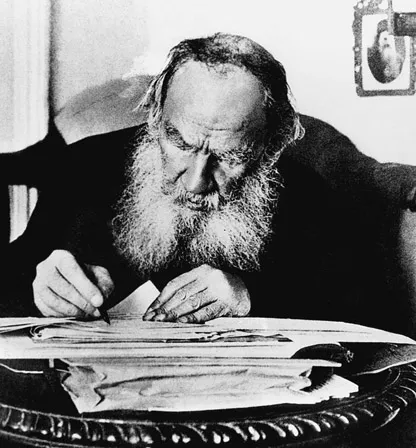
Figure 1.1 Leo Tolstoy
1846 to 1848 over the territories owned by Mexico that the United States saw as part of their “manifest destiny” to owning lands west of the Mississippi River. Such wars were very common in history. They are known as the interstate wars. Yet, wars are also fought within the states, between large groups of people that share the same culture and territory but differ in their political views up to the point that they are willing to fight each other with deadly weapons in their hands. A military conflict between the North and the South in the United States (1861–1865) is an appropriate example of such conflicts known as the intrastate (or civil) wars. In addition to these well-established categories, today scholars also talk about wars involving the violent nonstate actors such as national liberation movements (e.g., the Kosovo Liberation Army), and insurgent guerilla bands (e.g., Hezbollah, Hamas, the Taliban, the ISIS), and and terrorist groups (e.g., Al Qaeda).
Breakout Box 1.1: Leo Tolstoy on War
We are used to speaking about war as an extremely noble business. Kings wear military uniform. Men of war are given the same title as the benefactors of the human race – geniuses – and glorified as much, or more, incomparably more than Socrates and Newton. War is a boy’s dream. The highest honour is military honour. And what is required to wage war successfully? In order to be a genius, you need:
Provisions – organized theft.
Discipline – barbaric despotism, the extreme restriction of freedom.
The ability to acquire information – spying, deceit, betrayal.
The ability to employ military tricks and deceit.
What is war itself? – Murder.
What are a soldier’s activities? – Idleness.
Military morals are depravity and drunkenness.
Is there a single vice, a single bad side of human nature, that is not one of the conditions of military life? Why is the military calling respected? Because it is the supreme power. And power has flatterers.
So that is why war is subject above all to the inescapable antI laws that govern mankind, and why war increasingly excludes all personal will and knowledge of one’s aims the closer the involvement of the individuals concerned with the general course of events.
Source: Tolstoy, Leo. 2000. War and Peace. New York: HarperCollins: 755–756.
Fighting war by definition also involves using violence, including physical and symbolic violence. However, not any act of violence is necessarily an act of war. First, war is a form of collective violence, or fighting between large groups of people, which is coordinated, organized, and, most importantly, legitimized by society. The acts of individual and collective violence that are not legitimized by society usually constitute crime and are punishable by the state. Violence in war, on the contrary, is accepted. People who succeed in killing enemies are rewarded and glorified as military heroes. The more adversaries they kill, they greater warriors they are. Second, in war, individuals use deadly weapons with a deliberate goal to kill or injure their enemies. The deliberate, purposeful, rational pattern of waging war and use of deadly weapons distinguish military conflicts among human beings from violence among animals. Some groups of animals may fight each other fiercely but they certainly do not have rational plans or use weapons. War is a distinctly social, not a biological phenomenon. Third, in war, all active sides of the conflict are armed and use deadly weapons in the combat. In other words, the damage that they suffer in war is mutual. In this respect war differs from such one-sided use of collective violence such as terror, ethnic cleansing, or genocide.
Historically, war-making was a business of men, particularly young men, although examples of female warriors, such as Joan of Arc or Caterina Sforza, are well known. For years, women suffered from military conflicts, being victims of killings, rape, and numerous deprivations that wars brought about to them and their families. In the modern era, particularly in the world wars of the twentieth century, women’s active participation in the warfare expanded dramatically; millions of women were involved in pro duction of munitions, supplies, and provisions. In some countries, women warriors directly participated in the combat. During the Second World War, for example, from 800,000 to one million women served in the Soviet Armed Forces, with about 50 percent of these women serving at the front (Cottam 1980: 345). The same pattern was observed in the partisan and revolutionary warfare of the postwar era. Revolutionary armies in Asia (China, Vietnam, Cambodia) and Latin America (Cuba, Nicaragua, El Salvador) had extensive presence of female combatants, as high as 40 percent in some cases. At present, professional military institutions of the most advanced countries include a large (and growing) proportion of female military professionals. In such “hot spots” as Iraq, Syria, Palestine, and Chechnya women are recruited into insurgent paramilitary formations and terrorist organizations (Cook 2006).
Usually, persons join the armed forces either voluntarily or by means of compulsory enlistment by the state. A compulsory enlistment of individuals to the military institution is known as a draft or conscription (see Figure 1.2). A practice of the draft was common around the world in the nineteenth and twentieth centuries. By the twenty-first century, most democratic societies, including the United States, abandoned this practice in favor of voluntary service of professional soldiers, although some nations, such as Brazil, Mexico, and Russia, still rely on a conscripted military force. Only a few contemporary states draft women (Israel and North Korea are the notable examples), but women’s service in the pro fessional military force, including combat units, is increasingly common. In the United States, female personnel make up 15 percent of the active duty military population. In 2015, women serving in the U.S. military forces were given permission to serve in the combat units (see Chapter 6 for more information on military participation).
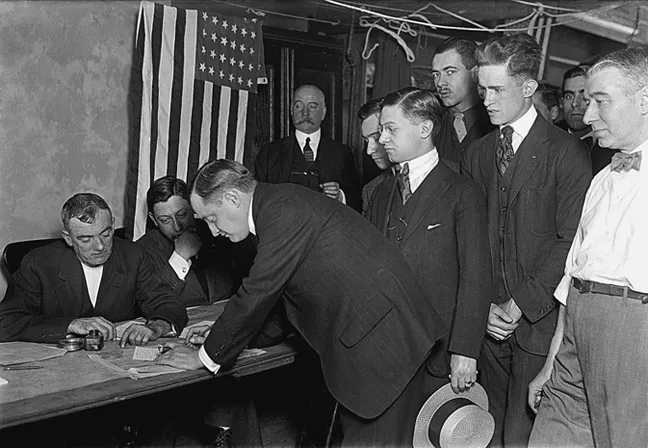
Figure 1.2 United States citizens signing up for military service
War and the State
Historically, having access to means of violence allowed the organized groups of armed people to control the rest of the society and extract resources from it. Obviously, the rest of the society might not have been willing to share their vital resources. Therefore, civilians were coerced to share their liv...
Table of contents
- Cover
- Title
- Copyright
- Contents
- List of Figures
- List of Tables
- List of Boxes
- 1 The Nature of War
- 2 Adaptations in War
- 3 The War Machine: The Political Economy
- 4 The Cultural Representations of War
- 5 War and Social Stratification
- 6 War and Military Participation
- 7 Postwar Peace and Antiwar Movements
- Index
Trusted by 375,005 students
Access to over 1.5 million titles for a fair monthly price.
Study more efficiently using our study tools.
Frequently asked questions
Yes, you can cancel anytime from the Subscription tab in your account settings on the Perlego website. Your subscription will stay active until the end of your current billing period. Learn how to cancel your subscription
No, books cannot be downloaded as external files, such as PDFs, for use outside of Perlego. However, you can download books within the Perlego app for offline reading on mobile or tablet. Learn how to download books offline
We are an online textbook subscription service, where you can get access to an entire online library for less than the price of a single book per month. With over 1.5 million books across 990+ topics, we’ve got you covered! Learn about our mission
Look out for the read-aloud symbol on your next book to see if you can listen to it. The read-aloud tool reads text aloud for you, highlighting the text as it is being read. You can pause it, speed it up and slow it down. Learn more about Read Aloud
Yes! You can use the Perlego app on both iOS and Android devices to read anytime, anywhere — even offline. Perfect for commutes or when you’re on the go.
Please note we cannot support devices running on iOS 13 and Android 7 or earlier. Learn more about using the app
Please note we cannot support devices running on iOS 13 and Android 7 or earlier. Learn more about using the app
Yes, you can access War by Cameron D. Lippard,Pavel Osinsky,Lon Strauss in PDF and/or ePUB format, as well as other popular books in Politics & International Relations & Military & Maritime History. We have over 1.5 million books available in our catalogue for you to explore.