eBook - ePub
Visual Identity
Promoting and Protecting the Public Face of an Organization
- 178 pages
- English
- ePUB (mobile friendly)
- Available on iOS & Android
eBook - ePub
Visual Identity
Promoting and Protecting the Public Face of an Organization
About this book
Brands, companies, and organizations, much like people, have personalities, and most of what we know and think about their personalities comes through visual identity. A visual identity is the strategically planned and purposeful presentation of the brand or organization in order to gain a positive image in the minds of the public, including - but not limited to - its name, logo, tagline, color palette and architecture, and even sounds. This practical guide explores visual identity from an organizational brand perspective (corporate, non-profit, etc.), rather than a product brand perspective. It not only helps readers to understand the meaning and value of an organization's visual identity, but also provides hands-on advice on how to promote and protect the identity. Each chapter draws from current research and also contains real-world examples and case studies that illustrate the key concepts.
Part 1
Promotion of Visual Identity
Promotion of Visual Identity
1
Introduction to Basic Concepts
Introduction to Basic Concepts
What Is Visual Identity?
Brands and organizations of all kinds (any public or private corporation, nonprofit, nongovernmental organization, school, or team) have personalities, and most of what we know about these organizations comes through in what we see or hear—or smell—about them. All of these things—what we see, hear, or even smell—make up a concept known as visual identity.
In order to understand, develop, and manage its identity, the leaders of an organization must first understand those elements that combine to make up an identity. Next, they must set up a structure that will allow for the development of the identity they want to project. Finally, they must use that structure to monitor and manage that identity. This enables leaders of an organization to harness its identity and use it as a resource. In short, every organization has an identity. Either the organization can control its identity, or the identity will control the organization. (Olins and Selame 1993)
Many consumer packaged-goods (CPG) companies instinctively understand the power of having a strong visual identity. In 1890, Aunt Jemima was brought to life by R.T. Davis, the new owner of a self-rising pancake flour company. He hired former slave Nancy Green to act as spokesperson for the brand. It was not until the early 1930s, however, that the now-famous Aunt Jemima icon began to represent the brand in a larger way. Anna Robinson, described as “a large, gregarious woman with the face of an angel,” made her debut at the 1933 Chicago World’s Fair. She was the official Aunt Jemima until her death in 1951 (www.auntjemima.com). Aunt Jemima’s fame grew; the company trademarked the image in 1937 and began advertising on television during the 1950s. Given the nature of the Aunt Jemima trademark, and the fact that she derives from a vaudeville act done in blackface, the Quaker Oats company has updated the look of Aunt Jemima on product packaging to reflect a more modern woman. In 1989, Aunt Jemima lost her headscarf and started wearing pearl earrings and a lace collar. Today, according to the company, “Aunt Jemima products continue to stand for warmth, nourishment and trust” (www.auntjemima.com).
Organization Defined
Consumer packaged-goods companies may have the most visible of visual identities, since the public is used to seeing these identities in a variety of media, but organizations of all sizes, types, and levels notoriety have visual identities. In this book, an organization is defined quite broadly:
In an organization there is a sense of interdependence among members who occupy positions in a hierarchy and attempt to achieve common goals. A hierarchy may be quite informal, but there is always some division of labor and some sense of who makes the final decisions. (DeWine 2001, p. 6)
Given this broad definition of an organization, it is easy to see that businesses of all kinds are considered organizations, but also that nonprofits, schools, colleges and universities, and even ad hoc neighborhood groups are considered organizations. In each one of these cases, the organization must pay close attention to its visual identity, for it has one even if it does not consciously work to project it.
Visual Identity Defined
The concept of identity is studied in many different fields and from many perspectives. The concept of visual identity, however, is quite distinct, and is a concept most closely aligned with the marketing and communications disciplines. In some cases, visual identity is studied in the management area, since the overall identity of an organization is a strategic function. This is a compelling point, since the importance of visual identity needs to be understood throughout the organization as a component of the organization’s success.
The importance and potential role of an identity management system can be best described by comparing it to other systems already functioning in the organization. Perhaps the two most significant and appropriate role models to help people throughout the organization think about identity management are financial management and information technology management, both of which are accepted as standard resources in successful institutions. (Olins and Selame 1993)
The concept of visual identity is defined in this book as a strategically planned and purposeful presentation in order to gain a positive organizational image in the minds of the public. A positive identity is established in order to gain a favorable reputation over time. More practically speaking, an organization’s visual identity includes all of the observable and measurable elements of the organization’s identity manifest in its comprehensive visual presentation of itself, including—but not limited to—its name, logo, tagline, color palette, and architecture. Visual identity also includes the organization’s public behavior, including—but not limited to—its reception of employees, customers, shareholders, and suppliers.
In relating this once again to personality, there is a parallel between an organization’s visual identity and a person’s identity. An organization’s name, logo, tagline, color palette, architecture, and behavior make up its visual identity, and a person’s name, appearance, clothing style, and behavior make up his or her identity.
In defining the concept of branding, the American Marketing Association actually delineates the nuances of an organization’s visual identity:
A brand is the feel of your business card, the way the company’s phone is answered, the tone of a letter, the package that’s almost impossible to open, the receptionist at the corporate office who continues to chat with a fellow worker when a customer arrives, the instructions that are too hard to follow, the lane-hogging driver of a corporation’s truck. The brand is every touch point and every thought the customer has about the brand. (Promotional Products Association International brochure)
Identity → Image
An organization’s identity is a set of individual elements, or components, that make up a part of its marketing toolkit. Taken as a whole, however, these elements make up the persona of the firm, or its gestalt, so strategy must play a role in the development of an identity. Most organizations are savvy enough to know that identity is a strategic issue, since they realize that how the organization looks and acts affects what the public thinks of it.
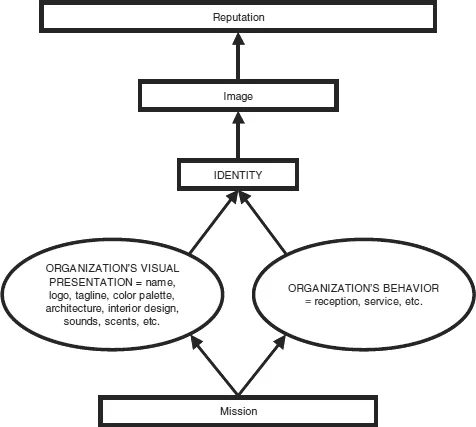
Figure 1.1 | A Model of Organizational Visual Identity |
The model of organizational visual identity presented in Figure 1.1 illustrates the process by which an organization’s visual identity affects the public’s perception (the image) of the organization. In this model, the organizational mission is synonymous with the firm’s philosophy (Abratt 1989; Leuthesser and Kohli 1997). The assumption is that every firm has a mission, whether tacit or codified, and that this mission is personified through the visual presentation of the organization as well as its behavior—the two complementary parts that make up the organizational visual identity. These components of the identity are within the organization’s control (Lambert 1989; Leitch 1999; Topalian 1984) and may be manipulated or altered at the organization’s discretion.
While the organization can—and should—control how it projects its identity, it is unable to control how that identity is perceived. This perception refers to the organization’s image, which results from people’s associations with the identity as a result of their interactions or experiences with it (Gray and Balmer 1998; Gregory and Wiechmann 1999; Topalian 1984).
An organization’s image typically results from two types of associations—those that are inherent and those that are built over time. For example, Prudential uses a stylized drawing of the Rock of Gibraltar as its logo. The rock’s inherent associations are with longevity and strength, two qualities that any insurance and financial services company would want associated with their firm. An example of a logo whose associations were built over time is the Nike Swoosh. Legend has it that Phil Knight, the founder of Nike, asked his graphic designer for a logo that connoted speed and motion. Because the Swoosh is a fabricated design, there is no way for it to have inherent associations: these are built over time and according to how that identity is projected and promoted.
This distinction between identity and image is integral to understanding how to maximize the effects of a visual identity. Since organizations retain complete control of their identities, but have no control over their image (Bronson 1985; Leitch 1999; Margulies 1977; Topalian 1984), the best way for an organization to cultivate what the public thinks of it is to indirectly control its image by directly controlling its identity. This is possible through interpersonal contact with stakeholders, but the most widespread exposure is likely to occur through formal marketing and mass communications channels, since most consumers lack a personal relationship with the organization.
Identity + Image = Reputation
Research indicates that the root of a brand or organization’s reputation is in its identity. A consistent visual identity delivered through an organization’s coordinated communications and public behavior can produce a positive image in the minds of an organization’s stakeholders. Over time, repeated exposure to an organization’s image serves to produce a positive reputation (Bronson 1985; Gray and Balmer 1998; Gregory and Wiechmann 1999; Markwick and Fill 1997; van Riel 1997).
The model presented here reflects the relationship among these three constructs (identity, image, and reputation) as a bottom-up process: the mission affects identity, identity affects image, and image builds the reputation over time. The reputation is less fleeting than an image, and is formed over time through the overall impressions of the image. As a result, an organization’s investment in its visual identity could ultimately pay off in the form of a positive reputation.
The theoretical underpinning of the relationship among the constructs of identity, image, and reputation is rooted in the psychological literature. It assumes that a “learning” of perceptions works in two stages: at a low-involvement level and, after an image has been formed, through classical conditioning.
The scholarly study of visual identity is relatively new, but as early as 1942, the U.S. Supreme Court recognized the commercial—and psychological—nature of symbols. Justice Felix Frankfurter (1942) wrote:
The protection of trade-marks is the law’s recognition of the psychological function of symbols. If it is true that we live by symbols, it is no less true that we purchase goods by them. A trade-mark is a merchandising short-cut which induces a purchaser to select what he wants, or what he has been led to believe he wants.
Frankfurter’s recognition that symbolism is most successful if it is widely recognized and known supports the theoretical explanation asserted here, that the public must first recognize the identity and then be conditioned to form a positive image of the identity.
Low Involvement
While there are several theories of consumer behavior that explain the ways in which consumers make purchase decisions (Rotzoll and Haefner 1996), the theory of low involvement is most useful for explaining how a consumer may actually come to recognize an organization’s identity. Krugman (1965) developed the theory of low involvement, for the first time asserting that a behavioral trigger may activate an awareness generated through repetition of a message. This behavior may then result in attitude change. Krugman describes the process of attitude change through low involvement this way: repetition of a message will bring about a two-step process in which repetition will move some information from short-term to long-term memory, and a change in the perception of the brand will occur (Krugman 1965). Based on the theory of low involvement, communicators may be optimistic that each of their messages is re...
Table of contents
- Cover Page
- Half Title Page
- Title Page
- Copyright Page
- Dedication
- Original Copyright Page
- Contents
- Preface and Acknowledgments
- Part 1 Promotion of Visual Identity
- Part 2 Protection of Visual Identity
- Appendix Organizational Visual Identity Checklist
- Index
Trusted by 375,005 students
Access to over 1.5 million titles for a fair monthly price.
Study more efficiently using our study tools.
Frequently asked questions
Yes, you can cancel anytime from the Subscription tab in your account settings on the Perlego website. Your subscription will stay active until the end of your current billing period. Learn how to cancel your subscription
No, books cannot be downloaded as external files, such as PDFs, for use outside of Perlego. However, you can download books within the Perlego app for offline reading on mobile or tablet. Learn how to download books offline
Perlego offers two plans: Essential and Complete
- Essential is ideal for learners and professionals who enjoy exploring a wide range of subjects. Access the Essential Library with 800,000+ trusted titles and best-sellers across business, personal growth, and the humanities. Includes unlimited reading time and Standard Read Aloud voice.
- Complete: Perfect for advanced learners and researchers needing full, unrestricted access. Unlock 1.5M+ books across hundreds of subjects, including academic and specialized titles. The Complete Plan also includes advanced features like Premium Read Aloud and Research Assistant.
We are an online textbook subscription service, where you can get access to an entire online library for less than the price of a single book per month. With over 1.5 million books across 990+ topics, we’ve got you covered! Learn about our mission
Look out for the read-aloud symbol on your next book to see if you can listen to it. The read-aloud tool reads text aloud for you, highlighting the text as it is being read. You can pause it, speed it up and slow it down. Learn more about Read Aloud
Yes! You can use the Perlego app on both iOS and Android devices to read anytime, anywhere — even offline. Perfect for commutes or when you’re on the go.
Please note we cannot support devices running on iOS 13 and Android 7 or earlier. Learn more about using the app
Please note we cannot support devices running on iOS 13 and Android 7 or earlier. Learn more about using the app
Yes, you can access Visual Identity by Susan Westcott Alessandri in PDF and/or ePUB format, as well as other popular books in Business & Business General. We have over 1.5 million books available in our catalogue for you to explore.