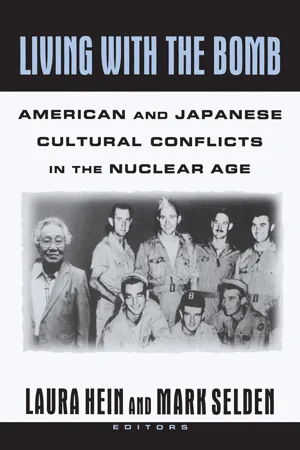
eBook - ePub
Living with the Bomb: American and Japanese Cultural Conflicts in the Nuclear Age
American and Japanese Cultural Conflicts in the Nuclear Age
- 324 pages
- English
- ePUB (mobile friendly)
- Available on iOS & Android
eBook - ePub
Living with the Bomb: American and Japanese Cultural Conflicts in the Nuclear Age
American and Japanese Cultural Conflicts in the Nuclear Age
About this book
The development and use of the atomic bombs at Hiroshima and Nagasaki number among the formative national experiences for both Japanese and Americans as well as for 20th-century Japan-US relations. This volume explores the way in which the bomb has shaped the self-image of both peoples.
I
Introduction
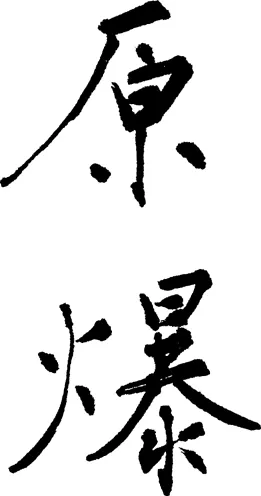
1
Commemoration and Silence
Fifty Years of Remembering the Bomb in America and Japan
Commemoration, Censorship, Conflict
For more than half a century, the world’s peoples have lived with the bomb: in awe of its power, anxious about its destructiveness, and aware that it was used to kill twice and could be used again, perhaps against oneself next time. This knowledge is most vivid, and has been most fiercely debated, in the United States and Japan. Both Americans and Japanese have revisited this issue repeatedly and reinterpreted it through the prism of the intervening half-century. That fifty-year history, including the shifts in United States—Japan relations, rather than the events of August 1945, is the subject of this book.
In both the United States and Japan, an “official story” quickly emerged to shape, but never to monopolize, nuclear consciousness. In each nation, a rich and distinctive body of literary, graphic, and historical work has engaged, documented, commemorated, protested, or mourned the bomb. From the earliest reports of the atomic bombings, Americans have viewed nuclear destruction primarily from the Promethean perspective of the inventor and bombardier. The carefully crafted image of a mushroom cloud spiraling heavenward has represented to most Americans the bomb as the ultimate symbol of victory in a “Good War” that carried the United States to the peak of its power and prosperity. This simple story presented Americans as a brave, selfless, and united people who responded to treachery with total mobilization culminating in a knockout victory. In that narrative, which elides earlier decades of conflict between two rising colonial powers in Asia, retribution was devoid of desire for power or economic gain. The atomic bomb, and the decision to use it twice against urban populations, has been consistently portrayed in the official story as the shining example of American decisiveness, moral certitude, and technological ingenuity in the service of the nation. When the war is remembered as climaxing in the atomic bombs, these are the qualities being celebrated.1 Beginning in 1945, United States officials prevented wide distribution of most images of the bombs’ destruction, particularly of the human havoc it wrought, and suppressed information about radiation, its most terrifying effect. As the “American century” opened, exclusive possession of the bomb instilled confidence in the global deployment of American military power and dramatized the awesome responsibility contingent on possession of such destructive might.
By contrast, from the outset, the official Japanese perspective was from the position of the first, and thus far only, target population. Their focus was on the human victims in the hellfires that consumed Hiroshima, killing 140, 000 of its 350, 000 inhabitants, and then Nagasaki and 70, 000 of the 270, 000 people who lived there.2 The empathy of their compatriots came easily, since nearly all urban Japanese had endured the fire-bombing that had taken a toll of hundreds of thousands of lives and left all but two Japanese cities in ruins. In the official narrative, the bomb conjured images of death and fortitude amid destruction. It soon became the symbol of both national defeat by a cruel and powerful foe and stoic endurance.
Two documents were critical in defining the official story of the bomb for Americans. Both were carefully crafted justifications for its use on the populations of Hiroshima and Nagasaki. One was also the first news most Americans had that such a weapon existed: President Harry Truman’s official announcement, in the form of a 1, 160-word press release, that the United States had dropped an atomic bomb on Hiroshima. Truman solemnly warned the world of the bomb’s unparalleled might: “It is an atomic bomb. It is a harnessing of the basic power of the universe.”3
From the opening sentence, Truman’s announcement was designed to fend off criticism by describing Hiroshima as “an important Japanese army base.” This was technically true, but the military base on the outskirts of the city was not the bomb’s target. Nor was the main target an industrial site. Rather, the bombardiers were instructed to look for a distinctive bridge in the center of the city. They also had primed the bomb to explode in the air, in order to maximize damage. Their mission was to annihilate the population and destroy the city in a terrifying demonstration of U.S. power.
The principal justification Truman gave for the bomb was vengeance: “The Japanese began the war from the air at Pearl Harbor. They have been repaid many fold.” He said much less about inducing surrender and nothing at all about saving American lives. Hiroshima was forever after paired with Pearl Harbor in an official story of innocent victimization and righteous revenge. By treating the bomb as the necessary and appropriate response to Pearl Harbor and subsequent Japanese atrocities, this official narrative erases all the small and large American acts of revenge that went before: mutilation of Japanese war dead, the “take no prisoners” philosophy that frequently prevailed among U.S. forces in the final battles of the war, and especially the systematic bombing of Japan’s civilian population. Although most of the major combatants, including the Japanese, bombed cities over the course of the war, in the end Americans far outdid all others in aerial destruction, setting a standard that would only be surpassed by U.S. bombardment of Vietnam twenty-five years later.4
The second highly influential document that shaped the official story and silenced critics was the 1947 Harper’s magazine article by Henry Stimson, secretary of war from July 1940 to September 1945. Stimson added several key elements of the official line when he argued that that Japanese surrender had been elusive until the United States “administered a tremendous shock which would carry convincing proof of our power to destroy the empire.” The only credible alternative, he held, had been an invasion that might have “cost over a million casualties in American forces alone,” with additional Allied losses and many more enemy casualties.5 This was the original statement—that is, the invention—of the 1 million casualty figure that would provide the centerpiece for subsequent defenses of the use of the atomic bombs.
Because Japan was a defeated and occupied nation, its framing of an official story of the atomic bomb and war’s end was necessarily muted and indirect. Nevertheless, the emperor’s Imperial Rescript announcing surrender on August 14, 1945, set the outlines of a Japanese official story. This radio broadcast, the emperor’s first direct address to the Japanese people, emphasized the inhumanity of the Americans, the unity of “the entire nation … as one family,” and the role of the emperor himself as peacemaker, architect of the postwar Japanese state, and purveyor of progress.6
The Japanese official story about the bomb complemented the American one in several important ways. It, too, emphasized the awesome power of the bombs and their unparalleled might. It also stated that atomic bombs were an important cause of the surrender. The devastation of Hiroshima and Nagasaki provided an opportunity for the emperor’s advisers to solve their most pressing problem: how to save the emperor system and end the war at the same time. The bombings allowed them to begin reshaping the image of the emperor as an advocate of both peace and science, since the surrender was issued in his name. The emperor announced the agreement to end the war, now that “the enemy has begun to employ a new and most cruel bomb, the power of which to do damage is indeed incalculable, taking the toll of many innocent lives.”7 The emperor also used the occasion to exhort his subjects to “work with resolution so as ye may enhance the innate glory of the Imperial state and keep pace with the progress of the world.” The bomb and the emperor formed a pair. The elements of the emperor’s rehabilitation in postwar Japan—his association with peace, democracy, science, and a residual sense of cosmic awe—all echoed the concurrent American associations with the atomic bomb. The American and the Japanese official stories have collaborated to recast these two agents of destruction as peacemakers ever since 1945.
Japanese officials also paired Hiroshima with Pearl Harbor, but with a slightly different goal than the one Truman had in mind. Rather than using the parallel to justify harsh reprisal, they used it to suggest that Japanese aims in going to war were in no way aggressive. “We declared war on America and Britain out of Our sincere desire to assure Japan’s self-preservation and the stabilization of East Asia, it being far from Our thought either to infringe upon the sovereignty of other nations or to embark upon territorial aggrandizement.” This would become a major defense argument at the International Military Tribunal for the Far East. Attorneys there argued that Japan had acted in self-defense and the United States had been the aggressor both in its demands that Japan withdraw from China and in its fortification of Pearl Harbor. Near the end of the war, the Japanese leaders were very concerned about protecting themselves and the emperor from indictment as war criminals, as had happened to Kaiser Wilhelm II after the First World War.8 The Imperial Rescript both argued that Japan had legitimate defensive reasons for going to war and asserted that the emperor had the unique authority to maintain peace and stability in a postsurrender Japan.
The rescript brilliantly anticipated and preempted charges of war crimes by claiming that, because of its greater technological power, the United States had engaged in a larger atrocity than anything Japan could muster. The emperor suggested this when he told the Japanese people that further resistance in the face of the atomic bomb could bring not only the “obliteration of the Japanese nation, but also … the total extinction of human civilization.” Kiyose Ichiro of the wartime Greater Japan Political Association (and later defense counsel at the Tokyo Tribunal) said as much in the Asahi Shinbun on August 14, 1945, on the eve of Japan’s surrender. Pondering the fact that so inhuman a bomb had not been used against “white” Germany, he argued that the Americans must have deliberately reserved the atomic bomb for the Japanese, whom, he stated, they regarded as a lower race akin to monkeys. He concluded that vengeful racial prejudice lay behind its use.9
Nuclear debate in the United States and Japan over the subsequent half-century would directly or indirectly engage the premises of each nation’s official story. Both of these dominant narratives were established early, and both quickly came to define the two national officially sanctioned “etiquettes” of bomb discourse, to use Lane Fenrich’s term. In the United States, this etiquette required depersonalizing the victims (the view from the mushroom cloud rather than from the streets of the cities in flames), recalling Americans who died earlier in the war, framing the issues of the decision to bomb in terms almost exclusively of preventing the loss of American life, and suppressing inquiry into the relationship between the use of the bombs and subsequent Soviet-American conflict. In Japan, “etiquette” required treating the atomic bombings as uniquely traumatizing events isolated from discussion of Japan’s own aggressive colonialism and the war responsibility of the emperor. In other words, American commemorations of the bombings leave out Japanese victims, whereas Japanese ones leave out the victims of Japanese aggression. The Americans falsified the arithmetic of suffering and loss by silencing the voices of hibakusha (atomic bomb victims), while the Japanese silence on the larger issues of war preserved the image of a virtuous nation of innocent victims.
Nonetheless, despite the efforts of censors and other guardians of orthodox patriotism, the fabric of these official stories would rip and tear over the years. In both countries, the cold instrumentality of the official story fared badly against a broad humanist vision. Beginning just after the first reports of the bomb’s use, a number of American critics—notably scientists, political activists, and religious leaders, but also leading generals and politicians—expressed horror at the slaughter of civilians in Hiroshima and Nagasaki and queried whether, in battling the ruthless Axis powers, Americans had come to resemble them. The broad popular response to John Hersey’s evocation of the lives of six Hiroshima residents as early as 1946 showed that such questions and doubts spread far beyond rarefied policymaking circles. In the writings of Hersey, Norman Cousins, Robert Lifton, John Dower, and many others over half a century, the human face of the bomb’s victims has been repeatedly invoked against the official U.S. story. Others have questioned the oft-repeated assertion that the atomic bombings were necessary to end the war quickly.10 The bomb also evoked deep fears of annihilation, strengthened by subsequent nuclear proliferation, the arms race, and Soviet-American and Chinese-American conflict. Indeed, it is precisely this unsettling juxtaposition of celebration and critique that made so intense the American cultural-political battle fought over the heritage of the bomb on the fiftieth anniversary, particularly in the 1995 debate over the eviscerated exhibit on the bombings at the Air and Space Museum of the Smithsonian Institution.11
For Japanese, if defeat and occupation were bitter, peace nevertheless held the promise of a better life for a nation in ruins. The atomic bombings marked the end of a conflict that had taken 3 million Japanese lives. Japan’s leveled cities—above all, Hiroshima and N...
Table of contents
- Cover
- Half Title
- Title Page
- Copyright Page
- Dedication
- Table of Contents
- Acknowledgments
- Part I: Introduction
- Part II: Commemoration and Censorship
- Part III: Contending Constituencies
- Part IV: Afterword
- About the Authors
- Index
Trusted by 375,005 students
Access to over 1.5 million titles for a fair monthly price.
Study more efficiently using our study tools.
Frequently asked questions
Yes, you can cancel anytime from the Subscription tab in your account settings on the Perlego website. Your subscription will stay active until the end of your current billing period. Learn how to cancel your subscription
No, books cannot be downloaded as external files, such as PDFs, for use outside of Perlego. However, you can download books within the Perlego app for offline reading on mobile or tablet. Learn how to download books offline
We are an online textbook subscription service, where you can get access to an entire online library for less than the price of a single book per month. With over 1.5 million books across 990+ topics, we’ve got you covered! Learn about our mission
Look out for the read-aloud symbol on your next book to see if you can listen to it. The read-aloud tool reads text aloud for you, highlighting the text as it is being read. You can pause it, speed it up and slow it down. Learn more about Read Aloud
Yes! You can use the Perlego app on both iOS and Android devices to read anytime, anywhere — even offline. Perfect for commutes or when you’re on the go.
Please note we cannot support devices running on iOS 13 and Android 7 or earlier. Learn more about using the app
Please note we cannot support devices running on iOS 13 and Android 7 or earlier. Learn more about using the app
Yes, you can access Living with the Bomb: American and Japanese Cultural Conflicts in the Nuclear Age by Laura E. Hein,Mark Selden in PDF and/or ePUB format, as well as other popular books in History & Japanese History. We have over 1.5 million books available in our catalogue for you to explore.