![]()
CHAPTER 1
GETTING STARTED
“Great people do things before they’re ready. They do things before they know they can do it. Doing what you’re afraid of, getting out of your comfort zone, taking risks like that—that is what life is.”
Amy Poehler
Taking the first step in any endeavor is always the most challenging—and also the easiest to put off. “I’ll start tomorrow. Next month. After I pay off the credit cards. After I feel a little more accomplished.”
It can be intimidating to proclaim to be a professional when so far all you have is amateur experience. Even if you have worked professionally, chances are you know actors who have worked more than you. Are they more professional? More worthy of success?
As you know from your experience auditioning, you won’t do yourself any favors comparing yourself to your competition. Now is the time to focus on you.
You know about the craft of acting. You’ve been honing your craft for years, and you’re well aware that you’ll be working on that for the rest of your life. The business of acting, though, that’s something entirely different. The business of acting for a living—and more importantly, the business of making a life as an actor—isn’t as Wild West as it might sound. There are some truths about working as an actor, and that’s where we’ll start with this chapter.
You’re about to begin your professional career as an actor. What do you need to learn to set yourself up for success?
Who Knew?
According to the U.S. Department of Labor’s Bureau of Labor Statistics, the job outlook for actors is encouraging. Employment for actors is projected to grow by ten percent from 2014 to 2024, which is faster than the average for all professions.1
Here’s what we’re going to address in this first chapter:
• Why you should act big, buttery, and bold, even for the camera
• How to prepare for an interview as well as for an audition
• What an agent is looking for in a new client and appropriate etiquette for reaching out to agents
• Why it’s important to embrace your age and type but not limit yourself to type
• The importance of ongoing training
• What you need to know about auditioning for Shakespeare
• What directors and casting directors do and don’t want to see in a Shakespeare audition
• Expectations and what it’s like to work in a resident theater
• Why casting agents are your new best friends
• What it means to move toward your goals and not away from your frustrations
Where you choose to begin your acting career is entirely up to you, and it is possible to make an informed decision about next steps. In fact, there are criteria you can use to make this decision.
Let’s begin there. You’re about to graduate from school … now what?
MOVING TOWARD YOUR DREAM
Big Buttery Acting and Developing Business Relationships
► An Interview With Richard Robichaux
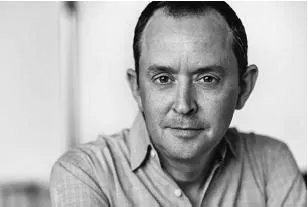
Richard Robichaux’s theater credits include the Shakespeare Theatre in Washington, DC, Yale Repertory Theatre, the Mark Taper Forum, Syracuse Stage, among others. He received his MFA from Rutgers University where he studied under William Esper and Maggie Flanigan.
Richard Robichaux
Photo by Mark Bennington
Robichaux has had leading, guest starring, and recurring roles on ABC, NBC, CBS, Showtime, Comedy Central, the Lifetime Channel, as well as the Sundance Film Festival and Tribeca Film Festival. He can be seen in Richard Linklater’s film Boyhood (2014), and as Lloyd Hornbuckle opposite Jack Black and Shirley MacLaine in Linklater’s film Bernie (2011).
Robichaux has worked with top training programs such as the Juilliard School, Yale School of Drama, and University of Texas at Austin. He is currently Head of Acting in the MFA program at Penn State University.
In 2012, Robichaux delivered the keynote address at the Southeastern Theatre Conference. Other keynote addresses include the Texas Thespian Festival, Florida Association for Theatre Education, Heartland Film Festival, and the Educational Theater Association’s National Teacher Conference in San Diego. Robichaux has been featured in Southern Theatre magazine and Dramatics Magazine.
Can you tell me how you prepare students for the business of acting in your program?
The first year at Penn State, my students learn process, which builds a foundation. It’s separate from product, and it’s separate from the industry. It comes from the self, from where you stand. Then slowly but surely we start to move away from that. Getting an authentic point of view is the most powerful thing for an actor in the beginning—this is what we’re working on.
Then in the third year, I have a camera in the classroom almost every day just so they’re comfortable with it. And we have serious conversations about the business of television, film, and theater—and conversations about money. Are the best actors working? No. Are there good actors working? Yes. If we’re going to be responsible, we have to deal with that question. When I was in school, I had excellent teachers who had never been on a set themselves. So the bridge between the classroom and the casting office wasn’t a walking bridge, but the Grand Canyon. What I try to do is make that bridge as small as possible.
How do you go about doing that, bridging that gap?
I’ll tell you this way: The MFAs study with me in a place called Room 6. I say, “If we figure out the theory of acting in Room 6, it doesn’t benefit anyone. We’re preparing for outside Room 6.” This isn’t hermetically sealed acting theory. It has to move outside, and it has to be practical. The theory can’t be enough. So we do mock agent meetings. We do all sorts of things. What I don’t want my students to feel after graduation is out of place, because once you feel out of place, you are.
How can you address that problem practically?
Every Monday, for instance, there’s a quiz. I ask what the number one movie at the box office was, who cast it, who was in it, and why it’s important that it was number one. They have to know that information but also know why it’s a big deal. When you come to set on Monday in LA, that’s all anybody is talking about. So every Monday, I bring my MFA students my Arts and Leisure sections from the New York Times as required reading. They read it, and then we discuss. They become living, curious, working artists who understand why things get made—and they learn about collaboration. They get to think about context outside of a studio where they do scenes by dead white men over and over again.
That’s interesting about the white male playwrights. Do you make an effort to diversify your program at Penn State?
Our program is one of the most diverse in the United States. The public theater in New York loves to use our actors for their emerging writer series. We have a relationship with the Classical Theatre of Harlem. We just brought in Dominique Morisseau to do a commissioned work for our students, called “Blood at the Root,” which is now in New York at the National Black Theatre. We have Hansol Jung coming in next year to do our commissioned work. That to me is what the twenty-first century is about. This is what the world looks like right now, in the day to day and in television and film. I want my students to know that because it’s empowering.
So in terms of teaching students to act for film and television as compared to theater, how do you differentiate?
Here’s what I tell my students: I tell them I want their acting big, fat, rich, and buttery. I want them to be big. Underplaying a part is just as bad as overplaying. The moment must be played, and the actor must have confidence. Only an acting technique derived by a director or a playwright would tell actors to do less. Audiences have proved that isn’t what they want. Say what you will about ham, but everybody loves it. You can’t eat it all the time but, yeah, I see Kevin Spacey chewing the scenery in House of Cards, and I say, sign me up. If my actors can begin to express themselves fully and live through something with no apologies, it’s really empowering for them.
Many film and television actors aren’t rich and buttery, though. Is this in the training?
I think there’s fear. So many programs don’t talk honestly about acting for the camera. What you end up getting are actors being still and quiet. I tell my actors that when casting directors say “less,” they’re really saying “more.” It needs to be more real. Don’t take something away, just dig deeper. They’re so afraid of the camera, of doing too much and being “a theater actor” that they forget everything that made them want to be an actor—all of that big, fat, buttery acting that we’re talking about.
Actors are told not to act, but that’s a cheesy, disingenuous slogan. I don’t think it’s a serious response to the art and craft of acting. Of course it’s acting. Of course it is, so then let’s seriously talk about it rather than throw around these bumper stickers and one-liners about acting.
Could it also be the idea that minimalism is what people want for film and television?
Yes, first-year students get caught up in scenes being “too dramatic.” But you can’t imagine the circumstances that television has right now. I coach an actor on The Walking Dead, and the circumstances he has to go through are outrageous. He has to think, my sister was just eaten by a zombie because there’s an apocalypse. And then he has to do that on the tightrope of a live set where time and money are everything. He has to live through it so that this unbelievable circumstance can for a moment or two be believable to me and you sitting in our house. We need to believe that zombies exist. That’s a huge responsibility for the actor, and it must be taken seriously.
“Here’s what I tell my students: I tell them I want their acting big, fat, rich, and buttery. Underplaying a part is just as bad as overplaying.”
Is there any acting—any types of role—that the actor shouldn’t take seriously?
Sure, there’s a lot of acting that’s just what I call “hotel art.” They don’t build museums for hotel art. Its whole purpose is to not be seen. There are some roles that you don’t need to research and backstory. If it’s an under-five in a TV show and you’re supposed to work at Best Buy, then you’re a supporting player who, of course, should play it as close to your own nature. And let’s be honest—it doesn’t require a lot of craft. There’s a time and place for crafting. I’ve done roles where it required an immense amount of concentration and craft, and I’ve also done roles that I could have done with my eyes closed. It was hotel art.
I’m curious about the decision actors have to make about where to move after school. Do you recommend New York or LA? Chicago or Minneapolis? How do actors make a decision that’s practical and also most likely to set themselves up for success?
One thing I do in my business class is I make everyone present why they should move to New York. Everyone has to tell me why New York is the place for them. They have to find an apartment, a job, and a studio where they’ll study. And they have to tell me why those things will work. I make them do a budget. Through this, I’m trying to get them to see the possibilities, to truly imagine how it would be. The next week, they do the exact same thing but for LA, and they have to tell me why New York is not the place for them.
I’m trying to help them see that they have to make decisions based on their pros list, not their cons list—so they’re running toward something rather than from something. I think for so many of us, the scarcity and lack of work chased us into the big cities like New York and LA, but there are opportunities everywhere. Take Atlanta—television there is booming. I want people to go to a city because they actually want to live and work there. I think that sets them up for much more success, and it’s much more empowering.
My wife and I left LA to move to Austin, and I remember my agent saying, “I can’t believe you’re leaving LA.” And I very clearly said to him, “I’m not leaving LA. I’m going to Austin.” I want to live. I’m the boss of me, and I’m going to live in Austin. Six months later, I was living in Austin, sitting across the table from Shirley MacLaine, Jack Black, and Rick Linklater about to shoot Bernie.
I was going to ask you about that. Was that a turning point in your career, when you took control in that way?
I’d never felt more power than when I thought, “I’m the boss of me.” It’s silly, but it occurred to me that I can do whatever I want.
It confuses them at first, but I tell my students in their third year, “I want you to know that I don’t care what you do after this. That if you call me in ten years and say you still read poetry, go to the theater, and you’re happy, then I’ll be thrilled.” I think so many times actors end up living their career to please their mentors or their parents, and then they find that it’s difficult to be happy where they are. That breaks my heart for them. I think so often how blessed I am to talk about art all day.
So that’s what I do. I make them think about and talk about this idea of “Where do you want to live?” And I do the same thing for grad school. If they want to do grad school, I say, “Give me five grad schools and tell me why each one is the right grad school and no other grad school is right for you.” Then I ask them, “Here are these five grad schools you say you want to go to. Now if the name brand of the university had nothing to do with it, where would you want to live?” There’s a relief when you can release yourself from the brand name pressure that I think a lot of mentors put on you.
Can an actor in the United States train specifically to have a career in the theater? Is that possible or practical? Or should you be trai...