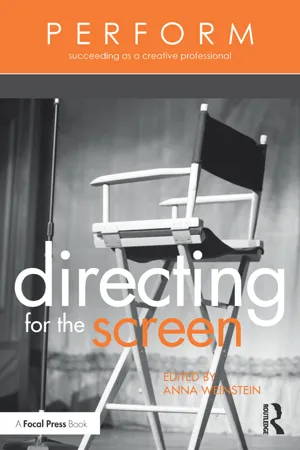
Directing for the Screen is a collection of essays and interviews exploring the business of directing. This highly accessible guide to working in film and television includes perspectives from industry insiders on topics such as breaking in; developing and nurturing business relationships; the director's responsibilities on set and in the field; and more. Directing for the Screen is an ideal companion to filmmaking classes, demystifying the industry and the role of the director with real-world narratives and little-known truths about the business. With insight from working professionals, you'll be armed with the information you need to pursue your career as a director.
Contains essays by and interviews with television directors, feature directors, documentary filmmakers, commercial directors, producers, and professors.
Offers expert opinions on how to get started, including landing and succeeding in an internship and getting your first gig.
Reveals details about working with actors, overseeing the work of often hundreds of crewmembers, writing last-minute on set, and developing a working relationship with producers and screenwriters.
Explores strategies for doing creative work under pressure, finding your directorial voice, financing shorts and independent films, breaking down barriers and overcoming discrimination, shooting in less-than-ideal situations, and recovering from bad reviews or box office results.
Illuminates the business of directing in the United States (New York and Los Angeles) as compared to other countries around the globe, including England, Ireland, Spain, Australia, Denmark, Pakistan, Belgium, and Canada.
Trusted by 375,005 students
Access to over 1.5 million titles for a fair monthly price.
“Never treat anything you do as a stepping stone. Do it fully, and follow it completely.”
Mira Nair
you won’t find an advertisement for the job of feature film director for a $100-million film on LinkedIn—or even on a more targeted job search site, like Mandy. Nobody’s doing a nationally advertised search for the next blockbuster feature director—and the same goes for television. Want to direct a hit sitcom? You won’t find an ad for that gig online.
This is where the film and television industry differs from other industries. If your ultimate goal were to run the national sales division for a high-end car company, you could find and apply for the job online. That’s not where you would start, of course, with a title of National Sales Director. But you could find the job advertised, and you could even see the job description.
It’s the lack of advertisements for jobs that often intimidates aspiring directors, along with the daunting notion that it’s all “who you know” that gets you in the door. What if you don’t know anyone? What if you don’t have family connections? What if you grew up in a remote part of a country where nobody dreams of becoming a filmmaker? What if even suggesting that you might harbor this secret aspiration would make you look flakey, head-in-the-clouds, and self-involved? And if you talk confidently about this goal, like you think it might actually happen, will people shake their heads and talk in quiet whispers when you leave the table to refill your coffee? Are you allowed to dream that big and share those dreams with friends who aim for something more practical?
Who Knew?
Our most esteemed directors were big dreamers. Oliver Stone wrote plays for his family as a child. He later went to Yale and dropped out after a year to teach high school in Saigon. While traveling, he wrote a 1,400-page novel, which he finally edited down and published thirty years later.1 Paul Thomas Anderson made a thirty-minute mockumentary as a senior in high school, which inspired his film Boogie Nights.2 Sofia Coppola dropped out of college and started a fashion line before trying her hand at directing.3 She made her first short film in 1998 and her first feature, The Virgin Suicides, one year later in 1999.
Dreaming big isn’t just allowed—it’s a requirement for the aspiring director. You can’t make films without first dreaming them up. Visualizing the success of your future films is only natural. As Nora Ephron said, “I don’t care who you are. When you sit down to write the first page of your screenplay, in your head, you’re also writing your Oscar acceptance speech.”4
This first chapter is about breaking in and getting started as a filmmaker. Here’s what we’ll cover:
• Getting an internship and what it takes to shine
• Working for a producer
• Finding an in as a script supervisor
• What to expect in your working relationship with a cinematographer
• Getting started in local television
• Working with comedic actors
• Why it’s a good idea to have multiple projects in different stages of development
• Finding and learning from mentors
• Directing a short film that you can use as a calling card
Let’s begin there, with finding mentors and making short films, both necessities for the aspiring director. You can’t expect to build a career without mentorship, and making a short film is the most logical way to showcase your talent. Elizabeth Allen Rosenbaum credits her short film and her mentors with jumpstarting her directing career.
TAKING RISKS AND FINDING MENTORS
Beginning With School
▶ An Interview With Elizabeth Allen Rosenbaum
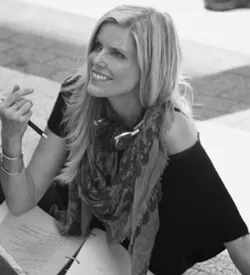
Elizabeth Allen Rosenbaum has directed three features, including Aquamarine (2006), starring Emma Roberts; Ramona and Beezus (2010), starring Selena Gomez, Ginnifer Goodwin, John Corbett, and Joey King in the lead role; and Careful What You Wish For (2015), staring Nick Jonas, Dermot Mulroney, and Paul Sorvino. She has directed television episodes of shows such as Gossip Girl, Life Unexpected, The Vampire Diaries, 90210, Dating Rules From My Future Self, and Red Band Society. She has also written screenplays for Paramount Studios, Disney Features, and Fox Searchlight.
Elizabeth Allen Rosenbaum
Photo by Izzy Reinhard
Most recently, Allen Rosenbaum directed and produced a pilot for Amazon Studios that was picked up for a full season. The show is called The Kicks and is based on the New York Times–bestselling book of the same name by Olympic gold-medalist soccer player Alex Morgan. She also collaborated with Verizon go90, producing and directing their first homegrown series as an aspiring new network for narrative content. The eleven-episode series was released in the spring of 2016, and will ultimately interweave into a two-hour ensemble romantic comedy feature film.
Allen Rosenbaum received her MFA from the University of Southern California (USC), where she was the recipient of the Jack Nicholson Directing Scholarship for the strongest directing candidate of her class.
Do you remember the first time you thought you might want to be a director?
There was this full-immersion theater arts program that my mom enrolled me in when I was a kid. I don’t really know what clicked, but I loved it. The teachers encouraged me and put me into Equity Theater. You do forty-five runs or so for a show. I never had big roles, because I was a kid, but I remember this little balcony area where you could sit and watch the show from above. I would watch the whole show every day. I’d sneak down and get a soda, and then sit up in the balcony between my scenes and watch it all unfold. From way above, I remember picturing how I’d move everything around—it just seemed almost like toys, and you could play with them.
That’s an interesting perspective for a child. Did you study directing in undergrad?
Yes, in college I had a great mentor, David Feldshuh. He was such an incredible person. He’d been nominated for a Pulitzer and was a medical doctor on the weekends. He was my professor at Cornell, and he just had this incredible way of breaking down directing. When I was in his class, that’s when it clicked for me. I understood that I was actually good at it, that I was in my element.
Were you aware of how few women were directing film and television at the time?
I had no idea. I’d never experienced anything that wasn’t achievable for a woman. In this day and age, you just assume there’s going to be an equal number of women to men in most career paths. I really became aware of the inequality at USC. I’d already worked for a while in the industry, and I was one of only a few women in my class. That starts to become noticeable.
“I was strategic all through film school about how to sculpt a short film that would get a lot of attention and that could make people feel confident that I could tell stories with character arcs that felt cinematic.”
What was the moment when you felt that you’d broken through, that you were on your way?
I worked as an assistant to a producer in LA for several years. That was a fantastic way to understand what producers are looking for in directors and how directors handle themselves. It was interesting to be thinking about things from that perspective. I was strategic all through film school about how to sculpt a short film that would get a lot of attention and that could make people feel confident that I could tell stories with character arcs that felt cinematic. The first priority was to say something that mattered to me, and I was also very careful about how I presented my calling card and myself.
And this calling card was your short film Eyeball Eddie?
Yeah, that short got me attention, so I had several different agents trying to sign me. It got me a bunch of writing assignments and, ultimately, my first feature-directing gig. That was the one thing I’d done really on my own, so it has the strongest voice for me.
What is the film about?
It’s about this kid in high school who has a glass eye. He’s pretty awkward and uncomfortable. He can’t play sports very well without depth perception, but he decides to be on the wrestling team. He’s not very good at that either, but at least it’s about holding on instead of seeing. And in the middle of one of the matches, his eyeball pops out, and it scares his opponent so badly that in that moment he’s able to pin him and win for the first time in his life. It gets him all this attention. People start attending matches and talking about him for a while. It’s kind of a fable about giving up a part of yourself to fit in. The point of no return is when someone on the wrestling team asks to take Eddie’s eyeball to a party, but not Eddie. His eye gets invited, but he doesn’t. That’s when he realizes how badly he’s selling out.
That’s a compelling story!
Yeah, it has a good cast, and it’s sort of subversive and has a lot of athleticism, stunt sequences, and visual effects. It has a bit of everything. It reflects my slightly off-kilter sense of humor, and the wrestling seemed like the perfect way to visualize conflict on screen. And it did a lot for me. Plus, it was very fun and very empowering. It was the first time I’d done something as a director, and it was quite ambitious. I got an amazing amount of favors. All the directors and producers I worked with when I was an assistant helped me make it. Panavision gave us three cameras and cranes, because I would write passionate letters and send them my publicity packet. They understood that I was giving it my all, so they helped me out.
What was the budget on that film?
The budget was $30,000, and it was 35mm surround sound. It was pretty high-end, with a big cast and maybe forty locations. When we assessed how much it really would have cost, if you count everyone’s time and the resources we had gotten donated, it was well over $1,000,000. I think most of my classmates thought I was slightly insane. I was aiming to use higher-level equipment and resources than USC had at the time, so I just went off and did it.
From what you’re saying, it sounds like you had a pretty impressive combination of talent and drive while you were in school—drive to go above and beyond.
I think that’s a big part of it. Ambition is absolutely essential—that and energy. I didn’t sleep for six months. There’s the snowball effect where you start to get people to come onboard every day. It took an enormous amount of energy, and it was sort of scary. I was paying for it on my credit card. I definitely got some donations, and people were really helpful within the community, but I already had $100,000 worth of debt in student loans, so I couldn’t get extra loans. So I did it on the credit card, and I had to keep calling and raising my limit. You have no guarantee that you’ll be able to pay it back and actually get a foothold in the industry. So that was terrifying, but it also kept me going, because I didn’t have a choice.
Were your parents supportive of your decision?
My parents have always been unconditionally supportive, and they know I’m responsible and don’t do anything willy-nilly. My producer and I came up with this idea—it was just at the advent of the Internet, and we created our own website. People ...
Table of contents
Cover
Half Title
Title Page
Copyright Page
Dedication
Table of Contents
Acknowledgments
Introduction
Chapter 1: Getting Started
Chapter 2: Sticking It Out
Chapter 3: Finding Success
Chapter 4: Getting Ahead
Chapter 5: Starting Again
Index
Frequently asked questions
Yes, you can cancel anytime from the Subscription tab in your account settings on the Perlego website. Your subscription will stay active until the end of your current billing period. Learn how to cancel your subscription
No, books cannot be downloaded as external files, such as PDFs, for use outside of Perlego. However, you can download books within the Perlego app for offline reading on mobile or tablet. Learn how to download books offline
Perlego offers two plans: Essential and Complete
Essential is ideal for learners and professionals who enjoy exploring a wide range of subjects. Access the Essential Library with 800,000+ trusted titles and best-sellers across business, personal growth, and the humanities. Includes unlimited reading time and Standard Read Aloud voice.
Complete: Perfect for advanced learners and researchers needing full, unrestricted access. Unlock 1.5M+ books across hundreds of subjects, including academic and specialized titles. The Complete Plan also includes advanced features like Premium Read Aloud and Research Assistant.
Both plans are available with monthly, semester, or annual billing cycles.
We are an online textbook subscription service, where you can get access to an entire online library for less than the price of a single book per month. With over 1.5 million books across 990+ topics, we’ve got you covered! Learn about our mission
Look out for the read-aloud symbol on your next book to see if you can listen to it. The read-aloud tool reads text aloud for you, highlighting the text as it is being read. You can pause it, speed it up and slow it down. Learn more about Read Aloud
Yes! You can use the Perlego app on both iOS and Android devices to read anytime, anywhere — even offline. Perfect for commutes or when you’re on the go. Please note we cannot support devices running on iOS 13 and Android 7 or earlier. Learn more about using the app
Yes, you can access Directing for the Screen by Anna Weinstein in PDF and/or ePUB format, as well as other popular books in Media & Performing Arts & Film & Video. We have over 1.5 million books available in our catalogue for you to explore.